

Beverages, Orange drink, breakfast type, with juice and pulp, frozen concentrate
Whole food · Beverages

Photo: Wikipedia
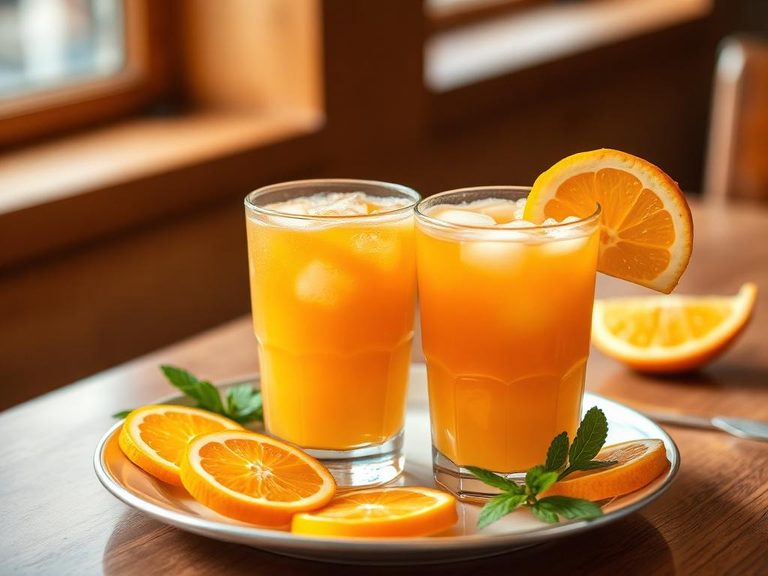
This is a frozen concentrate made from orange juice and pulp, designed to be diluted with water for a quick, sweet breakfast drink. It delivers a bright, tangy, and pulpy orange flavor with a smooth, icy texture when partially thawed. Nutritionally, it's a significant source of simple carbohydrates, primarily from sugar.
Calorie split: 1% protein · 99% carbs · 0% fat
↓ Full nutrition💚 Why it's loved
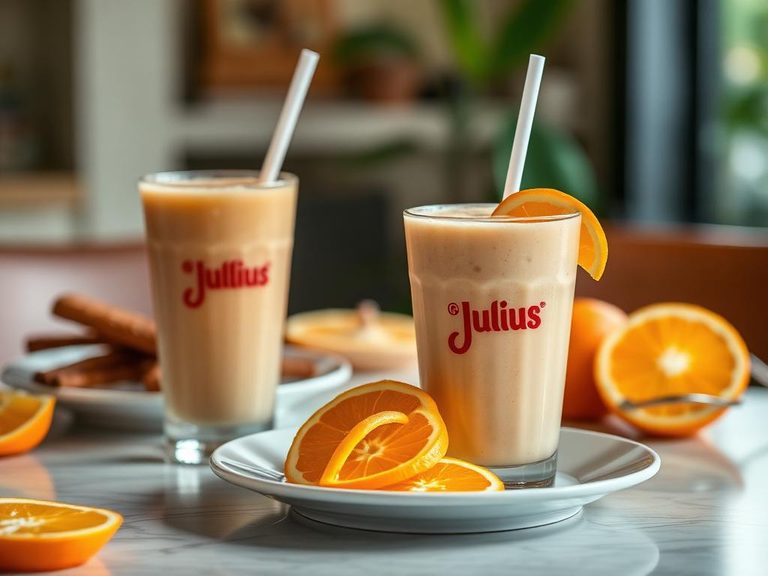
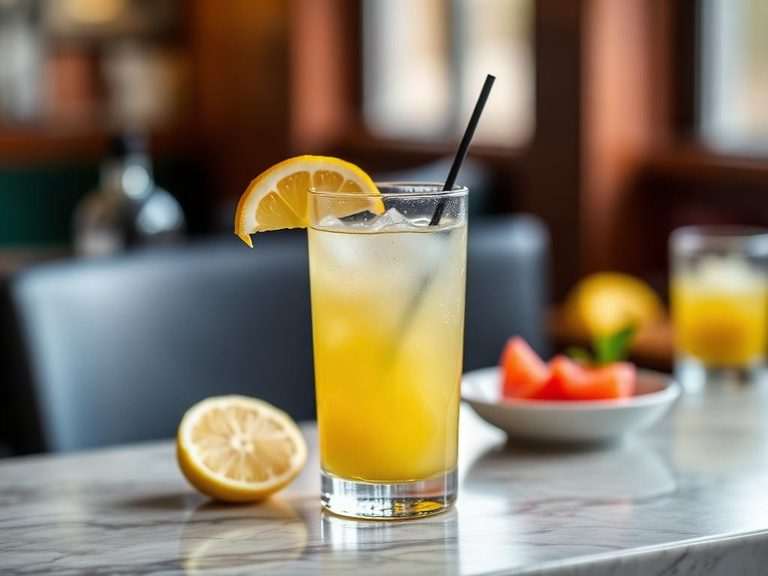
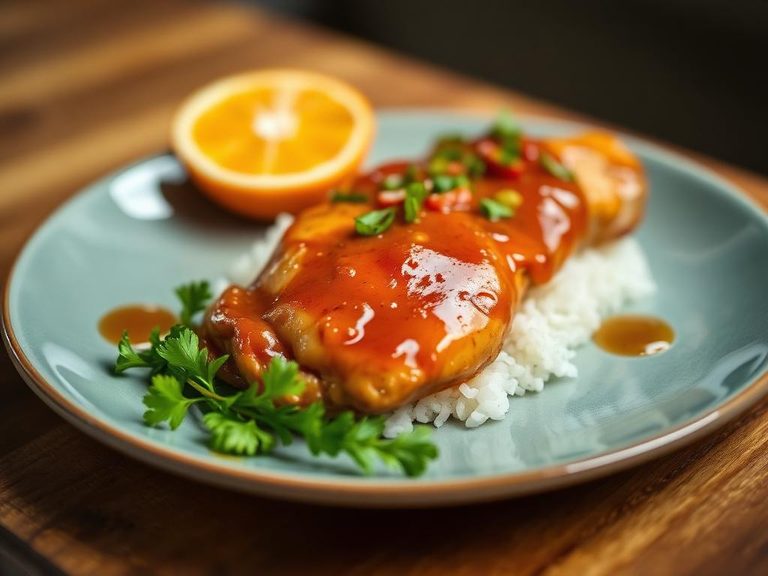
People love it for its nostalgic, sweet-tart flavor that instantly evokes a classic breakfast experience. Its versatility allows it to be served as a chilled drink, a base for smoothies, or even a glaze for meats.
⚠️ Watch-outs & how to enjoy it better
The high sugar content (38g per 100g of concentrate) can cause rapid blood-sugar spikes, making it a poor choice for those managing diabetes or seeking low-sugar options. To counteract this, dilute it more than the package suggests, or pair it with a source of protein or healthy fat (like eggs or yogurt) to slow sugar absorption. Always check the label for added sugars or preservatives.
Key benefits
- Provides a quick source of energy from natural fruit sugars.
- Contains vitamin C from the orange juice, supporting immune function.
- The pulp adds a small amount of dietary fiber.
- Offers a convenient and consistent orange flavor year-round.
- Can be a base for various non-alcoholic and alcoholic mixed drinks.
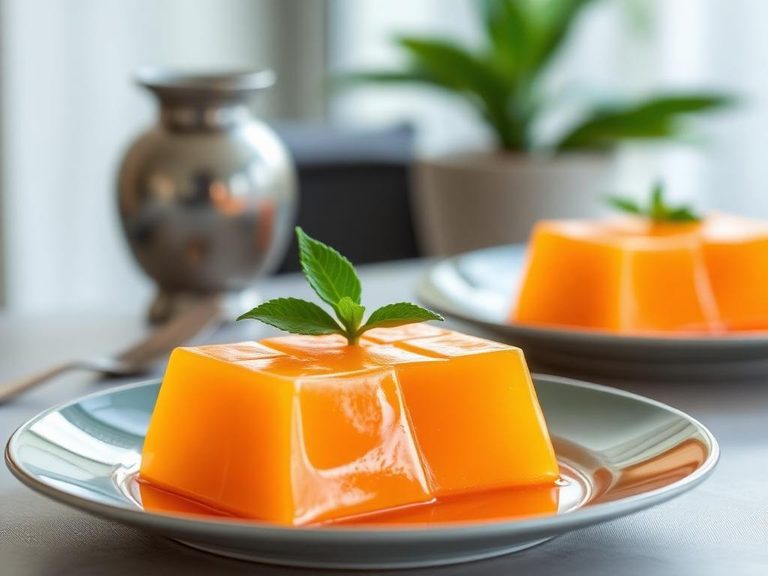
🍽️ Popular dishes
🌍 Where it's eaten
💡 Did you know?
The process for making frozen orange juice concentrate was perfected in the 1940s, largely to meet the U.S. military's need for a lightweight, non-perishable source of vitamin C for troops in World War II.
Full nutrition (USDA data · scales with serving)
| Water | 59.2 g |
| Energy | 153 kcal |
| Energy | 640 kj |
| Protein | 0.40 g |
| Total lipid (fat) | 0.00 g |
| Ash | 1.4 g |
| Carbohydrate, by difference | 39.0 g |
| Fiber, total dietary | 0.10 g |
| Total Sugars | 38.0 g |
| Calcium, Ca | 399 mg |
| Iron, Fe | 0.26 mg |
| Magnesium, Mg | 34.0 mg |
| Phosphorus, P | 115 mg |
| Potassium, K | 465 mg |
| Sodium, Na | 26.0 mg |
| Zinc, Zn | 0.12 mg |
| Copper, Cu | 0.32 mg |
| Manganese, Mn | 0.05 mg |
| Selenium, Se | 0.00 ug |
| Vitamin C, total ascorbic acid | 190 mg |
| Thiamin | 0.36 mg |
| Riboflavin | 3.6 mg |
| Niacin | 0.87 mg |
| Pantothenic acid | 0.65 mg |
| Vitamin B-6 | 0.24 mg |
| Folate, total | 0.00 ug |
| Folic acid | 0.00 ug |
| Folate, food | 0.00 ug |
| Folate, DFE | 0.00 ug |
| Choline, total | 1.7 mg |
| Vitamin B-12 | 0.00 ug |
| Vitamin B-12, added | 0.00 ug |
| Vitamin A, RAE | 1.0 ug |
| Retinol | 0.00 ug |
| Carotene, beta | 11.0 ug |
| Carotene, alpha | 0.00 ug |
| Cryptoxanthin, beta | 0.00 ug |
| Vitamin A, IU | 21.0 iu |
| Lycopene | 0.00 ug |
| Lutein + zeaxanthin | 0.00 ug |
| Vitamin E (alpha-tocopherol) | 0.09 mg |
| Vitamin E, added | 0.00 mg |
| Vitamin D (D2 + D3), International Units | 0.00 iu |
| Vitamin D (D2 + D3) | 0.00 ug |
| Vitamin K (phylloquinone) | 0.10 ug |
| Alcohol, ethyl | 0.00 g |
| Caffeine | 0.00 mg |
| Theobromine | 0.00 mg |
Fat & fatty acid profile (per 100g)
| Fatty acids, total saturated | 0.00 g |
| SFA 4:0 | 0.00 g |
| SFA 6:0 | 0.00 g |
| SFA 8:0 | 0.00 g |
| SFA 10:0 | 0.00 g |
| SFA 12:0 | 0.00 g |
| SFA 14:0 | 0.00 g |
| SFA 16:0 | 0.00 g |
| SFA 18:0 | 0.00 g |
| Fatty acids, total monounsaturated | 0.00 g |
| MUFA 16:1 | 0.00 g |
| MUFA 18:1 | 0.00 g |
| MUFA 20:1 | 0.00 g |
| MUFA 22:1 | 0.00 g |
| Fatty acids, total polyunsaturated | 0.00 g |
| PUFA 18:2 | 0.00 g |
| PUFA 18:3 | 0.00 g |
| PUFA 18:4 | 0.00 g |
| PUFA 20:4 | 0.00 g |
| PUFA 20:5 n-3 (EPA) | 0.00 g |
| PUFA 22:5 n-3 (DPA) | 0.00 g |
| PUFA 22:6 n-3 (DHA) | 0.00 g |
| Fatty acids, total trans | 0.00 g |
| Cholesterol | 0.00 mg |
Amino acid profile (per 100g)
| Tryptophan | 0.00 g |
| Threonine | 0.00 g |
| Isoleucine | 0.00 g |
| Leucine | 0.01 g |
| Lysine | 0.01 g |
| Methionine | 0.00 g |
| Cystine | 0.00 g |
| Phenylalanine | 0.01 g |
| Tyrosine | 0.00 g |
| Valine | 0.01 g |
| Arginine | 0.03 g |
| Histidine | 0.00 g |
| Alanine | 0.01 g |
| Aspartic acid | 0.04 g |
| Glutamic acid | 0.02 g |
| Glycine | 0.01 g |
| Proline | 0.02 g |
| Serine | 0.01 g |
FAQ
How do I prepare the frozen concentrate?
Typically, you thaw the can, pour the concentrate into a pitcher, and fill the empty can with cold water (or milk for a creamier drink) two to three times, stirring to combine.
Is this the same as frozen orange juice?
Not exactly. A concentrate like this is more concentrated and is meant to be diluted, often resulting in a sweeter, more intensely flavored drink than standard frozen orange juice, which may require less dilution.
Can I use it in baking?
Yes, it's excellent for adding orange flavor to cakes, muffins, glazes, and marinades. Reduce other liquids in the recipe slightly to account for the added liquid from the concentrate.
Nutrient density (calculated · NRF9.3)
Nutrient Rich Foods index: beneficial nutrients (protein, fiber, vitamins, minerals) minus saturated fat, added sugar & sodium, per 100 kcal.
NRF9.3 index — Fulgoni, Keast & Drewnowski, 2009. Computed from USDA nutrients.
Weight-loss friendliness (composite index)
Energy density 1.53 kcal/g · 1% calories from protein · 0.1 g fiber · 38.0 g sugar per 100 g.
Composite of energy density (Rolls et al., 1999), protein & fiber satiety, minus sugar. A calculated heuristic — ranks satiety-per-calorie, not a clinical measure.
Dietary load (calculated from USDA values)
Potential renal acid load. Positive = acid-forming, negative = alkaline-forming.
Sodium-to-potassium ratio: 0.06 (lower is better — aim for ≤ 1)
Sodium:potassium per WHO potassium guidance. Computed from USDA nutrients.