

Beverages, coconut milk, sweetened, fortified with calcium, vitamins A, B12, D2
Whole food · Beverages
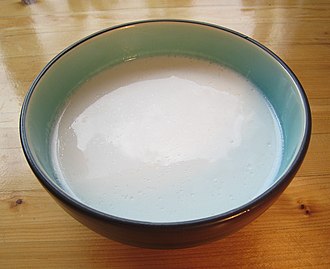
Photo: Wikipedia
This is a creamy, plant-based milk made from coconut meat, sweetened and fortified with key nutrients like calcium and vitamins. It has a rich, slightly sweet, tropical flavor with a smooth, velvety texture that's thinner than canned coconut cream but richer than regular milk. Per 100g, it's a low-calorie source of healthy fats and provides a significant boost of calcium and vitamin D for bone health.
Calorie split: 3% protein · 37% carbs · 60% fat
↓ Full nutrition💚 Why it's loved
People love it for its distinct, creamy coconut flavor that adds a tropical twist to everything from smoothies to curries. It's celebrated as a versatile, dairy-free staple that can be used in both sweet and savory cooking.
⚠️ Watch-outs & how to enjoy it better
The added sugar can contribute to blood sugar spikes if consumed in large amounts, and it's a common tree nut allergen. To counteract sugar impact, use it in small portions as part of a balanced meal with protein and fiber, and always check the label for added sugars.
Key benefits
- Provides calcium and vitamin D for bone and teeth health.
- Offers vitamin B12, important for nerve function, often lacking in plant-based diets.
- Contains medium-chain triglycerides (MCTs) from coconut, which can be a quick energy source.
- Dairy-free and lactose-free, suitable for vegans and those with lactose intolerance.
- Naturally contains some electrolytes like potassium.
🍽️ Popular dishes
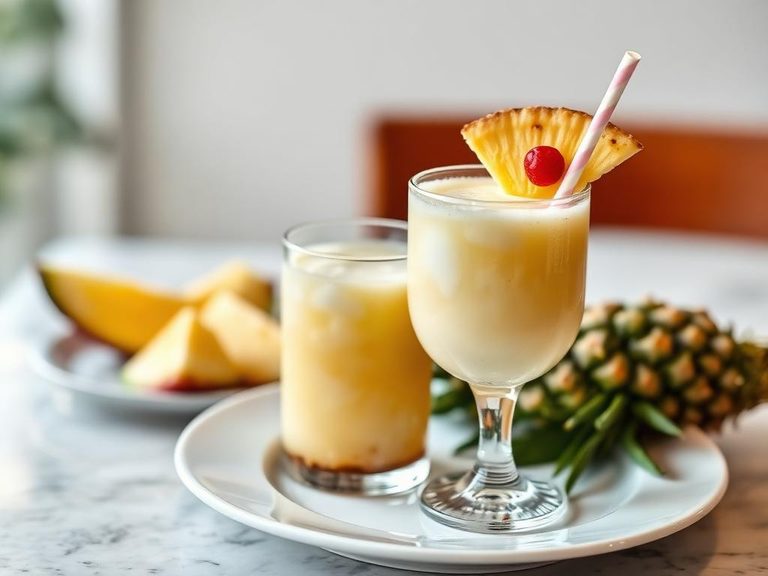
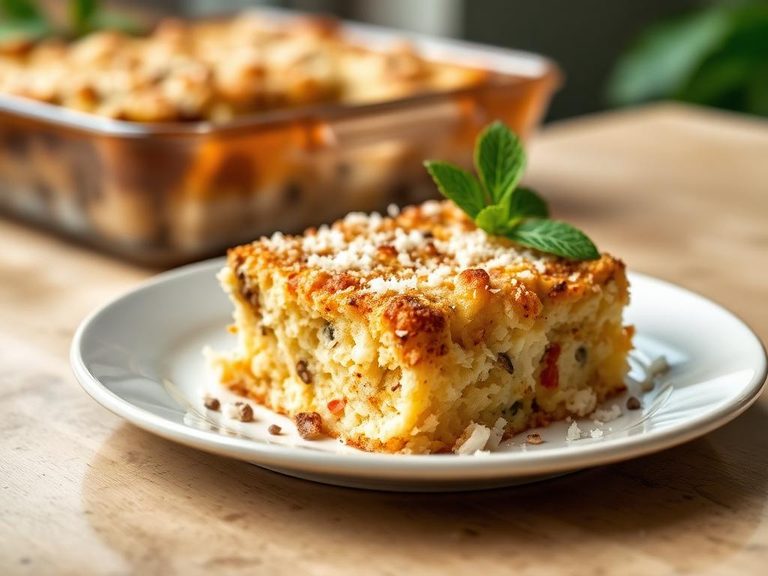
🌍 Where it's eaten
💡 Did you know?
The fortification process often uses a form of vitamin D2 (ergocalciferol), which is derived from fungi, making it suitable for vegan diets, unlike the more common D3 (cholecalciferol) which is often animal-derived.
Full nutrition (USDA data · scales with serving)
| Water | 94.6 g |
| Energy | 31.0 kcal |
| Energy | 131 kj |
| Protein | 0.21 g |
| Total lipid (fat) | 2.1 g |
| Ash | 0.23 g |
| Carbohydrate, by difference | 2.9 g |
| Fiber, total dietary | 0.00 g |
| Total Sugars | 2.5 g |
| Calcium, Ca | 188 mg |
| Iron, Fe | 0.30 mg |
| Magnesium, Mg | 0.00 mg |
| Phosphorus, P | 0.00 mg |
| Potassium, K | 19.0 mg |
| Sodium, Na | 19.0 mg |
| Zinc, Zn | 0.00 mg |
| Copper, Cu | 0.00 mg |
| Selenium, Se | 0.00 ug |
| Vitamin C, total ascorbic acid | 0.00 mg |
| Thiamin | 0.00 mg |
| Riboflavin | 0.00 mg |
| Niacin | 0.00 mg |
| Vitamin B-6 | 0.00 mg |
| Folate, total | 0.00 ug |
| Folic acid | 0.00 ug |
| Folate, food | 0.00 ug |
| Folate, DFE | 0.00 ug |
| Choline, total | 0.00 mg |
| Vitamin B-12 | 1.3 ug |
| Vitamin B-12, added | 1.3 ug |
| Vitamin A, RAE | 63.0 ug |
| Retinol | 63.0 ug |
| Carotene, beta | 0.00 ug |
| Carotene, alpha | 0.00 ug |
| Cryptoxanthin, beta | 0.00 ug |
| Vitamin A, IU | 208 iu |
| Lycopene | 0.00 ug |
| Lutein + zeaxanthin | 0.00 ug |
| Vitamin E (alpha-tocopherol) | 0.00 mg |
| Vitamin E, added | 0.00 mg |
| Vitamin D (D2 + D3), International Units | 42.0 iu |
| Vitamin D (D2 + D3) | 1.0 ug |
| Vitamin D2 (ergocalciferol) | 1.0 ug |
| Vitamin K (phylloquinone) | 0.00 ug |
| Alcohol, ethyl | 0.00 g |
| Caffeine | 0.00 mg |
| Theobromine | 0.00 mg |
Fat & fatty acid profile (per 100g)
| Fatty acids, total saturated | 2.1 g |
| SFA 4:0 | 0.00 g |
| SFA 6:0 | 0.01 g |
| SFA 8:0 | 0.17 g |
| SFA 10:0 | 0.13 g |
| SFA 12:0 | 1.0 g |
| SFA 14:0 | 0.41 g |
| SFA 16:0 | 0.20 g |
| SFA 18:0 | 0.12 g |
| Fatty acids, total monounsaturated | 0.00 g |
| MUFA 16:1 | 0.00 g |
| MUFA 18:1 | 0.00 g |
| MUFA 20:1 | 0.00 g |
| MUFA 22:1 | 0.00 g |
| Fatty acids, total polyunsaturated | 0.00 g |
| PUFA 18:2 | 0.00 g |
| PUFA 18:3 | 0.00 g |
| PUFA 18:4 | 0.00 g |
| PUFA 20:4 | 0.00 g |
| PUFA 20:5 n-3 (EPA) | 0.00 g |
| PUFA 22:5 n-3 (DPA) | 0.00 g |
| PUFA 22:6 n-3 (DHA) | 0.00 g |
| Fatty acids, total trans | 0.00 g |
| Cholesterol | 0.00 mg |
Amino acid profile (per 100g)
Estimated from Beverages, carbonated, tonic water — USDA does not publish this profile for Beverages.
| Tryptophan | 0.00 g |
| Threonine | 0.00 g |
| Isoleucine | 0.00 g |
| Leucine | 0.00 g |
| Lysine | 0.00 g |
| Methionine | 0.00 g |
| Cystine | 0.00 g |
| Phenylalanine | 0.00 g |
| Tyrosine | 0.00 g |
| Valine | 0.00 g |
| Arginine | 0.00 g |
| Histidine | 0.00 g |
| Alanine | 0.00 g |
| Aspartic acid | 0.00 g |
| Glutamic acid | 0.00 g |
| Glycine | 0.00 g |
| Proline | 0.00 g |
| Serine | 0.00 g |
FAQ
Is this the same as canned coconut milk?
No. Canned coconut milk is much thicker, higher in fat, and typically unsweetened, used primarily for cooking. This is a thinner, drinkable, sweetened, and fortified beverage.
Why is it fortified?
Coconut milk is naturally low in calcium and vitamin D. Fortification makes it a nutritionally competitive alternative to cow's milk, especially for those avoiding dairy.
Can I use this for baking?
Yes, but its lower fat content and added sugar will affect the final product. It works well in cakes, muffins, and pancakes, but you may need to adjust other liquids and sugars in the recipe.
Nutrient density (calculated · NRF9.3)
Nutrient Rich Foods index: beneficial nutrients (protein, fiber, vitamins, minerals) minus saturated fat, added sugar & sodium, per 100 kcal.
NRF9.3 index — Fulgoni, Keast & Drewnowski, 2009. Computed from USDA nutrients.
Weight-loss friendliness (composite index)
Energy density 0.31 kcal/g · 3% calories from protein · 0.0 g fiber · 2.5 g sugar per 100 g.
Composite of energy density (Rolls et al., 1999), protein & fiber satiety, minus sugar. A calculated heuristic — ranks satiety-per-calorie, not a clinical measure.
Dietary load (calculated from USDA values)
Potential renal acid load. Positive = acid-forming, negative = alkaline-forming.
Sodium-to-potassium ratio: 1.00 (lower is better — aim for ≤ 1)
Sodium:potassium per WHO potassium guidance. Computed from USDA nutrients.