

Beef, prepackaged or deli, luncheon meat
Common food

Photo: Wikipedia
Beef luncheon meat is a finely ground, pre-cooked, and canned beef product, often with added seasonings and preservatives. It has a soft, uniform, and slightly springy texture, with a savory, salty, and mildly spiced flavor profile. Nutritionally, it is a dense source of protein with very low carbohydrates and fat.
Calorie split: 68% protein · 2% carbs · 30% fat
↓ Full nutrition💚 Why it's loved
People love it for its savory umami punch and incredible convenience, making it a reliable staple for fast sandwiches, salads, and fried rice. It holds a nostalgic place in many cultures as a comforting, no-fuss ingredient.
⚠️ Watch-outs & how to enjoy it better
It is typically very high in sodium, which can contribute to water retention and is a concern for those managing blood pressure. To counteract this, pair it with potassium-rich foods like leafy greens or avocado, and rinse slices under water before use to reduce surface sodium.
Key benefits
- High-quality, complete protein source
- Extremely low in carbohydrates and sugars
- Long shelf life and convenient ready-to-eat format
- Versatile for quick meal preparation
🍽️ Popular dishes
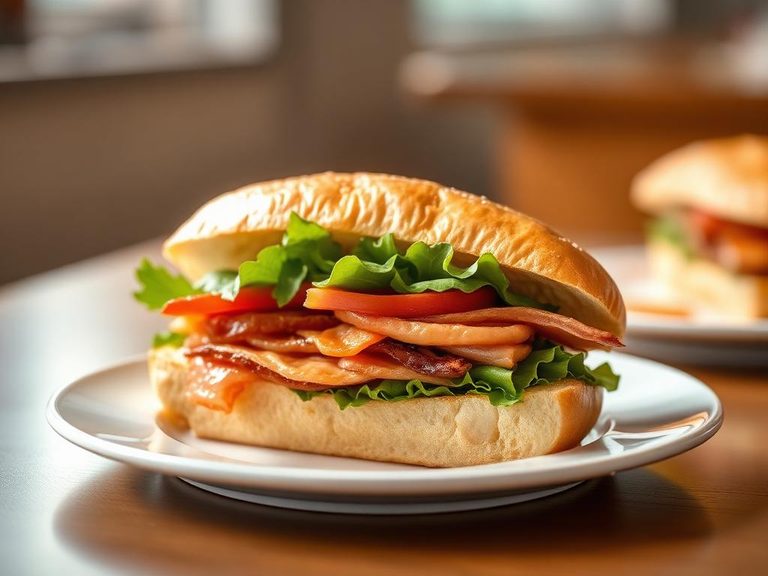
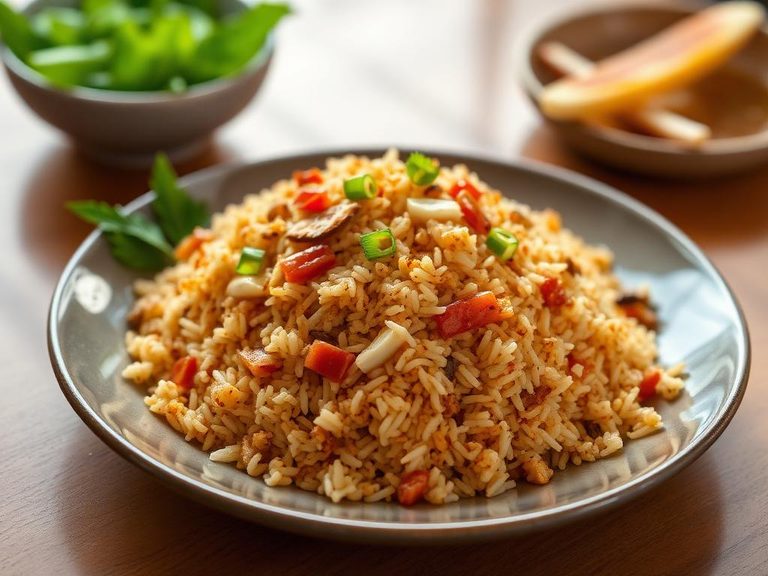
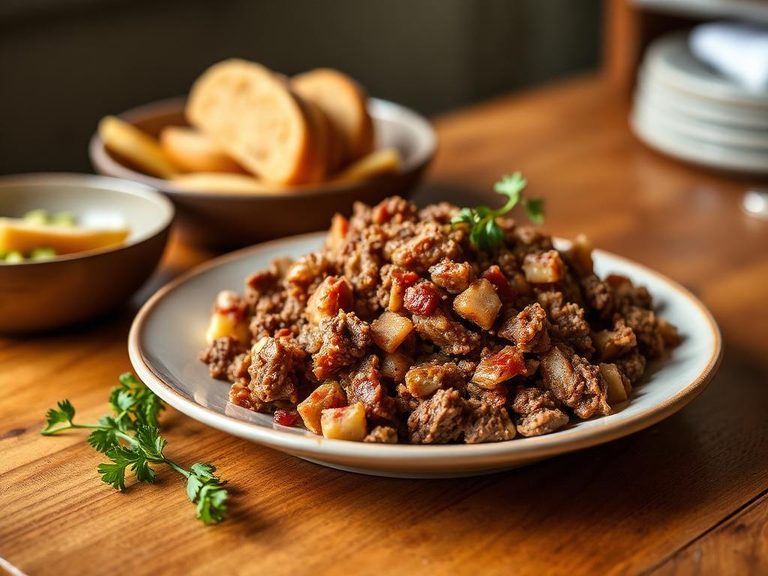

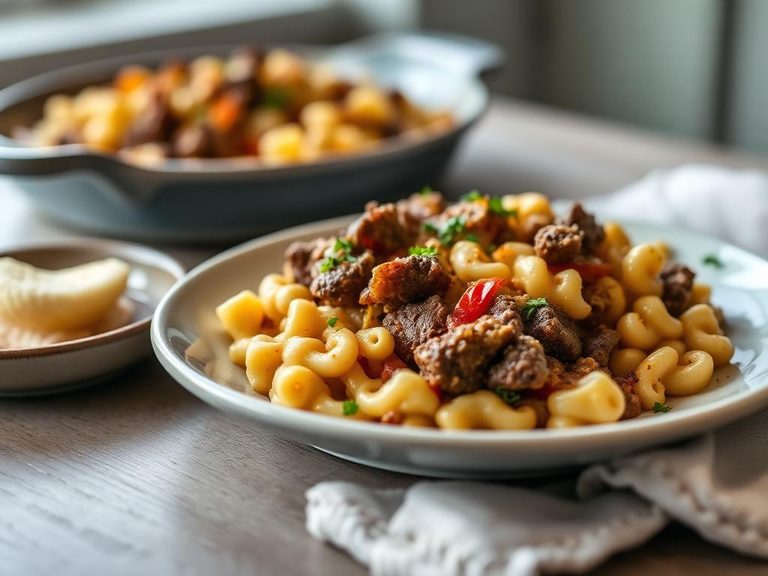
🌍 Where it's eaten
💡 Did you know?
The concept of prepackaged luncheon meat was popularized during WWII as a durable, non-perishable ration for soldiers, which cemented its place in post-war civilian pantries worldwide.
Full nutrition (USDA data · scales with serving)
| Water | 73.7 g |
| Energy | 115 kcal |
| Protein | 18.6 g |
| Total lipid (fat) | 3.7 g |
| Carbohydrate, by difference | 0.64 g |
| Fiber, total dietary | 0.00 g |
| Total Sugars | 0.29 g |
| Calcium, Ca | 5.0 mg |
| Iron, Fe | 2.0 mg |
| Magnesium, Mg | 20.0 mg |
| Phosphorus, P | 242 mg |
| Potassium, K | 647 mg |
| Sodium, Na | 853 mg |
| Zinc, Zn | 3.2 mg |
| Copper, Cu | 0.09 mg |
| Selenium, Se | 14.7 ug |
| Vitamin C, total ascorbic acid | 0.00 mg |
| Thiamin | 0.04 mg |
| Riboflavin | 0.21 mg |
| Niacin | 5.6 mg |
| Vitamin B-6 | 0.46 mg |
| Folate, total | 5.0 ug |
| Folic acid | 0.00 ug |
| Folate, food | 5.0 ug |
| Folate, DFE | 5.0 ug |
| Choline, total | 43.9 mg |
| Vitamin B-12 | 2.0 ug |
| Vitamin B-12, added | 0.00 ug |
| Vitamin A, RAE | 3.0 ug |
| Retinol | 3.0 ug |
| Carotene, beta | 0.00 ug |
| Carotene, alpha | 0.00 ug |
| Cryptoxanthin, beta | 0.00 ug |
| Lycopene | 0.00 ug |
| Lutein + zeaxanthin | 0.00 ug |
| Vitamin E (alpha-tocopherol) | 0.49 mg |
| Vitamin E, added | 0.00 mg |
| Vitamin D (D2 + D3) | 0.00 ug |
| Vitamin K (phylloquinone) | 1.6 ug |
| Alcohol, ethyl | 0.00 g |
| Caffeine | 0.00 mg |
| Theobromine | 0.00 mg |
Fat & fatty acid profile (per 100g)
| Fatty acids, total saturated | 1.3 g |
| SFA 4:0 | 0.00 g |
| SFA 6:0 | 0.00 g |
| SFA 8:0 | 0.00 g |
| SFA 10:0 | 0.00 g |
| SFA 12:0 | 0.00 g |
| SFA 14:0 | 0.09 g |
| SFA 16:0 | 0.75 g |
| SFA 18:0 | 0.43 g |
| Fatty acids, total monounsaturated | 1.5 g |
| MUFA 16:1 | 0.12 g |
| MUFA 18:1 | 1.3 g |
| MUFA 20:1 | 0.01 g |
| MUFA 22:1 | 0.00 g |
| Fatty acids, total polyunsaturated | 0.27 g |
| PUFA 18:2 | 0.18 g |
| PUFA 18:3 | 0.02 g |
| PUFA 18:4 | 0.00 g |
| PUFA 20:4 | 0.04 g |
| PUFA 20:5 n-3 (EPA) | 0.01 g |
| PUFA 22:5 n-3 (DPA) | 0.01 g |
| PUFA 22:6 n-3 (DHA) | 0.00 g |
| Cholesterol | 51.0 mg |
Amino acid profile (per 100g)
Estimated from Beef, variety meats and by-products, mechanically separated beef, raw — USDA does not publish this profile for Beef.
| Tryptophan | 0.17 g |
| Threonine | 0.47 g |
| Isoleucine | 0.58 g |
| Leucine | 1.2 g |
| Lysine | 1.2 g |
| Methionine | 0.43 g |
| Cystine | 0.23 g |
| Phenylalanine | 0.64 g |
| Tyrosine | 0.38 g |
| Valine | 0.92 g |
| Arginine | 1.2 g |
| Histidine | 0.44 g |
| Alanine | 1.0 g |
| Aspartic acid | 1.3 g |
| Glutamic acid | 2.1 g |
| Glycine | 1.2 g |
| Proline | 0.92 g |
| Serine | 0.57 g |
FAQ
Is beef luncheon meat the same as corned beef?
No. While both are canned beef products, corned beef is made from salt-cured beef brisket and has a coarser, more fibrous texture. Luncheon meat is made from finely ground, emulsified beef and has a smoother, more uniform texture.
How should I store an opened can of beef luncheon meat?
Transfer any unused portion from the can to an airtight container. It will keep in the refrigerator for 3-4 days. For longer storage, you can wrap portions tightly and freeze them for up to 2 months.
Can I eat beef luncheon meat straight from the can?
Yes, it is fully cooked and safe to eat cold. However, many people prefer to pan-fry slices until crispy on the edges to enhance its flavor and texture.
Nutrient density (calculated · NRF9.3)
Nutrient Rich Foods index: beneficial nutrients (protein, fiber, vitamins, minerals) minus saturated fat, added sugar & sodium, per 100 kcal.
NRF9.3 index — Fulgoni, Keast & Drewnowski, 2009. Computed from USDA nutrients.
Weight-loss friendliness (composite index)
Energy density 1.15 kcal/g · 65% calories from protein · 0.0 g fiber · 0.3 g sugar per 100 g.
Composite of energy density (Rolls et al., 1999), protein & fiber satiety, minus sugar. A calculated heuristic — ranks satiety-per-calorie, not a clinical measure.
Dietary load (calculated from USDA values)
Potential renal acid load. Positive = acid-forming, negative = alkaline-forming.
Sodium-to-potassium ratio: 1.32 (lower is better — aim for ≤ 1)
Sodium:potassium per WHO potassium guidance. Computed from USDA nutrients.