

Spam Musubi
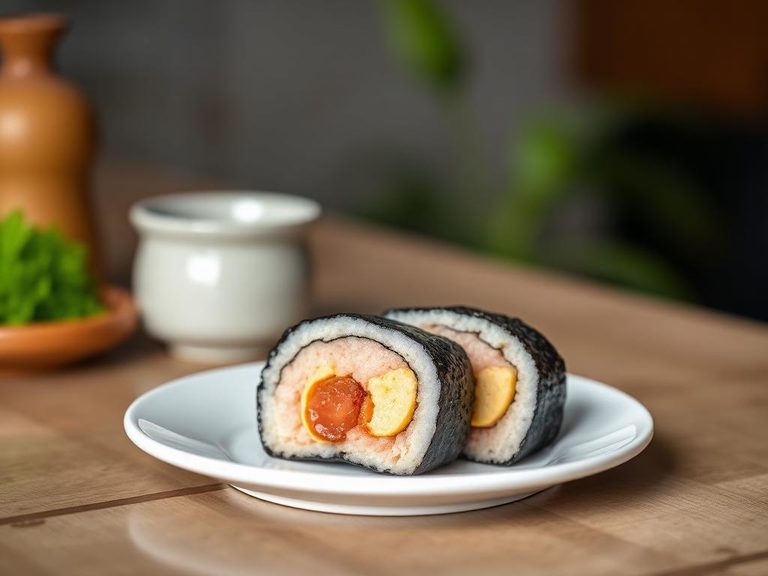
Spam Musubi is a popular Hawaiian snack or lunch item consisting of a slice of grilled Spam placed on top of a block of rice, wrapped together with a strip of nori (seaweed). It typically features a sweet-savory glaze on the Spam, often made with soy sauce and sugar. The dish originated in Hawaii and is a staple in local convenience stores and plate lunch culture.
🍳 View the full Spam Musubi recipe →
🍽️ Nutrition at a glance
Spam Musubi is high in both fat and sodium from the Spam, while the rice provides a significant amount of carbohydrates. A single piece offers a good source of protein and energy, with a rough calorie count of around 200-300 calories per serving depending on the size of the rice block and thickness of the Spam slice.
Nutrition breakdown
| Calories | 210 kcal |
| Protein | 6 g |
| Carbs | 28 g |
| Fat | 8 g |
| Fiber | 0.5 g |
| Sugar | 1 g |
| Sodium | 680 mg |
| Iron | 1.5 mg |
| Potassium | 120 mg |
| Calcium | 10 mg |
| Vitamin B1 (Thiamin) | 0.15 mg |
| Vitamin B2 (Riboflavin) | 0.1 mg |
| Niacin (B3) | 2 mg |
| Phosphorus | 80 mg |
| Selenium | 8 mcg |
Per 1 piece (approx. 110 g) · estimated, varies by recipe
💡 What's interesting
Culturally, Spam Musubi is a beloved example of Hawaii's unique fusion cuisine, blending American canned meat with Japanese onigiri-style presentation. Nutritionally, it's an interesting case of a processed meat becoming a cultural staple, providing a quick, portable, and calorie-dense meal that reflects the islands' history and multicultural influences.
🍽️ Related dishes





AI estimate may be inaccurate · Terms