

Spam
Common food

Photo: Wikipedia
Spam is a canned, pre-cooked meat product made from pork shoulder and ham, with a distinctively salty, savory flavor and a soft, slightly gelatinous texture that crisps up beautifully when fried. Nutritionally, it is a dense source of calories and fat, with a moderate protein content, but contains no fiber or sugar. Its long shelf life and unique taste have made it a global pantry staple.
Calorie split: 17% protein · 6% carbs · 77% fat
↓ Full nutrition💚 Why it's loved
People love Spam for its intensely savory, umami-rich flavor and the satisfyingly crispy crust it develops when pan-fried. Its convenience and role as a nostalgic comfort food, especially in Hawaiian, Korean, and Pacific Island cuisines, cement its beloved status.
⚠️ Watch-outs & how to enjoy it better
Spam is very high in sodium and saturated fat, which may be a concern for those monitoring heart health or blood pressure. To mitigate, pair it with potassium-rich vegetables like spinach or sweet potato, choose low-sodium versions when available, and practice strict portion control (e.g., using a few slices as a flavor accent rather than the main protein).
Key benefits
- Highly shelf-stable and requires no refrigeration until opened.
- Provides a quick and dense source of energy and protein.
- Extremely versatile for frying, baking, or eating straight from the can.
- A cultural icon with a dedicated following in many regions.
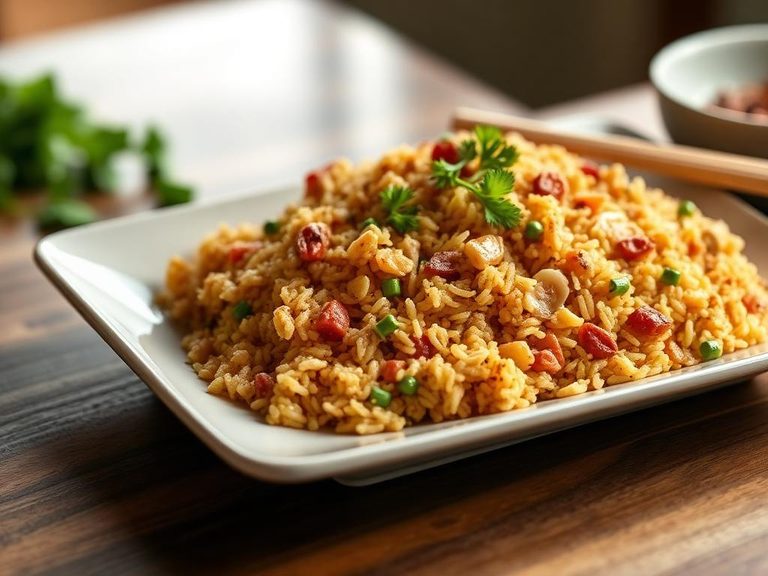
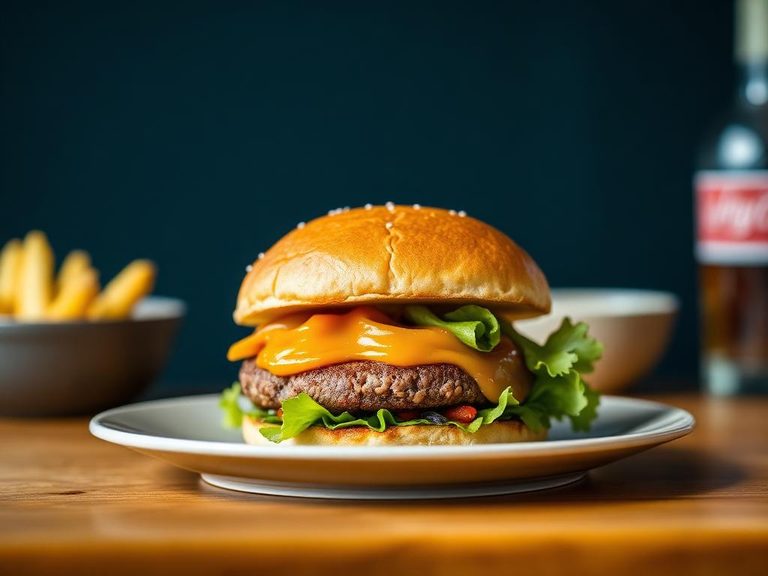
🍽️ Popular dishes



🌍 Where it's eaten
💡 Did you know?
The name 'Spam' is a portmanteau of 'spiced ham,' and its invention was a solution for Hormel to utilize pork shoulder, a cut that was less popular at the time.
Full nutrition (USDA data · scales with serving)
| Water | 51.7 g |
| Energy | 315 kcal |
| Protein | 13.4 g |
| Total lipid (fat) | 26.6 g |
| Carbohydrate, by difference | 4.6 g |
| Fiber, total dietary | 0.00 g |
| Total Sugars | 0.00 g |
| Calcium, Ca | 0.00 mg |
| Iron, Fe | 0.64 mg |
| Magnesium, Mg | 14.0 mg |
| Phosphorus, P | 151 mg |
| Potassium, K | 409 mg |
| Sodium, Na | 1411 mg |
| Zinc, Zn | 1.6 mg |
| Copper, Cu | 0.05 mg |
| Selenium, Se | 22.9 ug |
| Vitamin C, total ascorbic acid | 0.00 mg |
| Thiamin | 0.32 mg |
| Riboflavin | 0.18 mg |
| Niacin | 3.5 mg |
| Vitamin B-6 | 0.22 mg |
| Folate, total | 3.0 ug |
| Folic acid | 0.00 ug |
| Folate, food | 3.0 ug |
| Folate, DFE | 3.0 ug |
| Choline, total | 68.5 mg |
| Vitamin B-12 | 0.45 ug |
| Vitamin B-12, added | 0.00 ug |
| Vitamin A, RAE | 0.00 ug |
| Retinol | 0.00 ug |
| Carotene, beta | 0.00 ug |
| Carotene, alpha | 0.00 ug |
| Cryptoxanthin, beta | 0.00 ug |
| Lycopene | 0.00 ug |
| Lutein + zeaxanthin | 0.00 ug |
| Vitamin E (alpha-tocopherol) | 0.42 mg |
| Vitamin E, added | 0.00 mg |
| Vitamin D (D2 + D3) | 0.60 ug |
| Vitamin K (phylloquinone) | 0.00 ug |
| Alcohol, ethyl | 0.00 g |
| Caffeine | 0.00 mg |
| Theobromine | 0.00 mg |
Fat & fatty acid profile (per 100g)
| Fatty acids, total saturated | 10.0 g |
| SFA 4:0 | 0.00 g |
| SFA 6:0 | 0.00 g |
| SFA 8:0 | 0.00 g |
| SFA 10:0 | 0.02 g |
| SFA 12:0 | 0.02 g |
| SFA 14:0 | 0.35 g |
| SFA 16:0 | 6.2 g |
| SFA 18:0 | 3.4 g |
| Fatty acids, total monounsaturated | 13.5 g |
| MUFA 16:1 | 0.85 g |
| MUFA 18:1 | 12.4 g |
| MUFA 20:1 | 0.22 g |
| MUFA 22:1 | 0.00 g |
| Fatty acids, total polyunsaturated | 2.0 g |
| PUFA 18:2 | 1.9 g |
| PUFA 18:3 | 0.08 g |
| PUFA 18:4 | 0.00 g |
| PUFA 20:4 | 0.05 g |
| PUFA 20:5 n-3 (EPA) | 0.00 g |
| PUFA 22:5 n-3 (DPA) | 0.00 g |
| PUFA 22:6 n-3 (DHA) | 0.00 g |
| Cholesterol | 71.0 mg |
FAQ
What exactly is Spam made of?
Spam is made from six ingredients: pork with ham meat added, salt, water, potato starch (as a binder and thickener), sugar, and sodium nitrite (as a preservative).
Is Spam cooked? Can I eat it straight from the can?
Yes, Spam is fully cooked and shelf-stable. It is safe to eat directly from the can, though most people prefer to fry, grill, or bake it to enhance its texture and flavor.
How should I store opened Spam?
Once opened, the unused portion should be transferred to an airtight container or wrapped tightly and refrigerated. It will keep for 3 to 5 days in the refrigerator or can be frozen for up to 2 months.
Nutrient density (calculated · NRF9.3)
Nutrient Rich Foods index: beneficial nutrients (protein, fiber, vitamins, minerals) minus saturated fat, added sugar & sodium, per 100 kcal.
NRF9.3 index — Fulgoni, Keast & Drewnowski, 2009. Computed from USDA nutrients.
Weight-loss friendliness (composite index)
Energy density 3.15 kcal/g · 17% calories from protein · 0.0 g fiber · 0.0 g sugar per 100 g.
Composite of energy density (Rolls et al., 1999), protein & fiber satiety, minus sugar. A calculated heuristic — ranks satiety-per-calorie, not a clinical measure.
Dietary load (calculated from USDA values)
Potential renal acid load. Positive = acid-forming, negative = alkaline-forming.
Sodium-to-potassium ratio: 3.45 (lower is better — aim for ≤ 1)
Sodium:potassium per WHO potassium guidance. Computed from USDA nutrients.