

Beef, prepackaged or deli, luncheon meat, reduced sodium
Common food

Photo: Wikipedia
This is a lean, protein-packed, ready-to-eat beef product, sliced thin for sandwiches. It has a firm, slightly chewy texture and a savory, seasoned beef flavor without the high fat of traditional deli meats. Its standout feature is the high protein content (18.62g) with very low fat and carbohydrates.
Calorie split: 68% protein · 2% carbs · 30% fat
↓ Full nutrition💚 Why it's loved
People love it for its savory, umami-rich beef flavor and its unmatched convenience—it's the ultimate no-prep protein for busy schedules. It's a nostalgic staple in many households, instantly elevating a simple sandwich or serving as a quick snack.
⚠️ Watch-outs & how to enjoy it better
Despite being 'reduced sodium,' it can still be a significant source of sodium, which may concern those monitoring salt intake. Processed meats are also not ideal for daily consumption. To counteract this, pair it with fresh, potassium-rich vegetables like spinach or tomato in a sandwich, and practice portion control by using it as an accent rather than the main event.
Key benefits
- Excellent source of high-quality protein for muscle maintenance.
- Very low in carbohydrates and sugars, suitable for low-carb diets.
- Convenient, no-cook protein source for quick meals.
- Reduced sodium formulation compared to standard luncheon meats.
🍽️ Popular dishes
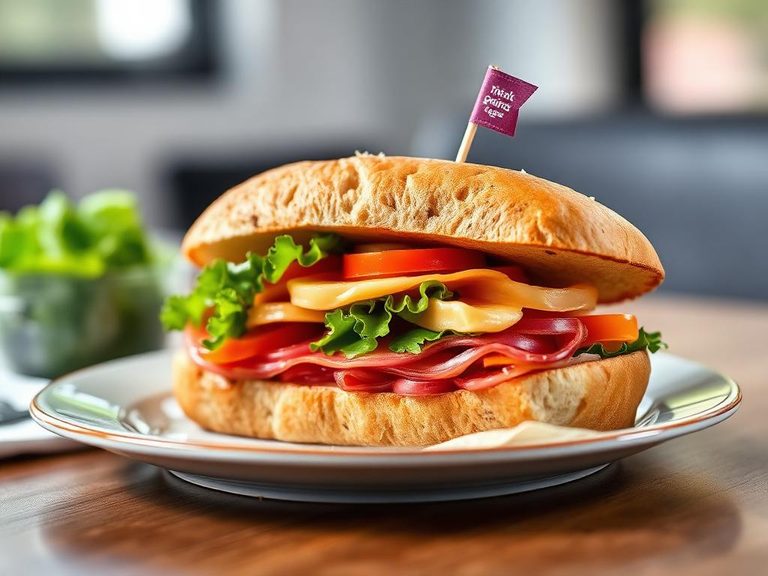
🌍 Where it's eaten
💡 Did you know?
Luncheon meat was originally developed as a way to utilize smaller cuts and trimmings of beef, making it one of the earliest forms of 'value-added' processed meat products.
Full nutrition (USDA data · scales with serving)
| Water | 73.7 g |
| Energy | 115 kcal |
| Protein | 18.6 g |
| Total lipid (fat) | 3.7 g |
| Carbohydrate, by difference | 0.64 g |
| Fiber, total dietary | 0.00 g |
| Total Sugars | 0.29 g |
| Calcium, Ca | 5.0 mg |
| Iron, Fe | 2.0 mg |
| Magnesium, Mg | 20.0 mg |
| Phosphorus, P | 242 mg |
| Potassium, K | 647 mg |
| Sodium, Na | 640 mg |
| Zinc, Zn | 3.2 mg |
| Copper, Cu | 0.09 mg |
| Selenium, Se | 14.7 ug |
| Vitamin C, total ascorbic acid | 0.00 mg |
| Thiamin | 0.04 mg |
| Riboflavin | 0.21 mg |
| Niacin | 5.6 mg |
| Vitamin B-6 | 0.46 mg |
| Folate, total | 5.0 ug |
| Folic acid | 0.00 ug |
| Folate, food | 5.0 ug |
| Folate, DFE | 5.0 ug |
| Choline, total | 43.9 mg |
| Vitamin B-12 | 2.0 ug |
| Vitamin B-12, added | 0.00 ug |
| Vitamin A, RAE | 3.0 ug |
| Retinol | 3.0 ug |
| Carotene, beta | 0.00 ug |
| Carotene, alpha | 0.00 ug |
| Cryptoxanthin, beta | 0.00 ug |
| Lycopene | 0.00 ug |
| Lutein + zeaxanthin | 0.00 ug |
| Vitamin E (alpha-tocopherol) | 0.49 mg |
| Vitamin E, added | 0.00 mg |
| Vitamin D (D2 + D3) | 0.00 ug |
| Vitamin K (phylloquinone) | 1.6 ug |
| Alcohol, ethyl | 0.00 g |
| Caffeine | 0.00 mg |
| Theobromine | 0.00 mg |
Fat & fatty acid profile (per 100g)
| Fatty acids, total saturated | 1.3 g |
| SFA 4:0 | 0.00 g |
| SFA 6:0 | 0.00 g |
| SFA 8:0 | 0.00 g |
| SFA 10:0 | 0.00 g |
| SFA 12:0 | 0.00 g |
| SFA 14:0 | 0.09 g |
| SFA 16:0 | 0.75 g |
| SFA 18:0 | 0.43 g |
| Fatty acids, total monounsaturated | 1.5 g |
| MUFA 16:1 | 0.12 g |
| MUFA 18:1 | 1.3 g |
| MUFA 20:1 | 0.01 g |
| MUFA 22:1 | 0.00 g |
| Fatty acids, total polyunsaturated | 0.27 g |
| PUFA 18:2 | 0.18 g |
| PUFA 18:3 | 0.02 g |
| PUFA 18:4 | 0.00 g |
| PUFA 20:4 | 0.04 g |
| PUFA 20:5 n-3 (EPA) | 0.01 g |
| PUFA 22:5 n-3 (DPA) | 0.01 g |
| PUFA 22:6 n-3 (DHA) | 0.00 g |
| Cholesterol | 51.0 mg |
Amino acid profile (per 100g)
Estimated from Beef, variety meats and by-products, mechanically separated beef, raw — USDA does not publish this profile for Beef.
| Tryptophan | 0.17 g |
| Threonine | 0.47 g |
| Isoleucine | 0.58 g |
| Leucine | 1.2 g |
| Lysine | 1.2 g |
| Methionine | 0.43 g |
| Cystine | 0.23 g |
| Phenylalanine | 0.64 g |
| Tyrosine | 0.38 g |
| Valine | 0.92 g |
| Arginine | 1.2 g |
| Histidine | 0.44 g |
| Alanine | 1.0 g |
| Aspartic acid | 1.3 g |
| Glutamic acid | 2.1 g |
| Glycine | 1.2 g |
| Proline | 0.92 g |
| Serine | 0.57 g |
FAQ
How is this different from regular roast beef or corned beef?
Luncheon meat is typically made from finely ground or emulsified beef that is cooked and pressed into a loaf, resulting in a uniform, sliceable texture. Roast beef and corned beef are whole-muscle cuts with a more fibrous, steak-like texture.
Is it a good choice for a post-workout meal?
Yes, its high protein content makes it excellent for muscle recovery. Pair it with a source of carbohydrates, like whole-grain bread, to replenish glycogen stores.
What does 'reduced sodium' actually mean here?
It means the product contains at least 25% less sodium than the manufacturer's standard version of the same food. However, it's still processed meat, so checking the nutrition label for the actual milligram count is key.
Nutrient density (calculated · NRF9.3)
Nutrient Rich Foods index: beneficial nutrients (protein, fiber, vitamins, minerals) minus saturated fat, added sugar & sodium, per 100 kcal.
NRF9.3 index — Fulgoni, Keast & Drewnowski, 2009. Computed from USDA nutrients.
Weight-loss friendliness (composite index)
Energy density 1.15 kcal/g · 65% calories from protein · 0.0 g fiber · 0.3 g sugar per 100 g.
Composite of energy density (Rolls et al., 1999), protein & fiber satiety, minus sugar. A calculated heuristic — ranks satiety-per-calorie, not a clinical measure.
Dietary load (calculated from USDA values)
Potential renal acid load. Positive = acid-forming, negative = alkaline-forming.
Sodium-to-potassium ratio: 0.99 (lower is better — aim for ≤ 1)
Sodium:potassium per WHO potassium guidance. Computed from USDA nutrients.