

Beans, fava, in pod, raw
Whole food · Vegetables and Vegetable Products

Photo: Wikipedia
Fava beans in their pod are the fresh, immature seeds of the broad bean plant, offering a crisp, slightly starchy bite and a sweet, earthy flavor reminiscent of green peas and asparagus. Nutritionally, they are a standout for their high protein and fiber content relative to calories, making them a satisfying and gut-friendly choice. Their vibrant green color and unique taste make them a seasonal highlight in many cuisines.
Calorie split: 29% protein · 65% carbs · 6% fat
↓ Full nutrition💚 Why it's loved
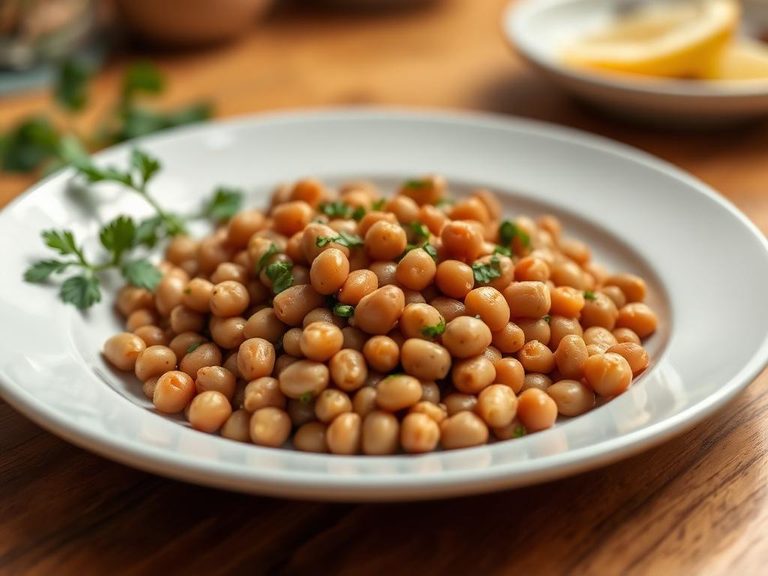
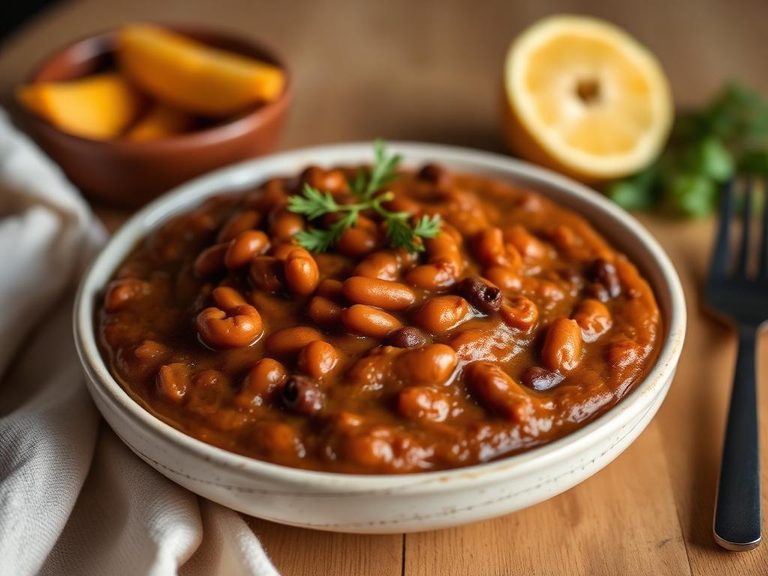
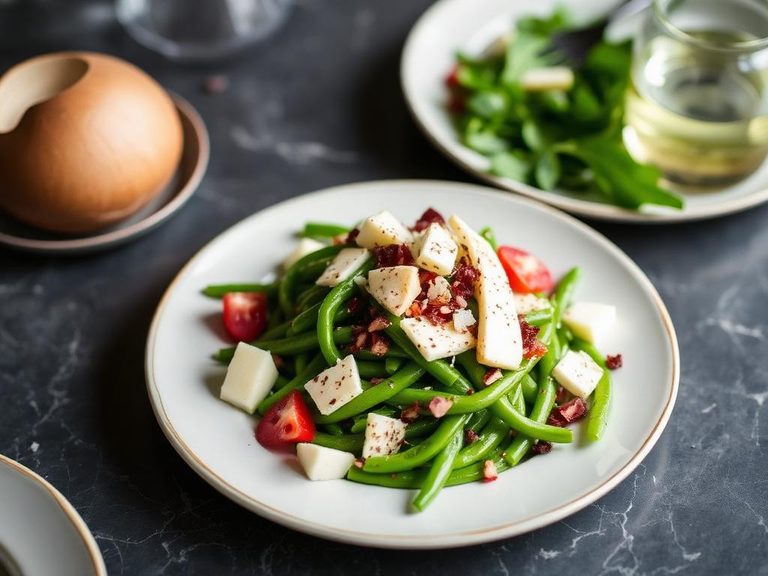
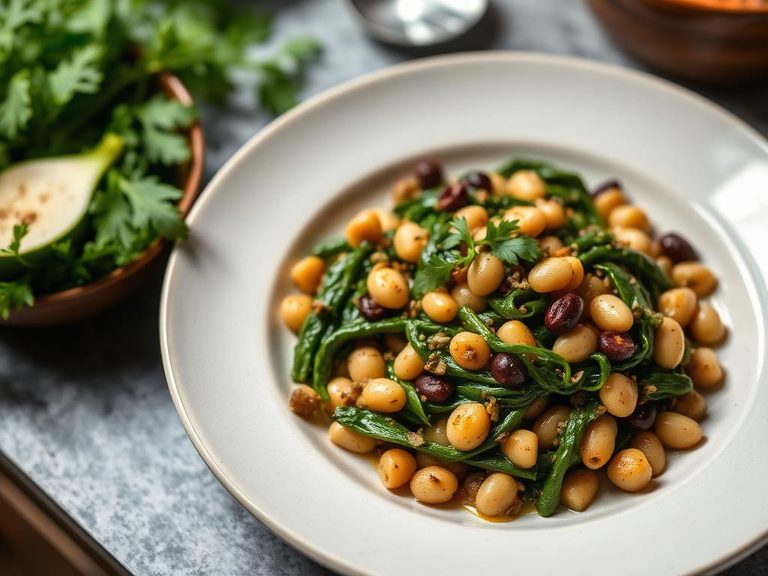
People cherish fresh fava beans for their unique, buttery-yet-earthy flavor that signals the arrival of spring. They are incredibly versatile, enjoyed raw as a snack, steamed, or transformed into iconic dishes like ful medames or bessara, deeply embedding them in culinary traditions from the Mediterranean to the Middle East.
⚠️ Watch-outs & how to enjoy it better
The primary downside is the presence of **vicine and convicine**, compounds that can cause hemolytic anemia (favism) in individuals with a genetic G6PD deficiency. For others, they can cause temporary digestive gas. To counteract this, **cooking thoroughly** is essential, as these compounds are heat-sensitive. For general digestion, start with smaller portions and ensure they are well-chewed.
Key benefits
- Excellent plant-based protein source for muscle maintenance.
- High in dietary fiber to support digestive health and satiety.
- Rich in folate (vitamin B9), crucial for cell function and tissue growth.
- Provides minerals like manganese and copper for metabolism and bone health.
- Low in fat and a good source of complex carbohydrates for sustained energy.
🍽️ Popular dishes
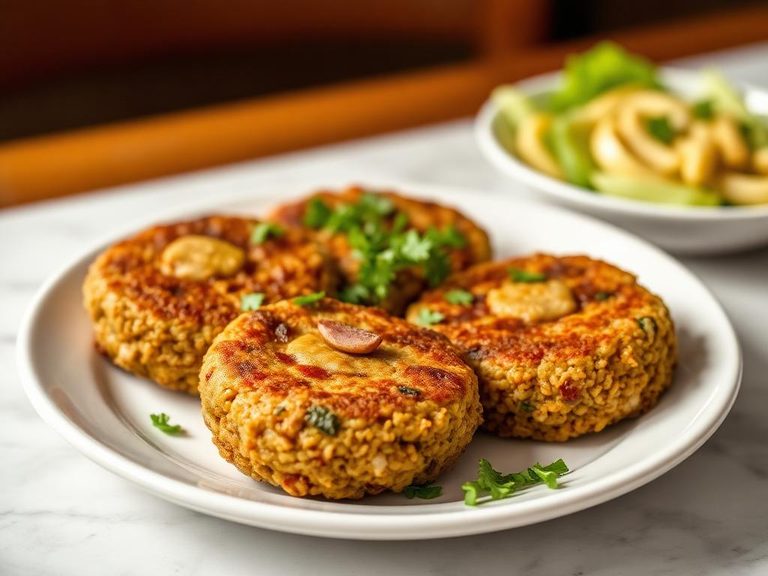
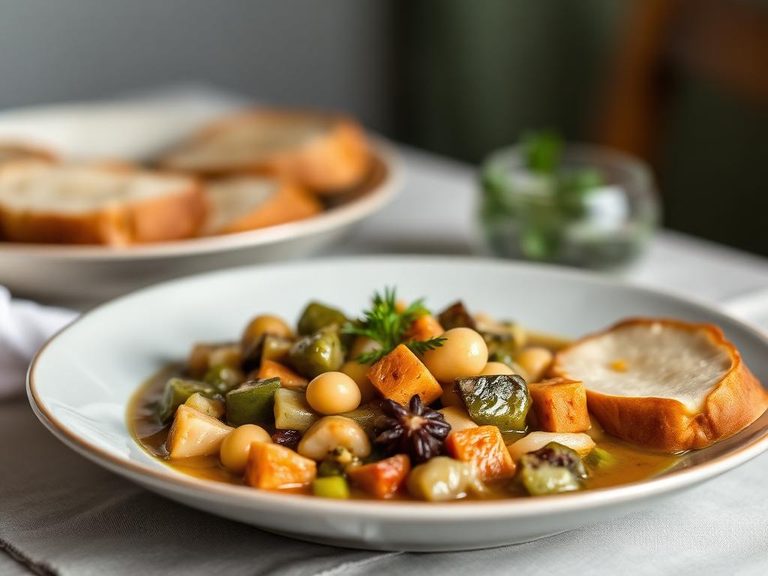
🌍 Where it's eaten
💡 Did you know?
Fava beans are one of the oldest cultivated plants, with evidence of their use dating back to 6000 BCE in the Near East, and they were a dietary staple for ancient Roman legions.
Full nutrition (USDA data · scales with serving)
| Water | 72.6 g |
| Energy | 88.0 kcal |
| Energy | 368 kj |
| Protein | 7.9 g |
| Total lipid (fat) | 0.73 g |
| Ash | 1.1 g |
| Carbohydrate, by difference | 17.6 g |
| Fiber, total dietary | 7.5 g |
| Total Sugars | 9.2 g |
| Calcium, Ca | 37.0 mg |
| Iron, Fe | 1.6 mg |
| Magnesium, Mg | 33.0 mg |
| Phosphorus, P | 129 mg |
| Potassium, K | 332 mg |
| Sodium, Na | 25.0 mg |
| Zinc, Zn | 1.0 mg |
| Copper, Cu | 0.40 mg |
| Manganese, Mn | 0.66 mg |
| Selenium, Se | 0.80 ug |
| Vitamin C, total ascorbic acid | 3.7 mg |
| Thiamin | 0.13 mg |
| Riboflavin | 0.29 mg |
| Niacin | 2.2 mg |
| Pantothenic acid | 0.23 mg |
| Vitamin B-6 | 0.10 mg |
| Folate, total | 148 ug |
| Folic acid | 0.00 ug |
| Folate, food | 148 ug |
| Folate, DFE | 148 ug |
| Vitamin B-12 | 0.00 ug |
| Vitamin A, RAE | 17.0 ug |
| Retinol | 0.00 ug |
| Carotene, beta | 196 ug |
| Carotene, alpha | 0.00 ug |
| Cryptoxanthin, beta | 9.0 ug |
| Vitamin A, IU | 333 iu |
| Lycopene | 0.00 ug |
| Lutein + zeaxanthin | 1811 ug |
| Vitamin E (alpha-tocopherol) | 1.2 mg |
| Vitamin D (D2 + D3), International Units | 0.00 iu |
| Vitamin D (D2 + D3) | 0.00 ug |
| Vitamin K (phylloquinone) | 40.9 ug |
| Alcohol, ethyl | 0.00 g |
| Caffeine | 0.00 mg |
| Theobromine | 0.00 mg |
Fat & fatty acid profile (per 100g)
| Fatty acids, total saturated | 0.12 g |
| SFA 12:0 | 0.00 g |
| SFA 14:0 | 0.00 g |
| SFA 15:0 | 0.00 g |
| SFA 16:0 | 0.07 g |
| SFA 17:0 | 0.00 g |
| SFA 18:0 | 0.03 g |
| SFA 20:0 | 0.01 g |
| SFA 22:0 | 0.01 g |
| SFA 24:0 | 0.00 g |
| Fatty acids, total monounsaturated | 0.10 g |
| MUFA 16:1 | 0.00 g |
| MUFA 18:1 | 0.10 g |
| MUFA 20:1 | 0.00 g |
| Fatty acids, total polyunsaturated | 0.34 g |
| PUFA 18:2 | 0.31 g |
| PUFA 18:3 | 0.03 g |
| Fatty acids, total trans | 0.00 g |
| Cholesterol | 0.00 mg |
| Phytosterols | 22.0 mg |
| Stigmasterol | 1.0 mg |
| Campesterol | 3.0 mg |
| Beta-sitosterol | 18.0 mg |
Amino acid profile (per 100g)
Estimated from Beans, kidney, mature seeds, sprouted, cooked, boiled, drained, without salt — USDA does not publish this profile for Beans.
| Tryptophan | 0.05 g |
| Threonine | 0.20 g |
| Isoleucine | 0.21 g |
| Leucine | 0.35 g |
| Lysine | 0.28 g |
| Methionine | 0.05 g |
| Cystine | 0.06 g |
| Phenylalanine | 0.24 g |
| Tyrosine | 0.17 g |
| Valine | 0.25 g |
| Arginine | 0.26 g |
| Histidine | 0.14 g |
| Alanine | 0.20 g |
| Aspartic acid | 0.63 g |
| Glutamic acid | 0.59 g |
| Glycine | 0.17 g |
| Proline | 0.20 g |
| Serine | 0.26 g |
FAQ
Are fava beans the same as lima beans?
No, they are different. Fava beans (Vicia faba) are also called broad beans, while lima beans (Phaseolus lunatus) are a distinct species. They differ in taste, texture, and botanical family.
Do I need to remove the waxy outer skin from each bean?
For fresh, young fava beans, the inner skin is often tender and can be eaten. For larger, more mature beans, blanching and slipping off the outer skin improves texture and reduces bitterness.
Can I eat fava beans raw?
Yes, very young, tender fava beans can be eaten raw in salads. However, cooking is recommended for most beans to improve digestibility and neutralize the compounds that cause favism.
Nutrient density (calculated · NRF9.3)
Nutrient Rich Foods index: beneficial nutrients (protein, fiber, vitamins, minerals) minus saturated fat, added sugar & sodium, per 100 kcal.
NRF9.3 index — Fulgoni, Keast & Drewnowski, 2009. Computed from USDA nutrients.
Weight-loss friendliness (composite index)
Energy density 0.88 kcal/g · 36% calories from protein · 7.5 g fiber · 9.2 g sugar per 100 g.
Composite of energy density (Rolls et al., 1999), protein & fiber satiety, minus sugar. A calculated heuristic — ranks satiety-per-calorie, not a clinical measure.
Dietary load (calculated from USDA values)
Potential renal acid load. Positive = acid-forming, negative = alkaline-forming.
Sodium-to-potassium ratio: 0.08 (lower is better — aim for ≤ 1)
Sodium:potassium per WHO potassium guidance. Computed from USDA nutrients.