

Babyfood, vegetables, beets, strained
Whole food · Baby Foods

Photo: Wikipedia
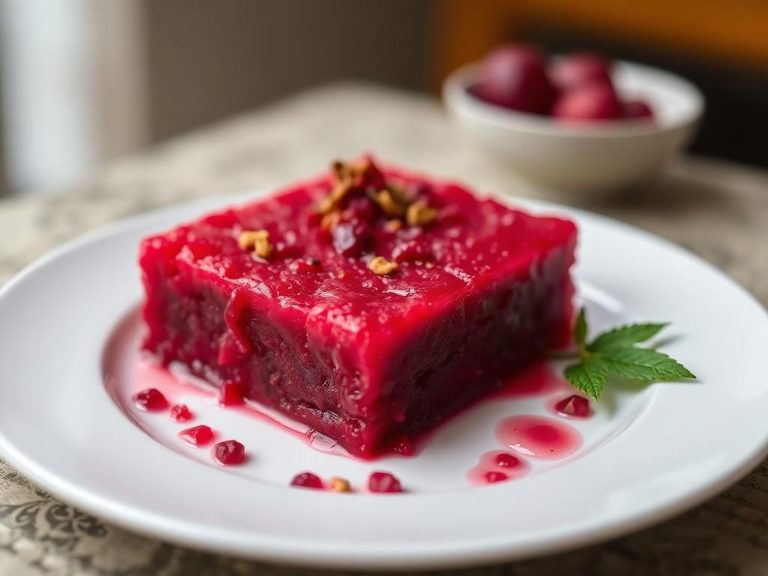
This is a smooth, vibrant crimson purée made from cooked and strained beets, designed for easy infant consumption. Its texture is velvety and uniform, with a naturally sweet, earthy flavor that is milder than whole beets. It's a concentrated source of carbohydrates for energy and dietary fiber, with minimal fat.
Calorie split: 14% protein · 83% carbs · 2% fat
↓ Full nutrition💚 Why it's loved
Parents appreciate it as a nutrient-dense, first-food introduction to vegetables, while its natural sweetness makes it palatable to many infants. Its smooth consistency is perfect for spoon-feeding and easy swallowing.
⚠️ Watch-outs & how to enjoy it better
The high natural sugar content (over 6g per 100g) can cause blood sugar spikes if served in large, isolated portions. Beets are high in oxalates, which can contribute to kidney stone formation in susceptible individuals. To counteract, serve moderate portions (like the listed servings) and pair it with a source of protein (like yogurt or pureed meat) or healthy fat (like avocado) to slow sugar absorption.
Key benefits
- Excellent source of dietary nitrates, which support cardiovascular health.
- High in fiber for healthy digestion and gut motility.
- Rich in folate (vitamin B9), essential for cell growth and function.
- Contains betalains, antioxidants that give beets their red color and have anti-inflammatory properties.
- Naturally low in fat and sodium.
🍽️ Popular dishes
🌍 Where it's eaten
💡 Did you know?
Beets were first cultivated not for their roots, but for their leafy greens, which were eaten as a vegetable similar to spinach.
Full nutrition (USDA data · scales with serving)
| Water | 90.1 g |
| Energy | 34.0 kcal |
| Energy | 142 kj |
| Protein | 1.3 g |
| Total lipid (fat) | 0.10 g |
| Ash | 0.90 g |
| Carbohydrate, by difference | 7.7 g |
| Fiber, total dietary | 1.9 g |
| Total Sugars | 6.1 g |
| Calcium, Ca | 14.0 mg |
| Iron, Fe | 0.32 mg |
| Magnesium, Mg | 14.0 mg |
| Phosphorus, P | 14.0 mg |
| Potassium, K | 182 mg |
| Sodium, Na | 83.0 mg |
| Zinc, Zn | 0.12 mg |
| Copper, Cu | 0.07 mg |
| Selenium, Se | 0.10 ug |
| Vitamin C, total ascorbic acid | 2.4 mg |
| Thiamin | 0.01 mg |
| Riboflavin | 0.04 mg |
| Niacin | 0.13 mg |
| Pantothenic acid | 0.10 mg |
| Vitamin B-6 | 0.02 mg |
| Folate, total | 31.0 ug |
| Folic acid | 0.00 ug |
| Folate, food | 31.0 ug |
| Folate, DFE | 31.0 ug |
| Choline, total | 4.8 mg |
| Vitamin B-12 | 0.00 ug |
| Vitamin B-12, added | 0.00 ug |
| Vitamin A, RAE | 1.0 ug |
| Retinol | 0.00 ug |
| Carotene, beta | 16.0 ug |
| Carotene, alpha | 0.00 ug |
| Cryptoxanthin, beta | 0.00 ug |
| Vitamin A, IU | 27.0 iu |
| Lycopene | 0.00 ug |
| Lutein + zeaxanthin | 0.00 ug |
| Vitamin E (alpha-tocopherol) | 0.03 mg |
| Vitamin E, added | 0.00 mg |
| Vitamin D (D2 + D3), International Units | 0.00 iu |
| Vitamin D (D2 + D3) | 0.00 ug |
| Vitamin K (phylloquinone) | 0.20 ug |
| Alcohol, ethyl | 0.00 g |
| Caffeine | 0.00 mg |
| Theobromine | 0.00 mg |
Fat & fatty acid profile (per 100g)
| Fatty acids, total saturated | 0.02 g |
| SFA 4:0 | 0.00 g |
| SFA 6:0 | 0.00 g |
| SFA 8:0 | 0.00 g |
| SFA 10:0 | 0.00 g |
| SFA 12:0 | 0.00 g |
| SFA 14:0 | 0.00 g |
| SFA 16:0 | 0.02 g |
| SFA 18:0 | 0.00 g |
| Fatty acids, total monounsaturated | 0.02 g |
| MUFA 16:1 | 0.00 g |
| MUFA 18:1 | 0.02 g |
| MUFA 20:1 | 0.00 g |
| MUFA 22:1 | 0.00 g |
| Fatty acids, total polyunsaturated | 0.04 g |
| PUFA 18:2 | 0.03 g |
| PUFA 18:3 | 0.00 g |
| PUFA 18:4 | 0.00 g |
| PUFA 20:4 | 0.00 g |
| PUFA 20:5 n-3 (EPA) | 0.00 g |
| PUFA 22:5 n-3 (DPA) | 0.00 g |
| PUFA 22:6 n-3 (DHA) | 0.00 g |
| Cholesterol | 0.00 mg |
Amino acid profile (per 100g)
| Tryptophan | 0.01 g |
| Threonine | 0.03 g |
| Isoleucine | 0.04 g |
| Leucine | 0.05 g |
| Lysine | 0.03 g |
| Methionine | 0.01 g |
| Cystine | 0.01 g |
| Phenylalanine | 0.02 g |
| Tyrosine | 0.04 g |
| Valine | 0.04 g |
| Arginine | 0.03 g |
| Histidine | 0.02 g |
| Alanine | 0.05 g |
| Aspartic acid | 0.09 g |
| Glutamic acid | 0.29 g |
| Glycine | 0.03 g |
| Proline | 0.03 g |
| Serine | 0.04 g |
FAQ
Is the red color in the stool normal after eating this?
Yes, it's completely normal and harmless. The pigment betanin that gives beets their color is not fully broken down during digestion and can tint urine and stool pink or red.
Can this be mixed with other baby foods?
Absolutely. Its sweet flavor pairs well with mild, starchy vegetables like sweet potato, carrot, or parsnip, or with fruits like apple or pear to create new flavor combinations.
Why is it strained?
Straining removes any fibrous bits, ensuring a completely smooth texture that is safe and easy for infants who are just starting on solid foods and have not yet developed chewing skills.
Nutrient density (calculated · NRF9.3)
Nutrient Rich Foods index: beneficial nutrients (protein, fiber, vitamins, minerals) minus saturated fat, added sugar & sodium, per 100 kcal.
NRF9.3 index — Fulgoni, Keast & Drewnowski, 2009. Computed from USDA nutrients.
Weight-loss friendliness (composite index)
Energy density 0.34 kcal/g · 15% calories from protein · 1.9 g fiber · 6.1 g sugar per 100 g.
Composite of energy density (Rolls et al., 1999), protein & fiber satiety, minus sugar. A calculated heuristic — ranks satiety-per-calorie, not a clinical measure.
Dietary load (calculated from USDA values)
Potential renal acid load. Positive = acid-forming, negative = alkaline-forming.
Sodium-to-potassium ratio: 0.46 (lower is better — aim for ≤ 1)
Sodium:potassium per WHO potassium guidance. Computed from USDA nutrients.