

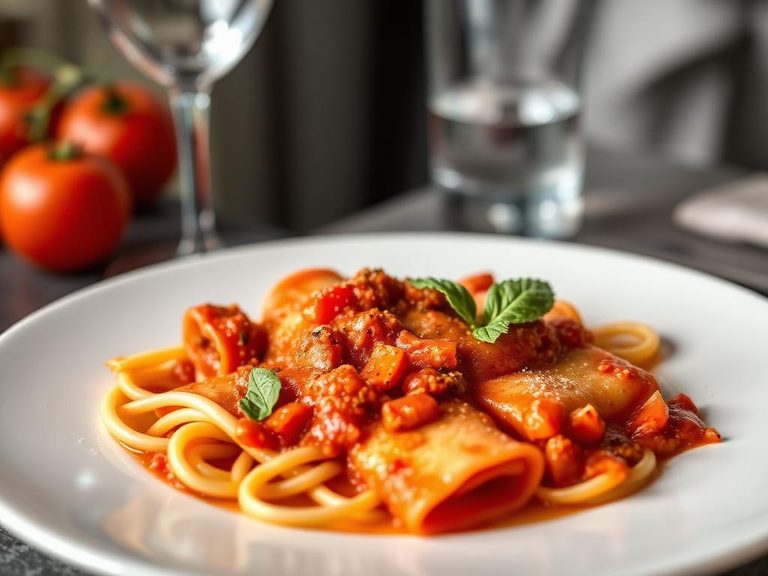
Babyfood, ravioli, cheese filled, with tomato sauce
Whole food · Baby Foods

Photo: Wikipedia
This is a soft, bite-sized pasta pocket filled with mild cheese, typically served in a simple, smooth tomato sauce. The texture is tender and yielding, designed for early eaters, with a gentle sweetness from the tomato and a subtle creamy note from the cheese filling. Nutritionally, it's a low-calorie, carbohydrate-focused food with modest protein, making it a light, energy-giving meal for infants.
Calorie split: 14% protein · 66% carbs · 20% fat
↓ Full nutrition💚 Why it's loved
Parents appreciate its convenience and the familiar, comforting taste that many babies accept readily. The soft texture and mild flavor make it a reliable option for introducing solid foods and expanding a baby's palate with a classic Italian-inspired combination.
⚠️ Watch-outs & how to enjoy it better
The low fiber and sugar content can lead to quick energy spikes and crashes, and the product may contain added sodium or common allergens like wheat and dairy. To counteract this, pair it with a side of mashed avocado or steamed green beans for fiber and healthy fats, and always check the label for sodium levels and allergen warnings.
Key benefits
- Provides quick energy from easily digestible carbohydrates
- Offers a source of protein for early growth and development
- Low in fat, supporting a balanced infant diet
- Convenient, pre-portioned meal for caregivers
- Introduces the classic pasta and tomato flavor profile early
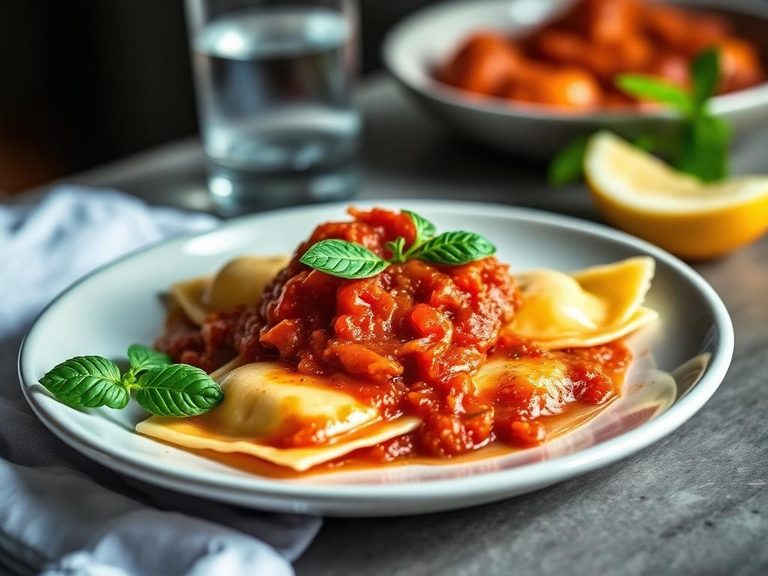
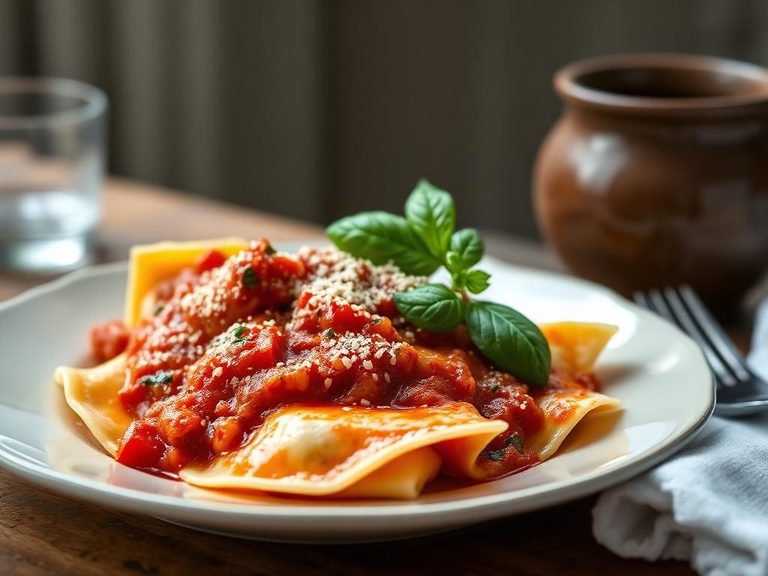
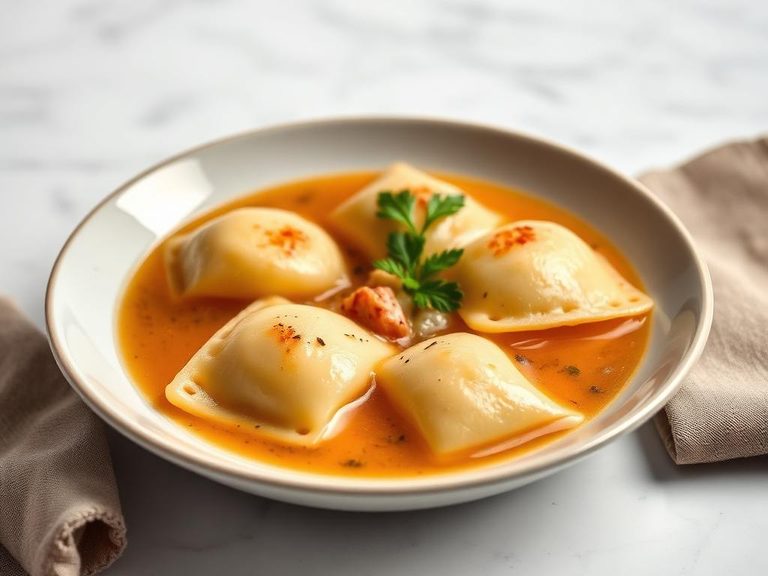
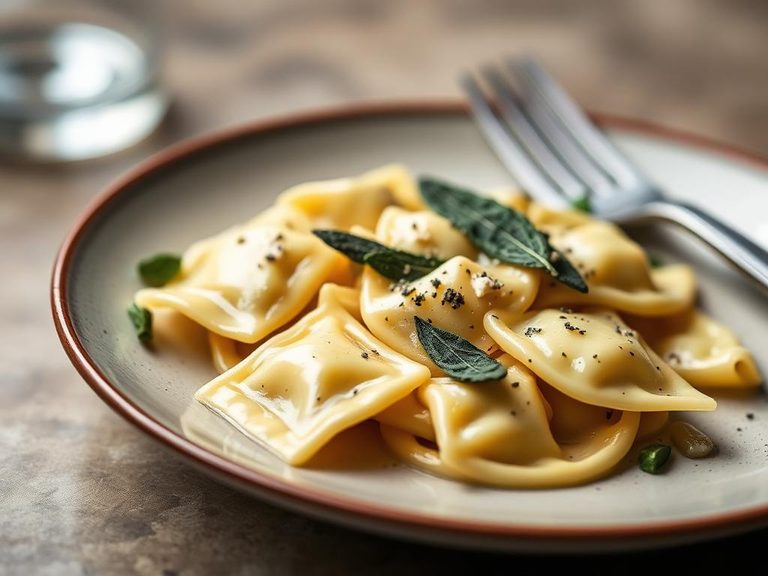
🍽️ Popular dishes
🌍 Where it's eaten
💡 Did you know?
The word 'ravioli' is believed to derive from the Italian 'riavvolgere,' meaning 'to wrap,' and the earliest known written recipe dates back to 14th-century Italy.
Full nutrition (USDA data · scales with serving)
| Water | 76.5 g |
| Energy | 99.0 kcal |
| Energy | 414 kj |
| Protein | 3.6 g |
| Total lipid (fat) | 2.2 g |
| Ash | 1.4 g |
| Carbohydrate, by difference | 16.3 g |
| Fiber, total dietary | 0.10 g |
| Total Sugars | 0.59 g |
| Calcium, Ca | 54.0 mg |
| Iron, Fe | 0.80 mg |
| Magnesium, Mg | 7.0 mg |
| Phosphorus, P | 56.0 mg |
| Potassium, K | 32.0 mg |
| Sodium, Na | 282 mg |
| Zinc, Zn | 0.35 mg |
| Copper, Cu | 0.04 mg |
| Selenium, Se | 13.4 ug |
| Vitamin C, total ascorbic acid | 0.10 mg |
| Thiamin | 0.12 mg |
| Riboflavin | 0.14 mg |
| Niacin | 1.6 mg |
| Vitamin B-6 | 0.09 mg |
| Folate, total | 36.0 ug |
| Folic acid | 0.00 ug |
| Folate, food | 36.0 ug |
| Folate, DFE | 36.0 ug |
| Choline, total | 8.0 mg |
| Vitamin B-12 | 0.05 ug |
| Vitamin B-12, added | 0.00 ug |
| Vitamin A, RAE | 51.0 ug |
| Retinol | 32.0 ug |
| Carotene, beta | 230 ug |
| Carotene, alpha | 2.0 ug |
| Cryptoxanthin, beta | 3.0 ug |
| Vitamin A, IU | 494 iu |
| Lycopene | 1632 ug |
| Lutein + zeaxanthin | 69.0 ug |
| Vitamin E (alpha-tocopherol) | 0.42 mg |
| Vitamin E, added | 0.00 mg |
| Vitamin D (D2 + D3), International Units | 1.0 iu |
| Vitamin D (D2 + D3) | 0.00 ug |
| Vitamin K (phylloquinone) | 9.4 ug |
| Alcohol, ethyl | 0.00 g |
| Caffeine | 0.00 mg |
| Theobromine | 0.00 mg |
Fat & fatty acid profile (per 100g)
| Fatty acids, total saturated | 0.96 g |
| SFA 4:0 | 0.05 g |
| SFA 6:0 | 0.02 g |
| SFA 8:0 | 0.01 g |
| SFA 10:0 | 0.03 g |
| SFA 12:0 | 0.03 g |
| SFA 14:0 | 0.13 g |
| SFA 16:0 | 0.49 g |
| SFA 18:0 | 0.16 g |
| Fatty acids, total monounsaturated | 0.57 g |
| MUFA 16:1 | 0.04 g |
| MUFA 18:1 | 0.51 g |
| MUFA 20:1 | 0.00 g |
| MUFA 22:1 | 0.00 g |
| Fatty acids, total polyunsaturated | 0.48 g |
| PUFA 18:2 | 0.42 g |
| PUFA 18:3 | 0.04 g |
| PUFA 18:4 | 0.00 g |
| PUFA 20:4 | 0.00 g |
| PUFA 20:5 n-3 (EPA) | 0.00 g |
| PUFA 22:5 n-3 (DPA) | 0.00 g |
| PUFA 22:6 n-3 (DHA) | 0.00 g |
| Cholesterol | 7.0 mg |
Amino acid profile (per 100g)
Estimated from Babyfood, grape juice, no sugar, canned — USDA does not publish this profile for Babyfood.
| Threonine | 0.02 g |
| Isoleucine | 0.01 g |
| Leucine | 0.02 g |
| Lysine | 0.02 g |
| Methionine | 0.03 g |
| Cystine | 0.01 g |
| Phenylalanine | 0.02 g |
| Tyrosine | 0.02 g |
| Valine | 0.02 g |
| Arginine | 0.06 g |
| Histidine | 0.03 g |
| Alanine | 0.04 g |
| Aspartic acid | 0.10 g |
| Glutamic acid | 0.18 g |
| Glycine | 0.03 g |
| Proline | 0.03 g |
| Serine | 0.04 g |
FAQ
Is this suitable for babies with a dairy allergy?
No, as it contains cheese filling, it is not suitable for babies with a dairy allergy. Always check the ingredient list for milk or milk derivatives.
How does this compare nutritionally to homemade ravioli?
Commercial baby food ravioli is typically lower in sodium and fat than homemade versions, but may also have less fiber and protein. Homemade allows for more control over ingredients.
Can I serve this to a toddler?
Yes, but the texture is very soft, which may be too mushy for toddlers who prefer more texture. It can be a quick, easy meal option, but ensure it's part of a varied diet.
Nutrient density (calculated · NRF9.3)
Nutrient Rich Foods index: beneficial nutrients (protein, fiber, vitamins, minerals) minus saturated fat, added sugar & sodium, per 100 kcal.
NRF9.3 index — Fulgoni, Keast & Drewnowski, 2009. Computed from USDA nutrients.
Weight-loss friendliness (composite index)
Energy density 0.99 kcal/g · 15% calories from protein · 0.1 g fiber · 0.6 g sugar per 100 g.
Composite of energy density (Rolls et al., 1999), protein & fiber satiety, minus sugar. A calculated heuristic — ranks satiety-per-calorie, not a clinical measure.
Dietary load (calculated from USDA values)
Potential renal acid load. Positive = acid-forming, negative = alkaline-forming.
Sodium-to-potassium ratio: 8.81 (lower is better — aim for ≤ 1)
Sodium:potassium per WHO potassium guidance. Computed from USDA nutrients.