

Babyfood, juice, apple - cherry
Whole food · Baby Foods

Photo: Wikipedia
A smooth, vibrant purée blending the sweet-tart notes of apple with the deeper, slightly tangy character of cherry. It has a thin, juice-like consistency and a bright ruby hue. Nutritionally, it's a simple, low-calorie source of quick energy, primarily from natural fruit sugars.
Calorie split: 2% protein · 96% carbs · 2% fat
↓ Full nutrition💚 Why it's loved
It's loved for its perfectly balanced, crowd-pleasing flavor—the familiar sweetness of apple rounds out the distinctive cherry tang. Its smooth texture and bright color make it an appealing and easy option for both infants and adults seeking a simple fruit drink.
⚠️ Watch-outs & how to enjoy it better
The high concentration of natural sugars (10.5g per 100g) can cause rapid blood sugar spikes, especially for those with insulin sensitivity. To mitigate this, pair it with a source of protein or fat (like yogurt or nut butter) to slow sugar absorption, and practice portion control. It is also a common fruit allergen for some individuals.
Key benefits
- Provides quick, natural energy from fruit carbohydrates.
- Contains small amounts of dietary fiber.
- Offers vitamin C from both apple and cherry sources.
- A convenient, no-prep way to consume fruit.
- Hydrating due to its high water content.
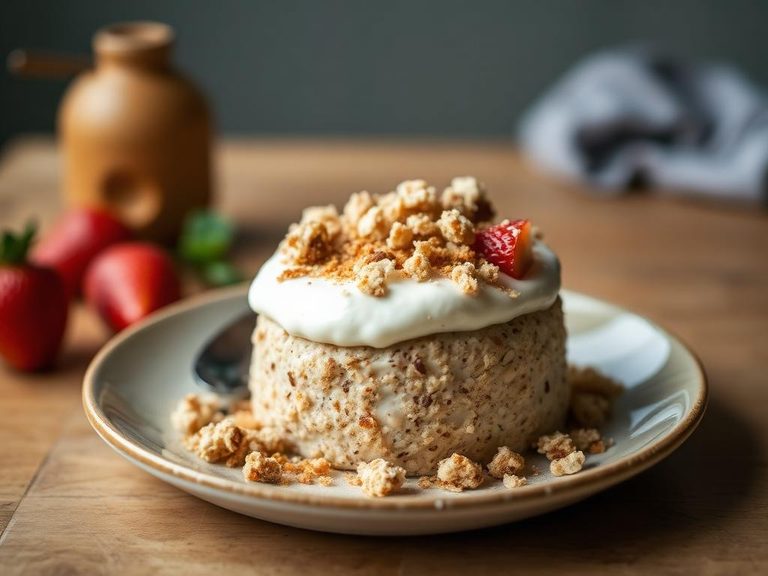
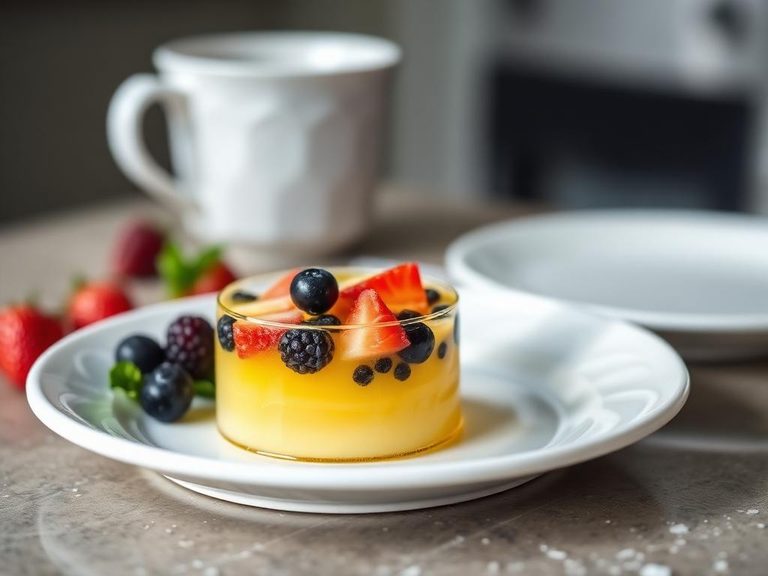
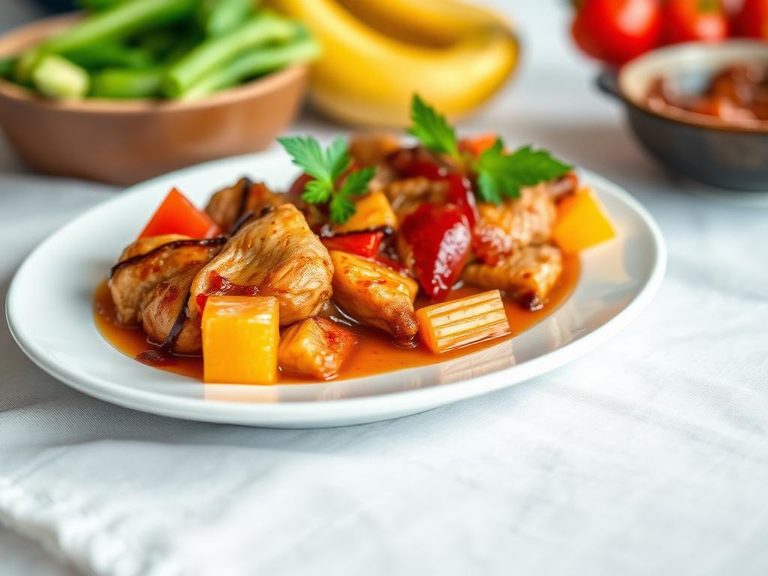
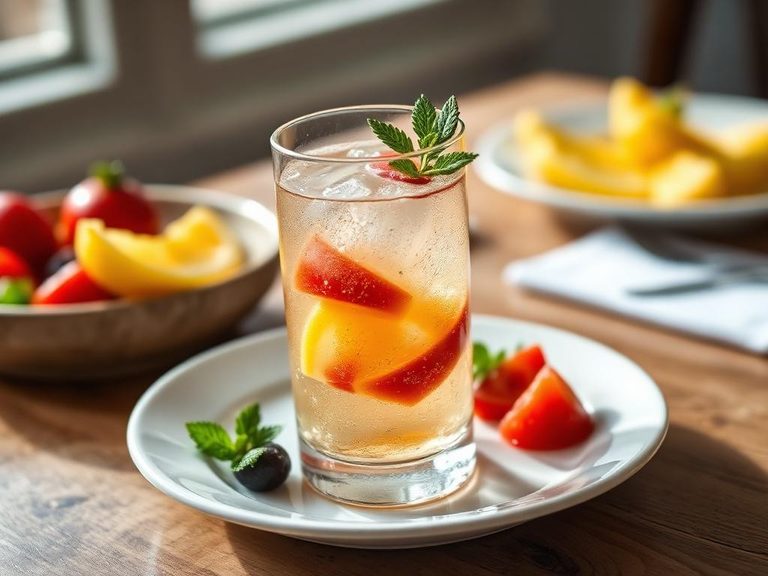
🍽️ Popular dishes
🌍 Where it's eaten
💡 Did you know?
The specific apple-cherry blend is a classic in baby food manufacturing because the malic acid in apples helps preserve the bright red color of the cherry pigments, preventing the juice from turning brown.
Full nutrition (USDA data · scales with serving)
| Water | 88.2 g |
| Energy | 47.0 kcal |
| Energy | 197 kj |
| Protein | 0.20 g |
| Total lipid (fat) | 0.10 g |
| Ash | 0.36 g |
| Carbohydrate, by difference | 11.2 g |
| Fiber, total dietary | 0.30 g |
| Total Sugars | 10.5 g |
| Calcium, Ca | 7.0 mg |
| Iron, Fe | 0.35 mg |
| Magnesium, Mg | 3.0 mg |
| Phosphorus, P | 12.0 mg |
| Potassium, K | 110 mg |
| Sodium, Na | 4.0 mg |
| Zinc, Zn | 0.03 mg |
| Copper, Cu | 0.02 mg |
| Selenium, Se | 0.10 ug |
| Fluoride, F | 61.6 ug |
| Vitamin C, total ascorbic acid | 32.1 mg |
| Thiamin | 0.01 mg |
| Riboflavin | 0.02 mg |
| Niacin | 0.11 mg |
| Vitamin B-6 | 0.03 mg |
| Folate, total | 0.00 ug |
| Folic acid | 0.00 ug |
| Folate, food | 0.00 ug |
| Folate, DFE | 0.00 ug |
| Choline, total | 1.9 mg |
| Vitamin B-12 | 0.00 ug |
| Vitamin B-12, added | 0.00 ug |
| Vitamin A, RAE | 1.0 ug |
| Retinol | 0.00 ug |
| Carotene, beta | 11.0 ug |
| Carotene, alpha | 0.00 ug |
| Cryptoxanthin, beta | 0.00 ug |
| Vitamin A, IU | 18.0 iu |
| Lycopene | 0.00 ug |
| Lutein + zeaxanthin | 21.0 ug |
| Vitamin E (alpha-tocopherol) | 0.02 mg |
| Vitamin E, added | 0.00 mg |
| Vitamin D (D2 + D3), International Units | 0.00 iu |
| Vitamin D (D2 + D3) | 0.00 ug |
| Vitamin K (phylloquinone) | 0.20 ug |
| Alcohol, ethyl | 0.00 g |
| Caffeine | 0.00 mg |
| Theobromine | 0.00 mg |
Fat & fatty acid profile (per 100g)
| Fatty acids, total saturated | 0.02 g |
| SFA 4:0 | 0.00 g |
| SFA 6:0 | 0.00 g |
| SFA 8:0 | 0.00 g |
| SFA 10:0 | 0.00 g |
| SFA 12:0 | 0.00 g |
| SFA 14:0 | 0.00 g |
| SFA 16:0 | 0.02 g |
| SFA 18:0 | 0.00 g |
| Fatty acids, total monounsaturated | 0.00 g |
| MUFA 16:1 | 0.00 g |
| MUFA 18:1 | 0.00 g |
| MUFA 20:1 | 0.00 g |
| MUFA 22:1 | 0.00 g |
| Fatty acids, total polyunsaturated | 0.03 g |
| PUFA 18:2 | 0.03 g |
| PUFA 18:3 | 0.00 g |
| PUFA 18:4 | 0.00 g |
| PUFA 20:4 | 0.00 g |
| PUFA 20:5 n-3 (EPA) | 0.00 g |
| PUFA 22:5 n-3 (DPA) | 0.00 g |
| PUFA 22:6 n-3 (DHA) | 0.00 g |
| Cholesterol | 0.00 mg |
Amino acid profile (per 100g)
Estimated from Babyfood, grape juice, no sugar, canned — USDA does not publish this profile for Babyfood.
| Threonine | 0.02 g |
| Isoleucine | 0.01 g |
| Leucine | 0.02 g |
| Lysine | 0.02 g |
| Methionine | 0.03 g |
| Cystine | 0.01 g |
| Phenylalanine | 0.02 g |
| Tyrosine | 0.02 g |
| Valine | 0.02 g |
| Arginine | 0.06 g |
| Histidine | 0.03 g |
| Alanine | 0.04 g |
| Aspartic acid | 0.10 g |
| Glutamic acid | 0.18 g |
| Glycine | 0.03 g |
| Proline | 0.03 g |
| Serine | 0.04 g |
FAQ
Is this juice a good source of vitamins?
It provides some vitamin C, but it is not a significant source of most vitamins or minerals. Whole fruits offer a broader nutrient profile, including more fiber.
Why is there no fat or protein listed?
Pure fruit juices and purées are naturally virtually fat-free and protein-free. Their macronutrient profile is dominated by carbohydrates from sugars.
Can I use this in baking?
Yes, it can be used to add moisture and fruity flavor to cakes, muffins, or pancakes, but it will add sugar and may affect the batter's consistency.
Nutrient density (calculated · NRF9.3)
Nutrient Rich Foods index: beneficial nutrients (protein, fiber, vitamins, minerals) minus saturated fat, added sugar & sodium, per 100 kcal.
NRF9.3 index — Fulgoni, Keast & Drewnowski, 2009. Computed from USDA nutrients.
Weight-loss friendliness (composite index)
Energy density 0.47 kcal/g · 2% calories from protein · 0.3 g fiber · 10.5 g sugar per 100 g.
Composite of energy density (Rolls et al., 1999), protein & fiber satiety, minus sugar. A calculated heuristic — ranks satiety-per-calorie, not a clinical measure.
Dietary load (calculated from USDA values)
Potential renal acid load. Positive = acid-forming, negative = alkaline-forming.
Sodium-to-potassium ratio: 0.04 (lower is better — aim for ≤ 1)
Sodium:potassium per WHO potassium guidance. Computed from USDA nutrients.