

Babyfood, dessert, fruit pudding, pineapple, strained
Whole food · Baby Foods

Photo: Wikipedia
This is a smooth, spoonable baby dessert made from pureed pineapple, offering a bright, tangy-sweet tropical flavor in a soft, pudding-like texture. It's a convenient way to introduce infants to the vibrant taste of fruit. Nutritionally, it's a low-fat, high-carbohydrate food, primarily providing quick energy from natural fruit sugars.
Calorie split: 6% protein · 91% carbs · 3% fat
↓ Full nutrition💚 Why it's loved
Parents and babies love it for its authentic, bright pineapple taste that isn't overly sweet and its perfectly smooth, easy-to-swallow texture. It's a trusted, familiar way to add a tropical fruit serving to a little one's diet.
⚠️ Watch-outs & how to enjoy it better
The high natural sugar content (over 10g per 100g) can cause rapid blood sugar spikes if consumed in large amounts or frequently. To counteract this, serve small portions and pair it with a protein or fat source, like a spoonful of plain yogurt or a piece of cheese, to slow sugar absorption.
Key benefits
- Provides quick, natural energy from fruit carbohydrates.
- Contains dietary fiber from the pineapple puree.
- Offers vitamin C, an antioxidant important for immune function.
- Free from added fats, making it a light snack option.
- Convenient, ready-to-eat introduction to tropical fruit flavors.
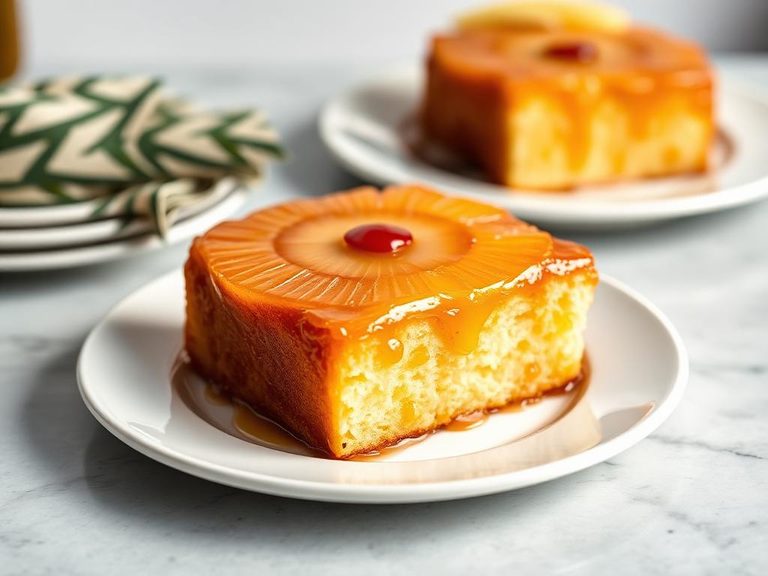
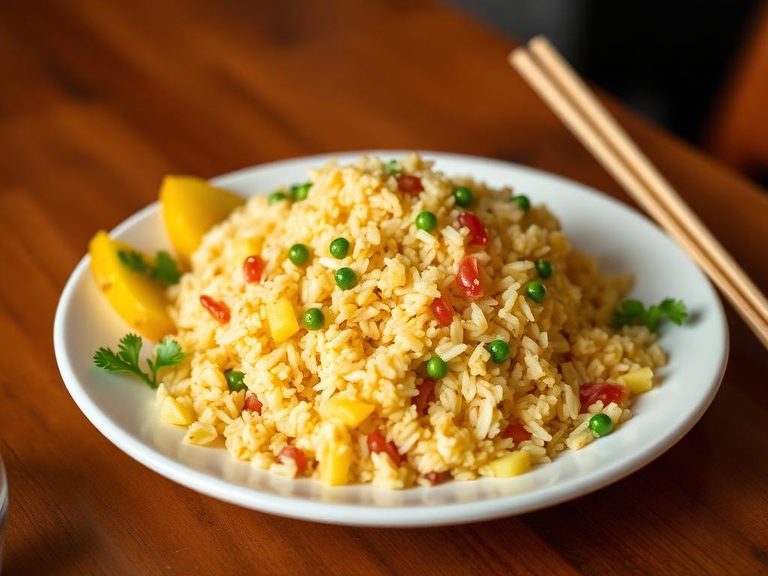
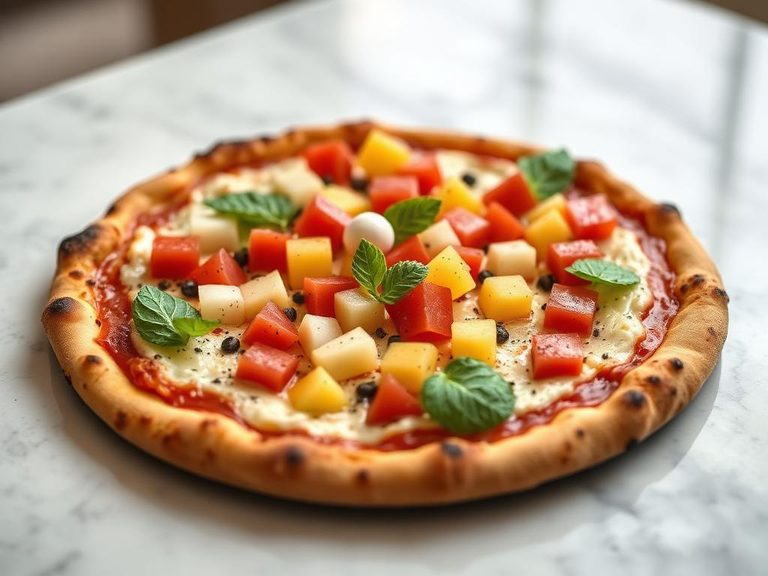
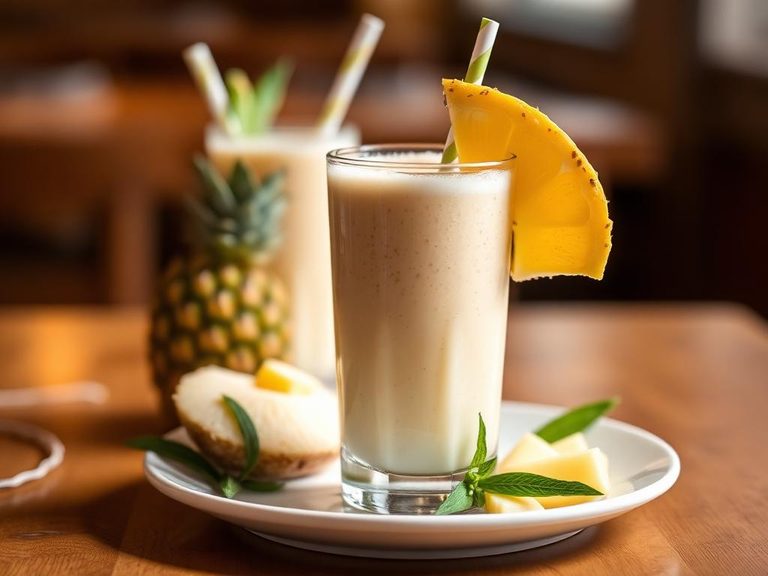
🍽️ Popular dishes
🌍 Where it's eaten
💡 Did you know?
Pineapple contains a unique enzyme called bromelain, which can break down proteins and is used as a natural meat tenderizer.
Full nutrition (USDA data · scales with serving)
| Water | 77.6 g |
| Energy | 81.0 kcal |
| Energy | 339 kj |
| Protein | 1.3 g |
| Total lipid (fat) | 0.30 g |
| Ash | 0.50 g |
| Carbohydrate, by difference | 20.3 g |
| Fiber, total dietary | 0.70 g |
| Total Sugars | 10.3 g |
| Calcium, Ca | 31.0 mg |
| Iron, Fe | 0.18 mg |
| Magnesium, Mg | 9.0 mg |
| Phosphorus, P | 31.0 mg |
| Potassium, K | 81.0 mg |
| Sodium, Na | 0.00 mg |
| Zinc, Zn | 0.20 mg |
| Copper, Cu | 0.02 mg |
| Selenium, Se | 1.2 ug |
| Vitamin C, total ascorbic acid | 27.2 mg |
| Thiamin | 0.04 mg |
| Riboflavin | 0.05 mg |
| Niacin | 0.11 mg |
| Pantothenic acid | 0.19 mg |
| Vitamin B-6 | 0.04 mg |
| Folate, total | 5.0 ug |
| Folic acid | 0.00 ug |
| Folate, food | 5.0 ug |
| Folate, DFE | 5.0 ug |
| Choline, total | 5.4 mg |
| Vitamin B-12 | 0.06 ug |
| Vitamin B-12, added | 0.00 ug |
| Vitamin A, RAE | 11.0 ug |
| Retinol | 11.0 ug |
| Carotene, beta | 0.00 ug |
| Carotene, alpha | 0.00 ug |
| Cryptoxanthin, beta | 0.00 ug |
| Vitamin A, IU | 37.0 iu |
| Lycopene | 0.00 ug |
| Lutein + zeaxanthin | 0.00 ug |
| Vitamin E (alpha-tocopherol) | 0.00 mg |
| Vitamin E, added | 0.00 mg |
| Vitamin D (D2 + D3), International Units | 0.00 iu |
| Vitamin D (D2 + D3) | 0.00 ug |
| Vitamin D3 (cholecalciferol) | 0.00 ug |
| Vitamin K (phylloquinone) | 0.00 ug |
| Alcohol, ethyl | 0.00 g |
| Caffeine | 0.00 mg |
| Theobromine | 0.00 mg |
Fat & fatty acid profile (per 100g)
| Fatty acids, total saturated | 0.10 g |
| SFA 4:0 | 0.00 g |
| SFA 6:0 | 0.00 g |
| SFA 8:0 | 0.00 g |
| SFA 10:0 | 0.00 g |
| SFA 12:0 | 0.00 g |
| SFA 14:0 | 0.00 g |
| SFA 16:0 | 0.07 g |
| SFA 18:0 | 0.02 g |
| Fatty acids, total monounsaturated | 0.11 g |
| MUFA 16:1 | 0.01 g |
| MUFA 18:1 | 0.10 g |
| MUFA 20:1 | 0.00 g |
| MUFA 22:1 | 0.00 g |
| Fatty acids, total polyunsaturated | 0.04 g |
| PUFA 18:2 | 0.03 g |
| PUFA 18:3 | 0.00 g |
| PUFA 18:4 | 0.00 g |
| PUFA 20:4 | 0.00 g |
| PUFA 20:5 n-3 (EPA) | 0.00 g |
| PUFA 22:5 n-3 (DPA) | 0.00 g |
| PUFA 22:6 n-3 (DHA) | 0.00 g |
| Cholesterol | 0.00 mg |
Amino acid profile (per 100g)
Estimated from Babyfood, grape juice, no sugar, canned — USDA does not publish this profile for Babyfood.
| Threonine | 0.02 g |
| Isoleucine | 0.01 g |
| Leucine | 0.02 g |
| Lysine | 0.02 g |
| Methionine | 0.03 g |
| Cystine | 0.01 g |
| Phenylalanine | 0.02 g |
| Tyrosine | 0.02 g |
| Valine | 0.02 g |
| Arginine | 0.06 g |
| Histidine | 0.03 g |
| Alanine | 0.04 g |
| Aspartic acid | 0.10 g |
| Glutamic acid | 0.18 g |
| Glycine | 0.03 g |
| Proline | 0.03 g |
| Serine | 0.04 g |
FAQ
Is this the same as pineapple juice?
No. This is a strained, pureed pudding with a thicker, spoonable consistency and contains the fibrous pulp of the fruit, unlike filtered juice.
Can I serve this to a baby with a dairy allergy?
Yes, this fruit-based dessert is typically dairy-free, but always check the label for any added ingredients or cross-contamination warnings.
How does the sugar here compare to whole pineapple?
The sugar concentration is higher because it's a puree without the water content of fresh fruit chunks, but it's still naturally occurring fruit sugar, not added sugar.
Nutrient density (calculated · NRF9.3)
Nutrient Rich Foods index: beneficial nutrients (protein, fiber, vitamins, minerals) minus saturated fat, added sugar & sodium, per 100 kcal.
NRF9.3 index — Fulgoni, Keast & Drewnowski, 2009. Computed from USDA nutrients.
Weight-loss friendliness (composite index)
Energy density 0.81 kcal/g · 6% calories from protein · 0.7 g fiber · 10.3 g sugar per 100 g.
Composite of energy density (Rolls et al., 1999), protein & fiber satiety, minus sugar. A calculated heuristic — ranks satiety-per-calorie, not a clinical measure.
Dietary load (calculated from USDA values)
Potential renal acid load. Positive = acid-forming, negative = alkaline-forming.
Sodium-to-potassium ratio: 0.00 (lower is better — aim for ≤ 1)
Sodium:potassium per WHO potassium guidance. Computed from USDA nutrients.