

Asparagus, NS as to form, cooked
Common food
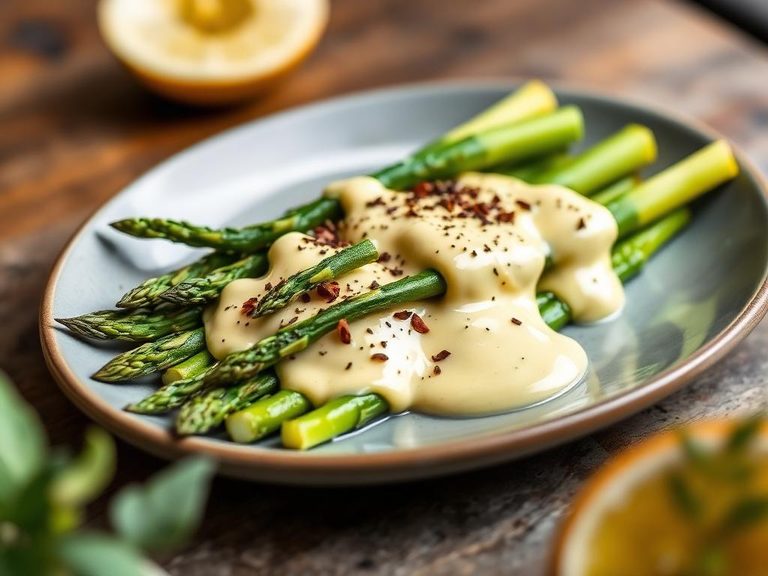
Asparagus is a spring vegetable with a distinct earthy, grassy flavor and a tender-crisp texture when cooked properly. It's a low-calorie, nutrient-dense choice, offering a good source of fiber and vitamins while being naturally low in sugar. Its elegant spears make it a versatile ingredient for both simple side dishes and complex culinary creations.
Calorie split: 18% protein · 32% carbs · 50% fat
↓ Full nutrition💚 Why it's loved
People love asparagus for its unique, savory flavor that pairs beautifully with butter, lemon, and parmesan. Its satisfying crunch and elegant presentation make it a favorite for both everyday meals and special occasions.
⚠️ Watch-outs & how to enjoy it better
Asparagus contains asparagusic acid, which can cause a distinct, harmless odor in urine for some people. It is also high in oxalates, which may be a concern for those prone to kidney stones; pairing it with calcium-rich foods and staying hydrated can help mitigate this.
Key benefits
- Rich in vitamin K for bone health
- Good source of folate, essential for cell function
- Contains antioxidants like glutathione
- High in fiber, supporting digestive health
- Naturally low in calories and sugar
🍽️ Popular dishes
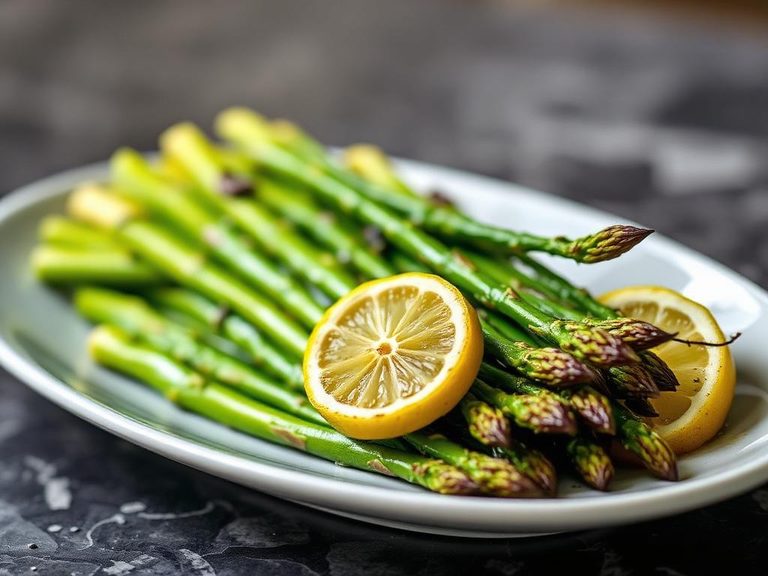
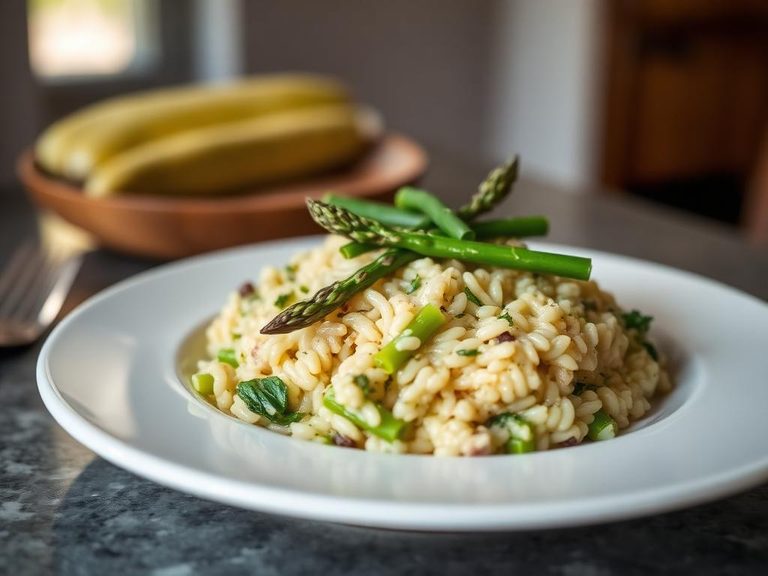
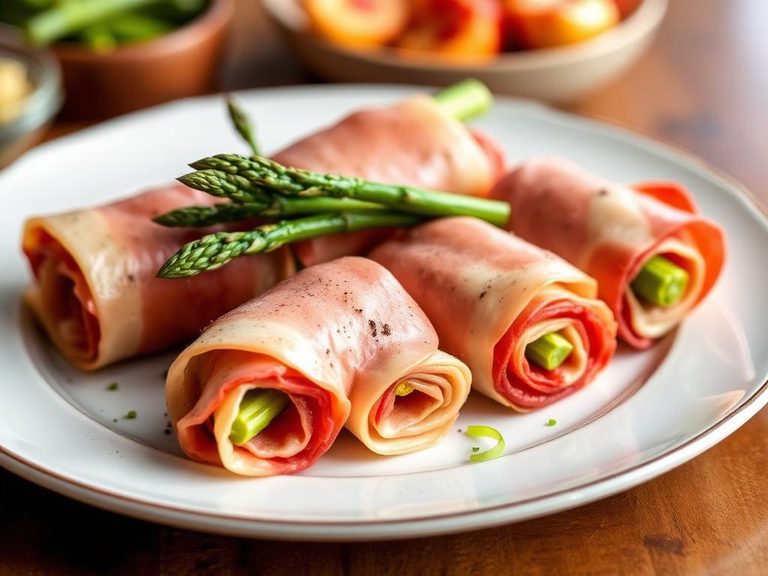
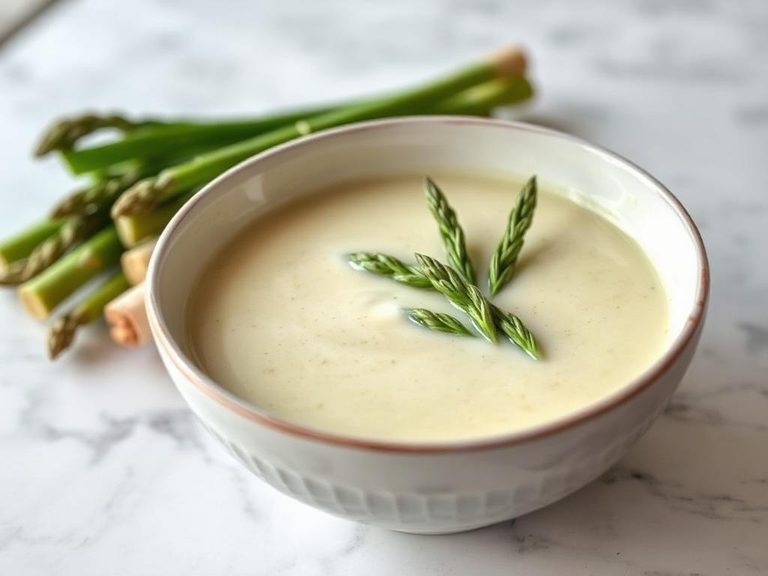
🌍 Where it's eaten
💡 Did you know?
Asparagus is a member of the lily family, making it a relative of onions, garlic, and tulips.
Full nutrition (USDA data · scales with serving)
| Water | 89.9 g |
| Energy | 45.0 kcal |
| Protein | 2.3 g |
| Total lipid (fat) | 2.9 g |
| Carbohydrate, by difference | 4.0 g |
| Fiber, total dietary | 2.2 g |
| Total Sugars | 2.0 g |
| Calcium, Ca | 25.0 mg |
| Iron, Fe | 2.2 mg |
| Magnesium, Mg | 15.0 mg |
| Phosphorus, P | 54.0 mg |
| Potassium, K | 211 mg |
| Sodium, Na | 132 mg |
| Zinc, Zn | 0.56 mg |
| Copper, Cu | 0.20 mg |
| Selenium, Se | 2.4 ug |
| Vitamin C, total ascorbic acid | 5.0 mg |
| Thiamin | 0.13 mg |
| Riboflavin | 0.14 mg |
| Niacin | 0.97 mg |
| Vitamin B-6 | 0.10 mg |
| Folate, total | 46.0 ug |
| Folic acid | 0.00 ug |
| Folate, food | 46.0 ug |
| Folate, DFE | 46.0 ug |
| Choline, total | 16.9 mg |
| Vitamin B-12 | 0.00 ug |
| Vitamin B-12, added | 0.00 ug |
| Vitamin A, RAE | 50.0 ug |
| Retinol | 12.0 ug |
| Carotene, beta | 449 ug |
| Carotene, alpha | 9.0 ug |
| Cryptoxanthin, beta | 0.00 ug |
| Lycopene | 0.00 ug |
| Lutein + zeaxanthin | 702 ug |
| Vitamin E (alpha-tocopherol) | 1.6 mg |
| Vitamin E, added | 0.00 mg |
| Vitamin D (D2 + D3) | 0.00 ug |
| Vitamin K (phylloquinone) | 45.6 ug |
| Alcohol, ethyl | 0.00 g |
| Caffeine | 0.00 mg |
| Theobromine | 0.00 mg |
Fat & fatty acid profile (per 100g)
| Fatty acids, total saturated | 0.76 g |
| SFA 4:0 | 0.02 g |
| SFA 6:0 | 0.01 g |
| SFA 8:0 | 0.01 g |
| SFA 10:0 | 0.02 g |
| SFA 12:0 | 0.02 g |
| SFA 14:0 | 0.07 g |
| SFA 16:0 | 0.43 g |
| SFA 18:0 | 0.15 g |
| Fatty acids, total monounsaturated | 0.97 g |
| MUFA 16:1 | 0.01 g |
| MUFA 18:1 | 0.94 g |
| MUFA 20:1 | 0.01 g |
| MUFA 22:1 | 0.00 g |
| Fatty acids, total polyunsaturated | 0.84 g |
| PUFA 18:2 | 0.74 g |
| PUFA 18:3 | 0.10 g |
| PUFA 18:4 | 0.00 g |
| PUFA 20:4 | 0.00 g |
| PUFA 20:5 n-3 (EPA) | 0.00 g |
| PUFA 22:5 n-3 (DPA) | 0.00 g |
| PUFA 22:6 n-3 (DHA) | 0.00 g |
| Cholesterol | 2.0 mg |
Amino acid profile (per 100g)
Estimated from Asparagus, cooked, boiled, drained — USDA does not publish this profile for Asparagus.
| Tryptophan | 0.03 g |
| Threonine | 0.09 g |
| Isoleucine | 0.08 g |
| Leucine | 0.14 g |
| Lysine | 0.11 g |
| Methionine | 0.03 g |
| Cystine | 0.03 g |
| Phenylalanine | 0.08 g |
| Tyrosine | 0.06 g |
| Valine | 0.13 g |
| Arginine | 0.10 g |
| Histidine | 0.05 g |
| Alanine | 0.13 g |
| Aspartic acid | 0.56 g |
| Glutamic acid | 0.26 g |
| Glycine | 0.10 g |
| Proline | 0.08 g |
| Serine | 0.12 g |
FAQ
How do I choose fresh asparagus?
Look for firm, straight spears with tight, compact tips. The cut ends should be moist, not dry or woody.
What's the best way to cook asparagus?
Roasting, grilling, or sautéing quickly over high heat helps retain its texture and flavor. Steaming is also a good method to preserve nutrients.
Can I eat asparagus raw?
Yes, young, thin spears can be eaten raw in salads or as a snack, though cooking makes it easier to digest and can enhance its flavor.
Nutrient density (calculated · NRF9.3)
Nutrient Rich Foods index: beneficial nutrients (protein, fiber, vitamins, minerals) minus saturated fat, added sugar & sodium, per 100 kcal.
NRF9.3 index — Fulgoni, Keast & Drewnowski, 2009. Computed from USDA nutrients.
Weight-loss friendliness (composite index)
Energy density 0.45 kcal/g · 20% calories from protein · 2.2 g fiber · 2.0 g sugar per 100 g.
Composite of energy density (Rolls et al., 1999), protein & fiber satiety, minus sugar. A calculated heuristic — ranks satiety-per-calorie, not a clinical measure.
Dietary load (calculated from USDA values)
Potential renal acid load. Positive = acid-forming, negative = alkaline-forming.
Sodium-to-potassium ratio: 0.63 (lower is better — aim for ≤ 1)
Sodium:potassium per WHO potassium guidance. Computed from USDA nutrients.