

Asparagus, canned, cooked, no added fat
Common food
Canned asparagus offers a tender, slightly fibrous texture and a mild, briny-sweet flavor distinct from its fresh counterpart. It's a convenient, low-calorie vegetable, with a 100g serving providing just 19 calories. Nutritionally, it's a good source of fiber (1.6g) and offers a modest protein boost (2.14g) for a vegetable.
Calorie split: 35% protein · 41% carbs · 24% fat
↓ Full nutrition💚 Why it's loved
People love canned asparagus for its incredible convenience and consistent, mild flavor that integrates easily into a wide range of dishes. It's a nostalgic staple in many kitchens, often featured in classic casseroles and salads, offering a taste of spring year-round.
⚠️ Watch-outs & how to enjoy it better
The primary downside is the potential for added sodium from the canning brine, which can be a concern for those monitoring salt intake. To counteract this, rinse the spears thoroughly under cold water before use. Those with kidney issues or prone to oxalate kidney stones should also be mindful of portion size, as asparagus contains oxalates.
Key benefits
- Low-calorie, nutrient-dense vegetable option
- Good source of dietary fiber for digestive health
- Provides plant-based protein (2.14g per 100g)
- Contains vitamins A, C, K, and folate
- Convenient and shelf-stable for quick meal prep
🍽️ Popular dishes
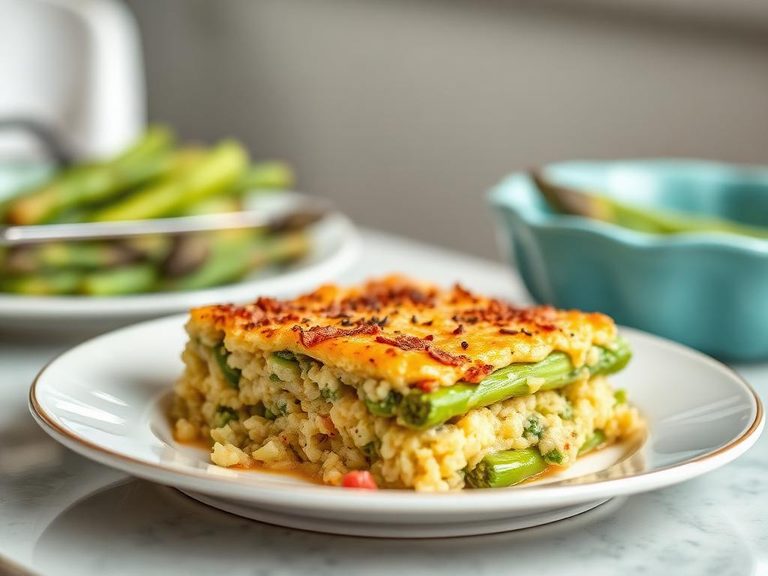
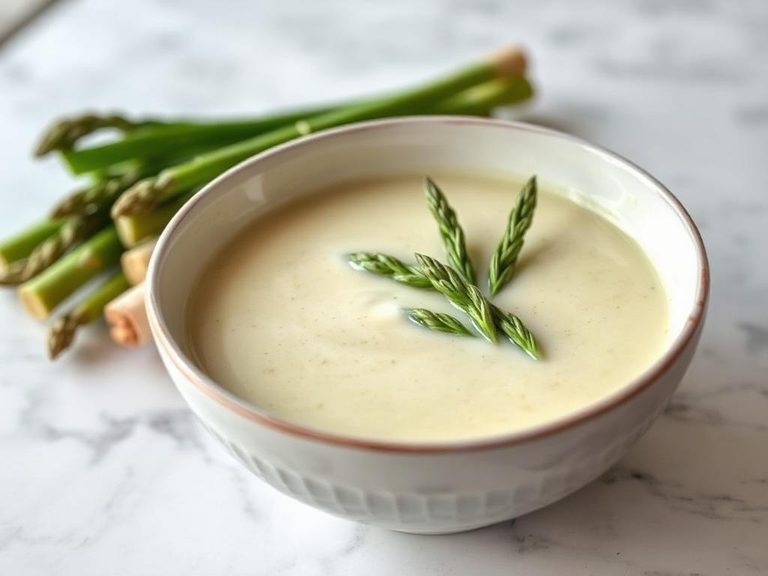
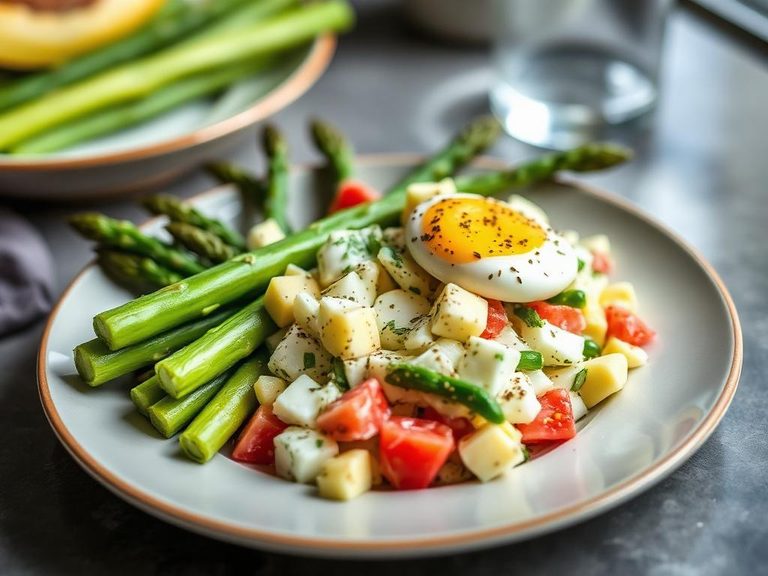
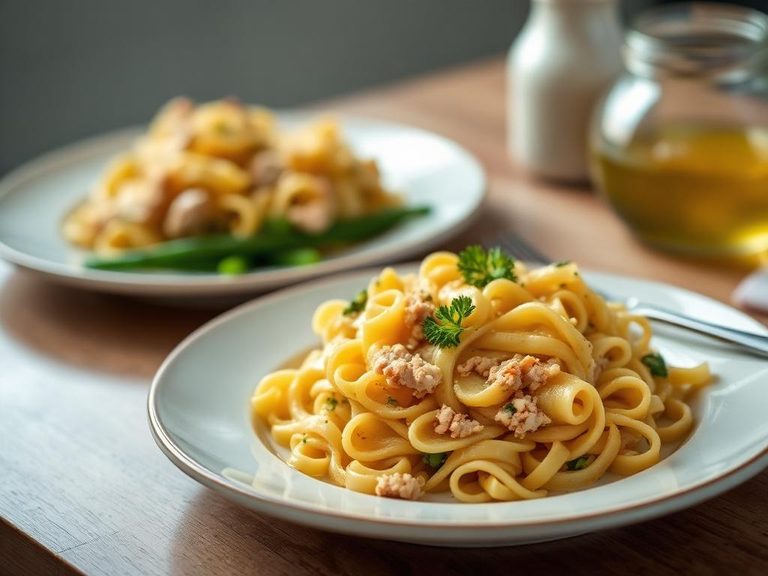

🌍 Where it's eaten
💡 Did you know?
Canned asparagus spears are often sorted by length and thickness, with the most uniform, slender spears typically reserved for the premium 'fancy grade' cans.
Full nutrition (USDA data · scales with serving)
| Water | 94.0 g |
| Energy | 19.0 kcal |
| Protein | 2.1 g |
| Total lipid (fat) | 0.65 g |
| Carbohydrate, by difference | 2.5 g |
| Fiber, total dietary | 1.6 g |
| Total Sugars | 1.1 g |
| Calcium, Ca | 16.0 mg |
| Iron, Fe | 1.8 mg |
| Magnesium, Mg | 10.0 mg |
| Phosphorus, P | 43.0 mg |
| Potassium, K | 172 mg |
| Sodium, Na | 287 mg |
| Zinc, Zn | 0.40 mg |
| Copper, Cu | 0.10 mg |
| Selenium, Se | 1.7 ug |
| Vitamin C, total ascorbic acid | 16.6 mg |
| Thiamin | 0.06 mg |
| Riboflavin | 0.10 mg |
| Niacin | 0.95 mg |
| Vitamin B-6 | 0.11 mg |
| Folate, total | 91.0 ug |
| Folic acid | 0.00 ug |
| Folate, food | 91.0 ug |
| Folate, DFE | 91.0 ug |
| Choline, total | 21.4 mg |
| Vitamin B-12 | 0.00 ug |
| Vitamin B-12, added | 0.00 ug |
| Vitamin A, RAE | 41.0 ug |
| Retinol | 0.00 ug |
| Carotene, beta | 493 ug |
| Carotene, alpha | 0.00 ug |
| Cryptoxanthin, beta | 0.00 ug |
| Lycopene | 24.0 ug |
| Lutein + zeaxanthin | 630 ug |
| Vitamin E (alpha-tocopherol) | 1.2 mg |
| Vitamin E, added | 0.00 mg |
| Vitamin D (D2 + D3) | 0.00 ug |
| Vitamin K (phylloquinone) | 41.3 ug |
| Alcohol, ethyl | 0.00 g |
| Caffeine | 0.00 mg |
| Theobromine | 0.00 mg |
Fat & fatty acid profile (per 100g)
| Fatty acids, total saturated | 0.15 g |
| SFA 4:0 | 0.00 g |
| SFA 6:0 | 0.00 g |
| SFA 8:0 | 0.00 g |
| SFA 10:0 | 0.00 g |
| SFA 12:0 | 0.00 g |
| SFA 14:0 | 0.00 g |
| SFA 16:0 | 0.13 g |
| SFA 18:0 | 0.01 g |
| Fatty acids, total monounsaturated | 0.02 g |
| MUFA 16:1 | 0.00 g |
| MUFA 18:1 | 0.02 g |
| MUFA 20:1 | 0.00 g |
| MUFA 22:1 | 0.00 g |
| Fatty acids, total polyunsaturated | 0.28 g |
| PUFA 18:2 | 0.27 g |
| PUFA 18:3 | 0.01 g |
| PUFA 18:4 | 0.00 g |
| PUFA 20:4 | 0.00 g |
| PUFA 20:5 n-3 (EPA) | 0.00 g |
| PUFA 22:5 n-3 (DPA) | 0.00 g |
| PUFA 22:6 n-3 (DHA) | 0.00 g |
| Cholesterol | 0.00 mg |
Amino acid profile (per 100g)
Estimated from Asparagus, cooked, boiled, drained — USDA does not publish this profile for Asparagus.
| Tryptophan | 0.03 g |
| Threonine | 0.09 g |
| Isoleucine | 0.08 g |
| Leucine | 0.14 g |
| Lysine | 0.11 g |
| Methionine | 0.03 g |
| Cystine | 0.03 g |
| Phenylalanine | 0.08 g |
| Tyrosine | 0.06 g |
| Valine | 0.13 g |
| Arginine | 0.10 g |
| Histidine | 0.05 g |
| Alanine | 0.13 g |
| Aspartic acid | 0.56 g |
| Glutamic acid | 0.26 g |
| Glycine | 0.10 g |
| Proline | 0.08 g |
| Serine | 0.12 g |
FAQ
Is canned asparagus as nutritious as fresh?
While the canning process can reduce some heat-sensitive vitamins like Vitamin C, canned asparagus retains most of its fiber, minerals, and other vitamins. It remains a nutritious and convenient choice.
How can I reduce the sodium in canned asparagus?
Simply place the asparagus in a colander and rinse it under cool running water for about a minute, gently separating the spears. This can wash away a significant portion of the surface sodium.
What's the best way to use the canned liquid?
The liquid, or brine, can be used as a flavorful vegetable stock in soups, stews, or for cooking grains like rice or quinoa to add a subtle savory note.
Nutrient density (calculated · NRF9.3)
Nutrient Rich Foods index: beneficial nutrients (protein, fiber, vitamins, minerals) minus saturated fat, added sugar & sodium, per 100 kcal.
NRF9.3 index — Fulgoni, Keast & Drewnowski, 2009. Computed from USDA nutrients.
Weight-loss friendliness (composite index)
Energy density 0.19 kcal/g · 45% calories from protein · 1.6 g fiber · 1.1 g sugar per 100 g.
Composite of energy density (Rolls et al., 1999), protein & fiber satiety, minus sugar. A calculated heuristic — ranks satiety-per-calorie, not a clinical measure.
Dietary load (calculated from USDA values)
Potential renal acid load. Positive = acid-forming, negative = alkaline-forming.
Sodium-to-potassium ratio: 1.67 (lower is better — aim for ≤ 1)
Sodium:potassium per WHO potassium guidance. Computed from USDA nutrients.