

Asparagus, canned, no salt added, solids and liquids
Whole food · Vegetables and Vegetable Products
Canned asparagus offers the vegetable's signature earthy, slightly grassy flavor and tender-crisp texture in a convenient, ready-to-eat format. Packed in water with no added salt, it retains a clean, mild taste. Nutritionally, it's a low-calorie source of fiber and plant-based protein.
Calorie split: 38% protein · 53% carbs · 9% fat
↓ Full nutrition💚 Why it's loved
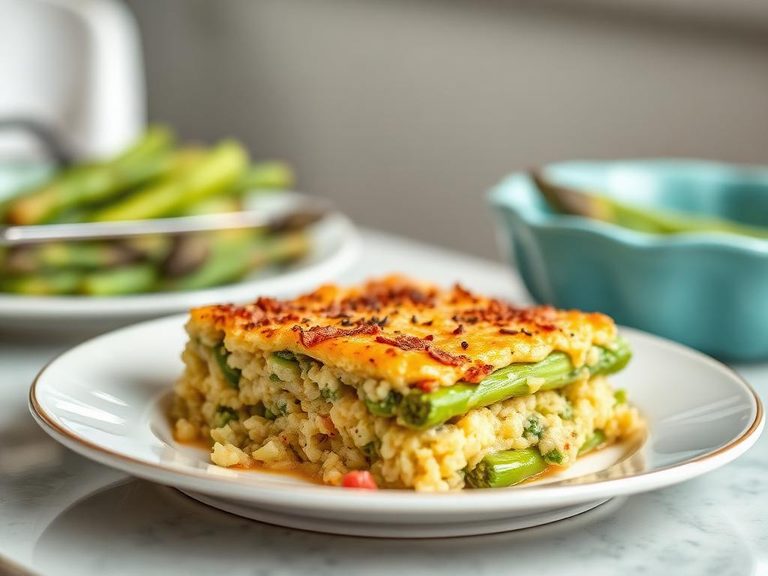
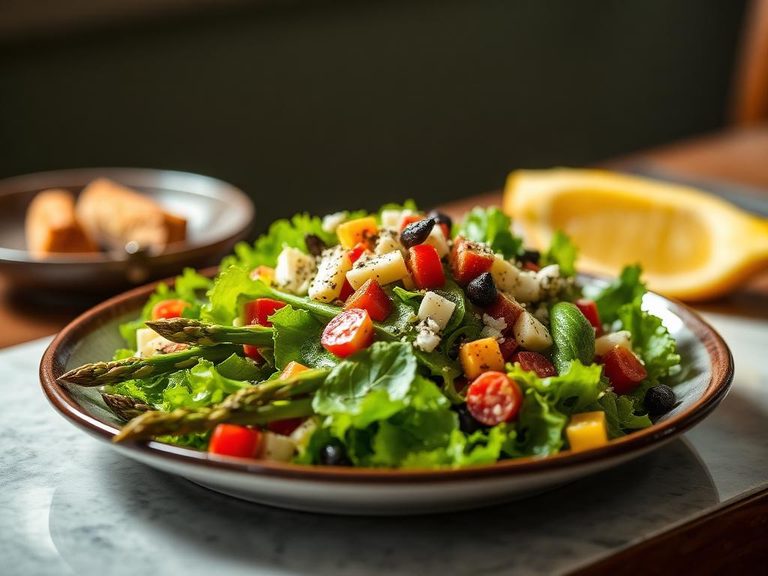
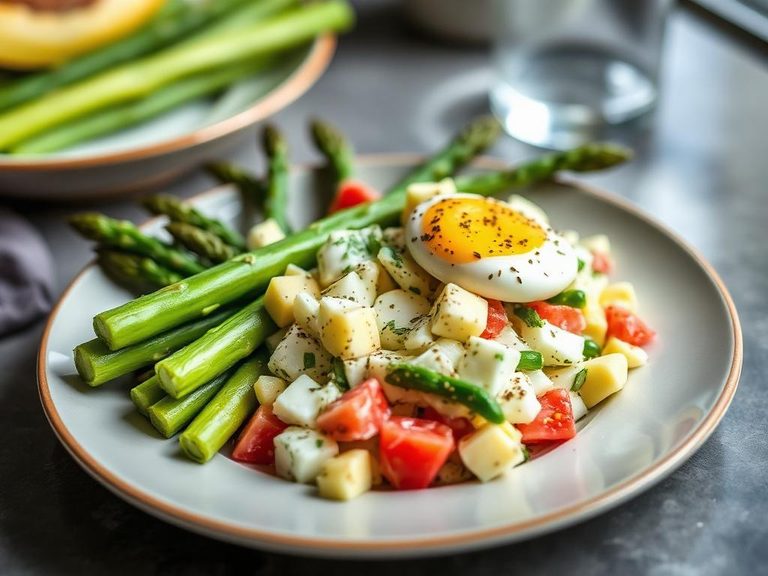
People love it for its unique, savory flavor that pairs well with eggs, pasta, and cheeses, and for the convenience of having a ready-to-use vegetable on hand for quick salads, sides, or casseroles.
⚠️ Watch-outs & how to enjoy it better
Some may find the texture softer than fresh asparagus, and the canning process can slightly diminish the vibrant flavor. Those monitoring blood sugar should be mindful of portion size due to the 2.48g of carbs per 100g, though the fiber helps mitigate this. Pairing it with a protein or healthy fat (like a poached egg or olive oil) can create a more balanced meal.
Key benefits
- Very low in calories (15 kcal per 100g)
- Good source of dietary fiber (1g per 100g)
- Provides plant-based protein (1.8g per 100g)
- Naturally low in fat (0.18g per 100g)
- Convenient and shelf-stable
🍽️ Popular dishes

🌍 Where it's eaten
💡 Did you know?
Asparagus is a member of the lily family, making it a distant relative to onions, garlic, and tulips.
Full nutrition (USDA data · scales with serving)
| Water | 94.3 g |
| Energy | 15.0 kcal |
| Energy | 62.0 kj |
| Protein | 1.8 g |
| Total lipid (fat) | 0.18 g |
| Ash | 1.2 g |
| Carbohydrate, by difference | 2.5 g |
| Fiber, total dietary | 1.0 g |
| Total Sugars | 1.0 g |
| Calcium, Ca | 15.0 mg |
| Iron, Fe | 0.60 mg |
| Magnesium, Mg | 9.0 mg |
| Phosphorus, P | 38.0 mg |
| Potassium, K | 172 mg |
| Sodium, Na | 26.0 mg |
| Zinc, Zn | 0.47 mg |
| Copper, Cu | 0.11 mg |
| Manganese, Mn | 0.15 mg |
| Selenium, Se | 1.6 ug |
| Vitamin C, total ascorbic acid | 16.5 mg |
| Thiamin | 0.05 mg |
| Riboflavin | 0.09 mg |
| Niacin | 0.85 mg |
| Pantothenic acid | 0.12 mg |
| Vitamin B-6 | 0.10 mg |
| Folate, total | 85.0 ug |
| Folic acid | 0.00 ug |
| Folate, food | 85.0 ug |
| Folate, DFE | 85.0 ug |
| Vitamin B-12 | 0.00 ug |
| Vitamin B-12, added | 0.00 ug |
| Vitamin A, RAE | 39.0 ug |
| Retinol | 0.00 ug |
| Carotene, beta | 465 ug |
| Carotene, alpha | 0.00 ug |
| Cryptoxanthin, beta | 0.00 ug |
| Vitamin A, IU | 776 iu |
| Lycopene | 23.0 ug |
| Lutein + zeaxanthin | 595 ug |
| Vitamin E (alpha-tocopherol) | 0.29 mg |
| Vitamin E, added | 0.00 mg |
| Vitamin D (D2 + D3), International Units | 0.00 iu |
| Vitamin D (D2 + D3) | 0.00 ug |
| Vitamin K (phylloquinone) | 39.0 ug |
| Alcohol, ethyl | 0.00 g |
| Caffeine | 0.00 mg |
| Theobromine | 0.00 mg |
Fat & fatty acid profile (per 100g)
| Fatty acids, total saturated | 0.04 g |
| SFA 12:0 | 0.00 g |
| SFA 14:0 | 0.00 g |
| SFA 16:0 | 0.04 g |
| SFA 18:0 | 0.00 g |
| Fatty acids, total monounsaturated | 0.01 g |
| MUFA 16:1 | 0.00 g |
| MUFA 18:1 | 0.01 g |
| Fatty acids, total polyunsaturated | 0.08 g |
| PUFA 18:2 | 0.07 g |
| PUFA 18:3 | 0.00 g |
| Fatty acids, total trans | 0.00 g |
| Cholesterol | 0.00 mg |
Amino acid profile (per 100g)
| Tryptophan | 0.02 g |
| Threonine | 0.05 g |
| Isoleucine | 0.07 g |
| Leucine | 0.08 g |
| Lysine | 0.09 g |
| Methionine | 0.02 g |
| Cystine | 0.02 g |
| Phenylalanine | 0.04 g |
| Tyrosine | 0.03 g |
| Valine | 0.07 g |
| Arginine | 0.08 g |
| Histidine | 0.03 g |
| Alanine | 0.09 g |
| Aspartic acid | 0.21 g |
| Glutamic acid | 0.29 g |
| Glycine | 0.06 g |
| Proline | 0.10 g |
| Serine | 0.07 g |
FAQ
Is canned asparagus as nutritious as fresh?
Canning involves heat, which can reduce some heat-sensitive vitamins like Vitamin C, but it preserves fiber, minerals, and other nutrients well. The no-salt-added version is a healthy choice.
How should I use the liquid from the can?
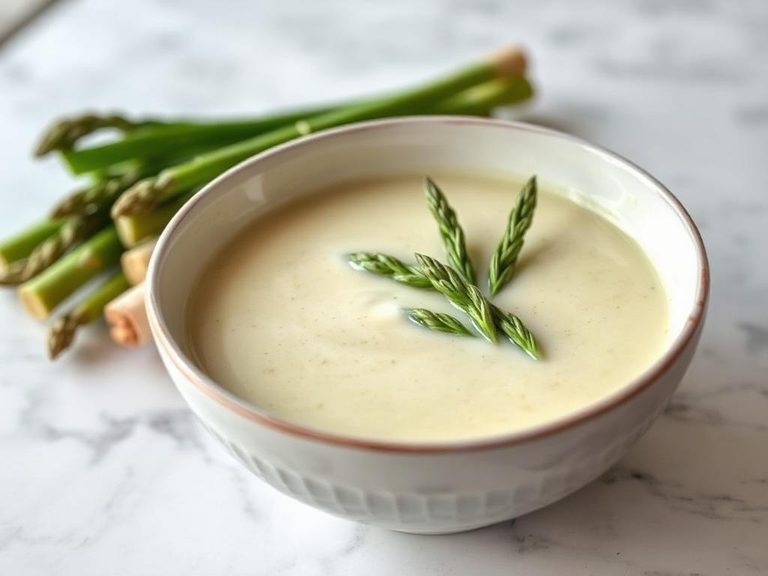
The liquid (often called 'asparagus water') contains some nutrients and flavor. You can use it as a light vegetable stock in soups, sauces, or when cooking grains.
Can I use this in place of fresh asparagus in recipes?
Yes, but adjust cooking times as it's already tender. It's best for dishes where a very crisp texture isn't essential, like casseroles, soups, or mixed into pasta.
Nutrient density (calculated · NRF9.3)
Nutrient Rich Foods index: beneficial nutrients (protein, fiber, vitamins, minerals) minus saturated fat, added sugar & sodium, per 100 kcal.
NRF9.3 index — Fulgoni, Keast & Drewnowski, 2009. Computed from USDA nutrients.
Weight-loss friendliness (composite index)
Energy density 0.15 kcal/g · 48% calories from protein · 1.0 g fiber · 1.0 g sugar per 100 g.
Composite of energy density (Rolls et al., 1999), protein & fiber satiety, minus sugar. A calculated heuristic — ranks satiety-per-calorie, not a clinical measure.
Dietary load (calculated from USDA values)
Potential renal acid load. Positive = acid-forming, negative = alkaline-forming.
Sodium-to-potassium ratio: 0.15 (lower is better — aim for ≤ 1)
Sodium:potassium per WHO potassium guidance. Computed from USDA nutrients.