

Asparagus, canned, cooked, fat added, NS as to fat type
Common food
Canned asparagus cooked with added fat offers a tender, slightly briny flavor with a soft, uniform texture that differs from its fresh counterpart. The added fat, often butter or oil, enriches the vegetable's mild, earthy taste and contributes to its 3.18g fat content per 100g. This preparation provides a convenient, low-calorie (41 kcal) way to enjoy asparagus, with a notable 1.6g of fiber per serving.
Calorie split: 18% protein · 21% carbs · 61% fat
↓ Full nutrition💚 Why it's loved
People appreciate the convenience and consistent, tender texture of canned asparagus, which makes it a quick addition to salads, casseroles, and side dishes. Its mild, slightly salty flavor pairs well with rich ingredients like cheese or butter, making it a versatile staple in many home kitchens.
⚠️ Watch-outs & how to enjoy it better
The soft texture and briny taste from the canning process can be off-putting to those who prefer the crispness and fresh flavor of raw or lightly cooked asparagus. Canned varieties often have higher sodium levels, so individuals monitoring their salt intake should rinse the spears or choose low-sodium options. To counteract the sodium, pair it with potassium-rich foods like potatoes or bananas.
Key benefits
- Good source of dietary fiber (1.6g per 100g)
- Low in calories (41 kcal per 100g)
- Contains plant-based protein (2.09g per 100g)
- Provides a convenient, ready-to-eat vegetable option
- The added fat can enhance the absorption of fat-soluble vitamins.
🍽️ Popular dishes
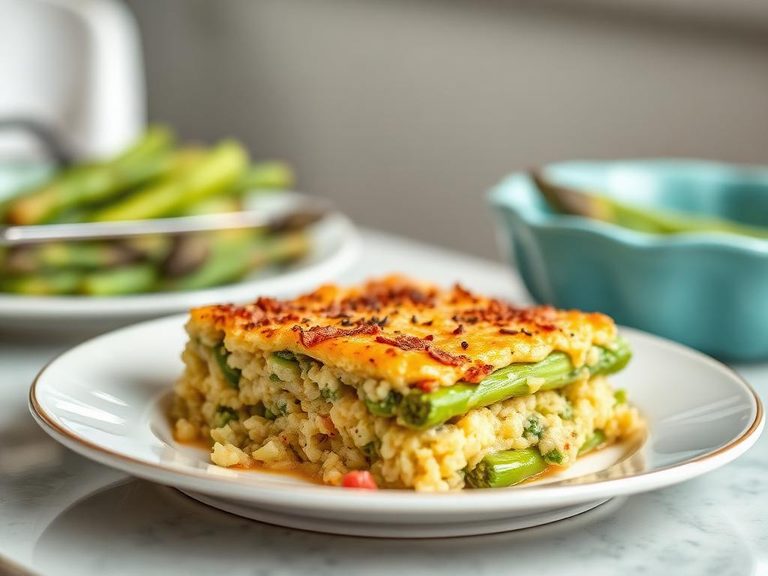
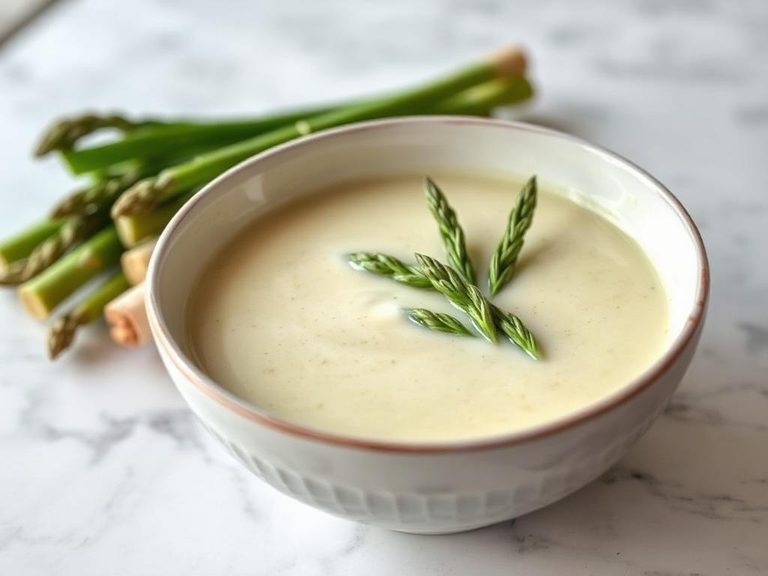

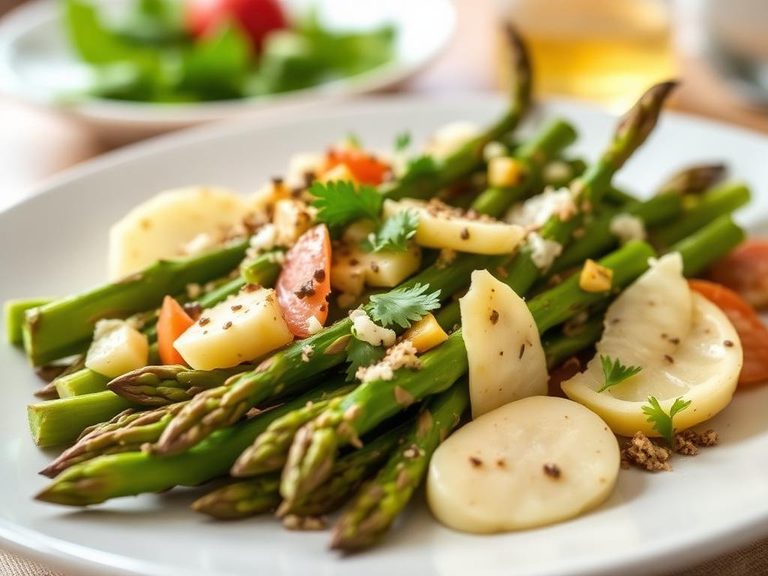

🌍 Where it's eaten
💡 Did you know?
Asparagus is a member of the lily family and is one of the few vegetables that is harvested for its shoots before they fully develop into plants.
Full nutrition (USDA data · scales with serving)
| Water | 91.6 g |
| Energy | 41.0 kcal |
| Protein | 2.1 g |
| Total lipid (fat) | 3.2 g |
| Carbohydrate, by difference | 2.4 g |
| Fiber, total dietary | 1.6 g |
| Total Sugars | 1.0 g |
| Calcium, Ca | 16.0 mg |
| Iron, Fe | 1.8 mg |
| Magnesium, Mg | 10.0 mg |
| Phosphorus, P | 42.0 mg |
| Potassium, K | 167 mg |
| Sodium, Na | 287 mg |
| Zinc, Zn | 0.39 mg |
| Copper, Cu | 0.09 mg |
| Selenium, Se | 1.6 ug |
| Vitamin C, total ascorbic acid | 16.1 mg |
| Thiamin | 0.06 mg |
| Riboflavin | 0.10 mg |
| Niacin | 0.93 mg |
| Vitamin B-6 | 0.12 mg |
| Folate, total | 89.0 ug |
| Folic acid | 0.00 ug |
| Folate, food | 89.0 ug |
| Folate, DFE | 89.0 ug |
| Choline, total | 21.0 mg |
| Vitamin B-12 | 0.00 ug |
| Vitamin B-12, added | 0.00 ug |
| Vitamin A, RAE | 51.0 ug |
| Retinol | 11.0 ug |
| Carotene, beta | 484 ug |
| Carotene, alpha | 0.00 ug |
| Cryptoxanthin, beta | 0.00 ug |
| Lycopene | 23.0 ug |
| Lutein + zeaxanthin | 612 ug |
| Vitamin E (alpha-tocopherol) | 1.6 mg |
| Vitamin E, added | 0.00 mg |
| Vitamin D (D2 + D3) | 0.00 ug |
| Vitamin K (phylloquinone) | 42.2 ug |
| Alcohol, ethyl | 0.00 g |
| Caffeine | 0.00 mg |
| Theobromine | 0.00 mg |
Fat & fatty acid profile (per 100g)
| Fatty acids, total saturated | 0.81 g |
| SFA 4:0 | 0.02 g |
| SFA 6:0 | 0.01 g |
| SFA 8:0 | 0.01 g |
| SFA 10:0 | 0.02 g |
| SFA 12:0 | 0.02 g |
| SFA 14:0 | 0.07 g |
| SFA 16:0 | 0.49 g |
| SFA 18:0 | 0.14 g |
| Fatty acids, total monounsaturated | 0.93 g |
| MUFA 16:1 | 0.02 g |
| MUFA 18:1 | 0.89 g |
| MUFA 20:1 | 0.01 g |
| MUFA 22:1 | 0.00 g |
| Fatty acids, total polyunsaturated | 1.0 g |
| PUFA 18:2 | 0.91 g |
| PUFA 18:3 | 0.10 g |
| PUFA 18:4 | 0.00 g |
| PUFA 20:4 | 0.00 g |
| PUFA 20:5 n-3 (EPA) | 0.00 g |
| PUFA 22:5 n-3 (DPA) | 0.00 g |
| PUFA 22:6 n-3 (DHA) | 0.00 g |
| Cholesterol | 2.0 mg |
Amino acid profile (per 100g)
Estimated from Asparagus, cooked, boiled, drained — USDA does not publish this profile for Asparagus.
| Tryptophan | 0.03 g |
| Threonine | 0.09 g |
| Isoleucine | 0.08 g |
| Leucine | 0.14 g |
| Lysine | 0.11 g |
| Methionine | 0.03 g |
| Cystine | 0.03 g |
| Phenylalanine | 0.08 g |
| Tyrosine | 0.06 g |
| Valine | 0.13 g |
| Arginine | 0.10 g |
| Histidine | 0.05 g |
| Alanine | 0.13 g |
| Aspartic acid | 0.56 g |
| Glutamic acid | 0.26 g |
| Glycine | 0.10 g |
| Proline | 0.08 g |
| Serine | 0.12 g |
FAQ
Is canned asparagus as nutritious as fresh asparagus?
Canned asparagus retains most of its fiber and minerals but may have slightly lower levels of some heat-sensitive vitamins like vitamin C. The added fat and sodium in canned versions can also alter its nutritional profile compared to fresh.
How can I reduce the sodium in canned asparagus?
Rinse the asparagus spears thoroughly under cold water before use to remove excess salt. Alternatively, look for low-sodium or no-salt-added varieties if available.
What is the best way to store leftover canned asparagus?
Transfer any unused asparagus and its liquid to an airtight container and refrigerate. It should be consumed within 3-4 days for best quality and safety.
Nutrient density (calculated · NRF9.3)
Nutrient Rich Foods index: beneficial nutrients (protein, fiber, vitamins, minerals) minus saturated fat, added sugar & sodium, per 100 kcal.
NRF9.3 index — Fulgoni, Keast & Drewnowski, 2009. Computed from USDA nutrients.
Weight-loss friendliness (composite index)
Energy density 0.41 kcal/g · 20% calories from protein · 1.6 g fiber · 1.0 g sugar per 100 g.
Composite of energy density (Rolls et al., 1999), protein & fiber satiety, minus sugar. A calculated heuristic — ranks satiety-per-calorie, not a clinical measure.
Dietary load (calculated from USDA values)
Potential renal acid load. Positive = acid-forming, negative = alkaline-forming.
Sodium-to-potassium ratio: 1.72 (lower is better — aim for ≤ 1)
Sodium:potassium per WHO potassium guidance. Computed from USDA nutrients.