

Asparagus, fresh, cooked, fat added, NS as to fat type
Common food
Cooked asparagus with added fat is a tender, earthy vegetable with a distinct, slightly grassy flavor and a satisfying snap. Its nutrition profile is light yet balanced, offering a good source of fiber and protein with minimal calories, especially when prepared with a healthy fat like olive oil or butter. The added fat enhances its natural richness and helps the body absorb its fat-soluble vitamins.
Calorie split: 18% protein · 32% carbs · 50% fat
↓ Full nutrition💚 Why it's loved
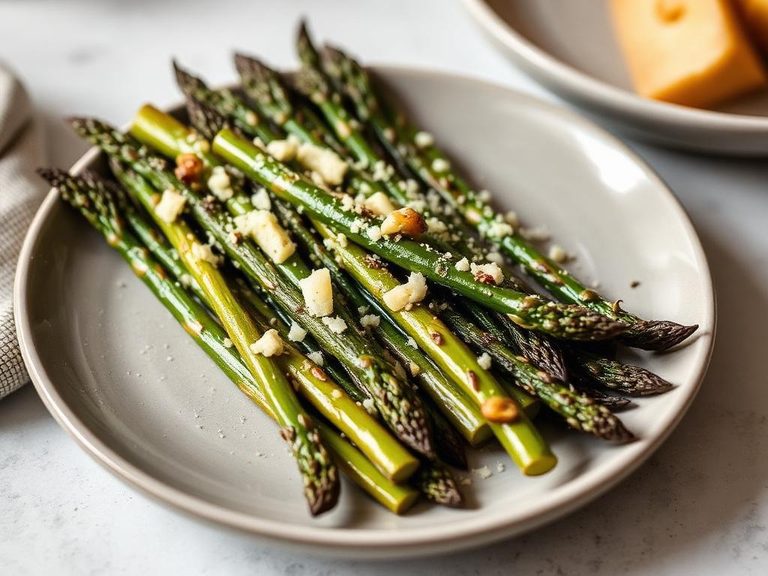
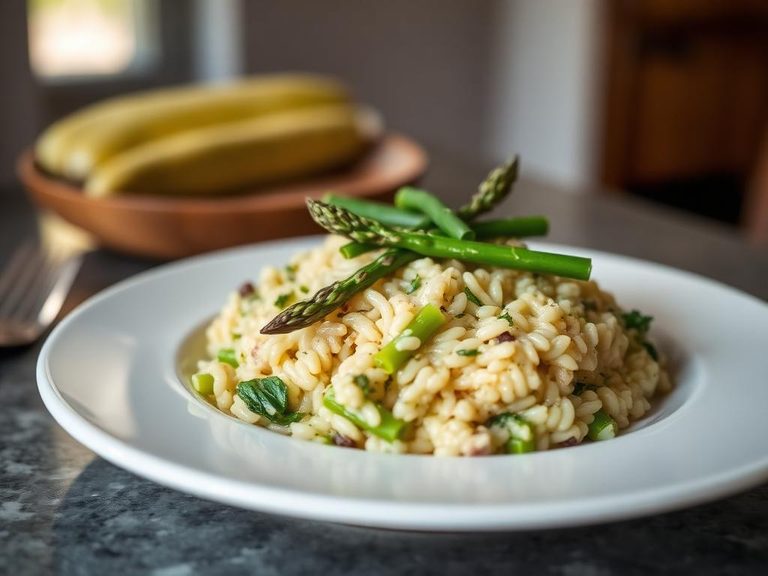
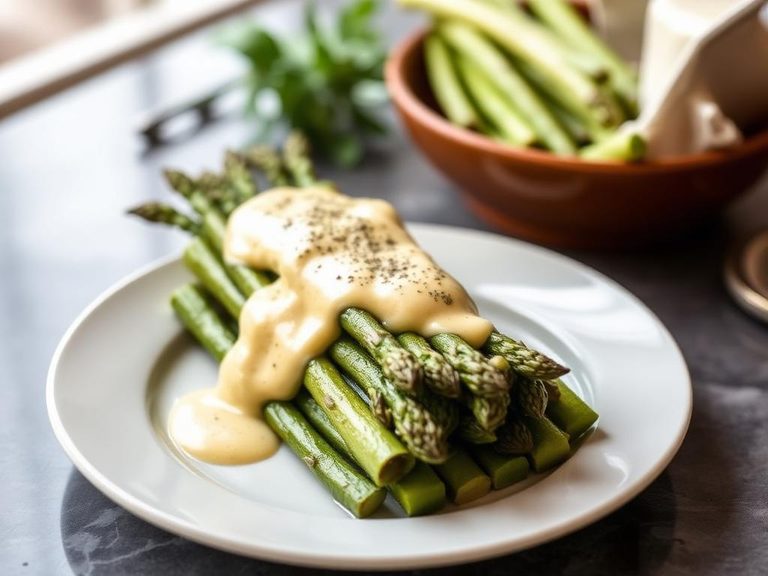
People love asparagus for its unique, savory flavor and versatile texture, which can be grilled, steamed, or roasted to perfection. It's a staple in many cuisines, symbolizing spring and often featured in elegant dishes, from simple buttered spears to complex gratins.
⚠️ Watch-outs & how to enjoy it better
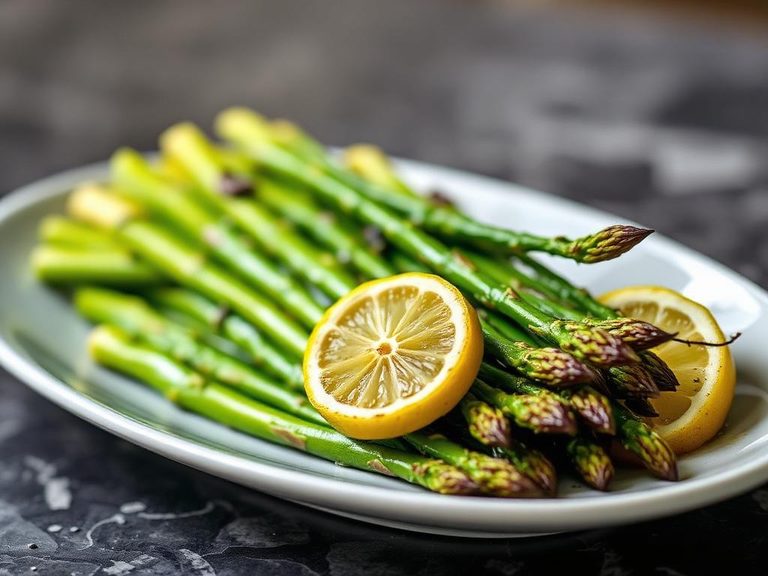
Some find asparagus has a strong, polarizing taste or a slightly bitter aftertaste, and it can cause a distinctive urine odor due to asparagusic acid. Those with kidney issues or on blood thinners should be cautious due to its vitamin K and oxalate content. To counteract bitterness, blanching or pairing with a squeeze of lemon and a fat like butter can mellow the flavor; for oxalates, cooking and draining can reduce levels.
Key benefits
- Rich in dietary fiber (2.2g per 100g) for digestive health
- Good source of plant-based protein (2.3g per 100g)
- Low in calories (45 kcal per 100g) for weight management
- Contains antioxidants like glutathione and flavonoids
- Provides essential vitamins like Vitamin K and folate
🍽️ Popular dishes

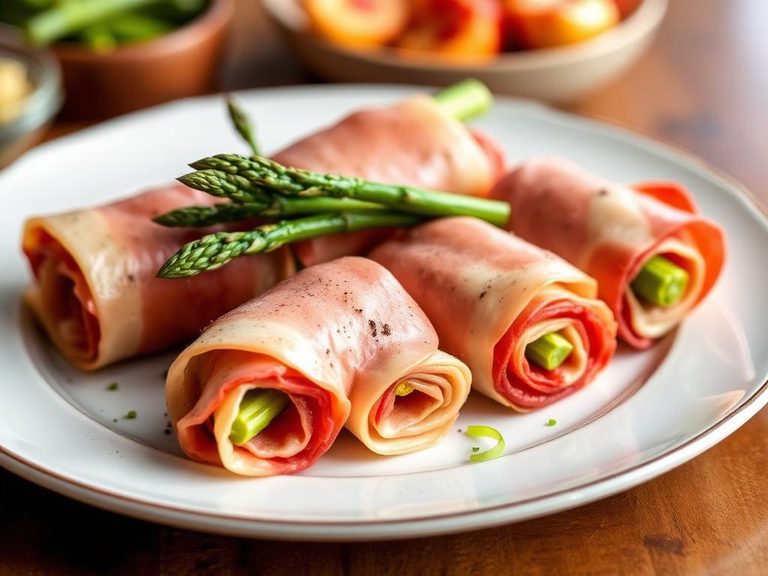
🌍 Where it's eaten
💡 Did you know?
Asparagus is a member of the lily family and is one of the few vegetables that can grow up to 10 inches in a single day under ideal conditions.
Full nutrition (USDA data · scales with serving)
| Water | 89.9 g |
| Energy | 45.0 kcal |
| Protein | 2.3 g |
| Total lipid (fat) | 2.9 g |
| Carbohydrate, by difference | 4.0 g |
| Fiber, total dietary | 2.2 g |
| Total Sugars | 2.0 g |
| Calcium, Ca | 25.0 mg |
| Iron, Fe | 2.2 mg |
| Magnesium, Mg | 15.0 mg |
| Phosphorus, P | 54.0 mg |
| Potassium, K | 211 mg |
| Sodium, Na | 132 mg |
| Zinc, Zn | 0.56 mg |
| Copper, Cu | 0.20 mg |
| Selenium, Se | 2.4 ug |
| Vitamin C, total ascorbic acid | 5.0 mg |
| Thiamin | 0.13 mg |
| Riboflavin | 0.14 mg |
| Niacin | 0.97 mg |
| Vitamin B-6 | 0.10 mg |
| Folate, total | 46.0 ug |
| Folic acid | 0.00 ug |
| Folate, food | 46.0 ug |
| Folate, DFE | 46.0 ug |
| Choline, total | 16.9 mg |
| Vitamin B-12 | 0.00 ug |
| Vitamin B-12, added | 0.00 ug |
| Vitamin A, RAE | 50.0 ug |
| Retinol | 12.0 ug |
| Carotene, beta | 449 ug |
| Carotene, alpha | 9.0 ug |
| Cryptoxanthin, beta | 0.00 ug |
| Lycopene | 0.00 ug |
| Lutein + zeaxanthin | 702 ug |
| Vitamin E (alpha-tocopherol) | 1.6 mg |
| Vitamin E, added | 0.00 mg |
| Vitamin D (D2 + D3) | 0.00 ug |
| Vitamin K (phylloquinone) | 45.6 ug |
| Alcohol, ethyl | 0.00 g |
| Caffeine | 0.00 mg |
| Theobromine | 0.00 mg |
Fat & fatty acid profile (per 100g)
| Fatty acids, total saturated | 0.76 g |
| SFA 4:0 | 0.02 g |
| SFA 6:0 | 0.01 g |
| SFA 8:0 | 0.01 g |
| SFA 10:0 | 0.02 g |
| SFA 12:0 | 0.02 g |
| SFA 14:0 | 0.07 g |
| SFA 16:0 | 0.43 g |
| SFA 18:0 | 0.15 g |
| Fatty acids, total monounsaturated | 0.97 g |
| MUFA 16:1 | 0.01 g |
| MUFA 18:1 | 0.94 g |
| MUFA 20:1 | 0.01 g |
| MUFA 22:1 | 0.00 g |
| Fatty acids, total polyunsaturated | 0.84 g |
| PUFA 18:2 | 0.74 g |
| PUFA 18:3 | 0.10 g |
| PUFA 18:4 | 0.00 g |
| PUFA 20:4 | 0.00 g |
| PUFA 20:5 n-3 (EPA) | 0.00 g |
| PUFA 22:5 n-3 (DPA) | 0.00 g |
| PUFA 22:6 n-3 (DHA) | 0.00 g |
| Cholesterol | 2.0 mg |
Amino acid profile (per 100g)
Estimated from Asparagus, cooked, boiled, drained — USDA does not publish this profile for Asparagus.
| Tryptophan | 0.03 g |
| Threonine | 0.09 g |
| Isoleucine | 0.08 g |
| Leucine | 0.14 g |
| Lysine | 0.11 g |
| Methionine | 0.03 g |
| Cystine | 0.03 g |
| Phenylalanine | 0.08 g |
| Tyrosine | 0.06 g |
| Valine | 0.13 g |
| Arginine | 0.10 g |
| Histidine | 0.05 g |
| Alanine | 0.13 g |
| Aspartic acid | 0.56 g |
| Glutamic acid | 0.26 g |
| Glycine | 0.10 g |
| Proline | 0.08 g |
| Serine | 0.12 g |
FAQ
Is cooked asparagus with added fat healthier than plain?
It depends on the fat used. Adding a small amount of healthy fat like olive oil can enhance nutrient absorption (e.g., vitamins A, D, E, K) without significantly increasing calories, but excessive butter or oil can add saturated fat.
How does cooking affect asparagus nutrition?
Cooking can reduce some water-soluble vitamins like vitamin C but can make other nutrients, like antioxidants, more bioavailable. Steaming or roasting preserves more nutrients than boiling.
Can asparagus cause digestive issues?
Asparagus contains fructans, which can cause bloating or gas in some people, especially those with IBS. Starting with small portions and cooking thoroughly can help.
Nutrient density (calculated · NRF9.3)
Nutrient Rich Foods index: beneficial nutrients (protein, fiber, vitamins, minerals) minus saturated fat, added sugar & sodium, per 100 kcal.
NRF9.3 index — Fulgoni, Keast & Drewnowski, 2009. Computed from USDA nutrients.
Weight-loss friendliness (composite index)
Energy density 0.45 kcal/g · 20% calories from protein · 2.2 g fiber · 2.0 g sugar per 100 g.
Composite of energy density (Rolls et al., 1999), protein & fiber satiety, minus sugar. A calculated heuristic — ranks satiety-per-calorie, not a clinical measure.
Dietary load (calculated from USDA values)
Potential renal acid load. Positive = acid-forming, negative = alkaline-forming.
Sodium-to-potassium ratio: 0.63 (lower is better — aim for ≤ 1)
Sodium:potassium per WHO potassium guidance. Computed from USDA nutrients.