

Cereals, CREAM OF RICE, cooked with water, with salt
Whole food · Breakfast Cereals

Photo: Wikipedia
Cream of Rice is a smooth, porridge-like cereal made from finely ground white rice, cooked with water to create a silky, neutral-tasting base. Its texture is exceptionally fine and almost gluey, making it easy to digest and a blank canvas for sweet or savory additions. Nutritionally, it is a low-fat, low-fiber carbohydrate source, providing quick energy with minimal protein or fat.
Calorie split: 7% protein · 91% carbs · 2% fat
↓ Full nutrition💚 Why it's loved
People love Cream of Rice for its comforting, mild flavor and incredibly smooth texture, which serves as a perfect canvas for toppings like honey, cinnamon, or fruit. It holds a special place in Southern American cuisine and is a nostalgic comfort food for many.
⚠️ Watch-outs & how to enjoy it better
The primary downside is its high glycemic index, which can cause rapid blood-sugar spikes, especially when eaten alone. To counteract this, pair it with a source of protein (like nuts or a boiled egg) and healthy fat (like nut butter or a drizzle of olive oil) to slow digestion and stabilize blood sugar. Also, be mindful of the added salt if using a pre-packaged mix.
Key benefits
- Gentle on the digestive system and easy to digest
- Provides quick, easily accessible energy from carbohydrates
- Naturally gluten-free, suitable for those with celiac disease
- Low in fat and sugar, making it a light meal option
- Can be used as a thickener in soups and sauces
🍽️ Popular dishes
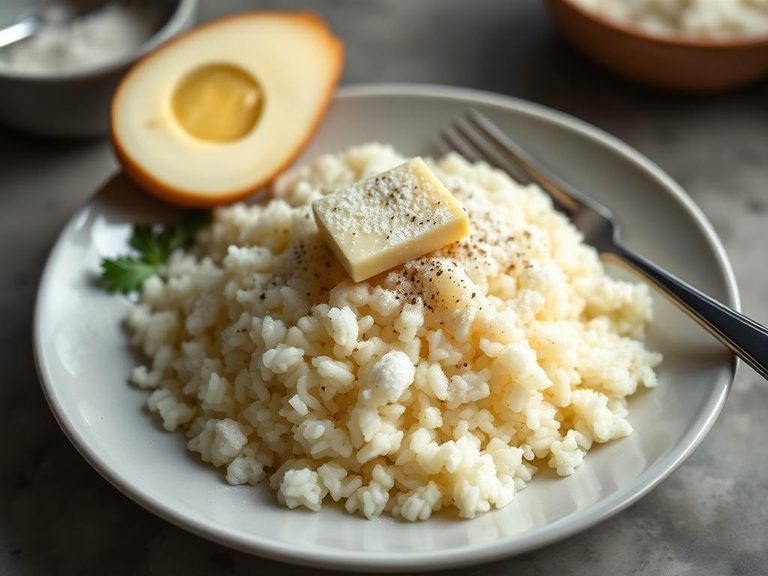
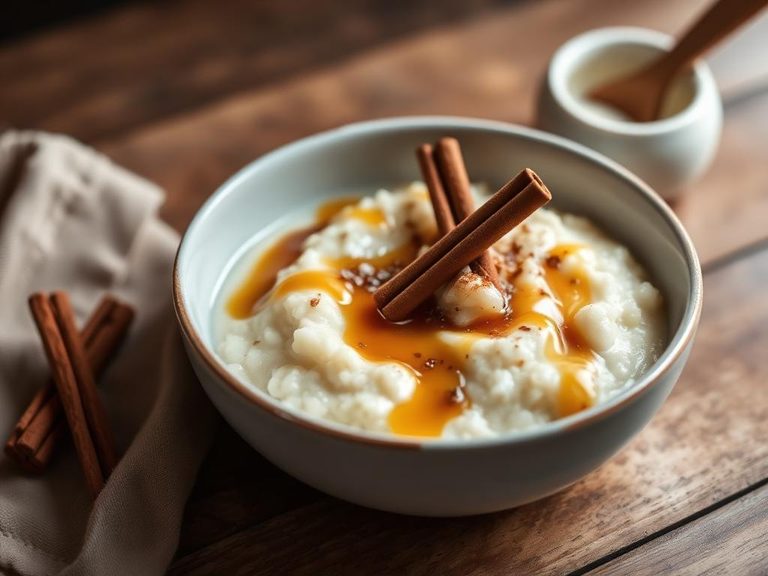
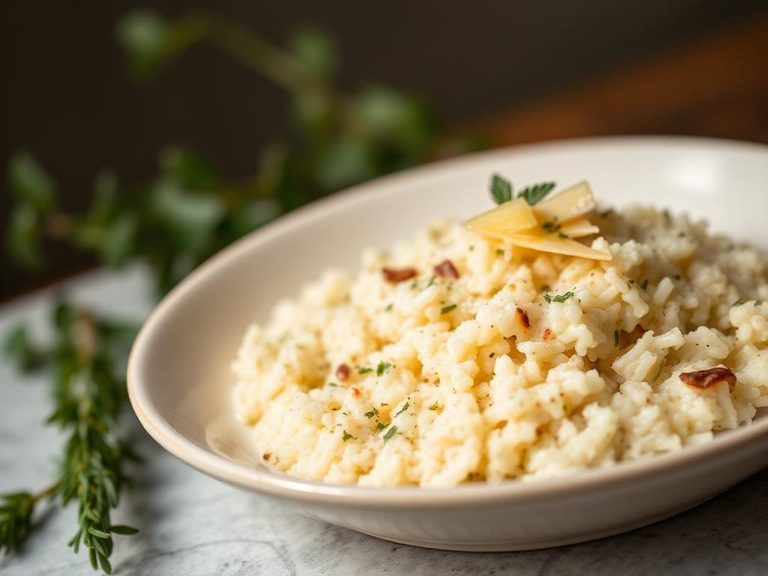
🌍 Where it's eaten
💡 Did you know?
Cream of Rice was a staple food for soldiers during World War II and the Korean War due to its long shelf life, ease of preparation, and high energy content.
Full nutrition (USDA data · scales with serving)
| Water | 87.5 g |
| Energy | 52.0 kcal |
| Energy | 218 kj |
| Protein | 0.90 g |
| Total lipid (fat) | 0.10 g |
| Ash | 0.30 g |
| Carbohydrate, by difference | 11.5 g |
| Fiber, total dietary | 0.10 g |
| Total Sugars | 0.04 g |
| Calcium, Ca | 1.0 mg |
| Iron, Fe | 4.0 mg |
| Magnesium, Mg | 3.0 mg |
| Phosphorus, P | 17.0 mg |
| Potassium, K | 20.0 mg |
| Sodium, Na | 173 mg |
| Zinc, Zn | 0.16 mg |
| Copper, Cu | 0.03 mg |
| Manganese, Mn | 0.14 mg |
| Selenium, Se | 3.0 ug |
| Vitamin C, total ascorbic acid | 0.00 mg |
| Thiamin | 0.07 mg |
| Riboflavin | 0.02 mg |
| Niacin | 1.0 mg |
| Pantothenic acid | 0.08 mg |
| Vitamin B-6 | 0.03 mg |
| Folate, total | 3.0 ug |
| Folic acid | 0.00 ug |
| Folate, food | 3.0 ug |
| Folate, DFE | 3.0 ug |
| Vitamin B-12 | 0.00 ug |
| Vitamin A, RAE | 0.00 ug |
| Retinol | 0.00 ug |
| Carotene, beta | 0.00 ug |
| Carotene, alpha | 0.00 ug |
| Cryptoxanthin, beta | 0.00 ug |
| Vitamin A, IU | 0.00 iu |
| Lycopene | 0.00 ug |
| Lutein + zeaxanthin | 0.00 ug |
| Vitamin E (alpha-tocopherol) | 0.02 mg |
| Vitamin K (phylloquinone) | 0.00 ug |
| Alcohol, ethyl | 0.00 g |
| Caffeine | 0.00 mg |
| Theobromine | 0.00 mg |
Fat & fatty acid profile (per 100g)
| Fatty acids, total saturated | 0.02 g |
| SFA 4:0 | 0.00 g |
| SFA 6:0 | 0.00 g |
| SFA 8:0 | 0.00 g |
| SFA 10:0 | 0.00 g |
| SFA 12:0 | 0.00 g |
| SFA 14:0 | 0.00 g |
| SFA 16:0 | 0.03 g |
| SFA 18:0 | 0.00 g |
| Fatty acids, total monounsaturated | 0.03 g |
| MUFA 16:1 | 0.00 g |
| MUFA 18:1 | 0.03 g |
| MUFA 20:1 | 0.00 g |
| MUFA 22:1 | 0.00 g |
| Fatty acids, total polyunsaturated | 0.03 g |
| PUFA 18:2 | 0.02 g |
| PUFA 18:3 | 0.01 g |
| PUFA 18:4 | 0.00 g |
| PUFA 20:4 | 0.00 g |
| PUFA 20:5 n-3 (EPA) | 0.00 g |
| PUFA 22:5 n-3 (DPA) | 0.00 g |
| PUFA 22:6 n-3 (DHA) | 0.00 g |
| Cholesterol | 0.00 mg |
Amino acid profile (per 100g)
| Tryptophan | 0.01 g |
| Threonine | 0.04 g |
| Isoleucine | 0.01 g |
| Leucine | 0.07 g |
| Lysine | 0.04 g |
| Methionine | 0.03 g |
| Cystine | 0.01 g |
| Phenylalanine | 0.04 g |
| Tyrosine | 0.05 g |
| Valine | 0.06 g |
| Arginine | 0.07 g |
| Histidine | 0.03 g |
| Alanine | 0.04 g |
| Aspartic acid | 0.08 g |
| Glutamic acid | 0.14 g |
| Glycine | 0.05 g |
| Proline | 0.04 g |
| Serine | 0.04 g |
FAQ
Is Cream of Rice gluten-free?
Yes, Cream of Rice is naturally gluten-free as it is made from ground rice. However, always check labels for potential cross-contamination if you have celiac disease or severe gluten sensitivity.
How does Cream of Rice differ from Cream of Wheat?
Cream of Rice is made from ground rice, while Cream of Wheat is made from ground wheat. Cream of Rice is gluten-free and has a smoother, silkier texture, whereas Cream of Wheat has a slightly grainier texture and contains gluten.
Can I make Cream of Rice with milk instead of water?
Yes, you can cook Cream of Rice with milk (dairy or plant-based) for a richer, creamier texture and added protein. This also helps lower the overall glycemic impact of the meal.
Nutrient density (calculated · NRF9.3)
Nutrient Rich Foods index: beneficial nutrients (protein, fiber, vitamins, minerals) minus saturated fat, added sugar & sodium, per 100 kcal.
NRF9.3 index — Fulgoni, Keast & Drewnowski, 2009. Computed from USDA nutrients.
Weight-loss friendliness (composite index)
Energy density 0.52 kcal/g · 7% calories from protein · 0.1 g fiber · 0.0 g sugar per 100 g.
Composite of energy density (Rolls et al., 1999), protein & fiber satiety, minus sugar. A calculated heuristic — ranks satiety-per-calorie, not a clinical measure.
Dietary load (calculated from USDA values)
Potential renal acid load. Positive = acid-forming, negative = alkaline-forming.
Sodium-to-potassium ratio: 8.65 (lower is better — aim for ≤ 1)
Sodium:potassium per WHO potassium guidance. Computed from USDA nutrients.