

Yogurt, Greek, nonfat, Fruit on Bottom, Strawberry, CHOBANI
Whole food · Dairy and Egg Products

Photo: Wikipedia
This is a single-serving cup of Chobani's nonfat Greek yogurt, featuring a layer of sweet strawberry fruit at the bottom. The yogurt itself is thick, creamy, and tangy, while the fruit layer provides a burst of sweet, jammy strawberry flavor. It's a high-protein, low-fat snack that delivers a significant protein punch with minimal fat.
Calorie split: 37% protein · 60% carbs · 3% fat
↓ Full nutrition💚 Why it's loved
People love the satisfying contrast between the cool, tart Greek yogurt and the sweet, fruity layer, which feels like a treat without the guilt. It's a versatile staple that works as a quick breakfast, a post-workout refuel, or a healthy dessert.
⚠️ Watch-outs & how to enjoy it better
The 10.41g of sugar per 100g, largely from the fruit layer, can cause a blood-sugar spike, especially if eaten alone. To counteract this, pair it with a source of healthy fat or extra fiber, like a handful of nuts or a sprinkle of chia seeds, to slow sugar absorption. Those monitoring sodium should note that yogurt can contain moderate amounts.
Key benefits
- Excellent source of protein for muscle maintenance and satiety
- Very low in fat, making it a lean protein choice
- Contains probiotics from live and active cultures
- Provides calcium for bone health
- Convenient, pre-portioned single-serving format
🍽️ Popular dishes
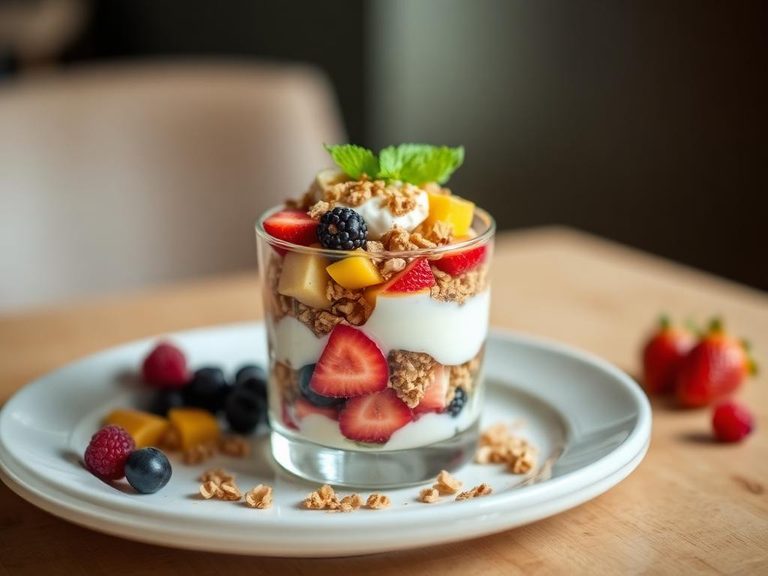
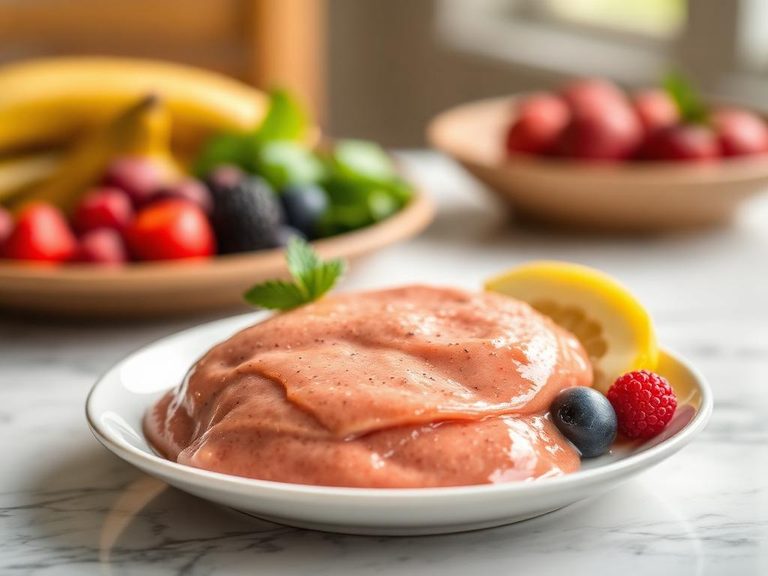
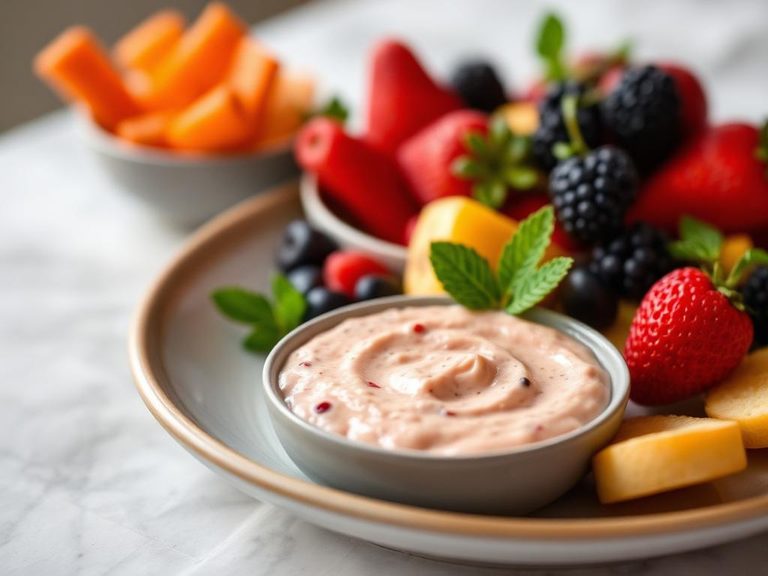
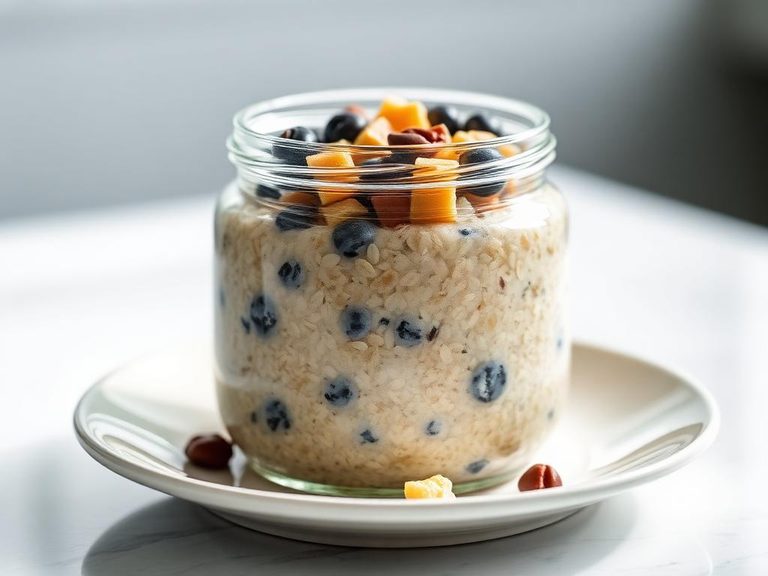
🌍 Where it's eaten
💡 Did you know?
The 'Fruit on Bottom' design isn't just for looks; it's a manufacturing technique that prevents the fruit from being blended into the yogurt, preserving its distinct texture and allowing you to mix it to your desired sweetness.
Full nutrition (USDA data · scales with serving)
| Water | 80.0 g |
| Energy | 79.0 kcal |
| Energy | 331 kj |
| Protein | 7.3 g |
| Total lipid (fat) | 0.23 g |
| Ash | 0.63 g |
| Carbohydrate, by difference | 11.9 g |
| Fiber, total dietary | 0.40 g |
| Total Sugars | 10.4 g |
| Sucrose | 7.1 g |
| Glucose | 0.68 g |
| Fructose | 0.73 g |
| Lactose | 1.9 g |
| Maltose | 0.11 g |
| Calcium, Ca | 93.0 mg |
| Iron, Fe | 0.15 mg |
| Magnesium, Mg | 10.0 mg |
| Phosphorus, P | 112 mg |
| Potassium, K | 132 mg |
| Sodium, Na | 31.0 mg |
| Zinc, Zn | 0.44 mg |
| Copper, Cu | 0.02 mg |
| Selenium, Se | 9.5 ug |
| Vitamin C, total ascorbic acid | 0.60 mg |
| Thiamin | 0.03 mg |
| Riboflavin | 0.28 mg |
| Niacin | 0.21 mg |
| Vitamin B-6 | 0.05 mg |
| Vitamin B-12 | 0.45 ug |
| Vitamin A, RAE | 3.0 ug |
| Retinol | 0.00 ug |
| Carotene, beta | 37.0 ug |
| Carotene, alpha | 0.00 ug |
| Cryptoxanthin, beta | 0.00 ug |
| Vitamin A, IU | 62.0 iu |
| Vitamin D (D2 + D3), International Units | 0.00 iu |
| Vitamin D (D2 + D3) | 0.00 ug |
| Vitamin D2 (ergocalciferol) | 0.00 ug |
| Vitamin D3 (cholecalciferol) | 0.00 ug |
| Alcohol, ethyl | 0.00 g |
| Caffeine | 0.00 mg |
Fat & fatty acid profile (per 100g)
| Fatty acids, total saturated | 0.15 g |
| SFA 4:0 | 0.01 g |
| SFA 6:0 | 0.00 g |
| SFA 8:0 | 0.01 g |
| SFA 10:0 | 0.03 g |
| SFA 12:0 | 0.01 g |
| SFA 14:0 | 0.01 g |
| SFA 16:0 | 0.06 g |
| SFA 18:0 | 0.03 g |
| Fatty acids, total monounsaturated | 0.04 g |
| MUFA 16:1 | 0.00 g |
| MUFA 18:1 | 0.04 g |
| MUFA 22:1 | 0.00 g |
| Fatty acids, total polyunsaturated | 0.04 g |
| PUFA 18:2 | 0.01 g |
| PUFA 18:3 | 0.00 g |
| PUFA 18:4 | 0.00 g |
| PUFA 20:4 | 0.00 g |
| PUFA 20:5 n-3 (EPA) | 0.00 g |
| PUFA 22:5 n-3 (DPA) | 0.00 g |
| PUFA 22:6 n-3 (DHA) | 0.00 g |
| Fatty acids, total trans | 0.01 g |
| Cholesterol | 4.0 mg |
Amino acid profile (per 100g)
| Tryptophan | 0.11 g |
| Threonine | 0.32 g |
| Isoleucine | 0.39 g |
| Leucine | 0.72 g |
| Lysine | 0.63 g |
| Methionine | 0.20 g |
| Cystine | 0.05 g |
| Phenylalanine | 0.36 g |
| Tyrosine | 0.36 g |
| Valine | 0.48 g |
| Arginine | 0.26 g |
| Histidine | 0.21 g |
| Alanine | 0.25 g |
| Aspartic acid | 0.58 g |
| Glutamic acid | 1.6 g |
| Glycine | 0.14 g |
| Proline | 0.74 g |
| Serine | 0.40 g |
FAQ
Is this the same as regular strawberry yogurt?
No. Greek yogurt is strained to remove whey, resulting in a thicker, creamier texture and a much higher protein concentration than regular yogurt. The 'Fruit on Bottom' format also keeps the fruit separate.
Can I use this in cooking or baking?
Absolutely. Its thick, high-protein nature makes it an excellent substitute for sour cream, mayonnaise, or cream in dips, dressings, and baked goods to add moisture and protein while cutting fat.
Why is the fruit on the bottom?
This packaging method keeps the fruit compote separate from the yogurt until you're ready to eat. It prevents the fruit from making the yogurt watery and gives you control over how much you mix in.
Nutrient density (calculated · NRF9.3)
Nutrient Rich Foods index: beneficial nutrients (protein, fiber, vitamins, minerals) minus saturated fat, added sugar & sodium, per 100 kcal.
NRF9.3 index — Fulgoni, Keast & Drewnowski, 2009. Computed from USDA nutrients.
Weight-loss friendliness (composite index)
Energy density 0.79 kcal/g · 37% calories from protein · 0.4 g fiber · 10.4 g sugar per 100 g.
Composite of energy density (Rolls et al., 1999), protein & fiber satiety, minus sugar. A calculated heuristic — ranks satiety-per-calorie, not a clinical measure.
Dietary load (calculated from USDA values)
Potential renal acid load. Positive = acid-forming, negative = alkaline-forming.
Sodium-to-potassium ratio: 0.23 (lower is better — aim for ≤ 1)
Sodium:potassium per WHO potassium guidance. Computed from USDA nutrients.