

Turkey, white, rotisserie, deli cut
Whole food · Sausages and Luncheon Meats

Photo: Wikipedia
This is lean, pre-cooked turkey breast, sliced thin from a rotisserie bird, offering a tender, slightly chewy texture with a mild, savory flavor. It's a protein powerhouse, delivering over 13 grams of protein per 100 grams with minimal fat, making it a staple for quick, healthy meals. The subtle sweetness from the natural juices and light seasoning makes it incredibly versatile.
Calorie split: 48% protein · 28% carbs · 24% fat
↓ Full nutrition💚 Why it's loved
People love it for its mild, crowd-pleasing flavor that acts as a blank canvas, and its incredible versatility—from stacking in sandwiches to topping salads. It's a nostalgic comfort food in American deli culture, representing a quick, satisfying, and seemingly virtuous lunch option.
⚠️ Watch-outs & how to enjoy it better
The primary concern is often high sodium content from the curing and seasoning process, which can be problematic for those monitoring blood pressure. To counteract this, rinse slices briefly under cool water or pair with potassium-rich foods like avocado or leafy greens. Some may also experience bloating; pairing with digestive-friendly vegetables like cucumber can help.
Key benefits
- Excellent source of lean, complete protein for muscle maintenance
- Very low in fat, especially saturated fat
- Provides B vitamins like niacin and B6 for energy metabolism
- Convenient, no-cook protein source for busy schedules
- Naturally gluten-free and low in carbohydrates
🍽️ Popular dishes
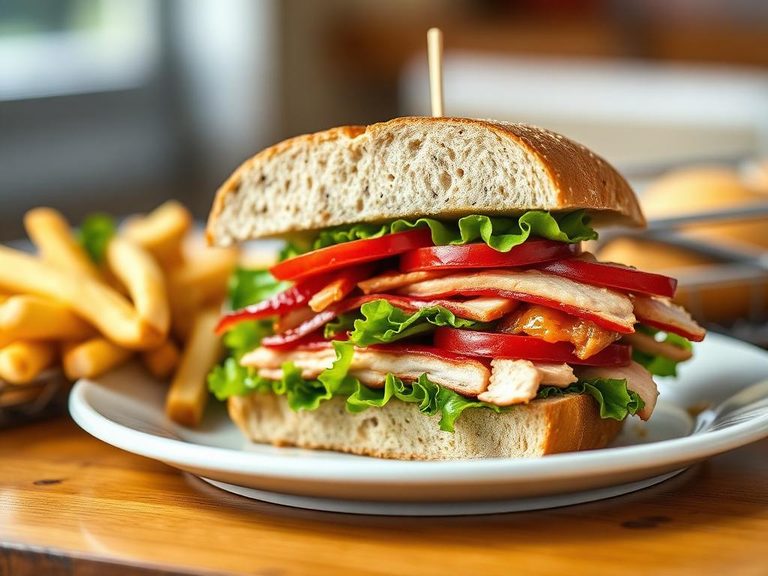

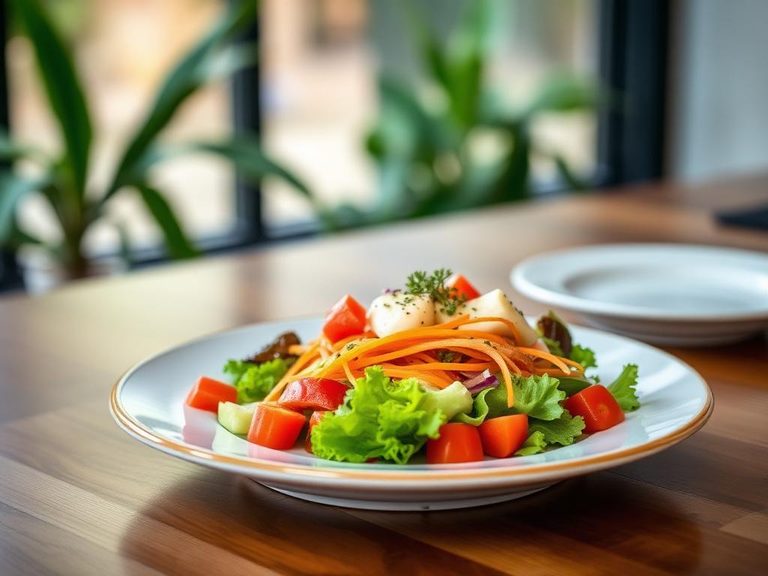
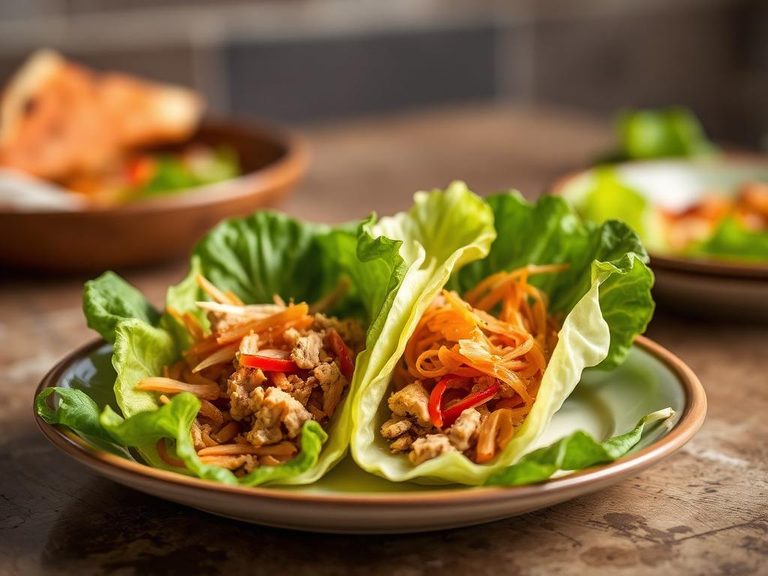
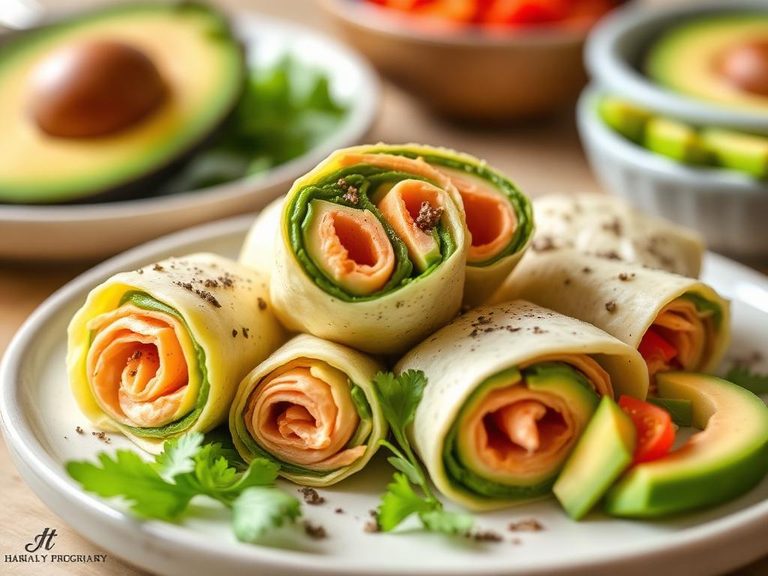
🌍 Where it's eaten
💡 Did you know?
The rotisserie method, where the whole bird is skewered and rotated, is believed to date back to the Byzantine Empire and was a common cooking technique in medieval Europe.
Full nutrition (USDA data · scales with serving)
| Water | 72.0 g |
| Energy | 112 kcal |
| Energy | 468 kj |
| Protein | 13.5 g |
| Total lipid (fat) | 3.0 g |
| Ash | 3.8 g |
| Carbohydrate, by difference | 7.7 g |
| Fiber, total dietary | 0.40 g |
| Total Sugars | 4.0 g |
| Calcium, Ca | 16.0 mg |
| Iron, Fe | 2.2 mg |
| Magnesium, Mg | 20.0 mg |
| Phosphorus, P | 158 mg |
| Potassium, K | 349 mg |
| Sodium, Na | 1200 mg |
| Zinc, Zn | 2.1 mg |
| Copper, Cu | 0.04 mg |
| Manganese, Mn | 0.02 mg |
| Selenium, Se | 29.9 ug |
| Vitamin C, total ascorbic acid | 10.0 mg |
| Thiamin | 0.03 mg |
| Riboflavin | 0.11 mg |
| Niacin | 5.2 mg |
| Pantothenic acid | 0.58 mg |
| Vitamin B-6 | 0.29 mg |
| Folate, total | 4.0 ug |
| Folic acid | 0.00 ug |
| Folate, food | 4.0 ug |
| Folate, DFE | 4.0 ug |
| Vitamin B-12 | 0.22 ug |
| Vitamin A, RAE | 2.0 ug |
| Retinol | 2.0 ug |
| Carotene, beta | 0.00 ug |
| Carotene, alpha | 0.00 ug |
| Cryptoxanthin, beta | 0.00 ug |
| Vitamin A, IU | 8.0 iu |
| Lycopene | 0.00 ug |
| Lutein + zeaxanthin | 0.00 ug |
| Vitamin K (phylloquinone) | 0.00 ug |
| Alcohol, ethyl | 0.00 g |
| Caffeine | 0.00 mg |
| Theobromine | 0.00 mg |
Fat & fatty acid profile (per 100g)
| Fatty acids, total saturated | 0.12 g |
| SFA 4:0 | 0.00 g |
| SFA 6:0 | 0.00 g |
| SFA 8:0 | 0.00 g |
| SFA 10:0 | 0.00 g |
| SFA 12:0 | 0.00 g |
| SFA 14:0 | 0.00 g |
| SFA 16:0 | 0.09 g |
| SFA 18:0 | 0.03 g |
| Fatty acids, total monounsaturated | 0.59 g |
| MUFA 16:1 | 0.10 g |
| MUFA 18:1 | 0.49 g |
| MUFA 20:1 | 0.00 g |
| MUFA 22:1 | 0.00 g |
| Fatty acids, total polyunsaturated | 0.37 g |
| PUFA 18:2 | 0.32 g |
| PUFA 18:3 | 0.02 g |
| PUFA 18:4 | 0.00 g |
| PUFA 20:4 | 0.02 g |
| PUFA 20:5 n-3 (EPA) | 0.00 g |
| PUFA 22:5 n-3 (DPA) | 0.00 g |
| PUFA 22:6 n-3 (DHA) | 0.00 g |
| Cholesterol | 55.0 mg |
Amino acid profile (per 100g)
| Tryptophan | 0.15 g |
| Threonine | 0.60 g |
| Isoleucine | 0.70 g |
| Leucine | 1.1 g |
| Lysine | 1.3 g |
| Methionine | 0.39 g |
| Cystine | 0.14 g |
| Phenylalanine | 0.54 g |
| Tyrosine | 0.53 g |
| Valine | 0.72 g |
| Arginine | 0.94 g |
| Histidine | 0.42 g |
| Alanine | 0.84 g |
| Aspartic acid | 1.3 g |
| Glutamic acid | 2.2 g |
| Glycine | 0.67 g |
| Proline | 0.56 g |
| Serine | 0.60 g |
FAQ
Is deli turkey processed meat?
Yes, it is considered a processed meat because it has been cured, seasoned, and cooked before slicing. This processing often includes added sodium and sometimes nitrates/nitrites for preservation and color.
How long does it last after opening?
Once opened, it should be stored in an airtight container in the refrigerator and consumed within 3 to 5 days for best quality and safety.
Can I freeze leftover slices?
Yes, you can freeze it for up to 1-2 months. Place slices between pieces of parchment paper in a freezer bag to prevent them from sticking together. Thaw in the refrigerator before use.
Nutrient density (calculated · NRF9.3)
Nutrient Rich Foods index: beneficial nutrients (protein, fiber, vitamins, minerals) minus saturated fat, added sugar & sodium, per 100 kcal.
NRF9.3 index — Fulgoni, Keast & Drewnowski, 2009. Computed from USDA nutrients.
Weight-loss friendliness (composite index)
Energy density 1.12 kcal/g · 48% calories from protein · 0.4 g fiber · 4.0 g sugar per 100 g.
Composite of energy density (Rolls et al., 1999), protein & fiber satiety, minus sugar. A calculated heuristic — ranks satiety-per-calorie, not a clinical measure.
Dietary load (calculated from USDA values)
Potential renal acid load. Positive = acid-forming, negative = alkaline-forming.
Sodium-to-potassium ratio: 3.44 (lower is better — aim for ≤ 1)
Sodium:potassium per WHO potassium guidance. Computed from USDA nutrients.