

Tea, iced, instant, black, unsweetened, dry
Common food

Photo: Wikipedia
Instant black iced tea powder is a concentrated, dark amber granule that dissolves instantly in cold water, yielding a brisk, tannic, and slightly malty brew. Nutritionally, it's a surprisingly potent source of plant-based protein and dietary fiber for a beverage powder, with virtually no fat.
Calorie split: 26% protein · 74% carbs · 0% fat
↓ Full nutrition💚 Why it's loved
It's beloved for its instant convenience and bold, authentic black tea flavor that makes a perfect base for sweet tea, Arnold Palmers, or a quick energy boost. Its versatility allows it to be mixed into smoothies, yogurt, or even used in dry rubs.
⚠️ Watch-outs & how to enjoy it better
The high fiber content can cause digestive discomfort if consumed in large quantities without adequate water. The natural tannins may inhibit iron absorption, so it's best consumed between meals. To counteract this, pair it with a source of vitamin C (like a squeeze of lemon) to enhance iron uptake.
Key benefits
- High in soluble fiber from tea leaves
- Significant plant-based protein content
- Zero fat and low in sugar
- Provides antioxidants like catechins and theaflavins
- Convenient source of hydration and mild caffeine
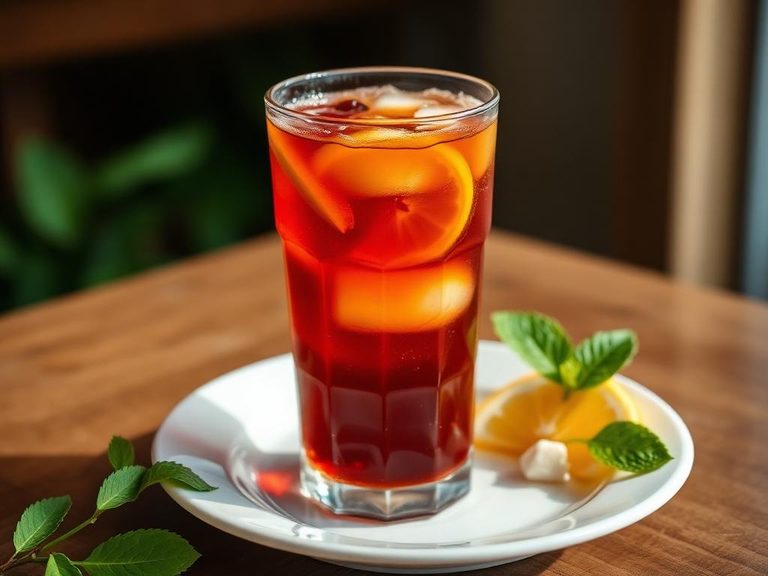
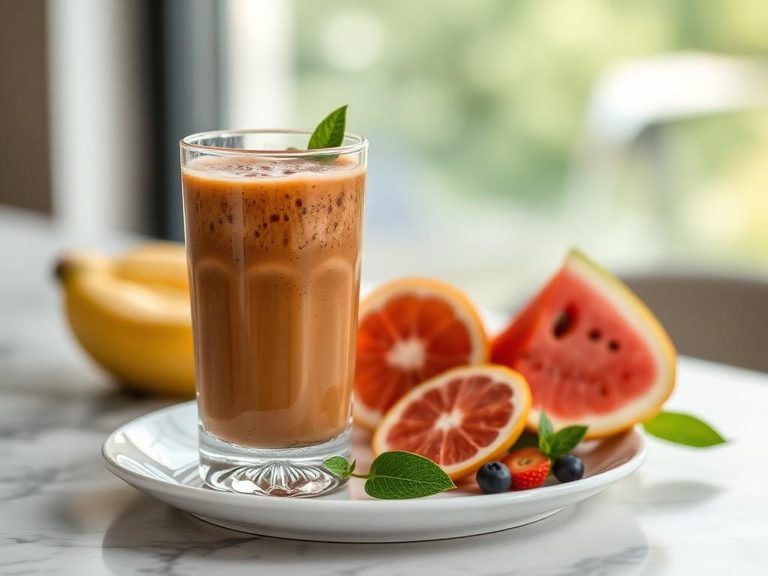
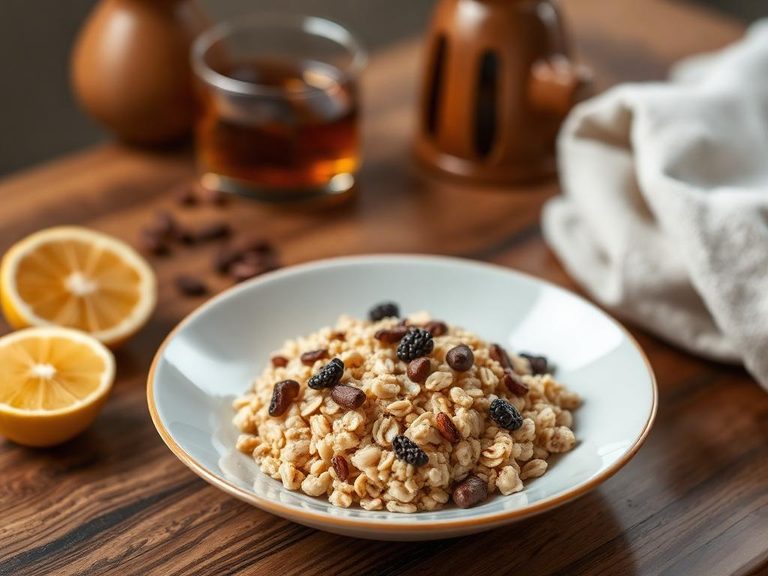
🍽️ Popular dishes



🌍 Where it's eaten
💡 Did you know?
The protein content (20.21g per 100g) is higher than that of whole wheat flour, making it one of the most protein-dense beverage powders available.
Full nutrition (USDA data · scales with serving)
| Water | 5.1 g |
| Energy | 315 kcal |
| Protein | 20.2 g |
| Total lipid (fat) | 0.00 g |
| Carbohydrate, by difference | 58.7 g |
| Fiber, total dietary | 8.5 g |
| Total Sugars | 5.5 g |
| Calcium, Ca | 118 mg |
| Iron, Fe | 2.3 mg |
| Magnesium, Mg | 272 mg |
| Phosphorus, P | 239 mg |
| Potassium, K | 6040 mg |
| Sodium, Na | 72.0 mg |
| Zinc, Zn | 1.7 mg |
| Copper, Cu | 0.55 mg |
| Selenium, Se | 5.3 ug |
| Vitamin C, total ascorbic acid | 0.00 mg |
| Thiamin | 0.00 mg |
| Riboflavin | 0.98 mg |
| Niacin | 10.8 mg |
| Vitamin B-6 | 0.36 mg |
| Folate, total | 103 ug |
| Folic acid | 0.00 ug |
| Folate, food | 103 ug |
| Folate, DFE | 103 ug |
| Choline, total | 118 mg |
| Vitamin B-12 | 0.00 ug |
| Vitamin B-12, added | 0.00 ug |
| Vitamin A, RAE | 0.00 ug |
| Retinol | 0.00 ug |
| Carotene, beta | 0.00 ug |
| Carotene, alpha | 0.00 ug |
| Cryptoxanthin, beta | 0.00 ug |
| Lycopene | 0.00 ug |
| Lutein + zeaxanthin | 0.00 ug |
| Vitamin E (alpha-tocopherol) | 0.00 mg |
| Vitamin E, added | 0.00 mg |
| Vitamin D (D2 + D3) | 0.00 ug |
| Vitamin K (phylloquinone) | 0.00 ug |
| Alcohol, ethyl | 0.00 g |
| Caffeine | 5714 mg |
| Theobromine | 71.0 mg |
Fat & fatty acid profile (per 100g)
| Fatty acids, total saturated | 0.00 g |
| SFA 4:0 | 0.00 g |
| SFA 6:0 | 0.00 g |
| SFA 8:0 | 0.00 g |
| SFA 10:0 | 0.00 g |
| SFA 12:0 | 0.00 g |
| SFA 14:0 | 0.00 g |
| SFA 16:0 | 0.04 g |
| SFA 18:0 | 0.01 g |
| Fatty acids, total monounsaturated | 0.00 g |
| MUFA 16:1 | 0.00 g |
| MUFA 18:1 | 0.01 g |
| MUFA 20:1 | 0.00 g |
| MUFA 22:1 | 0.00 g |
| Fatty acids, total polyunsaturated | 0.00 g |
| PUFA 18:2 | 0.04 g |
| PUFA 18:3 | 0.08 g |
| PUFA 18:4 | 0.00 g |
| PUFA 20:4 | 0.00 g |
| PUFA 20:5 n-3 (EPA) | 0.00 g |
| PUFA 22:5 n-3 (DPA) | 0.00 g |
| PUFA 22:6 n-3 (DHA) | 0.00 g |
| Cholesterol | 0.00 mg |
Amino acid profile (per 100g)
Estimated from Cookies, animal crackers (includes arrowroot, tea biscuits) — USDA does not publish this profile for Tea.
| Tryptophan | 0.10 g |
| Threonine | 0.19 g |
| Isoleucine | 0.26 g |
| Leucine | 0.47 g |
| Lysine | 0.24 g |
| Methionine | 0.12 g |
| Cystine | 0.15 g |
| Phenylalanine | 0.32 g |
| Tyrosine | 0.20 g |
| Valine | 0.30 g |
| Arginine | 0.26 g |
| Histidine | 0.14 g |
| Alanine | 0.21 g |
| Aspartic acid | 0.29 g |
| Glutamic acid | 2.3 g |
| Glycine | 0.23 g |
| Proline | 0.76 g |
| Serine | 0.36 g |
FAQ
How does this compare to regular brewed black tea?
This powder is a concentrated form of brewed tea that has been dehydrated. It retains most of the antioxidants and flavor compounds but has a much higher density of nutrients like fiber and protein per gram.
Can I use this in baking?
Yes, it's excellent for adding a deep tea flavor to cakes, cookies, or shortbread. Use about 1-2 teaspoons per cup of flour for a subtle infusion.
Why is the sugar listed as 5.53g if it's unsweetened?
That is the naturally occurring sugar present in the tea leaves themselves (like glucose and fructose), not added sugar.
Nutrient density (calculated · NRF9.3)
Nutrient Rich Foods index: beneficial nutrients (protein, fiber, vitamins, minerals) minus saturated fat, added sugar & sodium, per 100 kcal.
NRF9.3 index — Fulgoni, Keast & Drewnowski, 2009. Computed from USDA nutrients.
Weight-loss friendliness (composite index)
Energy density 3.15 kcal/g · 26% calories from protein · 8.5 g fiber · 5.5 g sugar per 100 g.
Composite of energy density (Rolls et al., 1999), protein & fiber satiety, minus sugar. A calculated heuristic — ranks satiety-per-calorie, not a clinical measure.
Dietary load (calculated from USDA values)
Potential renal acid load. Positive = acid-forming, negative = alkaline-forming.
Sodium-to-potassium ratio: 0.01 (lower is better — aim for ≤ 1)
Sodium:potassium per WHO potassium guidance. Computed from USDA nutrients.