

Strawberries, frozen
Common food
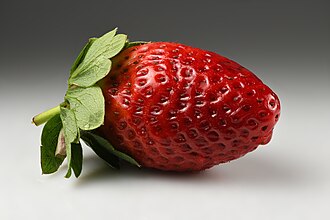
Photo: Wikipedia
Frozen strawberries are whole or sliced berries flash-frozen at peak ripeness, preserving their vibrant red color and sweet-tart flavor. Their texture softens upon thawing, making them ideal for blending or cooking rather than fresh eating. Nutritionally, they are a low-calorie, high-fiber source of vitamin C and natural sugars.
Calorie split: 4% protein · 93% carbs · 3% fat
↓ Full nutrition💚 Why it's loved
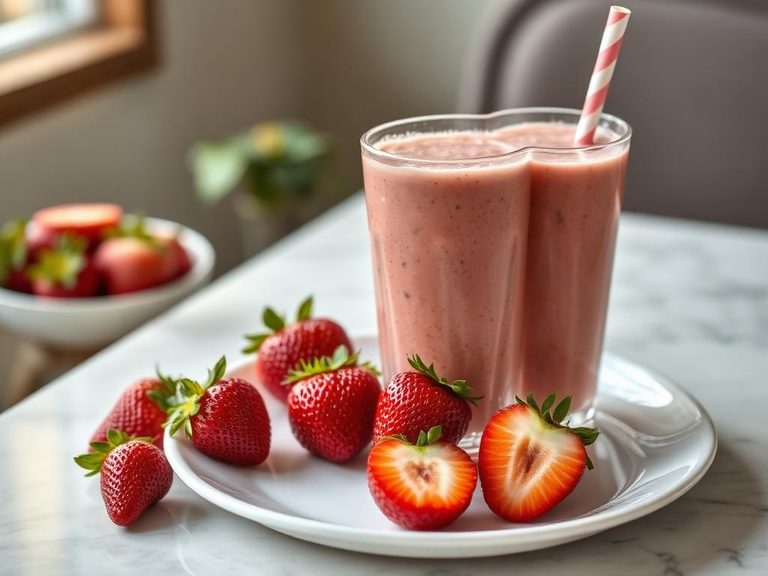
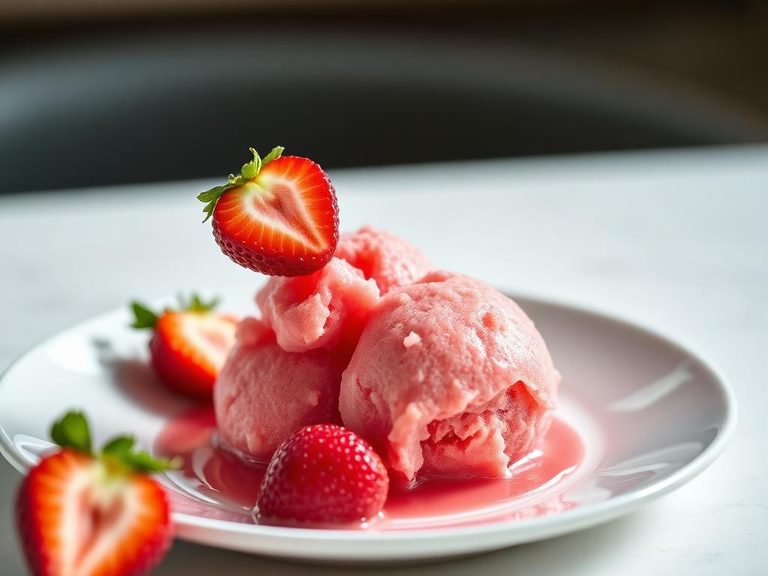
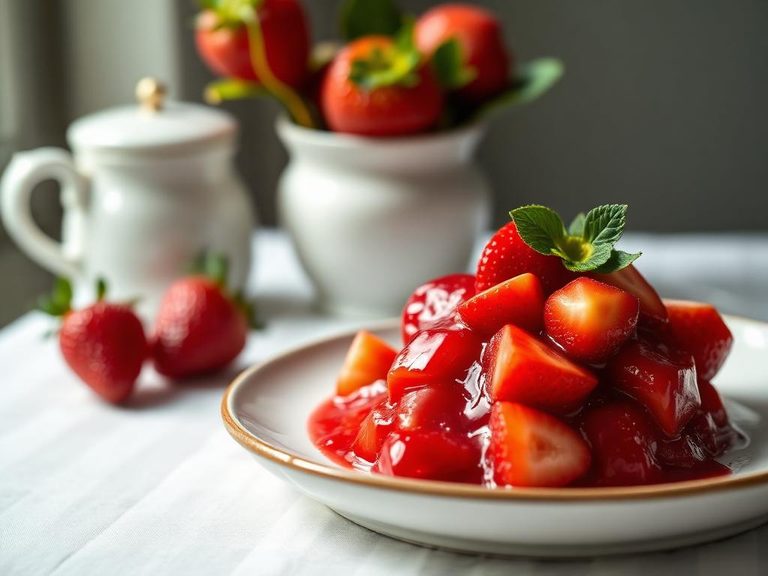
People love them for their intense, concentrated berry flavor and the convenience of having summer fruit available anytime. They are a staple for smoothies, desserts, and sauces, offering a sweet-tart burst that brightens many dishes.
⚠️ Watch-outs & how to enjoy it better
Thawed frozen strawberries can become mushy, which some find unappealing for fresh applications. Those monitoring blood sugar should be mindful of their natural sugar content, especially when consumed in large quantities or as juice. To counteract, pair with a protein or fat source like yogurt or nuts, or use them in balanced meals rather than as a standalone snack.
Key benefits
- High in vitamin C for immune support
- Good source of dietary fiber for digestion
- Low in calories and fat
- Contains antioxidants like anthocyanins
- Convenient year-round availability
🍽️ Popular dishes
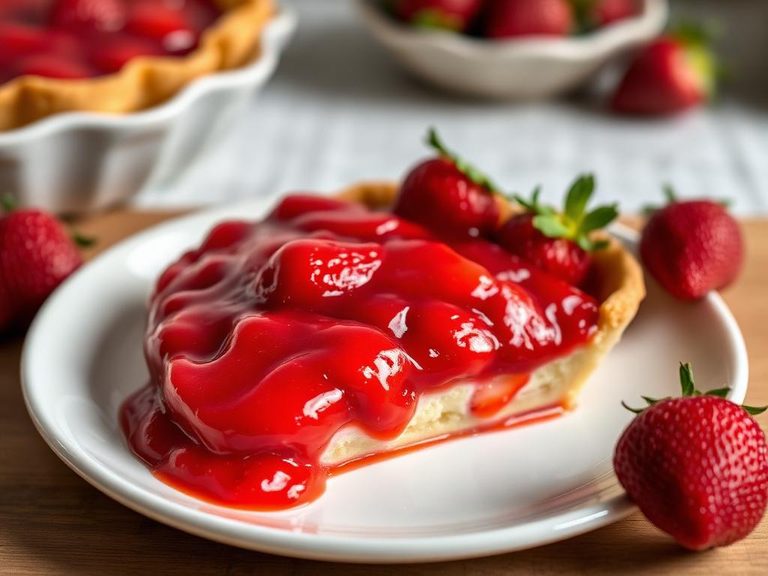
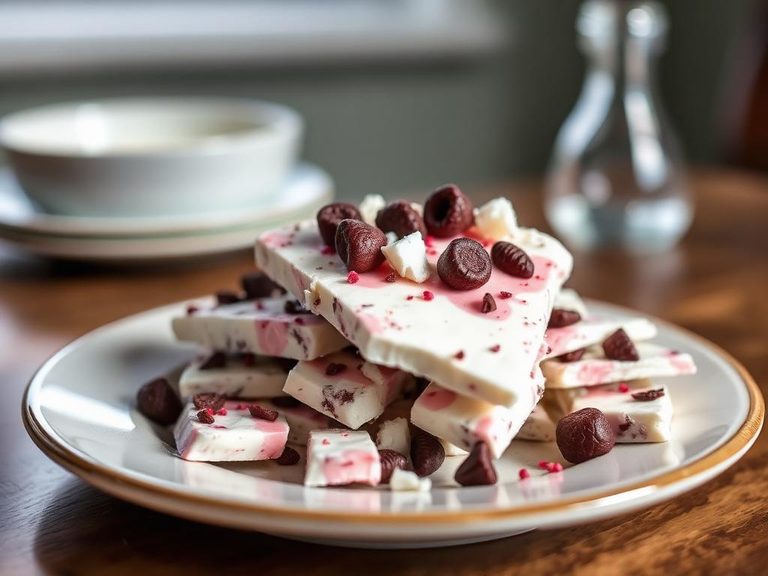
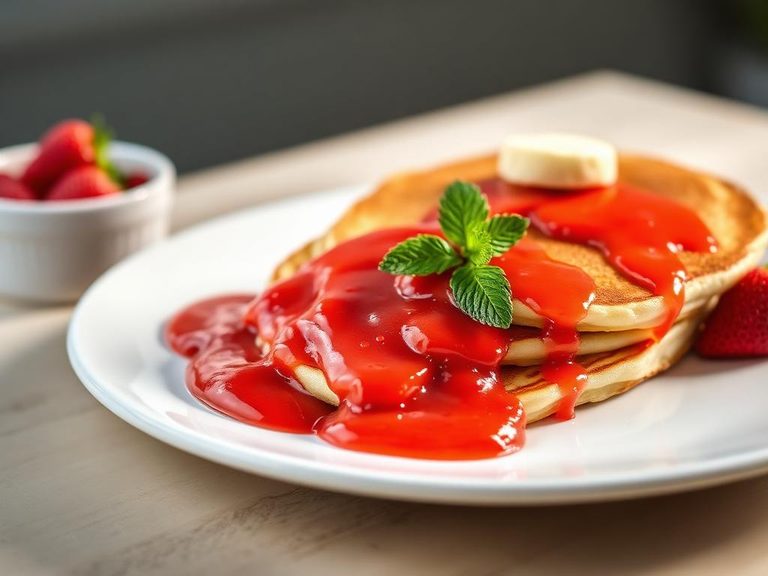
🌍 Where it's eaten
💡 Did you know?
Strawberries are the only fruit with seeds on the outside, with an average of about 200 seeds per berry.
Full nutrition (USDA data · scales with serving)
| Water | 90.0 g |
| Energy | 35.0 kcal |
| Protein | 0.43 g |
| Total lipid (fat) | 0.11 g |
| Carbohydrate, by difference | 9.1 g |
| Fiber, total dietary | 2.1 g |
| Total Sugars | 4.6 g |
| Calcium, Ca | 16.0 mg |
| Iron, Fe | 0.75 mg |
| Magnesium, Mg | 11.0 mg |
| Phosphorus, P | 13.0 mg |
| Potassium, K | 148 mg |
| Sodium, Na | 2.0 mg |
| Zinc, Zn | 0.13 mg |
| Copper, Cu | 0.05 mg |
| Selenium, Se | 0.70 ug |
| Vitamin C, total ascorbic acid | 41.2 mg |
| Thiamin | 0.02 mg |
| Riboflavin | 0.04 mg |
| Niacin | 0.46 mg |
| Vitamin B-6 | 0.03 mg |
| Folate, total | 17.0 ug |
| Folic acid | 0.00 ug |
| Folate, food | 17.0 ug |
| Folate, DFE | 17.0 ug |
| Choline, total | 5.7 mg |
| Vitamin B-12 | 0.00 ug |
| Vitamin B-12, added | 0.00 ug |
| Vitamin A, RAE | 2.0 ug |
| Retinol | 0.00 ug |
| Carotene, beta | 27.0 ug |
| Carotene, alpha | 0.00 ug |
| Cryptoxanthin, beta | 0.00 ug |
| Lycopene | 0.00 ug |
| Lutein + zeaxanthin | 26.0 ug |
| Vitamin E (alpha-tocopherol) | 0.29 mg |
| Vitamin E, added | 0.00 mg |
| Vitamin D (D2 + D3) | 0.00 ug |
| Vitamin K (phylloquinone) | 2.2 ug |
| Alcohol, ethyl | 0.00 g |
| Caffeine | 0.00 mg |
| Theobromine | 0.00 mg |
Fat & fatty acid profile (per 100g)
| Fatty acids, total saturated | 0.01 g |
| SFA 4:0 | 0.00 g |
| SFA 6:0 | 0.00 g |
| SFA 8:0 | 0.00 g |
| SFA 10:0 | 0.00 g |
| SFA 12:0 | 0.00 g |
| SFA 14:0 | 0.00 g |
| SFA 16:0 | 0.00 g |
| SFA 18:0 | 0.00 g |
| Fatty acids, total monounsaturated | 0.01 g |
| MUFA 16:1 | 0.00 g |
| MUFA 18:1 | 0.01 g |
| MUFA 20:1 | 0.00 g |
| MUFA 22:1 | 0.00 g |
| Fatty acids, total polyunsaturated | 0.05 g |
| PUFA 18:2 | 0.03 g |
| PUFA 18:3 | 0.02 g |
| PUFA 18:4 | 0.00 g |
| PUFA 20:4 | 0.00 g |
| PUFA 20:5 n-3 (EPA) | 0.00 g |
| PUFA 22:5 n-3 (DPA) | 0.00 g |
| PUFA 22:6 n-3 (DHA) | 0.00 g |
| Cholesterol | 0.00 mg |
Amino acid profile (per 100g)
Estimated from Strawberries, raw — USDA does not publish this profile for Strawberries.
| Tryptophan | 0.01 g |
| Threonine | 0.02 g |
| Isoleucine | 0.02 g |
| Leucine | 0.03 g |
| Lysine | 0.03 g |
| Methionine | 0.00 g |
| Cystine | 0.01 g |
| Phenylalanine | 0.02 g |
| Tyrosine | 0.02 g |
| Valine | 0.02 g |
| Arginine | 0.03 g |
| Histidine | 0.01 g |
| Alanine | 0.03 g |
| Aspartic acid | 0.15 g |
| Glutamic acid | 0.10 g |
| Glycine | 0.03 g |
| Proline | 0.02 g |
| Serine | 0.03 g |
FAQ
Should I thaw frozen strawberries before using them?
It depends on the recipe. For smoothies or sauces, you can often blend them frozen. For baking or eating, thawing in the refrigerator or at room temperature is best.
Are frozen strawberries as nutritious as fresh?
Yes, they are often equally or more nutritious because they are frozen at peak ripeness, locking in vitamins and antioxidants that can degrade over time in fresh berries.
How should I store opened frozen strawberries?
Return them to the freezer in an airtight container or resealable bag, pressing out excess air to prevent freezer burn. They are best used within 6-8 months.
Nutrient density (calculated · NRF9.3)
Nutrient Rich Foods index: beneficial nutrients (protein, fiber, vitamins, minerals) minus saturated fat, added sugar & sodium, per 100 kcal.
NRF9.3 index — Fulgoni, Keast & Drewnowski, 2009. Computed from USDA nutrients.
Weight-loss friendliness (composite index)
Energy density 0.35 kcal/g · 5% calories from protein · 2.1 g fiber · 4.6 g sugar per 100 g.
Composite of energy density (Rolls et al., 1999), protein & fiber satiety, minus sugar. A calculated heuristic — ranks satiety-per-calorie, not a clinical measure.
Dietary load (calculated from USDA values)
Potential renal acid load. Positive = acid-forming, negative = alkaline-forming.
Sodium-to-potassium ratio: 0.01 (lower is better — aim for ≤ 1)
Sodium:potassium per WHO potassium guidance. Computed from USDA nutrients.