

Squash, winter, souffle
Common food

Photo: Wikipedia
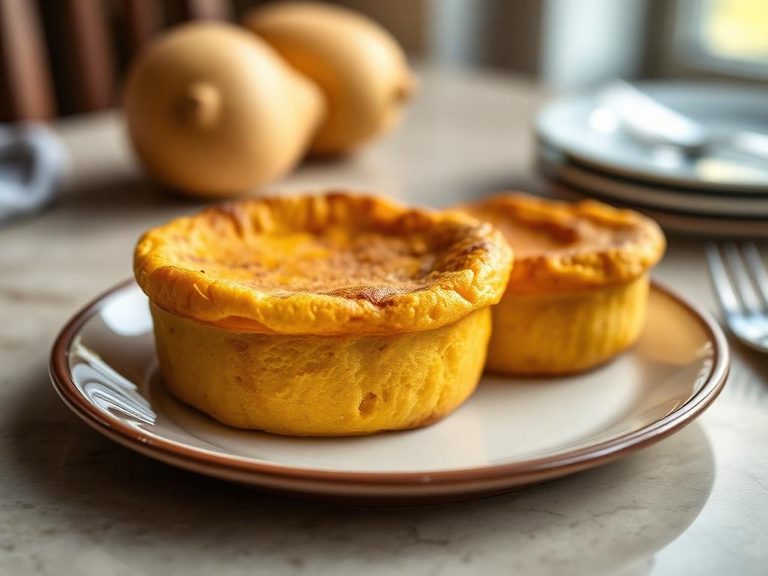
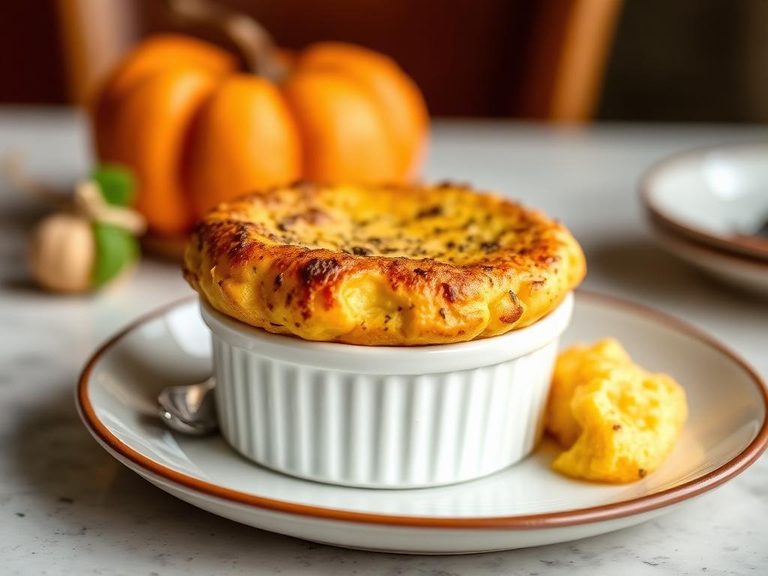
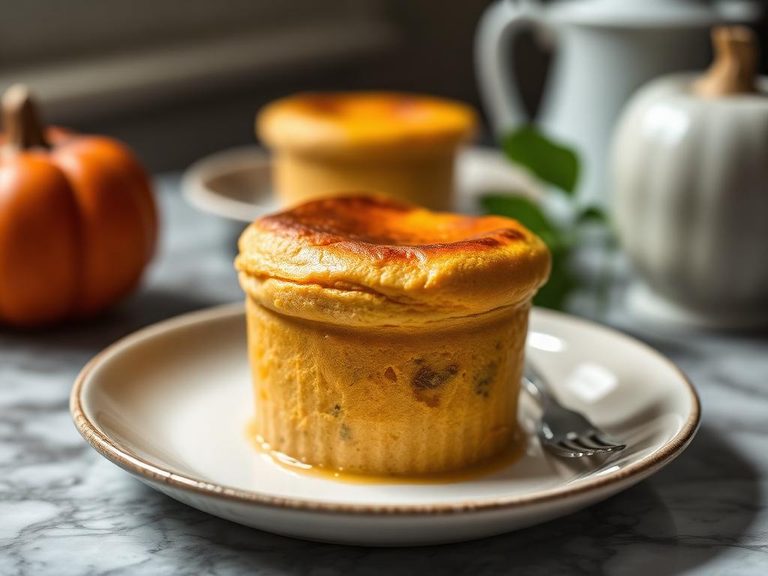
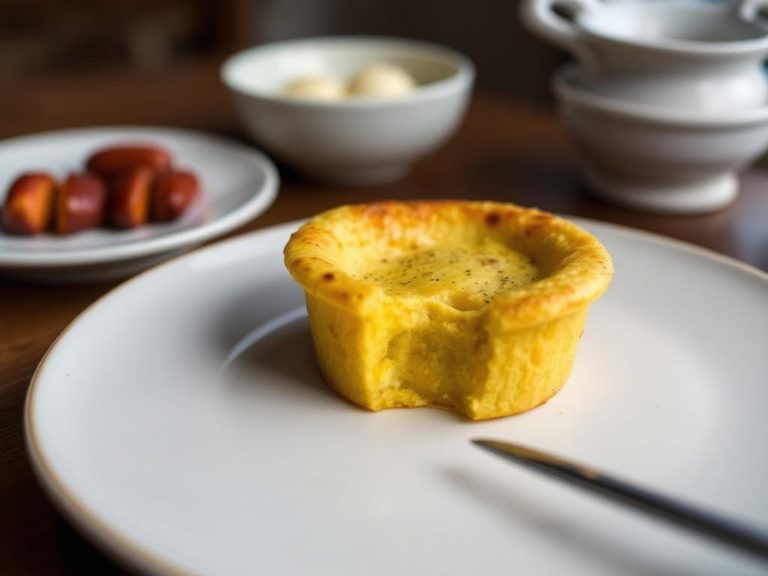
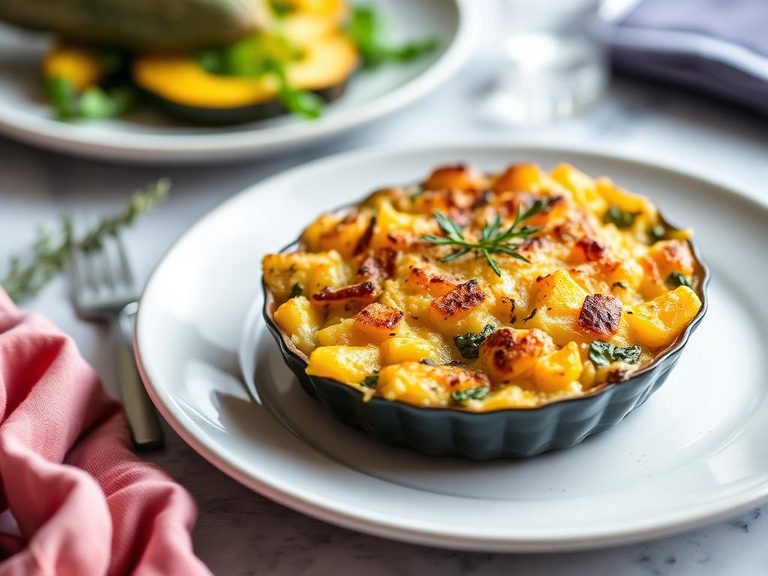
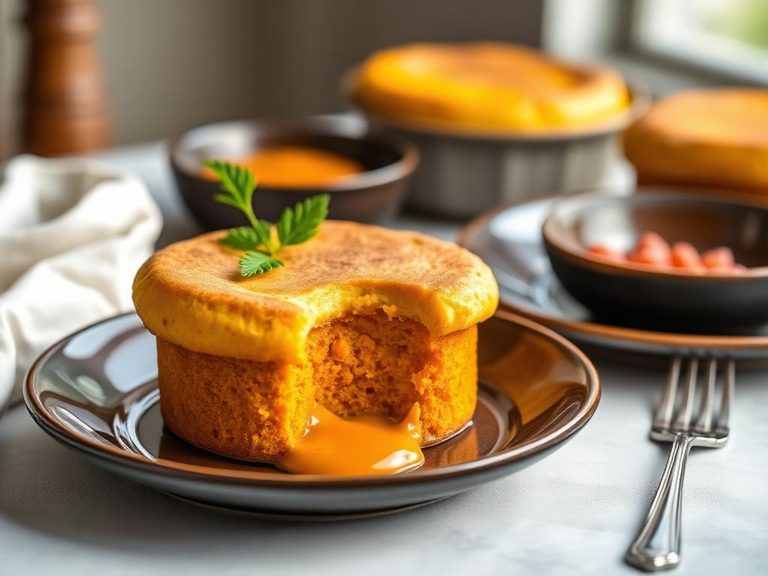
Winter squash soufflé is a light, airy, and savory baked dish where puréed winter squash (like butternut or acorn) is folded into whipped eggs and baked until puffed. It has a delicate, custardy texture with a subtle, sweet, and nutty squash flavor. Nutritionally, it's a low-calorie, high-fiber side dish that provides a good source of vitamins A and C from the squash itself.
Calorie split: 16% protein · 59% carbs · 25% fat
↓ Full nutrition💚 Why it's loved
People love it for its elegant, cloud-like texture that transforms humble winter squash into a sophisticated dish. It's cherished for its comforting, subtly sweet flavor that pairs beautifully with savory herbs like sage and thyme, making it a versatile holiday staple.
⚠️ Watch-outs & how to enjoy it better
The high egg content can be a concern for those with egg allergies. Its light texture can cause a rapid rise in blood sugar for some, as the refined purée lacks whole-food fiber structure. To counteract, pair it with a protein-rich main (like roast turkey or chicken) and a source of healthy fat (like a drizzle of olive oil or a side salad with vinaigrette) to slow digestion and stabilize blood sugar response.
Key benefits
- Excellent source of beta-carotene (vitamin A) for eye and immune health.
- High in dietary fiber, promoting digestive health and sati.g
- Low in calories and fat, making it a light, nutrient-dense side dish.
- Provides a good amount of vitamin C and potassium.
- Naturally gluten-free, suitable for gluten-sensitive diets.
🍽️ Popular dishes
🌍 Where it's eaten
💡 Did you know?
A classic soufflé relies entirely on the air trapped in whipped egg whites for its rise—no baking powder or soda is used, making it a pure feat of kitchen physics.
Full nutrition (USDA data · scales with serving)
| Water | 81.1 g |
| Energy | 78.0 kcal |
| Protein | 3.4 g |
| Total lipid (fat) | 2.3 g |
| Carbohydrate, by difference | 12.1 g |
| Fiber, total dietary | 2.1 g |
| Total Sugars | 5.8 g |
| Calcium, Ca | 35.0 mg |
| Iron, Fe | 0.79 mg |
| Magnesium, Mg | 13.0 mg |
| Phosphorus, P | 57.0 mg |
| Potassium, K | 216 mg |
| Sodium, Na | 164 mg |
| Zinc, Zn | 0.44 mg |
| Copper, Cu | 0.07 mg |
| Selenium, Se | 6.4 ug |
| Vitamin C, total ascorbic acid | 7.0 mg |
| Thiamin | 0.05 mg |
| Riboflavin | 0.14 mg |
| Niacin | 0.54 mg |
| Vitamin B-6 | 0.13 mg |
| Folate, total | 27.0 ug |
| Folic acid | 3.0 ug |
| Folate, food | 25.0 ug |
| Folate, DFE | 29.0 ug |
| Choline, total | 56.5 mg |
| Vitamin B-12 | 0.17 ug |
| Vitamin B-12, added | 0.00 ug |
| Vitamin A, RAE | 225 ug |
| Retinol | 36.0 ug |
| Carotene, beta | 2028 ug |
| Carotene, alpha | 495 ug |
| Cryptoxanthin, beta | 2.0 ug |
| Lycopene | 0.00 ug |
| Lutein + zeaxanthin | 1117 ug |
| Vitamin E (alpha-tocopherol) | 0.28 mg |
| Vitamin E, added | 0.00 mg |
| Vitamin D (D2 + D3) | 0.50 ug |
| Vitamin K (phylloquinone) | 3.3 ug |
| Alcohol, ethyl | 0.00 g |
| Caffeine | 0.00 mg |
| Theobromine | 0.00 mg |
Fat & fatty acid profile (per 100g)
| Fatty acids, total saturated | 0.75 g |
| SFA 4:0 | 0.00 g |
| SFA 6:0 | 0.00 g |
| SFA 8:0 | 0.00 g |
| SFA 10:0 | 0.00 g |
| SFA 12:0 | 0.01 g |
| SFA 14:0 | 0.05 g |
| SFA 16:0 | 0.50 g |
| SFA 18:0 | 0.16 g |
| Fatty acids, total monounsaturated | 0.70 g |
| MUFA 16:1 | 0.05 g |
| MUFA 18:1 | 0.65 g |
| MUFA 20:1 | 0.00 g |
| MUFA 22:1 | 0.00 g |
| Fatty acids, total polyunsaturated | 0.45 g |
| PUFA 18:2 | 0.32 g |
| PUFA 18:3 | 0.07 g |
| PUFA 18:4 | 0.00 g |
| PUFA 20:4 | 0.00 g |
| PUFA 20:5 n-3 (EPA) | 0.00 g |
| PUFA 22:5 n-3 (DPA) | 0.00 g |
| PUFA 22:6 n-3 (DHA) | 0.00 g |
| Cholesterol | 73.0 mg |
Amino acid profile (per 100g)
Estimated from Squash, summer, crookneck and straightneck, frozen, cooked, boiled, drained, with salt — USDA does not publish this profile for Squash.
| Tryptophan | 0.01 g |
| Threonine | 0.03 g |
| Isoleucine | 0.05 g |
| Leucine | 0.07 g |
| Lysine | 0.07 g |
| Methionine | 0.02 g |
| Cystine | 0.01 g |
| Phenylalanine | 0.04 g |
| Tyrosine | 0.03 g |
| Valine | 0.06 g |
| Arginine | 0.05 g |
| Histidine | 0.03 g |
| Alanine | 0.07 g |
| Aspartic acid | 0.16 g |
| Glutamic acid | 0.14 g |
| Glycine | 0.05 g |
| Proline | 0.04 g |
| Serine | 0.05 g |
FAQ
Can I make winter squash soufflé ahead of time?
It's best served immediately, as soufflés begin to deflate within minutes of leaving the oven. You can prepare the squash purée and egg yolk mixture in advance, but the final whipping and baking should be done just before serving.
What's the best winter squash for a savory soufflé?
Butternut squash is a top choice for its smooth, creamy texture and sweet, nutty flavor. Acorn and delicata squash also work well, offering slightly different flavor profiles.
Why did my soufflé not rise or fall flat?
Common reasons include under-whipped egg whites, over-folding the mixture (which deflates the air), or an oven door being opened too early during baking. Ensure your bowl and whisk are grease-free for maximum egg white volume.
Nutrient density (calculated · NRF9.3)
Nutrient Rich Foods index: beneficial nutrients (protein, fiber, vitamins, minerals) minus saturated fat, added sugar & sodium, per 100 kcal.
NRF9.3 index — Fulgoni, Keast & Drewnowski, 2009. Computed from USDA nutrients.
Weight-loss friendliness (composite index)
Energy density 0.78 kcal/g · 17% calories from protein · 2.1 g fiber · 5.8 g sugar per 100 g.
Composite of energy density (Rolls et al., 1999), protein & fiber satiety, minus sugar. A calculated heuristic — ranks satiety-per-calorie, not a clinical measure.
Dietary load (calculated from USDA values)
Potential renal acid load. Positive = acid-forming, negative = alkaline-forming.
Sodium-to-potassium ratio: 0.76 (lower is better — aim for ≤ 1)
Sodium:potassium per WHO potassium guidance. Computed from USDA nutrients.