

Split peas, from dried, fat added
Common food

Photo: Wikipedia
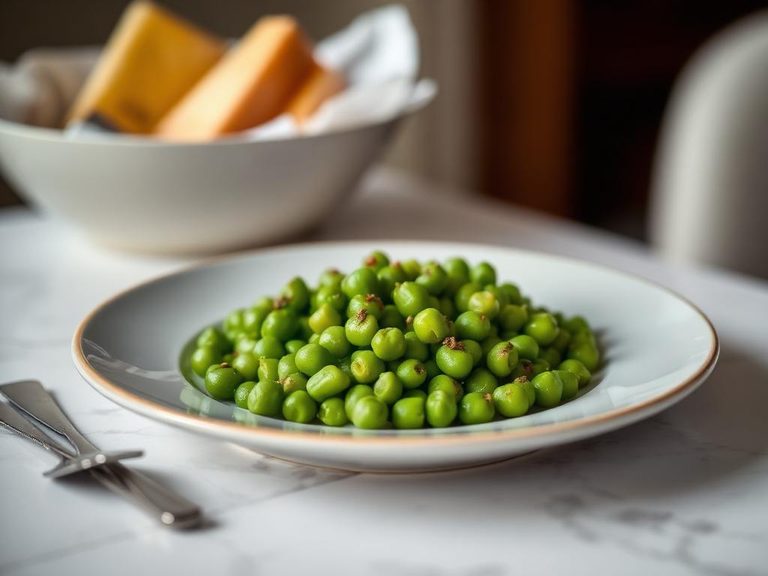
Cooked split peas, prepared from dried with added fat, transform into a thick, creamy, and earthy legume dish with a satisfyingly soft texture. They offer a robust, savory base that absorbs surrounding flavors while delivering a substantial 7.75g of plant-based protein per 100g. This humble staple is a nutritional powerhouse, packing significant fiber (7.7g) alongside its comforting, hearty character.
Calorie split: 18% protein · 46% carbs · 36% fat
↓ Full nutrition💚 Why it's loved
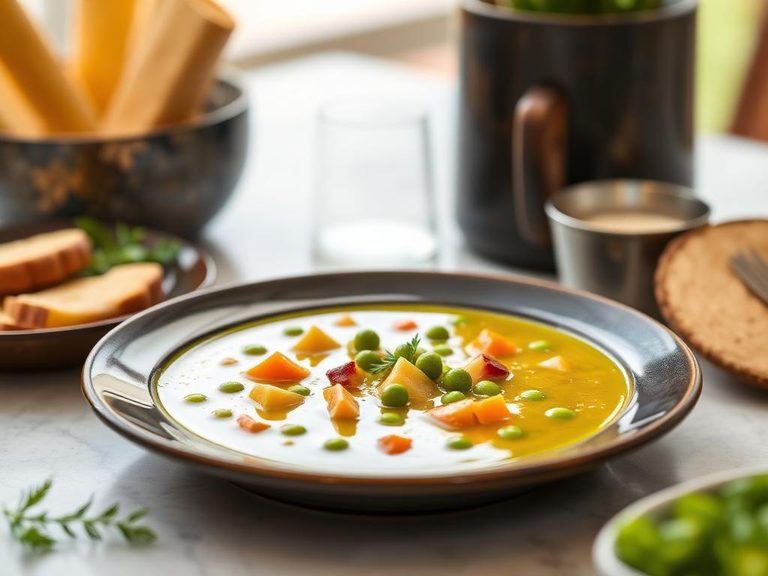
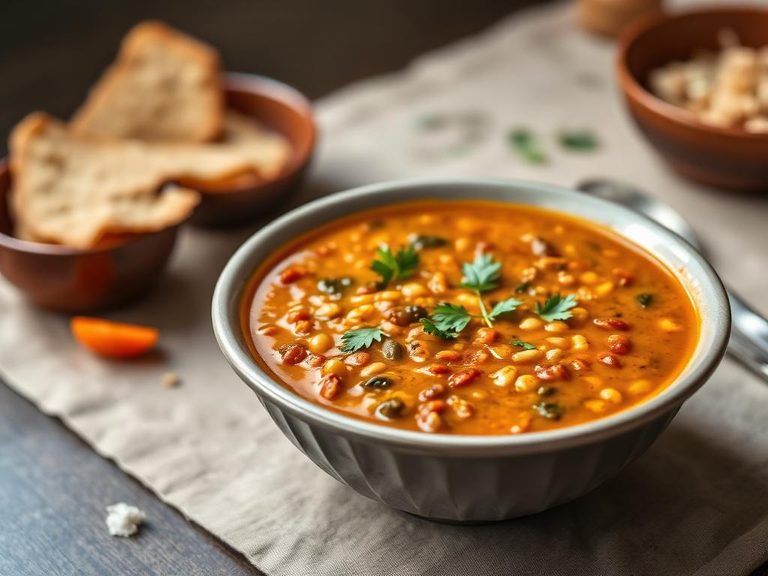
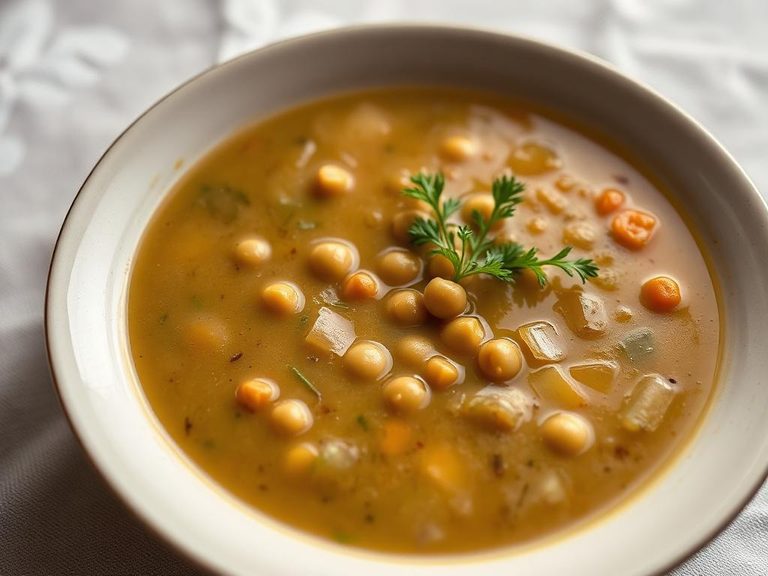
People love split peas for their deeply savory, umami-rich flavor and the velvety, comforting texture they achieve when cooked. They are a culinary chameleon, forming the soul of hearty soups, stews, and dals across countless global cuisines.
⚠️ Watch-outs & how to enjoy it better
The high fiber content can cause digestive discomfort like bloating for those not accustomed to it; gradually increasing intake and ensuring adequate water helps. As a legume, it contains lectins, which are thoroughly deactivated by proper boiling during cooking, and is a common allergen for some individuals.
Key benefits
- Excellent source of plant-based protein and dietary fiber
- Rich in folate, manganese, and other essential minerals
- Provides sustained energy due to complex carbohydrates
- Naturally low in sodium when prepared without added salt
- Supports digestive health through high soluble fiber content
🍽️ Popular dishes
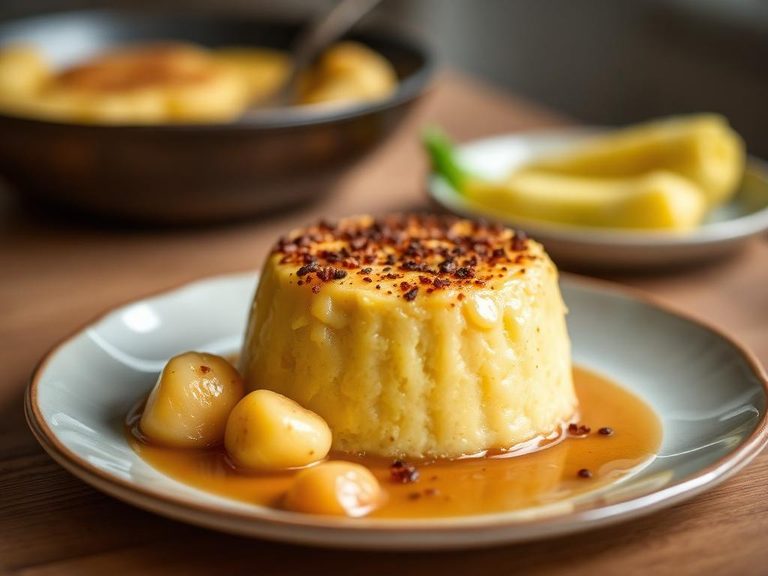
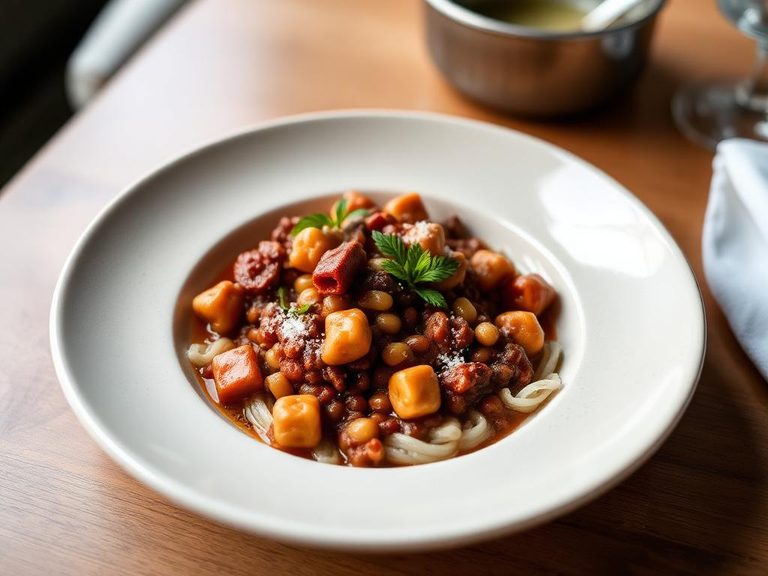
🌍 Where it's eaten
💡 Did you know?
The classic thickener for traditional British pease pudding is the pea's own starch, released during long, slow cooking, requiring no added flour or cream.
Full nutrition (USDA data · scales with serving)
| Water | 64.6 g |
| Energy | 168 kcal |
| Protein | 7.8 g |
| Total lipid (fat) | 6.9 g |
| Carbohydrate, by difference | 19.6 g |
| Fiber, total dietary | 7.7 g |
| Total Sugars | 2.7 g |
| Calcium, Ca | 13.0 mg |
| Iron, Fe | 1.2 mg |
| Magnesium, Mg | 33.0 mg |
| Phosphorus, P | 92.0 mg |
| Potassium, K | 336 mg |
| Sodium, Na | 218 mg |
| Zinc, Zn | 0.93 mg |
| Copper, Cu | 0.17 mg |
| Selenium, Se | 0.60 ug |
| Vitamin C, total ascorbic acid | 0.40 mg |
| Thiamin | 0.17 mg |
| Riboflavin | 0.05 mg |
| Niacin | 0.79 mg |
| Vitamin B-6 | 0.04 mg |
| Folate, total | 57.0 ug |
| Folic acid | 0.00 ug |
| Folate, food | 57.0 ug |
| Folate, DFE | 57.0 ug |
| Choline, total | 30.5 mg |
| Vitamin B-12 | 0.00 ug |
| Vitamin B-12, added | 0.00 ug |
| Vitamin A, RAE | 0.00 ug |
| Retinol | 0.00 ug |
| Carotene, beta | 4.0 ug |
| Carotene, alpha | 0.00 ug |
| Cryptoxanthin, beta | 0.00 ug |
| Lycopene | 0.00 ug |
| Lutein + zeaxanthin | 0.00 ug |
| Vitamin E (alpha-tocopherol) | 1.3 mg |
| Vitamin E, added | 0.00 mg |
| Vitamin D (D2 + D3) | 0.00 ug |
| Vitamin K (phylloquinone) | 11.2 ug |
| Alcohol, ethyl | 0.00 g |
| Caffeine | 0.00 mg |
| Theobromine | 0.00 mg |
Fat & fatty acid profile (per 100g)
| Fatty acids, total saturated | 0.92 g |
| SFA 4:0 | 0.00 g |
| SFA 6:0 | 0.00 g |
| SFA 8:0 | 0.00 g |
| SFA 10:0 | 0.00 g |
| SFA 12:0 | 0.00 g |
| SFA 14:0 | 0.00 g |
| SFA 16:0 | 0.66 g |
| SFA 18:0 | 0.20 g |
| Fatty acids, total monounsaturated | 2.8 g |
| MUFA 16:1 | 0.02 g |
| MUFA 18:1 | 2.8 g |
| MUFA 20:1 | 0.05 g |
| MUFA 22:1 | 0.00 g |
| Fatty acids, total polyunsaturated | 2.7 g |
| PUFA 18:2 | 2.3 g |
| PUFA 18:3 | 0.31 g |
| PUFA 18:4 | 0.00 g |
| PUFA 20:4 | 0.00 g |
| PUFA 20:5 n-3 (EPA) | 0.00 g |
| PUFA 22:5 n-3 (DPA) | 0.00 g |
| PUFA 22:6 n-3 (DHA) | 0.00 g |
| Cholesterol | 0.00 mg |
Amino acid profile (per 100g)
Estimated from Peas, green, split, mature seeds, raw — USDA does not publish this profile for Split peas.
| Tryptophan | 0.16 g |
| Threonine | 0.81 g |
| Isoleucine | 0.98 g |
| Leucine | 1.7 g |
| Lysine | 1.8 g |
| Methionine | 0.20 g |
| Cystine | 0.27 g |
| Phenylalanine | 1.2 g |
| Tyrosine | 0.52 g |
| Valine | 1.0 g |
| Arginine | 1.9 g |
| Histidine | 0.59 g |
| Alanine | 1.0 g |
| Aspartic acid | 2.5 g |
| Glutamic acid | 3.9 g |
| Glycine | 1.0 g |
| Proline | 1.0 g |
| Serine | 1.1 g |
| Hydroxyproline | 0.00 g |
FAQ
Why do my split peas sometimes stay hard even after long cooking?
This is often due to age or improper storage. Older peas can have hardened skins. Using fresh peas, adding a pinch of baking soda (which can affect texture), or soaking them overnight can help ensure even cooking.
Do I need to soak dried split peas before cooking?
Unlike many beans, split peas generally do not require soaking. They cook relatively quickly (45-60 minutes) and will break down naturally. However, a short soak can reduce cooking time slightly.
What is the difference between green and yellow split peas?
Green split peas are more common, with a slightly earthier, grassier flavor. Yellow split peas are milder and sweeter. Nutritionally, they are very similar and can often be used interchangeably in recipes.
Nutrient density (calculated · NRF9.3)
Nutrient Rich Foods index: beneficial nutrients (protein, fiber, vitamins, minerals) minus saturated fat, added sugar & sodium, per 100 kcal.
NRF9.3 index — Fulgoni, Keast & Drewnowski, 2009. Computed from USDA nutrients.
Weight-loss friendliness (composite index)
Energy density 1.68 kcal/g · 18% calories from protein · 7.7 g fiber · 2.7 g sugar per 100 g.
Composite of energy density (Rolls et al., 1999), protein & fiber satiety, minus sugar. A calculated heuristic — ranks satiety-per-calorie, not a clinical measure.
Dietary load (calculated from USDA values)
Potential renal acid load. Positive = acid-forming, negative = alkaline-forming.
Sodium-to-potassium ratio: 0.65 (lower is better — aim for ≤ 1)
Sodium:potassium per WHO potassium guidance. Computed from USDA nutrients.