

Split peas, from dried, no added fat
Common food

Photo: Wikipedia
Split peas are the dried, hulled, and split seeds of the Pisum sativum plant, transforming into a thick, earthy, and subtly sweet soup or dal when simmered. They have a hearty, starchy texture that breaks down into a creamy consistency, making them a staple for comfort food. Nutritionally, they are a powerhouse of plant-based protein and fiber, offering a low-fat, high-energy source for sustained satiety.
Calorie split: 28% protein · 70% carbs · 3% fat
↓ Full nutrition💚 Why it's loved
People love split peas for their deep, comforting flavor and ability to absorb spices and aromatics, making them incredibly versatile in soups and stews. They are a beloved staple in many cultures, often associated with hearty, home-cooked meals and traditional recipes passed down through generations.
⚠️ Watch-outs & how to enjoy it better
The high fiber content can cause digestive discomfort or bloating in some individuals, especially if not accustomed to it. To counteract this, start with smaller portions and ensure adequate hydration. Additionally, the natural sugars can contribute to blood sugar spikes if consumed in large quantities without balancing protein or fat, so pairing with a lean protein or healthy fat is recommended.
Key benefits
- Excellent source of plant-based protein (8.29g per 100g)
- High in dietary fiber (8.2g per 100g) for digestive health
- Very low in fat (0.39g per 100g)
- Rich in complex carbohydrates for sustained energy
- Provides essential minerals like iron and folate
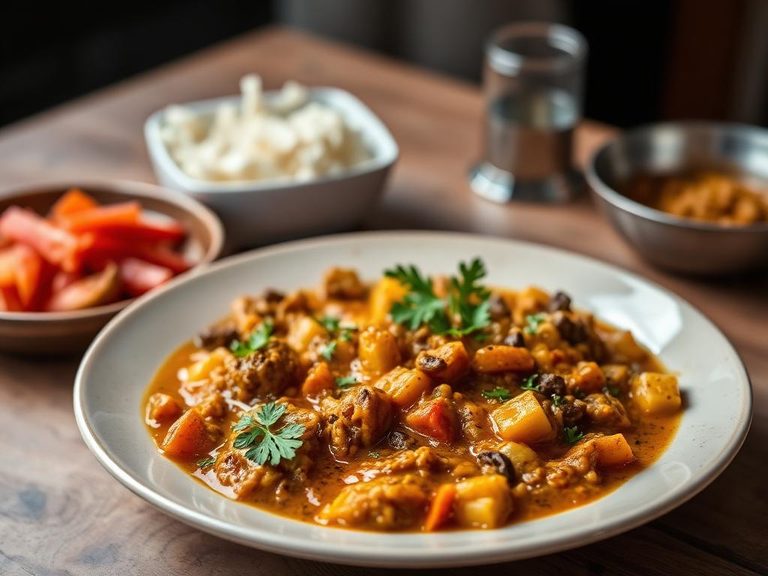
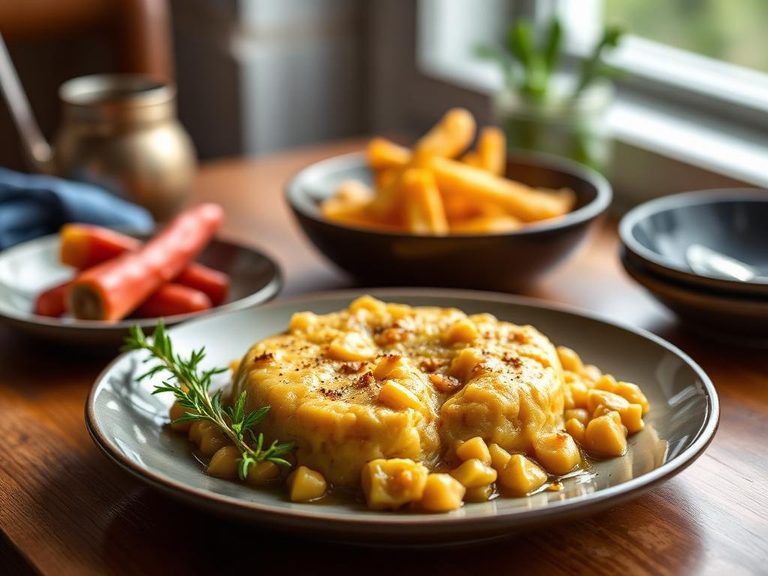
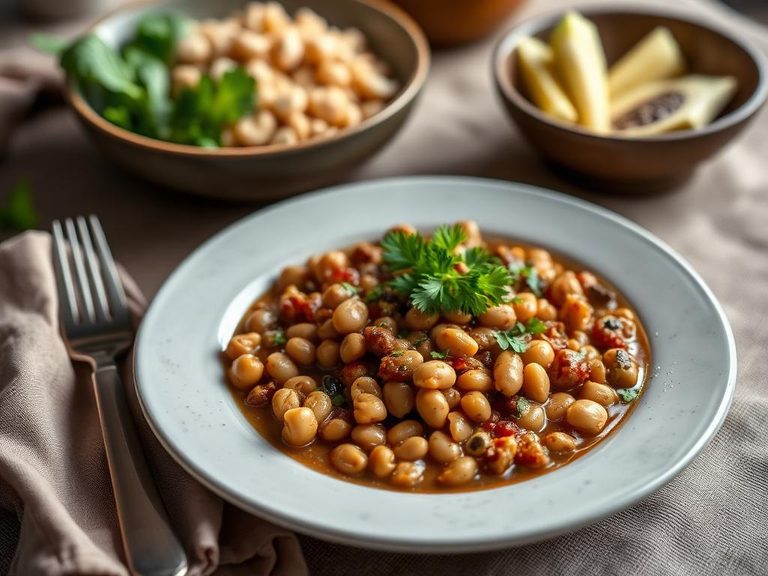
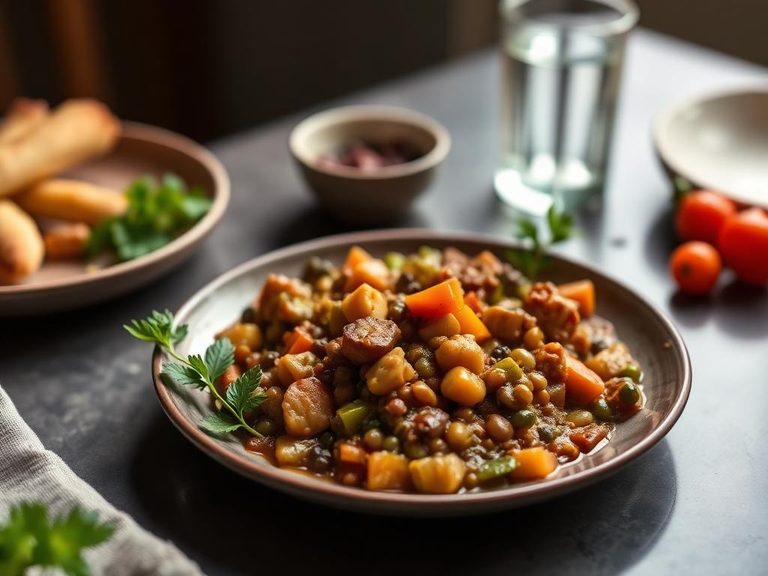
🍽️ Popular dishes

🌍 Where it's eaten
💡 Did you know?
Split peas are actually the dried, peeled, and split seeds of the same plant that gives us green peas, but they are specifically harvested at a later stage for a starchier, more robust texture.
Full nutrition (USDA data · scales with serving)
| Water | 69.1 g |
| Energy | 117 kcal |
| Protein | 8.3 g |
| Total lipid (fat) | 0.39 g |
| Carbohydrate, by difference | 21.0 g |
| Fiber, total dietary | 8.2 g |
| Total Sugars | 2.9 g |
| Calcium, Ca | 14.0 mg |
| Iron, Fe | 1.3 mg |
| Magnesium, Mg | 36.0 mg |
| Phosphorus, P | 98.0 mg |
| Potassium, K | 360 mg |
| Sodium, Na | 233 mg |
| Zinc, Zn | 0.99 mg |
| Copper, Cu | 0.18 mg |
| Selenium, Se | 0.60 ug |
| Vitamin C, total ascorbic acid | 0.40 mg |
| Thiamin | 0.18 mg |
| Riboflavin | 0.05 mg |
| Niacin | 0.84 mg |
| Vitamin B-6 | 0.04 mg |
| Folate, total | 61.0 ug |
| Folic acid | 0.00 ug |
| Folate, food | 61.0 ug |
| Folate, DFE | 61.0 ug |
| Choline, total | 32.6 mg |
| Vitamin B-12 | 0.00 ug |
| Vitamin B-12, added | 0.00 ug |
| Vitamin A, RAE | 0.00 ug |
| Retinol | 0.00 ug |
| Carotene, beta | 4.0 ug |
| Carotene, alpha | 0.00 ug |
| Cryptoxanthin, beta | 0.00 ug |
| Lycopene | 0.00 ug |
| Lutein + zeaxanthin | 0.00 ug |
| Vitamin E (alpha-tocopherol) | 0.03 mg |
| Vitamin E, added | 0.00 mg |
| Vitamin D (D2 + D3) | 0.00 ug |
| Vitamin K (phylloquinone) | 5.0 ug |
| Alcohol, ethyl | 0.00 g |
| Caffeine | 0.00 mg |
| Theobromine | 0.00 mg |
Fat & fatty acid profile (per 100g)
| Fatty acids, total saturated | 0.05 g |
| SFA 4:0 | 0.00 g |
| SFA 6:0 | 0.00 g |
| SFA 8:0 | 0.00 g |
| SFA 10:0 | 0.00 g |
| SFA 12:0 | 0.00 g |
| SFA 14:0 | 0.00 g |
| SFA 16:0 | 0.04 g |
| SFA 18:0 | 0.01 g |
| Fatty acids, total monounsaturated | 0.08 g |
| MUFA 16:1 | 0.00 g |
| MUFA 18:1 | 0.08 g |
| MUFA 20:1 | 0.00 g |
| MUFA 22:1 | 0.00 g |
| Fatty acids, total polyunsaturated | 0.16 g |
| PUFA 18:2 | 0.14 g |
| PUFA 18:3 | 0.03 g |
| PUFA 18:4 | 0.00 g |
| PUFA 20:4 | 0.00 g |
| PUFA 20:5 n-3 (EPA) | 0.00 g |
| PUFA 22:5 n-3 (DPA) | 0.00 g |
| PUFA 22:6 n-3 (DHA) | 0.00 g |
| Cholesterol | 0.00 mg |
Amino acid profile (per 100g)
Estimated from Peas, green, split, mature seeds, raw — USDA does not publish this profile for Split peas.
| Tryptophan | 0.16 g |
| Threonine | 0.81 g |
| Isoleucine | 0.98 g |
| Leucine | 1.7 g |
| Lysine | 1.8 g |
| Methionine | 0.20 g |
| Cystine | 0.27 g |
| Phenylalanine | 1.2 g |
| Tyrosine | 0.52 g |
| Valine | 1.0 g |
| Arginine | 1.9 g |
| Histidine | 0.59 g |
| Alanine | 1.0 g |
| Aspartic acid | 2.5 g |
| Glutamic acid | 3.9 g |
| Glycine | 1.0 g |
| Proline | 1.0 g |
| Serine | 1.1 g |
| Hydroxyproline | 0.00 g |
FAQ
Do I need to soak split peas before cooking?
No, split peas do not require soaking like dried beans; they can be cooked directly, though soaking can reduce cooking time slightly.
Are split peas a good source of protein for vegetarians?
Yes, split peas provide a substantial amount of plant-based protein, making them an excellent choice for vegetarian and vegan diets.
How long does it take to cook split peas?
Split peas typically take 30-45 minutes to cook in a pot, or about 15-20 minutes in a pressure cooker, until they are soft and creamy.
Nutrient density (calculated · NRF9.3)
Nutrient Rich Foods index: beneficial nutrients (protein, fiber, vitamins, minerals) minus saturated fat, added sugar & sodium, per 100 kcal.
NRF9.3 index — Fulgoni, Keast & Drewnowski, 2009. Computed from USDA nutrients.
Weight-loss friendliness (composite index)
Energy density 1.17 kcal/g · 28% calories from protein · 8.2 g fiber · 2.9 g sugar per 100 g.
Composite of energy density (Rolls et al., 1999), protein & fiber satiety, minus sugar. A calculated heuristic — ranks satiety-per-calorie, not a clinical measure.
Dietary load (calculated from USDA values)
Potential renal acid load. Positive = acid-forming, negative = alkaline-forming.
Sodium-to-potassium ratio: 0.65 (lower is better — aim for ≤ 1)
Sodium:potassium per WHO potassium guidance. Computed from USDA nutrients.