

Spinach, fresh, cooked with butter or margarine
Common food
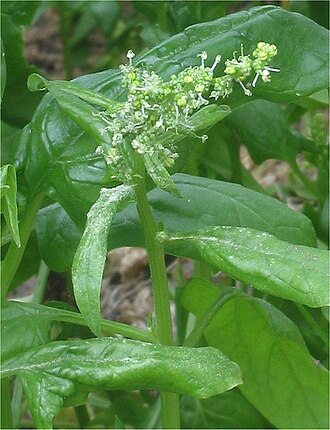
Photo: Wikipedia
Butter-sautéed spinach is a classic side where tender, wilted leaves are enriched with a rich, velvety coating. The flavor is earthy and slightly sweet, with a silky texture that melts in the mouth. At just 55 kcal per 100g, it delivers a notable protein punch (3.33g) and healthy fats, making it a nutrient-dense, low-calorie staple.
Calorie split: 24% protein · 22% carbs · 54% fat
↓ Full nutrition💚 Why it's loved
People love it for the simple, comforting marriage of earthy greens and rich butter, which elevates a humble vegetable into a luxurious side. It's incredibly versatile, pairing perfectly with everything from grilled steak to pasta, and is a cornerstone of home cooking across many cultures.
⚠️ Watch-outs & how to enjoy it better
The oxalates in spinach can inhibit calcium absorption and may be a concern for those with kidney stones. To counteract this, pair it with a calcium-rich food like cheese or yogurt, and consider using young, tender spinach which has lower oxalate levels. The butter also adds saturated fat, so using a moderate portion (1-2 tsp per serving) or opting for olive oil can balance this.
Key benefits
- Excellent source of protein for a vegetable side dish
- High in dietary fiber (1.8g) to support digestion
- Rich in fat-soluble vitamins (A, K) that are better absorbed with butter
- Low in sugar (0.49g) and carbohydrates (3.02g)
- Provides essential minerals like iron and magnesium
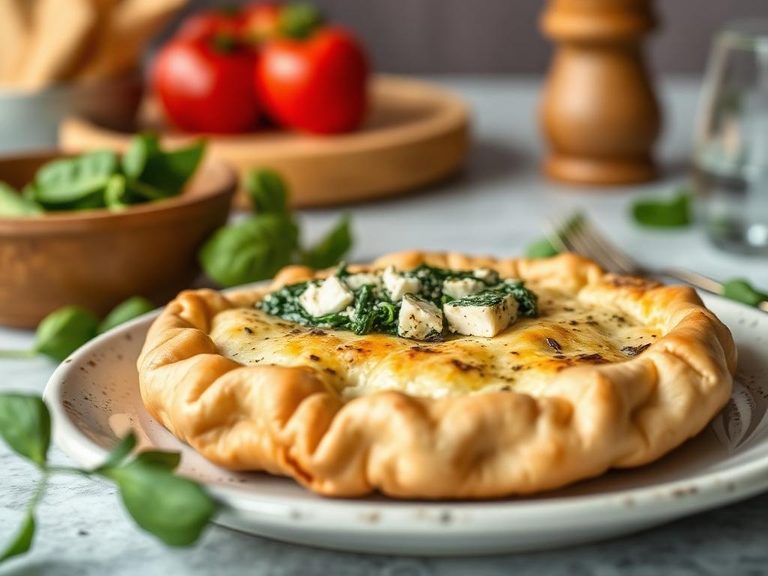
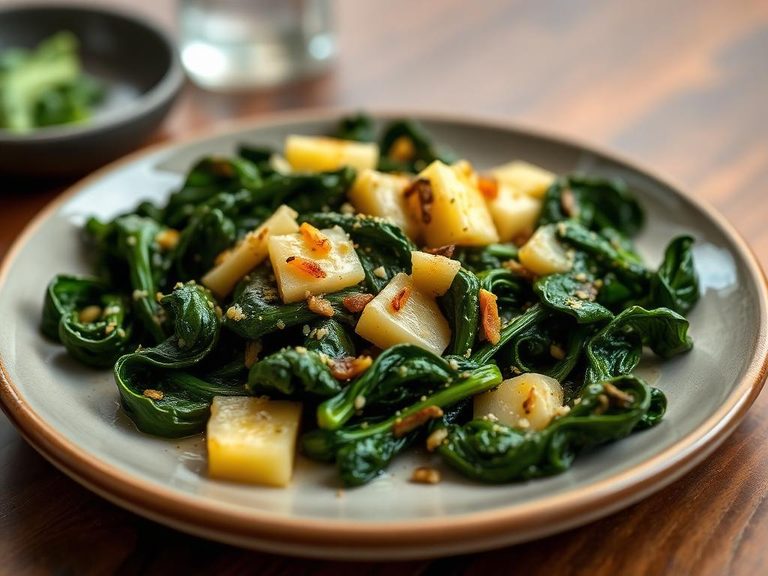
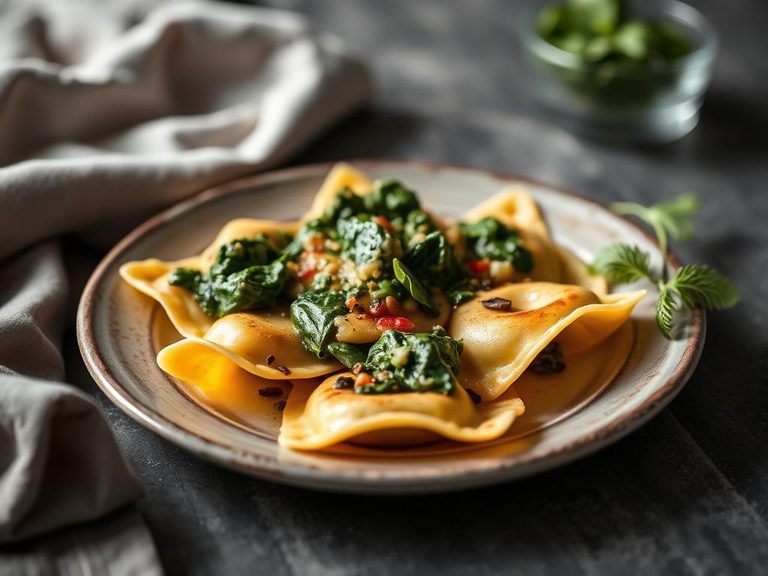
🍽️ Popular dishes
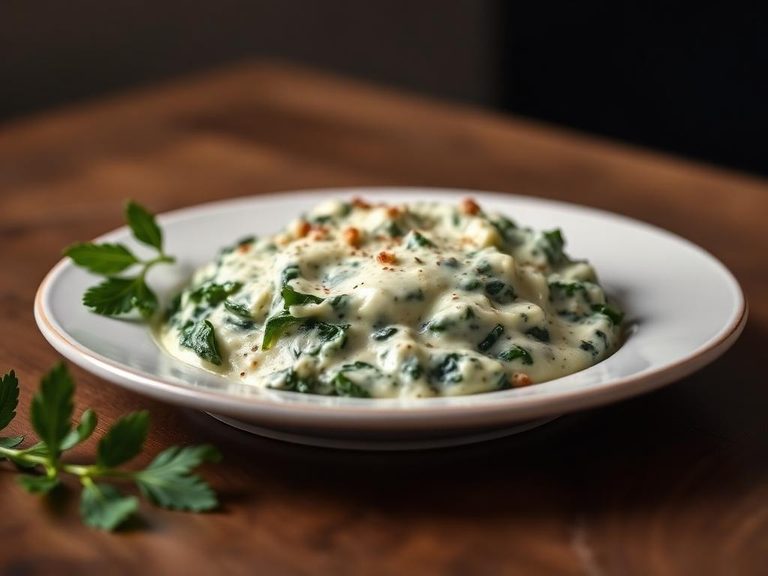
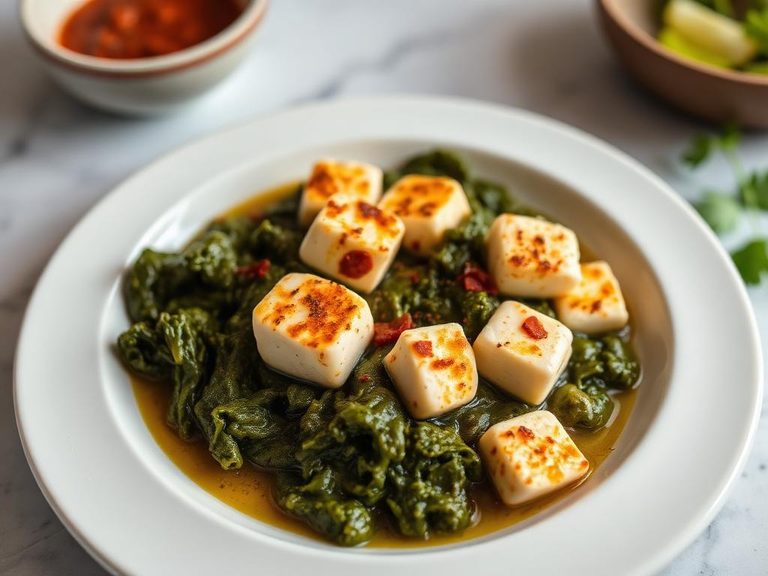
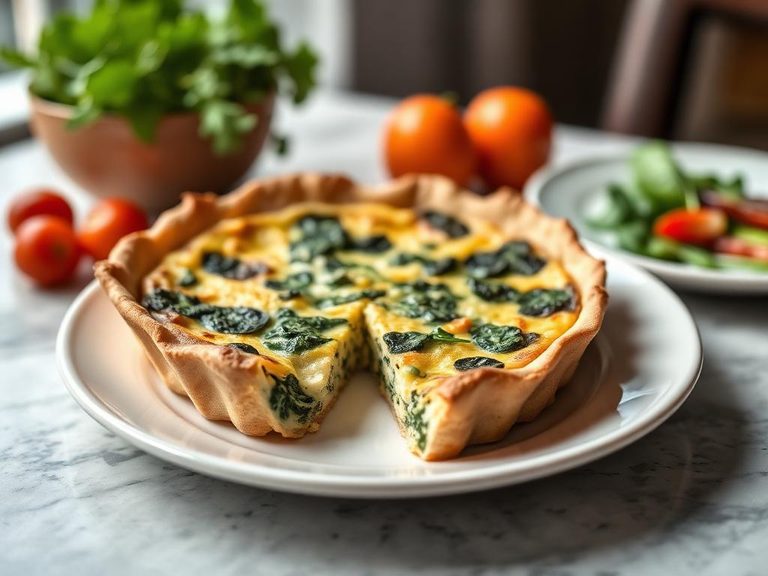
🌍 Where it's eaten
💡 Did you know?
Cooking spinach with butter or oil significantly increases the bioavailability of its fat-soluble vitamins A and K, meaning your body absorbs more of these nutrients than it would from raw spinach.
Full nutrition (USDA data · scales with serving)
| Water | 88.4 g |
| Energy | 55.0 kcal |
| Protein | 3.3 g |
| Total lipid (fat) | 3.3 g |
| Carbohydrate, by difference | 3.0 g |
| Fiber, total dietary | 1.8 g |
| Total Sugars | 0.49 g |
| Calcium, Ca | 77.0 mg |
| Iron, Fe | 1.2 mg |
| Magnesium, Mg | 106 mg |
| Phosphorus, P | 47.0 mg |
| Potassium, K | 525 mg |
| Sodium, Na | 274 mg |
| Zinc, Zn | 0.48 mg |
| Copper, Cu | 0.09 mg |
| Selenium, Se | 0.00 ug |
| Vitamin C, total ascorbic acid | 24.2 mg |
| Thiamin | 0.08 mg |
| Riboflavin | 0.21 mg |
| Niacin | 0.55 mg |
| Vitamin B-6 | 0.27 mg |
| Folate, total | 97.0 ug |
| Folic acid | 0.00 ug |
| Folate, food | 97.0 ug |
| Folate, DFE | 97.0 ug |
| Choline, total | 22.5 mg |
| Vitamin B-12 | 0.00 ug |
| Vitamin B-12, added | 0.00 ug |
| Vitamin A, RAE | 358 ug |
| Retinol | 26.0 ug |
| Carotene, beta | 3981 ug |
| Carotene, alpha | 0.00 ug |
| Cryptoxanthin, beta | 11.0 ug |
| Lycopene | 0.00 ug |
| Lutein + zeaxanthin | 8567 ug |
| Vitamin E (alpha-tocopherol) | 2.6 mg |
| Vitamin E, added | 0.00 mg |
| Vitamin D (D2 + D3) | 0.10 ug |
| Vitamin K (phylloquinone) | 552 ug |
| Alcohol, ethyl | 0.00 g |
| Caffeine | 0.00 mg |
| Theobromine | 0.00 mg |
Fat & fatty acid profile (per 100g)
| Fatty acids, total saturated | 1.2 g |
| SFA 4:0 | 0.04 g |
| SFA 6:0 | 0.03 g |
| SFA 8:0 | 0.02 g |
| SFA 10:0 | 0.04 g |
| SFA 12:0 | 0.05 g |
| SFA 14:0 | 0.16 g |
| SFA 16:0 | 0.58 g |
| SFA 18:0 | 0.23 g |
| Fatty acids, total monounsaturated | 0.69 g |
| MUFA 16:1 | 0.03 g |
| MUFA 18:1 | 0.64 g |
| MUFA 20:1 | 0.01 g |
| MUFA 22:1 | 0.00 g |
| Fatty acids, total polyunsaturated | 0.59 g |
| PUFA 18:2 | 0.40 g |
| PUFA 18:3 | 0.20 g |
| PUFA 18:4 | 0.00 g |
| PUFA 20:4 | 0.00 g |
| PUFA 20:5 n-3 (EPA) | 0.00 g |
| PUFA 22:5 n-3 (DPA) | 0.00 g |
| PUFA 22:6 n-3 (DHA) | 0.00 g |
| Cholesterol | 5.0 mg |
Amino acid profile (per 100g)
Estimated from Babyfood, vegetables, spinach, creamed, strained — USDA does not publish this profile for Spinach.
| Tryptophan | 0.04 g |
| Threonine | 0.10 g |
| Isoleucine | 0.11 g |
| Leucine | 0.22 g |
| Lysine | 0.15 g |
| Methionine | 0.06 g |
| Cystine | 0.03 g |
| Phenylalanine | 0.10 g |
| Tyrosine | 0.12 g |
| Valine | 0.15 g |
| Arginine | 0.15 g |
| Histidine | 0.06 g |
| Alanine | 0.12 g |
| Aspartic acid | 0.20 g |
| Glutamic acid | 0.42 g |
| Glycine | 0.10 g |
| Proline | 0.21 g |
| Serine | 0.10 g |
FAQ
Is cooked spinach with butter healthier than raw spinach?
Cooking spinach with a small amount of fat like butter actually increases the absorption of its fat-soluble vitamins (A, K) and antioxidants like beta-carotene, making it more nutritious in that sense.
How can I reduce the oxalates in spinach?
You can reduce oxalates by using young, tender spinach leaves, cooking them in plenty of water (which leaches out oxalates), and pairing the dish with calcium-rich foods like cheese or yogurt to help bind the oxalates.
What's a good substitute for butter in this dish?
Olive oil is a great substitute that adds healthy monounsaturated fats. For a dairy-free option, you can use ghee (clarified butter) or a plant-based butter alternative.
Nutrient density (calculated · NRF9.3)
Nutrient Rich Foods index: beneficial nutrients (protein, fiber, vitamins, minerals) minus saturated fat, added sugar & sodium, per 100 kcal.
NRF9.3 index — Fulgoni, Keast & Drewnowski, 2009. Computed from USDA nutrients.
Weight-loss friendliness (composite index)
Energy density 0.55 kcal/g · 24% calories from protein · 1.8 g fiber · 0.5 g sugar per 100 g.
Composite of energy density (Rolls et al., 1999), protein & fiber satiety, minus sugar. A calculated heuristic — ranks satiety-per-calorie, not a clinical measure.
Dietary load (calculated from USDA values)
Potential renal acid load. Positive = acid-forming, negative = alkaline-forming.
Sodium-to-potassium ratio: 0.52 (lower is better — aim for ≤ 1)
Sodium:potassium per WHO potassium guidance. Computed from USDA nutrients.