

Spinach, canned, cooked with butter or margarine
Common food

Photo: Wikipedia
Canned spinach, softened and enriched with butter or margarine, offers a deeply savory, earthy flavor with a tender, almost silky texture that differs significantly from fresh or frozen varieties. Its nutritional profile is notably lean, providing a modest 42 calories per 100g while delivering a good source of protein and dietary fiber. The addition of fat enhances the absorption of its fat-soluble vitamins, making it a practical and nutrient-dense side dish.
Calorie split: 23% protein · 27% carbs · 50% fat
↓ Full nutrition💚 Why it's loved
People love it for its comforting, savory depth and the way it pairs seamlessly with rich, hearty meals. Its convenience and long shelf life make it a staple in home cooking and a nostalgic favorite in many cuisines.
⚠️ Watch-outs & how to enjoy it better
Canned spinach can be high in sodium and may have a softer, less vibrant texture than fresh. To mitigate sodium, rinse it thoroughly before cooking and use herbs or spices to enhance flavor without added salt. Those concerned about oxalates, which can affect mineral absorption, should pair it with calcium-rich foods or consume it in moderation.
Key benefits
- Rich in iron and folate, supporting blood health and cell function
- High in vitamin K, essential for bone health and blood clotting
- Good source of dietary fiber, aiding digestion and satiety
- Low in calories, making it suitable for weight management
- Contains antioxidants like lutein and zeaxanthin for eye health
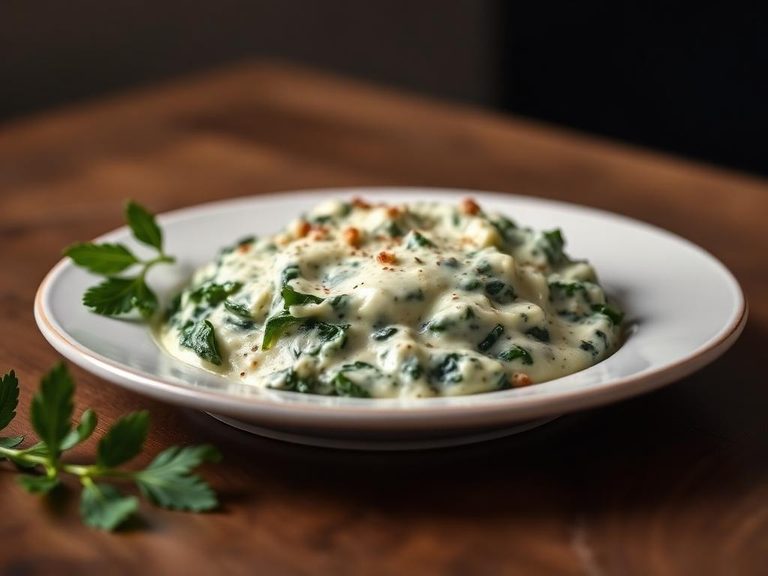
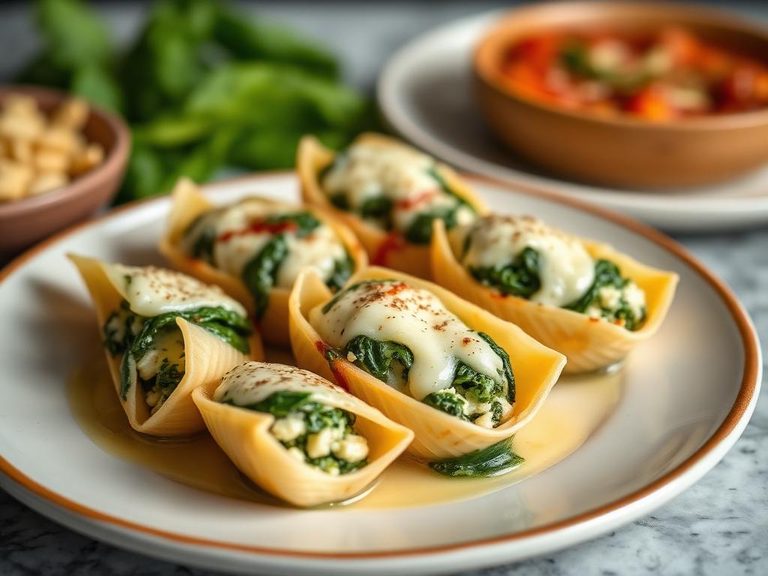
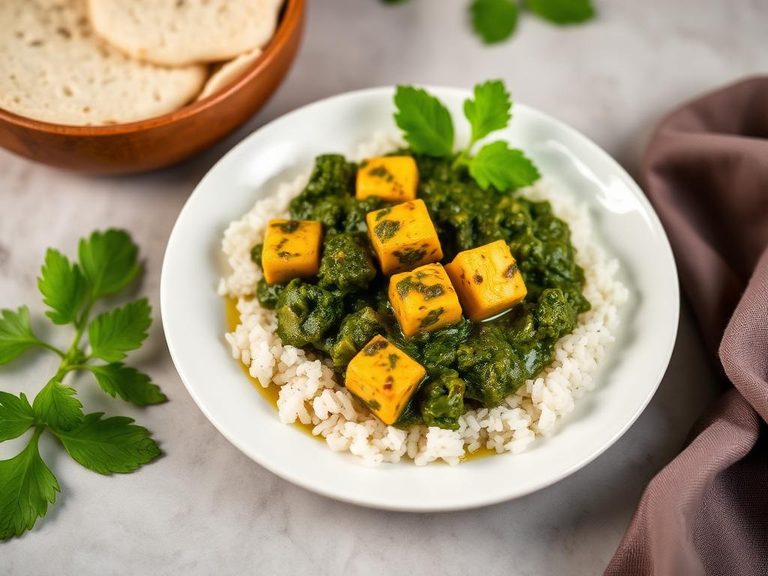
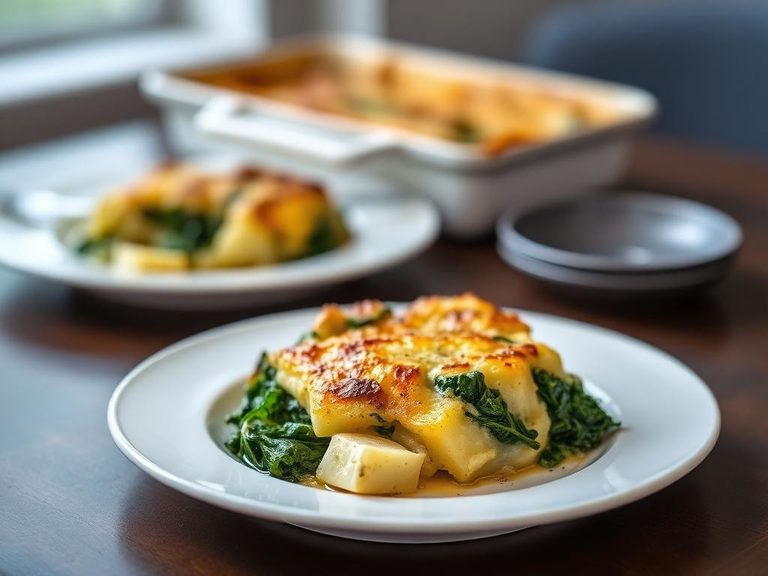
🍽️ Popular dishes

🌍 Where it's eaten
💡 Did you know?
Canned spinach was a staple of the U.S. Navy in the early 20th century, famously popularized by the cartoon character Popeye, who credited his strength to it.
Full nutrition (USDA data · scales with serving)
| Water | 89.8 g |
| Energy | 42.0 kcal |
| Protein | 2.7 g |
| Total lipid (fat) | 2.7 g |
| Carbohydrate, by difference | 3.3 g |
| Fiber, total dietary | 2.3 g |
| Total Sugars | 0.40 g |
| Calcium, Ca | 124 mg |
| Iron, Fe | 2.2 mg |
| Magnesium, Mg | 74.0 mg |
| Phosphorus, P | 43.0 mg |
| Potassium, K | 337 mg |
| Sodium, Na | 330 mg |
| Zinc, Zn | 0.45 mg |
| Copper, Cu | 0.17 mg |
| Selenium, Se | 1.4 ug |
| Vitamin C, total ascorbic acid | 13.2 mg |
| Thiamin | 0.02 mg |
| Riboflavin | 0.13 mg |
| Niacin | 0.38 mg |
| Vitamin B-6 | 0.13 mg |
| Folate, total | 90.0 ug |
| Folic acid | 0.00 ug |
| Folate, food | 90.0 ug |
| Folate, DFE | 90.0 ug |
| Choline, total | 18.3 mg |
| Vitamin B-12 | 0.00 ug |
| Vitamin B-12, added | 0.00 ug |
| Vitamin A, RAE | 499 ug |
| Retinol | 22.0 ug |
| Carotene, beta | 5720 ug |
| Carotene, alpha | 0.00 ug |
| Cryptoxanthin, beta | 0.00 ug |
| Lycopene | 0.00 ug |
| Lutein + zeaxanthin | 10267 ug |
| Vitamin E (alpha-tocopherol) | 2.1 mg |
| Vitamin E, added | 0.00 mg |
| Vitamin D (D2 + D3) | 0.10 ug |
| Vitamin K (phylloquinone) | 449 ug |
| Alcohol, ethyl | 0.00 g |
| Caffeine | 0.00 mg |
| Theobromine | 0.00 mg |
Fat & fatty acid profile (per 100g)
| Fatty acids, total saturated | 1.0 g |
| SFA 4:0 | 0.04 g |
| SFA 6:0 | 0.03 g |
| SFA 8:0 | 0.01 g |
| SFA 10:0 | 0.03 g |
| SFA 12:0 | 0.04 g |
| SFA 14:0 | 0.14 g |
| SFA 16:0 | 0.51 g |
| SFA 18:0 | 0.19 g |
| Fatty acids, total monounsaturated | 0.59 g |
| MUFA 16:1 | 0.02 g |
| MUFA 18:1 | 0.55 g |
| MUFA 20:1 | 0.00 g |
| MUFA 22:1 | 0.00 g |
| Fatty acids, total polyunsaturated | 0.55 g |
| PUFA 18:2 | 0.34 g |
| PUFA 18:3 | 0.21 g |
| PUFA 18:4 | 0.00 g |
| PUFA 20:4 | 0.00 g |
| PUFA 20:5 n-3 (EPA) | 0.00 g |
| PUFA 22:5 n-3 (DPA) | 0.00 g |
| PUFA 22:6 n-3 (DHA) | 0.00 g |
| Cholesterol | 4.0 mg |
Amino acid profile (per 100g)
Estimated from Babyfood, vegetables, spinach, creamed, strained — USDA does not publish this profile for Spinach.
| Tryptophan | 0.04 g |
| Threonine | 0.10 g |
| Isoleucine | 0.11 g |
| Leucine | 0.22 g |
| Lysine | 0.15 g |
| Methionine | 0.06 g |
| Cystine | 0.03 g |
| Phenylalanine | 0.10 g |
| Tyrosine | 0.12 g |
| Valine | 0.15 g |
| Arginine | 0.15 g |
| Histidine | 0.06 g |
| Alanine | 0.12 g |
| Aspartic acid | 0.20 g |
| Glutamic acid | 0.42 g |
| Glycine | 0.10 g |
| Proline | 0.21 g |
| Serine | 0.10 g |
FAQ
Is canned spinach as nutritious as fresh spinach?
Canned spinach retains most of its vitamins and minerals, though some water-soluble nutrients like vitamin C may be reduced. It is still a good source of iron, fiber, and vitamin K.
How should I store opened canned spinach?
Transfer any unused spinach to an airtight container and refrigerate. It will keep for 3-4 days. Do not store it in the opened can.
Can I use canned spinach in place of fresh in recipes?
Yes, but adjust for texture and moisture. Canned spinach is already cooked and softer, so reduce cooking time and drain well to avoid excess liquid in dishes.
Nutrient density (calculated · NRF9.3)
Nutrient Rich Foods index: beneficial nutrients (protein, fiber, vitamins, minerals) minus saturated fat, added sugar & sodium, per 100 kcal.
NRF9.3 index — Fulgoni, Keast & Drewnowski, 2009. Computed from USDA nutrients.
Weight-loss friendliness (composite index)
Energy density 0.42 kcal/g · 26% calories from protein · 2.3 g fiber · 0.4 g sugar per 100 g.
Composite of energy density (Rolls et al., 1999), protein & fiber satiety, minus sugar. A calculated heuristic — ranks satiety-per-calorie, not a clinical measure.
Dietary load (calculated from USDA values)
Potential renal acid load. Positive = acid-forming, negative = alkaline-forming.
Sodium-to-potassium ratio: 0.98 (lower is better — aim for ≤ 1)
Sodium:potassium per WHO potassium guidance. Computed from USDA nutrients.