

Spanish rice, fat added
Common food

Photo: Wikipedia
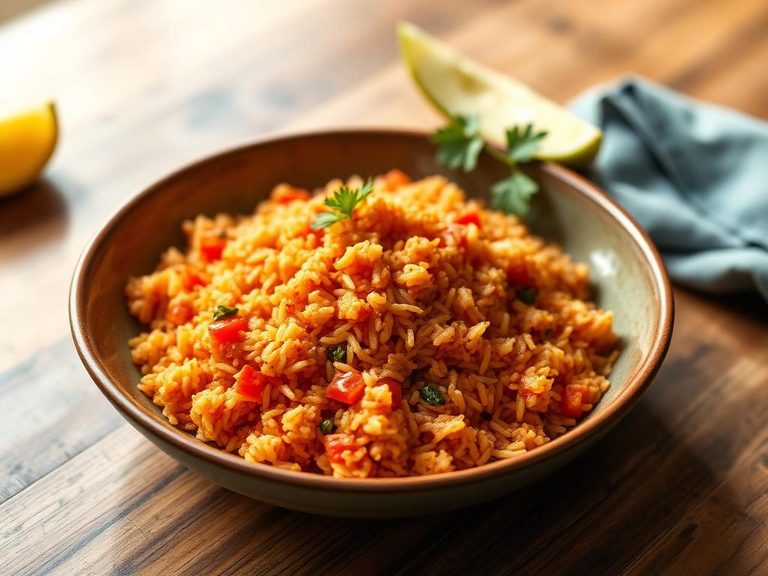
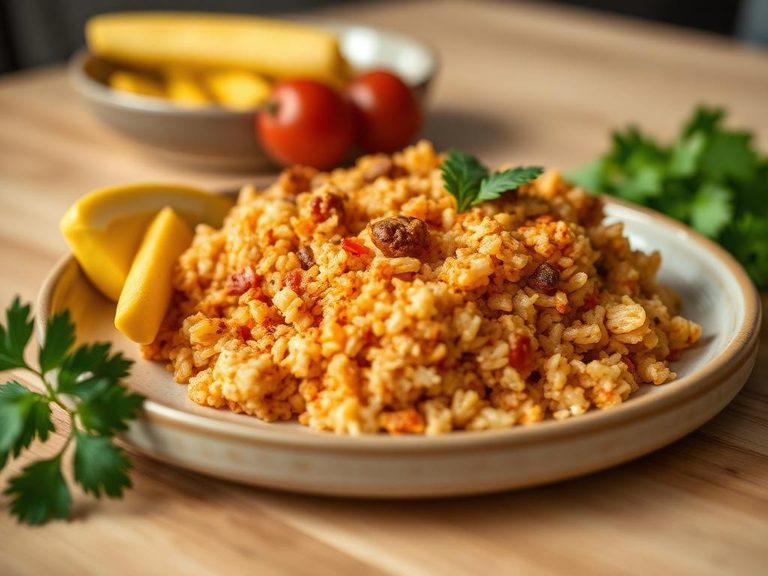
Spanish rice, also known as Mexican rice, is a savory, fluffy side dish made by toasting long-grain white rice in oil before simmering it in a tomato-based broth. The grains are typically separated and tender, with a mild, savory flavor and a subtle tang from tomatoes. Nutritionally, it's primarily a carbohydrate source, offering moderate calories with minimal fat and protein.
Calorie split: 10% protein · 69% carbs · 21% fat
↓ Full nutrition💚 Why it's loved
People love it for its comforting, savory flavor that acts as a perfect canvas for bold spices and salsas. It's a beloved staple in Mexican and Tex-Mex cuisine, serving as a versatile and essential side dish for countless family meals and celebrations.
⚠️ Watch-outs & how to enjoy it better
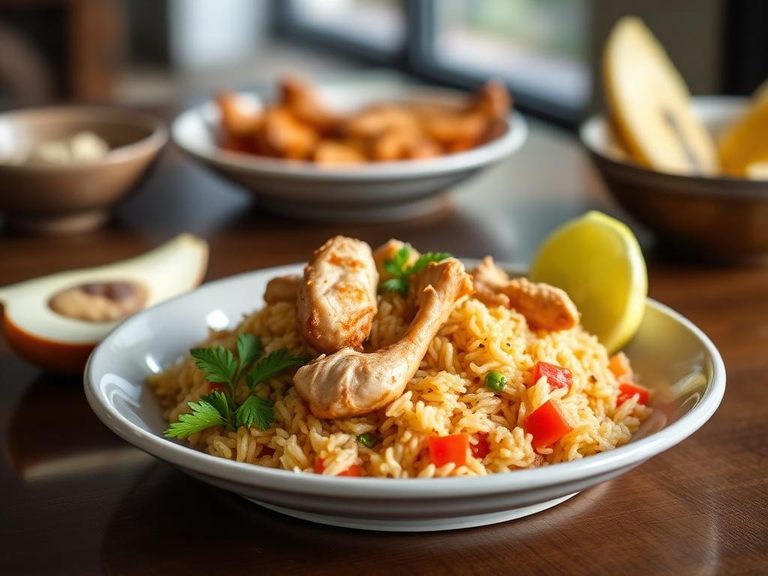
The primary concern is its high glycemic index, which can cause rapid blood-sugar spikes, making it less ideal for diabetics or those managing insulin resistance. To counteract this, always pair it with a source of protein (like beans, chicken, or cheese) and healthy fats (like avocado) to slow digestion and stabilize blood sugar. Be mindful of portion sizes, as it's easy to overeat.
Key benefits
- Provides quick energy from complex carbohydrates
- Low in fat, especially saturated fat
- Contains small amounts of essential minerals like iron
- Versatile base for adding vegetables and lean proteins
- Naturally low in cholesterol
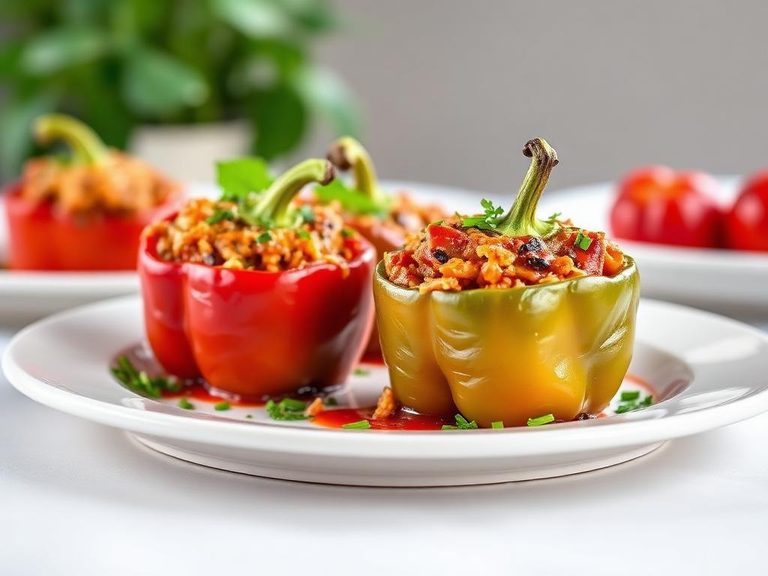
🍽️ Popular dishes
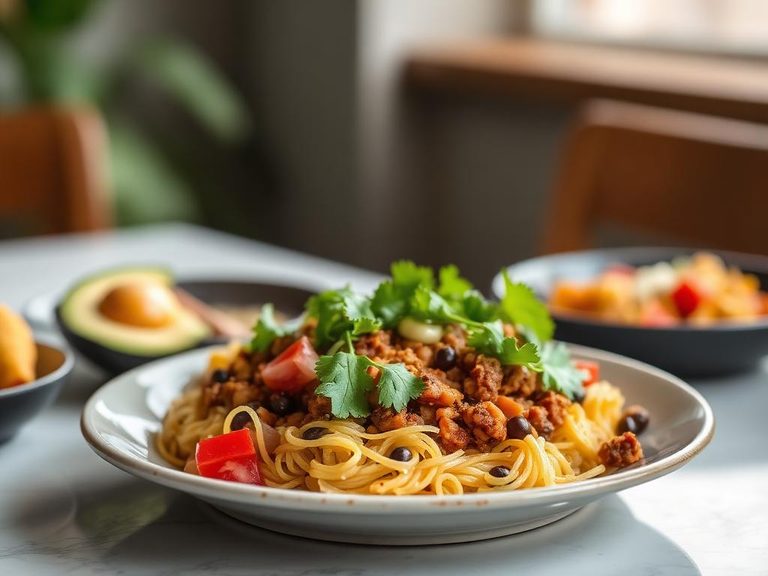
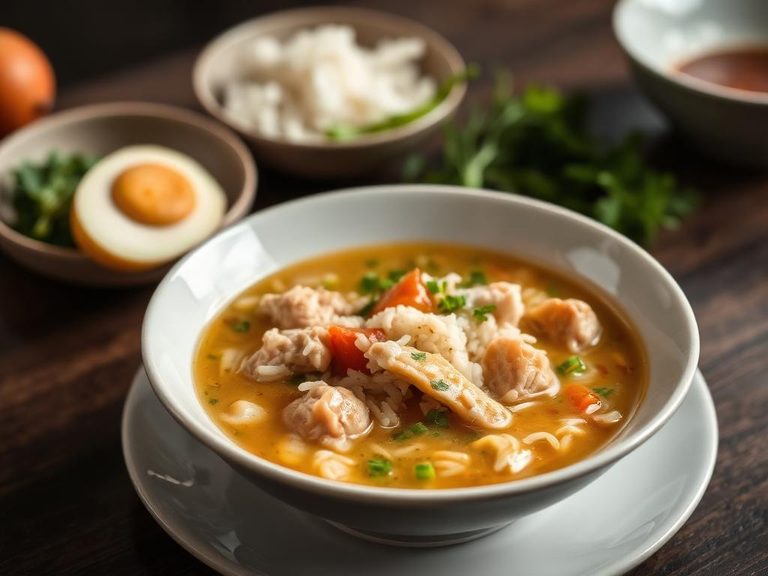
🌍 Where it's eaten
💡 Did you know?
Despite its name, 'Spanish rice' is not a traditional dish from Spain; it's a Mexican-American creation. The name likely originated in the U.S. to distinguish it from plain steamed rice.
Full nutrition (USDA data · scales with serving)
| Water | 73.8 g |
| Energy | 115 kcal |
| Protein | 2.9 g |
| Total lipid (fat) | 2.6 g |
| Carbohydrate, by difference | 19.6 g |
| Fiber, total dietary | 1.1 g |
| Total Sugars | 1.6 g |
| Calcium, Ca | 21.0 mg |
| Iron, Fe | 1.1 mg |
| Magnesium, Mg | 11.0 mg |
| Phosphorus, P | 41.0 mg |
| Potassium, K | 123 mg |
| Sodium, Na | 310 mg |
| Zinc, Zn | 0.38 mg |
| Copper, Cu | 0.08 mg |
| Selenium, Se | 4.6 ug |
| Vitamin C, total ascorbic acid | 11.2 mg |
| Thiamin | 0.27 mg |
| Riboflavin | 0.07 mg |
| Niacin | 1.4 mg |
| Vitamin B-6 | 0.11 mg |
| Folate, total | 34.0 ug |
| Folic acid | 28.0 ug |
| Folate, food | 6.0 ug |
| Folate, DFE | 54.0 ug |
| Choline, total | 6.0 mg |
| Vitamin B-12 | 0.03 ug |
| Vitamin B-12, added | 0.00 ug |
| Vitamin A, RAE | 10.0 ug |
| Retinol | 0.00 ug |
| Carotene, beta | 115 ug |
| Carotene, alpha | 2.0 ug |
| Cryptoxanthin, beta | 9.0 ug |
| Lycopene | 665 ug |
| Lutein + zeaxanthin | 72.0 ug |
| Vitamin E (alpha-tocopherol) | 0.59 mg |
| Vitamin E, added | 0.00 mg |
| Vitamin D (D2 + D3) | 0.00 ug |
| Vitamin K (phylloquinone) | 3.1 ug |
| Alcohol, ethyl | 0.00 g |
| Caffeine | 0.00 mg |
| Theobromine | 0.00 mg |
Fat & fatty acid profile (per 100g)
| Fatty acids, total saturated | 0.50 g |
| SFA 4:0 | 0.00 g |
| SFA 6:0 | 0.00 g |
| SFA 8:0 | 0.00 g |
| SFA 10:0 | 0.00 g |
| SFA 12:0 | 0.00 g |
| SFA 14:0 | 0.01 g |
| SFA 16:0 | 0.35 g |
| SFA 18:0 | 0.12 g |
| Fatty acids, total monounsaturated | 1.0 g |
| MUFA 16:1 | 0.02 g |
| MUFA 18:1 | 0.99 g |
| MUFA 20:1 | 0.02 g |
| MUFA 22:1 | 0.00 g |
| Fatty acids, total polyunsaturated | 0.82 g |
| PUFA 18:2 | 0.72 g |
| PUFA 18:3 | 0.08 g |
| PUFA 18:4 | 0.00 g |
| PUFA 20:4 | 0.00 g |
| PUFA 20:5 n-3 (EPA) | 0.00 g |
| PUFA 22:5 n-3 (DPA) | 0.00 g |
| PUFA 22:6 n-3 (DHA) | 0.00 g |
| Cholesterol | 3.0 mg |
Amino acid profile (per 100g)
Estimated from Restaurant, Mexican, spanish rice — USDA does not publish this profile for Spanish rice.
| Tryptophan | 0.04 g |
| Threonine | 0.10 g |
| Isoleucine | 0.11 g |
| Leucine | 0.24 g |
| Lysine | 0.13 g |
| Methionine | 0.07 g |
| Cystine | 0.07 g |
| Phenylalanine | 0.15 g |
| Tyrosine | 0.10 g |
| Valine | 0.14 g |
| Arginine | 0.26 g |
| Histidine | 0.07 g |
| Alanine | 0.17 g |
| Aspartic acid | 0.27 g |
| Glutamic acid | 0.61 g |
| Glycine | 0.14 g |
| Proline | 0.14 g |
| Serine | 0.15 g |
| Hydroxyproline | 0.00 g |
FAQ
What's the difference between Spanish rice and Mexican rice?
The terms are often used interchangeably in the U.S. In general, 'Spanish rice' is a broader term for tomato-seasoned rice, while 'Mexican rice' (Arroz Rojo) specifically refers to the traditional Mexican preparation with tomatoes, onions, garlic, and broth.
Is Spanish rice gluten-free?
The base ingredients (rice, tomatoes, oil) are naturally gluten-free. However, you must check any pre-made broth or seasoning mixes used, as they could contain gluten-based additives or flavorings.
How can I make it healthier?
Use brown rice for more fiber and nutrients. Reduce added oil by toasting the rice in a non-stick pan. Boost nutrition by stirring in vegetables like peas, carrots, or corn, and add a protein source like black beans or shredded chicken.
Nutrient density (calculated · NRF9.3)
Nutrient Rich Foods index: beneficial nutrients (protein, fiber, vitamins, minerals) minus saturated fat, added sugar & sodium, per 100 kcal.
NRF9.3 index — Fulgoni, Keast & Drewnowski, 2009. Computed from USDA nutrients.
Weight-loss friendliness (composite index)
Energy density 1.15 kcal/g · 10% calories from protein · 1.1 g fiber · 1.6 g sugar per 100 g.
Composite of energy density (Rolls et al., 1999), protein & fiber satiety, minus sugar. A calculated heuristic — ranks satiety-per-calorie, not a clinical measure.
Dietary load (calculated from USDA values)
Potential renal acid load. Positive = acid-forming, negative = alkaline-forming.
Sodium-to-potassium ratio: 2.52 (lower is better — aim for ≤ 1)
Sodium:potassium per WHO potassium guidance. Computed from USDA nutrients.