

Soup, tomato, canned, condensed
Whole food · Soups, Sauces, and Gravies
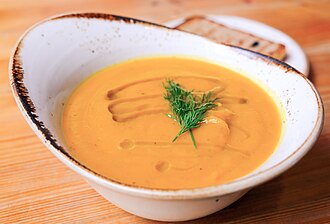
Photo: Wikipedia
Canned condensed tomato soup is a smooth, velvety pantry staple that transforms into a rich, tangy-sweet broth with the addition of water or milk. It delivers a concentrated burst of tomato flavor with a mild, comforting sweetness and a velvety texture that coats the palate. Nutritionally, it's a low-calorie, low-fat option (66 kcal, 0.44g fat) with a notable carbohydrate content (15.22g) and a touch of natural fiber (1.1g).
Calorie split: 8% protein · 86% carbs · 6% fat
↓ Full nutrition💚 Why it's loved
People love it for its nostalgic, comforting flavor and incredible versatility—it's a classic pairing with grilled cheese sandwiches and a quick base for countless sauces and stews. Its sweet-tart profile and smooth texture make it a universally appealing, easy-to-enjoy comfort food.
⚠️ Watch-outs & how to enjoy it better
The high sugar content (8.23g per 100g) and often high sodium levels can be a concern for those monitoring blood sugar or blood pressure. To counteract this, pair it with a source of protein (like beans or chicken) or healthy fat (like avocado or olive oil) to slow sugar absorption, and choose low-sodium versions or dilute it with water to reduce salt intake per serving.
Key benefits
- Low in calories and fat, supporting weight management goals.
- Provides a good source of lycopene, an antioxidant linked to heart health.
- Convenient and shelf-stable for quick meal preparation.
- Contains some dietary fiber (1.1g) to aid digestion.
- Low in protein (1.46g), making it a light base for adding other ingredients.
🍽️ Popular dishes
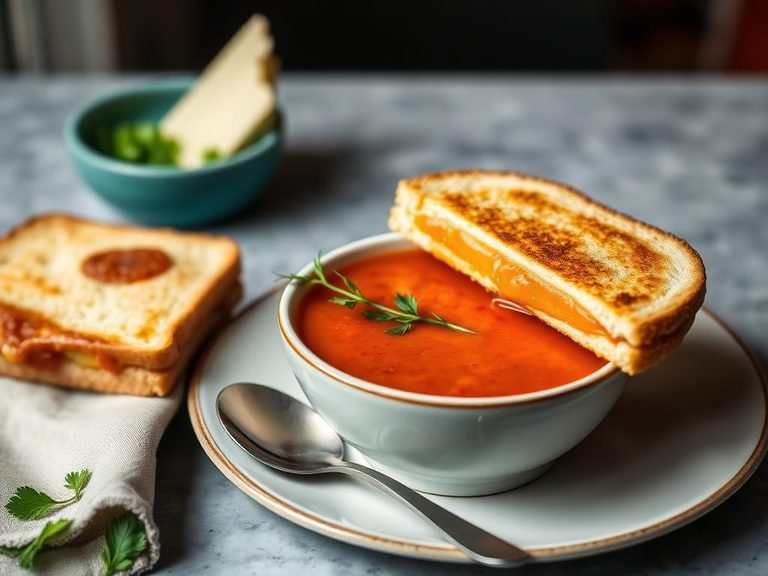
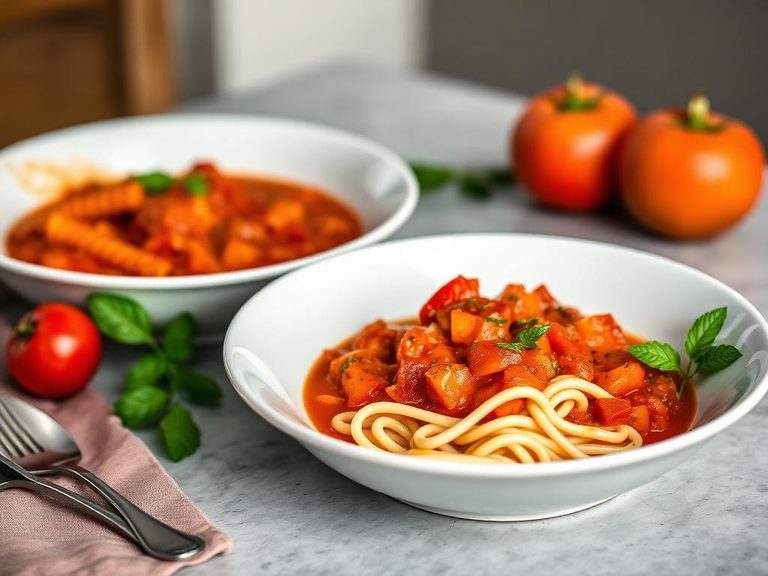
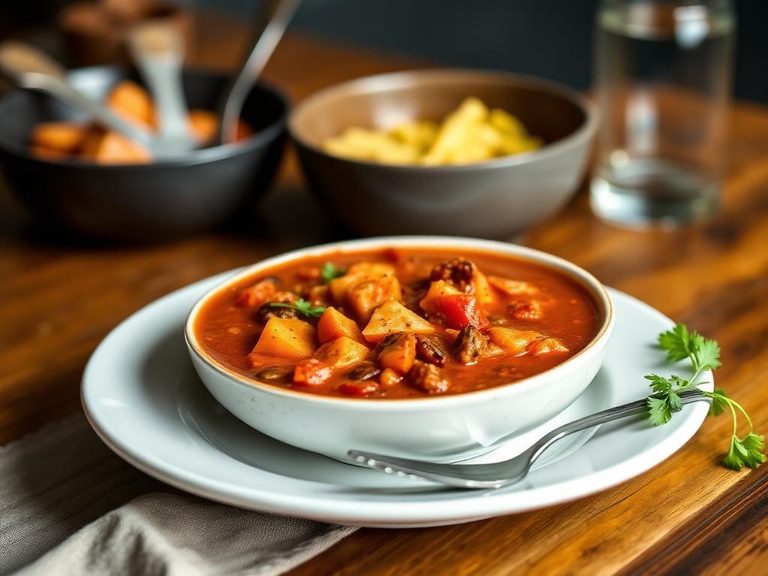
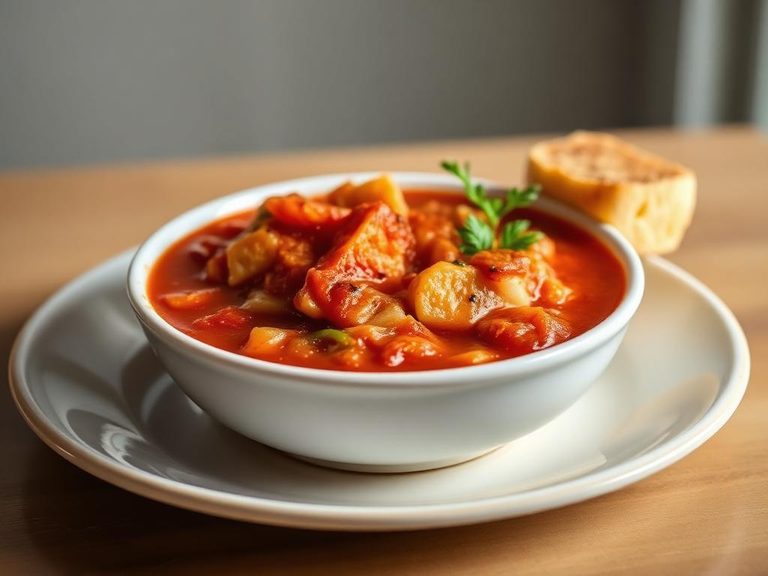
🌍 Where it's eaten
💡 Did you know?
The iconic Campbell's condensed tomato soup, first introduced in 1897, was a key factor in popularizing the canned soup industry and was famously painted by Andy Warhol in his 1962 pop art series.
Full nutrition (USDA data · scales with serving)
| Water | 80.8 g |
| Energy | 66.0 kcal |
| Energy | 275 kj |
| Protein | 1.5 g |
| Total lipid (fat) | 0.44 g |
| Ash | 2.1 g |
| Carbohydrate, by difference | 15.2 g |
| Fiber, total dietary | 1.1 g |
| Total Sugars | 8.2 g |
| Calcium, Ca | 13.0 mg |
| Iron, Fe | 0.59 mg |
| Magnesium, Mg | 14.0 mg |
| Phosphorus, P | 31.0 mg |
| Potassium, K | 562 mg |
| Sodium, Na | 377 mg |
| Zinc, Zn | 0.18 mg |
| Copper, Cu | 0.05 mg |
| Manganese, Mn | 0.14 mg |
| Selenium, Se | 3.0 ug |
| Vitamin C, total ascorbic acid | 12.9 mg |
| Thiamin | 0.04 mg |
| Riboflavin | 0.01 mg |
| Niacin | 0.86 mg |
| Vitamin B-6 | 0.09 mg |
| Folate, total | 0.00 ug |
| Folic acid | 0.00 ug |
| Folate, food | 0.00 ug |
| Folate, DFE | 0.00 ug |
| Choline, total | 12.8 mg |
| Vitamin B-12 | 0.00 ug |
| Vitamin B-12, added | 0.00 ug |
| Vitamin A, RAE | 20.0 ug |
| Retinol | 0.00 ug |
| Carotene, beta | 235 ug |
| Carotene, alpha | 0.00 ug |
| Cryptoxanthin, beta | 0.00 ug |
| Vitamin A, IU | 392 iu |
| Lycopene | 10920 ug |
| Lutein + zeaxanthin | 90.0 ug |
| Vitamin E (alpha-tocopherol) | 0.34 mg |
| Vitamin E, added | 0.00 mg |
| Vitamin D (D2 + D3), International Units | 0.00 iu |
| Vitamin D (D2 + D3) | 0.00 ug |
| Vitamin K (phylloquinone) | 3.2 ug |
| Alcohol, ethyl | 0.00 g |
| Caffeine | 0.00 mg |
| Theobromine | 0.00 mg |
Fat & fatty acid profile (per 100g)
| Fatty acids, total saturated | 0.12 g |
| SFA 4:0 | 0.00 g |
| SFA 6:0 | 0.00 g |
| SFA 8:0 | 0.00 g |
| SFA 10:0 | 0.00 g |
| SFA 12:0 | 0.00 g |
| SFA 14:0 | 0.01 g |
| SFA 16:0 | 0.08 g |
| SFA 18:0 | 0.02 g |
| Fatty acids, total monounsaturated | 0.14 g |
| MUFA 16:1 | 0.01 g |
| MUFA 18:1 | 0.08 g |
| MUFA 20:1 | 0.03 g |
| MUFA 22:1 | 0.02 g |
| Fatty acids, total polyunsaturated | 0.16 g |
| PUFA 18:2 | 0.13 g |
| PUFA 18:3 | 0.03 g |
| PUFA 18:4 | 0.00 g |
| PUFA 20:4 | 0.00 g |
| PUFA 20:5 n-3 (EPA) | 0.00 g |
| PUFA 22:5 n-3 (DPA) | 0.00 g |
| PUFA 22:6 n-3 (DHA) | 0.00 g |
| Cholesterol | 0.00 mg |
Amino acid profile (per 100g)
Estimated from Soup, bean with pork, canned, condensed — USDA does not publish this profile for Soup.
| Tryptophan | 0.06 g |
| Threonine | 0.24 g |
| Isoleucine | 0.29 g |
| Leucine | 0.48 g |
| Lysine | 0.40 g |
| Methionine | 0.07 g |
| Cystine | 0.07 g |
| Phenylalanine | 0.33 g |
| Tyrosine | 0.18 g |
| Valine | 0.32 g |
| Arginine | 0.31 g |
| Histidine | 0.15 g |
| Alanine | 0.29 g |
| Aspartic acid | 0.66 g |
| Glutamic acid | 1.1 g |
| Glycine | 0.28 g |
| Proline | 0.27 g |
| Serine | 0.29 g |
FAQ
Is condensed tomato soup healthy?
It can be part of a healthy diet due to its low calorie and fat content, but it's important to be mindful of its sugar and sodium levels. Opting for low-sodium versions and pairing it with protein or fiber-rich foods can make it a more balanced choice.
How do I make condensed tomato soup from scratch?
To make it from scratch, sauté onions and garlic, add fresh or canned tomatoes, broth, and herbs, then simmer and blend until smooth. This allows you to control the sugar and sodium content while maximizing flavor.
What are the best pairings for tomato soup?
Classic pairings include grilled cheese sandwiches, crusty bread, and crackers. For a more balanced meal, add protein like grilled chicken, beans, or a dollop of Greek yogurt, and include vegetables like spinach or carrots for extra fiber and nutrients.
Nutrient density (calculated · NRF9.3)
Nutrient Rich Foods index: beneficial nutrients (protein, fiber, vitamins, minerals) minus saturated fat, added sugar & sodium, per 100 kcal.
NRF9.3 index — Fulgoni, Keast & Drewnowski, 2009. Computed from USDA nutrients.
Weight-loss friendliness (composite index)
Energy density 0.66 kcal/g · 9% calories from protein · 1.1 g fiber · 8.2 g sugar per 100 g.
Composite of energy density (Rolls et al., 1999), protein & fiber satiety, minus sugar. A calculated heuristic — ranks satiety-per-calorie, not a clinical measure.
Dietary load (calculated from USDA values)
Potential renal acid load. Positive = acid-forming, negative = alkaline-forming.
Sodium-to-potassium ratio: 0.67 (lower is better — aim for ≤ 1)
Sodium:potassium per WHO potassium guidance. Computed from USDA nutrients.