

Soup, minestrone, canned, reduced sodium, ready-to-serve
Whole food · Soups, Sauces, and Gravies

Photo: Wikipedia
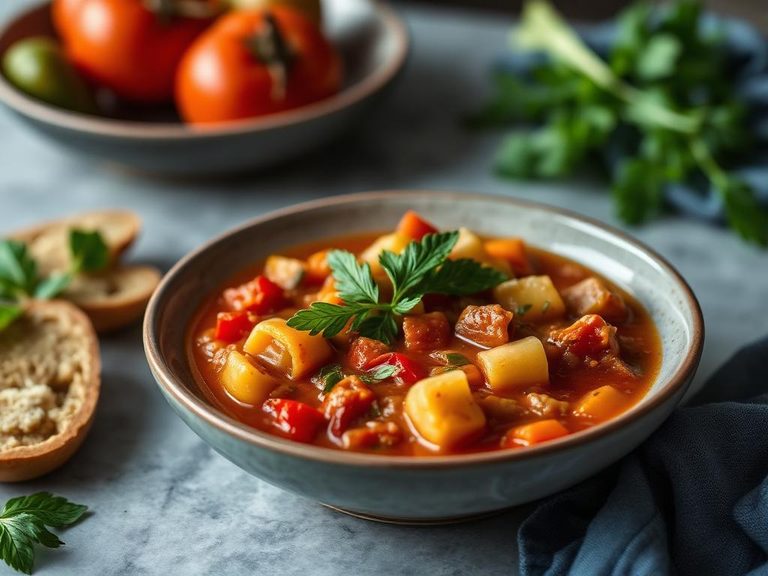
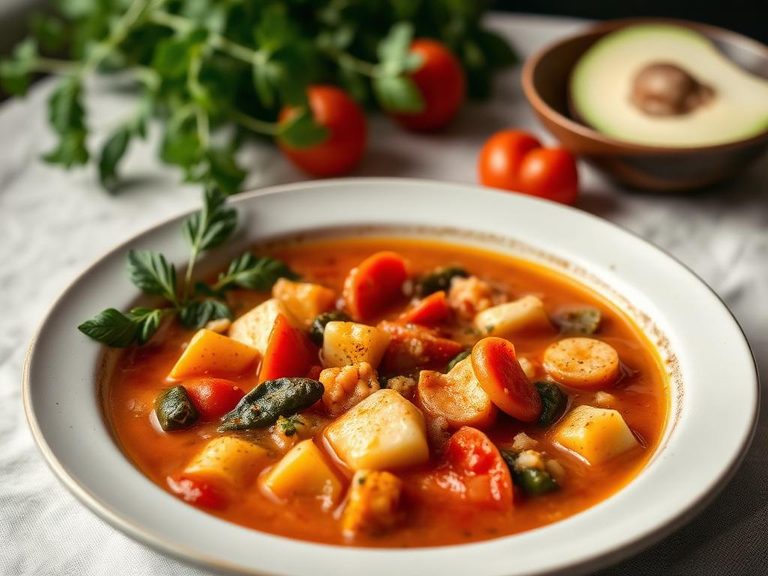
This is a ready-to-eat, canned version of the classic Italian vegetable soup, significantly reduced in sodium for a healthier profile. It offers a hearty, chunky texture with a medley of tender vegetables like carrots, celery, and tomatoes swimming in a savory, herb-infused tomato broth. A standout nutritional feature is its high fiber content relative to its low calorie count, making it a satisfying, nutrient-dense option.
Calorie split: 16% protein · 70% carbs · 14% fat
↓ Full nutrition💚 Why it's loved
People love minestrone for its comforting, homestyle flavor and remarkable versatility—it's a complete meal in a bowl that can be customized with pasta, beans, or extra greens. It's deeply rooted in Italian culinary tradition as a practical, nourishing way to use seasonal vegetables.
⚠️ Watch-outs & how to enjoy it better
The reduced sodium version can taste bland to some, and its canned form may have softer vegetable textures than homemade. For those monitoring blood sugar, the 2.13g of sugar per 100g (often from tomatoes and carrots) can add up in large servings. To counteract this, pair it with a source of protein (like a side of chicken or a sprinkle of Parmesan) or healthy fat (a drizzle of olive oil) to slow digestion and enhance satiety.
Key benefits
- Excellent source of dietary fiber (2.4g per 100g)
- Very low in calories (50 kcal per 100g)
- Reduced sodium formulation supports heart health
- Provides a convenient, plant-based protein source
- Rich in various vegetables in a single serving
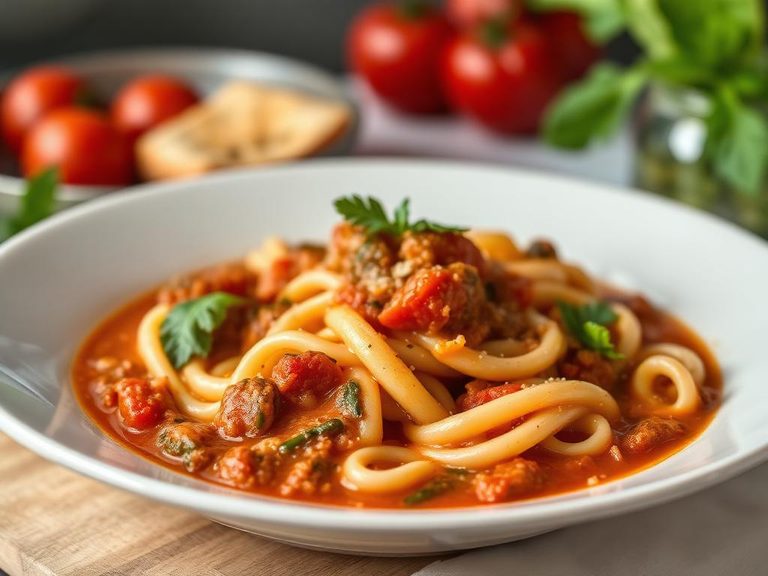
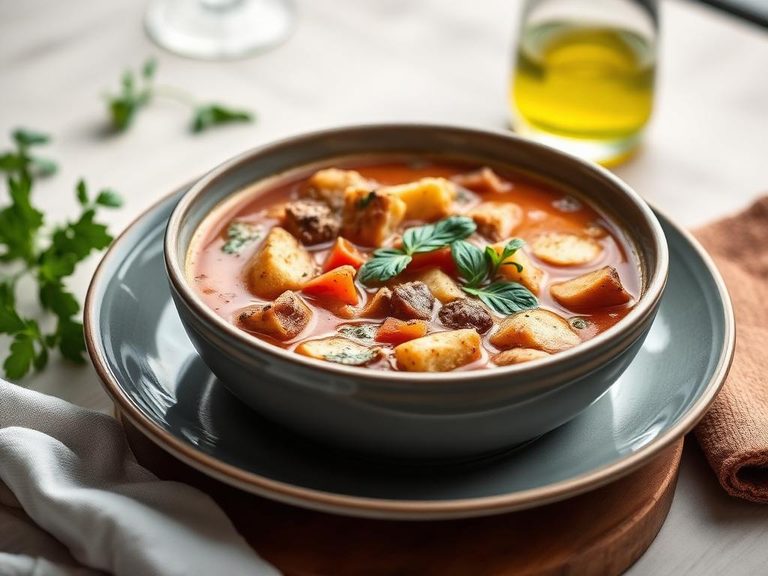
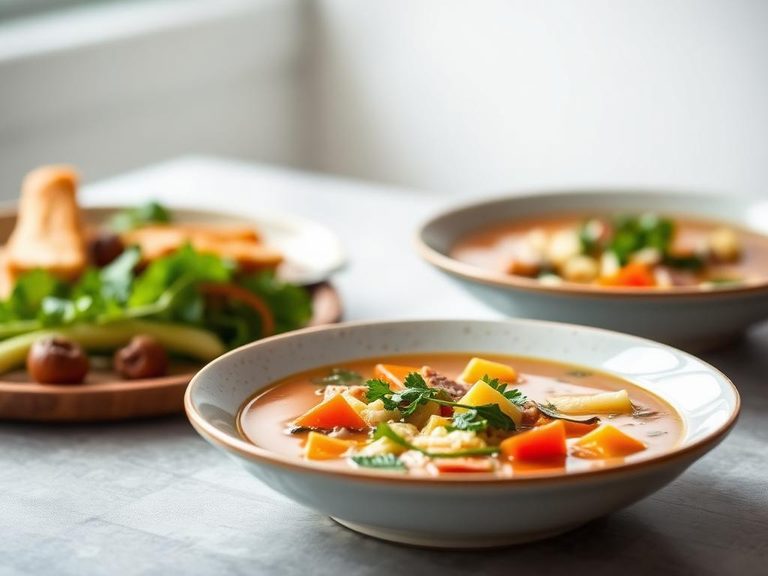
🍽️ Popular dishes
🌍 Where it's eaten
💡 Did you know?
The word 'minestrone' comes from the Latin 'minestrare,' meaning 'to serve,' and historically referred to the starchy cooking water from boiled vegetables, which was the soup's original base.
Full nutrition (USDA data · scales with serving)
| Water | 87.3 g |
| Energy | 50.0 kcal |
| Energy | 209 kj |
| Protein | 2.0 g |
| Total lipid (fat) | 0.80 g |
| Ash | 1.3 g |
| Carbohydrate, by difference | 9.0 g |
| Fiber, total dietary | 2.4 g |
| Total Sugars | 2.1 g |
| Calcium, Ca | 20.0 mg |
| Iron, Fe | 0.72 mg |
| Magnesium, Mg | 13.0 mg |
| Phosphorus, P | 34.0 mg |
| Potassium, K | 186 mg |
| Sodium, Na | 215 mg |
| Zinc, Zn | 0.32 mg |
| Copper, Cu | 0.08 mg |
| Selenium, Se | 2.1 ug |
| Vitamin C, total ascorbic acid | 5.7 mg |
| Thiamin | 0.06 mg |
| Riboflavin | 0.04 mg |
| Niacin | 0.64 mg |
| Vitamin B-6 | 0.06 mg |
| Folate, total | 16.0 ug |
| Folic acid | 1.0 ug |
| Folate, food | 14.0 ug |
| Folate, DFE | 17.0 ug |
| Choline, total | 6.6 mg |
| Vitamin B-12 | 0.00 ug |
| Vitamin B-12, added | 0.00 ug |
| Vitamin A, RAE | 33.0 ug |
| Retinol | 0.00 ug |
| Carotene, beta | 349 ug |
| Carotene, alpha | 99.0 ug |
| Cryptoxanthin, beta | 0.00 ug |
| Vitamin A, IU | 665 iu |
| Lycopene | 6359 ug |
| Lutein + zeaxanthin | 90.0 ug |
| Vitamin E (alpha-tocopherol) | 0.70 mg |
| Vitamin E, added | 0.00 mg |
| Vitamin D (D2 + D3), International Units | 0.00 iu |
| Vitamin D (D2 + D3) | 0.00 ug |
| Vitamin K (phylloquinone) | 5.8 ug |
| Alcohol, ethyl | 0.00 g |
| Caffeine | 0.00 mg |
| Theobromine | 0.00 mg |
Fat & fatty acid profile (per 100g)
| Fatty acids, total saturated | 0.14 g |
| SFA 4:0 | 0.01 g |
| SFA 6:0 | 0.00 g |
| SFA 8:0 | 0.00 g |
| SFA 10:0 | 0.00 g |
| SFA 12:0 | 0.01 g |
| SFA 14:0 | 0.01 g |
| SFA 16:0 | 0.09 g |
| SFA 18:0 | 0.03 g |
| Fatty acids, total monounsaturated | 0.28 g |
| MUFA 16:1 | 0.00 g |
| MUFA 18:1 | 0.23 g |
| MUFA 20:1 | 0.00 g |
| MUFA 22:1 | 0.00 g |
| Fatty acids, total polyunsaturated | 0.25 g |
| PUFA 18:2 | 0.22 g |
| PUFA 18:3 | 0.03 g |
| PUFA 18:4 | 0.00 g |
| PUFA 20:4 | 0.00 g |
| PUFA 20:5 n-3 (EPA) | 0.00 g |
| PUFA 22:5 n-3 (DPA) | 0.00 g |
| PUFA 22:6 n-3 (DHA) | 0.00 g |
| Cholesterol | 0.00 mg |
Amino acid profile (per 100g)
Estimated from Soup, bean with pork, canned, condensed — USDA does not publish this profile for Soup.
| Tryptophan | 0.06 g |
| Threonine | 0.24 g |
| Isoleucine | 0.29 g |
| Leucine | 0.48 g |
| Lysine | 0.40 g |
| Methionine | 0.07 g |
| Cystine | 0.07 g |
| Phenylalanine | 0.33 g |
| Tyrosine | 0.18 g |
| Valine | 0.32 g |
| Arginine | 0.31 g |
| Histidine | 0.15 g |
| Alanine | 0.29 g |
| Aspartic acid | 0.66 g |
| Glutamic acid | 1.1 g |
| Glycine | 0.28 g |
| Proline | 0.27 g |
| Serine | 0.29 g |
FAQ
Is canned minestrone soup healthy?
Yes, especially reduced-sodium versions. It's low in calories and fat, high in fiber, and provides a good mix of vegetables. Check labels for sodium content and choose options with minimal added sugars.
How can I improve the taste of canned minestrone?
Enhance it by stirring in fresh herbs like basil or parsley, a splash of balsamic vinegar, a dollop of pesto, or a sprinkle of grated Parmesan cheese. Heating it gently and not boiling preserves the flavors.
What is the difference between minestrone and vegetable soup?
Minestrone is a specific Italian vegetable soup that traditionally includes beans, pasta or rice, and a tomato-based broth. Generic vegetable soup is a broader category with no required ingredients or cultural origin.
Nutrient density (calculated · NRF9.3)
Nutrient Rich Foods index: beneficial nutrients (protein, fiber, vitamins, minerals) minus saturated fat, added sugar & sodium, per 100 kcal.
NRF9.3 index — Fulgoni, Keast & Drewnowski, 2009. Computed from USDA nutrients.
Weight-loss friendliness (composite index)
Energy density 0.50 kcal/g · 16% calories from protein · 2.4 g fiber · 2.1 g sugar per 100 g.
Composite of energy density (Rolls et al., 1999), protein & fiber satiety, minus sugar. A calculated heuristic — ranks satiety-per-calorie, not a clinical measure.
Dietary load (calculated from USDA values)
Potential renal acid load. Positive = acid-forming, negative = alkaline-forming.
Sodium-to-potassium ratio: 1.16 (lower is better — aim for ≤ 1)
Sodium:potassium per WHO potassium guidance. Computed from USDA nutrients.