

Soup, chicken broth or bouillon, dry
Whole food · Soups, Sauces, and Gravies
This is a concentrated, dehydrated powder made from chicken stock, designed to dissolve quickly into hot water to create an instant, savory broth. It delivers a potent, salty, umami-rich chicken flavor with a fine, granular texture that vanishes upon reconstitution. Nutritionally, it's a calorie-dense ingredient, packing significant protein and fat per 100g, but is primarily used in small amounts for flavor.
Calorie split: 25% protein · 27% carbs · 47% fat
↓ Full nutrition💚 Why it's loved
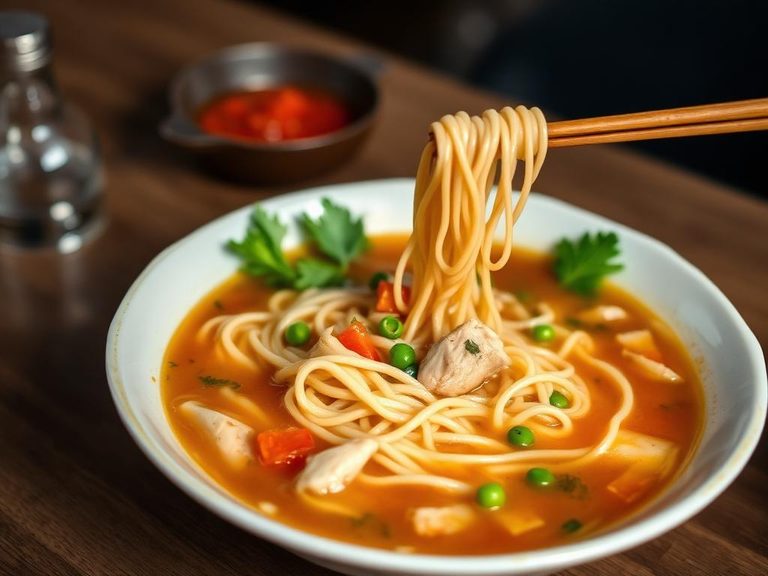
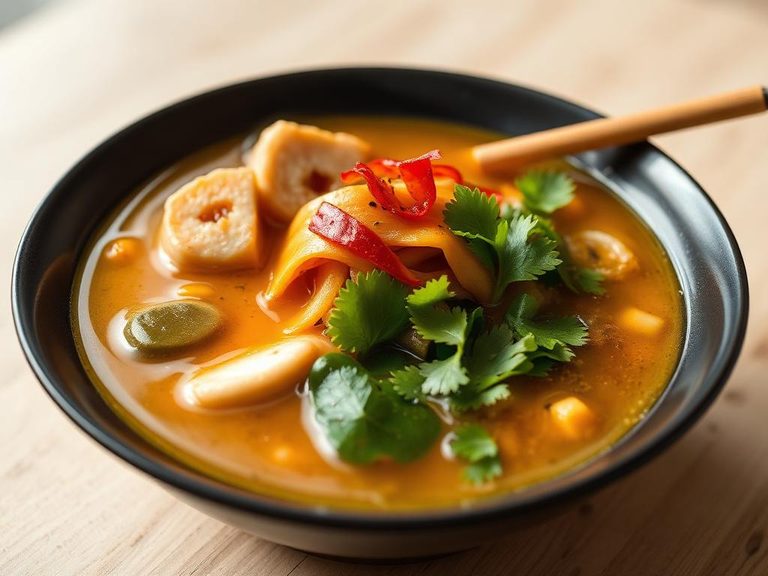
People love it for its unmatched convenience and ability to instantly add deep, comforting chicken flavor to a dish, embodying a sense of home cooking in a pinch. It's a versatile flavor amplifier, beloved in everything from quick noodle cups to complex gravies.
⚠️ Watch-outs & how to enjoy it better
Its high sodium content can be a concern for those monitoring salt intake, and it often contains additives like MSG or common allergens. To counteract this, use it sparingly as a seasoning rather than the main liquid, and pair it with low-sodium ingredients and fresh herbs to build flavor without over-salting.
Key benefits
- Provides a quick, savory base for soups and sauces
- Source of protein and electrolytes like sodium
- Long shelf life and convenient for instant meals
- Enhances the flavor of grains and vegetables
🍽️ Popular dishes
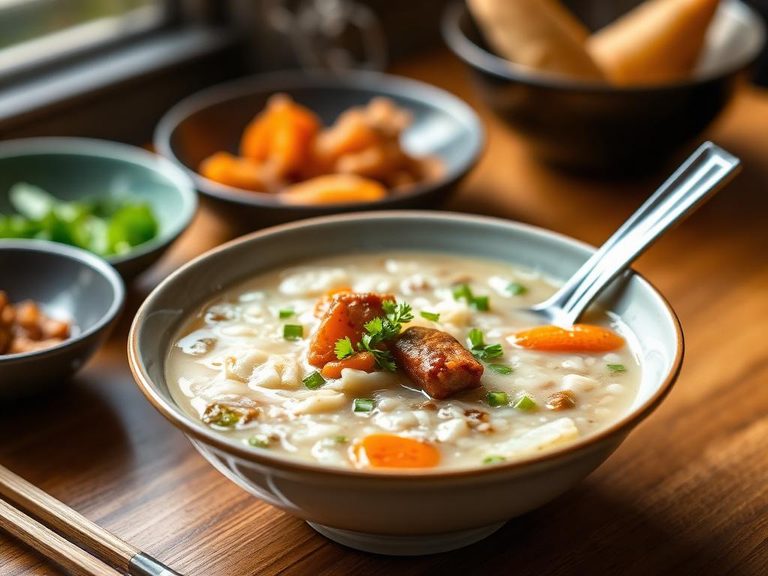
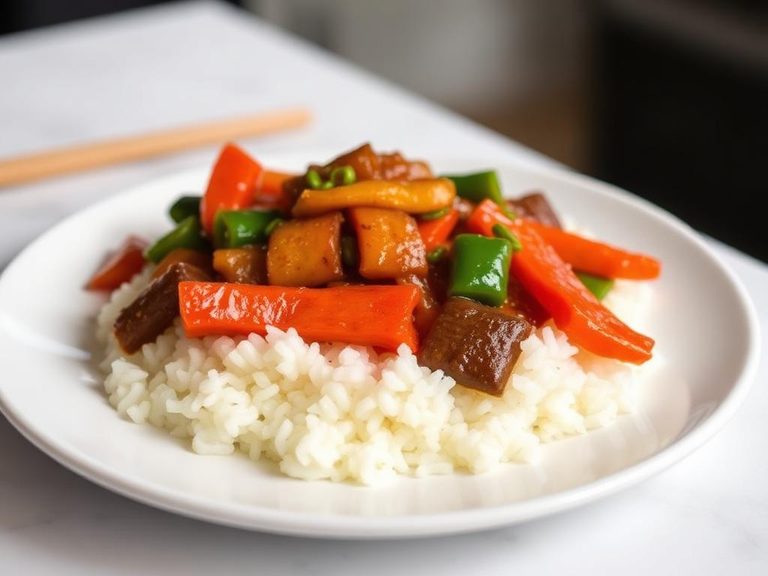
🌍 Where it's eaten
💡 Did you know?
The concept of dehydrated bouillon cubes was popularized by the Swiss company Maggi in the late 19th century, revolutionizing home cooking by making complex stock flavors instantly accessible.
Full nutrition (USDA data · scales with serving)
| Water | 2.3 g |
| Energy | 267 kcal |
| Energy | 1117 kj |
| Protein | 16.7 g |
| Total lipid (fat) | 13.9 g |
| Ash | 49.2 g |
| Carbohydrate, by difference | 18.0 g |
| Fiber, total dietary | 0.00 g |
| Total Sugars | 17.4 g |
| Calcium, Ca | 187 mg |
| Iron, Fe | 1.0 mg |
| Magnesium, Mg | 56.0 mg |
| Phosphorus, P | 166 mg |
| Potassium, K | 309 mg |
| Sodium, Na | 23875 mg |
| Zinc, Zn | 0.09 mg |
| Copper, Cu | 0.00 mg |
| Manganese, Mn | 0.15 mg |
| Selenium, Se | 28.0 ug |
| Vitamin C, total ascorbic acid | 1.1 mg |
| Thiamin | 0.10 mg |
| Riboflavin | 0.43 mg |
| Niacin | 2.5 mg |
| Pantothenic acid | 0.60 mg |
| Vitamin B-6 | 0.10 mg |
| Folate, total | 32.0 ug |
| Folic acid | 0.00 ug |
| Folate, food | 32.0 ug |
| Folate, DFE | 32.0 ug |
| Choline, total | 115 mg |
| Vitamin B-12 | 0.30 ug |
| Vitamin B-12, added | 0.00 ug |
| Vitamin A, RAE | 0.00 ug |
| Retinol | 0.00 ug |
| Carotene, beta | 0.00 ug |
| Carotene, alpha | 0.00 ug |
| Cryptoxanthin, beta | 0.00 ug |
| Vitamin A, IU | 2.0 iu |
| Lycopene | 0.00 ug |
| Lutein + zeaxanthin | 0.00 ug |
| Vitamin E (alpha-tocopherol) | 0.46 mg |
| Vitamin E, added | 0.00 mg |
| Vitamin D (D2 + D3), International Units | 0.00 iu |
| Vitamin D (D2 + D3) | 0.00 ug |
| Vitamin K (phylloquinone) | 0.00 ug |
| Alcohol, ethyl | 0.00 g |
| Caffeine | 0.00 mg |
| Theobromine | 0.00 mg |
Fat & fatty acid profile (per 100g)
| Fatty acids, total saturated | 3.4 g |
| SFA 4:0 | 0.00 g |
| SFA 6:0 | 0.00 g |
| SFA 8:0 | 0.00 g |
| SFA 10:0 | 0.00 g |
| SFA 12:0 | 0.01 g |
| SFA 14:0 | 0.01 g |
| SFA 16:0 | 2.6 g |
| SFA 18:0 | 0.66 g |
| Fatty acids, total monounsaturated | 5.4 g |
| MUFA 16:1 | 0.60 g |
| MUFA 18:1 | 4.6 g |
| MUFA 20:1 | 0.12 g |
| MUFA 22:1 | 0.00 g |
| Fatty acids, total polyunsaturated | 4.5 g |
| PUFA 18:2 | 4.3 g |
| PUFA 18:3 | 0.13 g |
| PUFA 18:4 | 0.00 g |
| PUFA 20:4 | 0.01 g |
| PUFA 20:5 n-3 (EPA) | 0.00 g |
| PUFA 22:5 n-3 (DPA) | 0.00 g |
| PUFA 22:6 n-3 (DHA) | 0.00 g |
| Cholesterol | 13.0 mg |
Amino acid profile (per 100g)
Estimated from Soup, bean with pork, canned, condensed — USDA does not publish this profile for Soup.
| Tryptophan | 0.06 g |
| Threonine | 0.24 g |
| Isoleucine | 0.29 g |
| Leucine | 0.48 g |
| Lysine | 0.40 g |
| Methionine | 0.07 g |
| Cystine | 0.07 g |
| Phenylalanine | 0.33 g |
| Tyrosine | 0.18 g |
| Valine | 0.32 g |
| Arginine | 0.31 g |
| Histidine | 0.15 g |
| Alanine | 0.29 g |
| Aspartic acid | 0.66 g |
| Glutamic acid | 1.1 g |
| Glycine | 0.28 g |
| Proline | 0.27 g |
| Serine | 0.29 g |
FAQ
Is chicken broth powder the same as bouillon?
Yes, the terms are often used interchangeably. Both are dehydrated, concentrated forms of chicken stock, though 'bouillon' sometimes implies a more seasoned, cube form.
How much powder should I use per cup of water?
A typical ratio is about 1 teaspoon (3g) of powder per 1 cup (240ml) of hot water, but always check the package directions as concentration varies.
Can I use it in dry rubs or for seasoning?
Absolutely. Its fine powder makes it an excellent seasoning for roasted vegetables, popcorn, or as a base for dry rubs on chicken or pork.
Nutrient density (calculated · NRF9.3)
Nutrient Rich Foods index: beneficial nutrients (protein, fiber, vitamins, minerals) minus saturated fat, added sugar & sodium, per 100 kcal.
NRF9.3 index — Fulgoni, Keast & Drewnowski, 2009. Computed from USDA nutrients.
Weight-loss friendliness (composite index)
Energy density 2.67 kcal/g · 25% calories from protein · 0.0 g fiber · 17.4 g sugar per 100 g.
Composite of energy density (Rolls et al., 1999), protein & fiber satiety, minus sugar. A calculated heuristic — ranks satiety-per-calorie, not a clinical measure.
Dietary load (calculated from USDA values)
Potential renal acid load. Positive = acid-forming, negative = alkaline-forming.
Sodium-to-potassium ratio: 77.27 (lower is better — aim for ≤ 1)
Sodium:potassium per WHO potassium guidance. Computed from USDA nutrients.