

Soup, barley
Common food
A humble, hearty broth where tender, chewy barley grains mingle with soft vegetables in a savory, subtly nutty base. This low-calorie staple offers a satisfying, starchy texture without heaviness, delivering a modest but meaningful 3.34g of protein per 100g. Its gentle, earthy flavor profile makes it a comforting canvas for countless herbs and spices.
Calorie split: 23% protein · 45% carbs · 32% fat
↓ Full nutrition💚 Why it's loved
People adore it for its comforting, rustic warmth and the satisfying chew of the barley, which makes the soup feel substantial and nourishing. It's a versatile base that absorbs flavors beautifully, fitting seamlessly into both simple home cooking and elaborate, slow-simmered traditions.
⚠️ Watch-outs & how to enjoy it better
The primary concern is its potential to cause blood-sugar spikes in sensitive individuals due to its carbohydrate content, though the fiber helps mitigate this. To counteract this, pair the soup with a source of protein (like chicken or beans) or healthy fat (like a drizzle of olive oil) to slow digestion and stabilize blood sugar levels. Additionally, be mindful of sodium if using a pre-made broth base; opt for low-sodium versions and season with herbs and spices instead.
Key benefits
- High in fiber for digestive health
- Low in calories, ideal for weight management
- Contains beta-glucan, a soluble fiber linked to heart health
- Provides plant-based protein for satiety
- Naturally low in fat and sugar
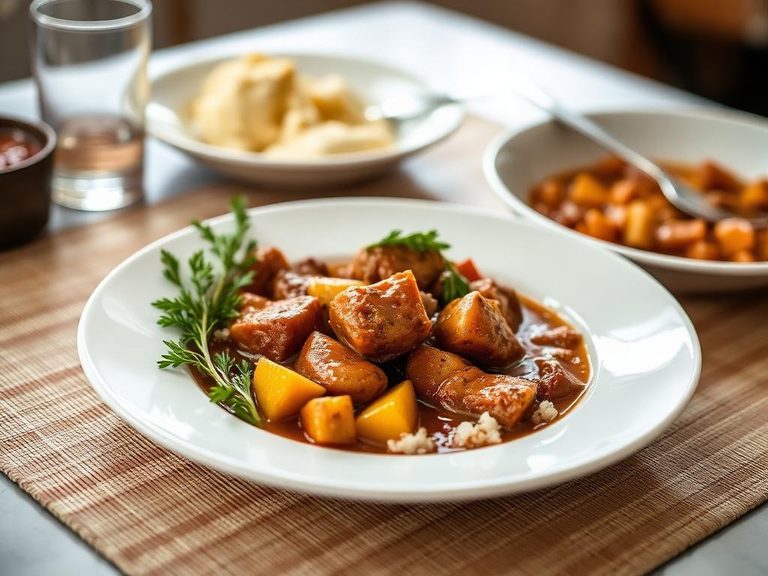
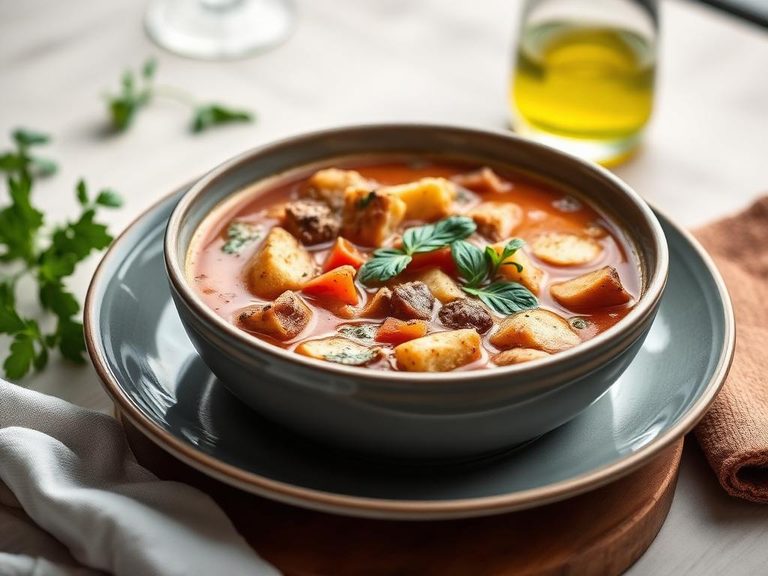
🍽️ Popular dishes
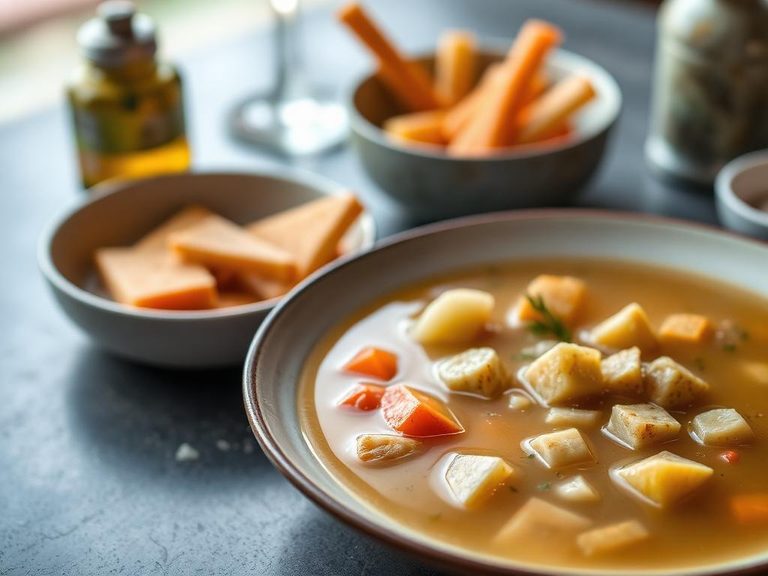
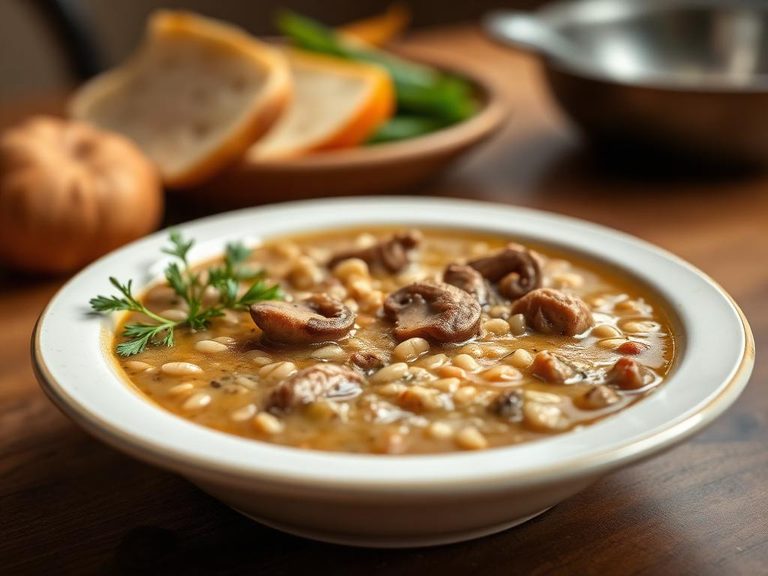
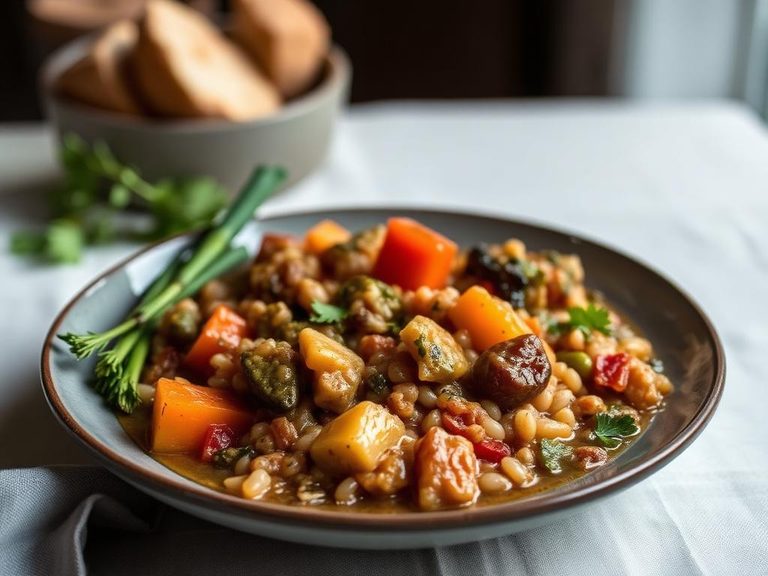
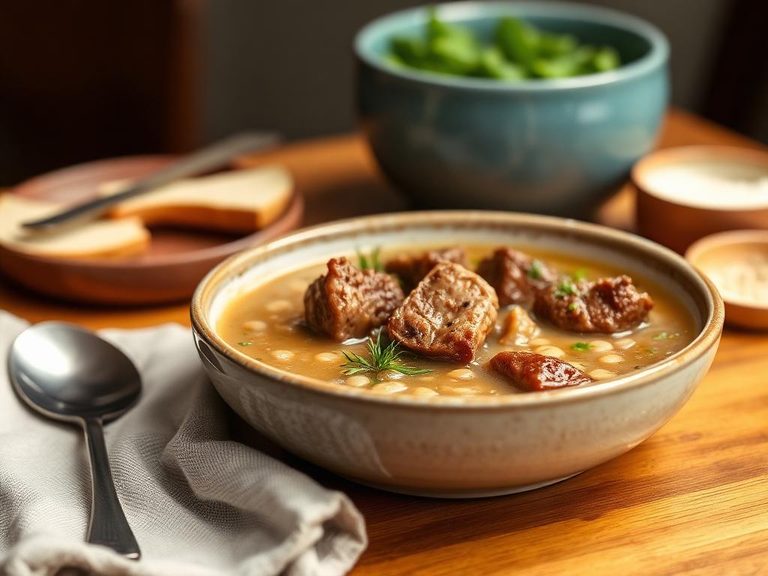
🌍 Where it's eaten
💡 Did you know?
Barley is one of the oldest cultivated grains, with evidence of its use dating back to 10,000 BCE in the Fertile Crescent, long before wheat or rice.
Full nutrition (USDA data · scales with serving)
| Water | 87.0 g |
| Energy | 58.0 kcal |
| Protein | 3.3 g |
| Total lipid (fat) | 2.1 g |
| Carbohydrate, by difference | 6.7 g |
| Fiber, total dietary | 1.1 g |
| Total Sugars | 0.80 g |
| Calcium, Ca | 11.0 mg |
| Iron, Fe | 0.53 mg |
| Magnesium, Mg | 11.0 mg |
| Phosphorus, P | 39.0 mg |
| Potassium, K | 117 mg |
| Sodium, Na | 247 mg |
| Zinc, Zn | 0.82 mg |
| Copper, Cu | 0.04 mg |
| Selenium, Se | 3.7 ug |
| Vitamin C, total ascorbic acid | 3.7 mg |
| Thiamin | 0.03 mg |
| Riboflavin | 0.04 mg |
| Niacin | 1.0 mg |
| Vitamin B-6 | 0.09 mg |
| Folate, total | 10.0 ug |
| Folic acid | 0.00 ug |
| Folate, food | 10.0 ug |
| Folate, DFE | 10.0 ug |
| Choline, total | 13.2 mg |
| Vitamin B-12 | 0.25 ug |
| Vitamin B-12, added | 0.00 ug |
| Vitamin A, RAE | 27.0 ug |
| Retinol | 0.00 ug |
| Carotene, beta | 275 ug |
| Carotene, alpha | 91.0 ug |
| Cryptoxanthin, beta | 2.0 ug |
| Lycopene | 114 ug |
| Lutein + zeaxanthin | 145 ug |
| Vitamin E (alpha-tocopherol) | 0.15 mg |
| Vitamin E, added | 0.00 mg |
| Vitamin D (D2 + D3) | 0.00 ug |
| Vitamin K (phylloquinone) | 7.6 ug |
| Alcohol, ethyl | 0.00 g |
| Caffeine | 0.00 mg |
| Theobromine | 0.00 mg |
Fat & fatty acid profile (per 100g)
| Fatty acids, total saturated | 0.70 g |
| SFA 4:0 | 0.00 g |
| SFA 6:0 | 0.00 g |
| SFA 8:0 | 0.00 g |
| SFA 10:0 | 0.00 g |
| SFA 12:0 | 0.00 g |
| SFA 14:0 | 0.05 g |
| SFA 16:0 | 0.41 g |
| SFA 18:0 | 0.21 g |
| Fatty acids, total monounsaturated | 0.87 g |
| MUFA 16:1 | 0.06 g |
| MUFA 18:1 | 0.77 g |
| MUFA 20:1 | 0.01 g |
| MUFA 22:1 | 0.00 g |
| Fatty acids, total polyunsaturated | 0.22 g |
| PUFA 18:2 | 0.19 g |
| PUFA 18:3 | 0.03 g |
| PUFA 18:4 | 0.00 g |
| PUFA 20:4 | 0.01 g |
| PUFA 20:5 n-3 (EPA) | 0.00 g |
| PUFA 22:5 n-3 (DPA) | 0.00 g |
| PUFA 22:6 n-3 (DHA) | 0.00 g |
| Cholesterol | 9.0 mg |
Amino acid profile (per 100g)
Estimated from Restaurant, Latino, black bean soup — USDA does not publish this profile for Soup.
| Tryptophan | 0.04 g |
| Threonine | 0.17 g |
| Isoleucine | 0.16 g |
| Leucine | 0.32 g |
| Lysine | 0.27 g |
| Methionine | 0.10 g |
| Cystine | 0.04 g |
| Phenylalanine | 0.16 g |
| Tyrosine | 0.13 g |
| Valine | 0.20 g |
| Arginine | 0.35 g |
| Histidine | 0.09 g |
| Alanine | 0.35 g |
| Aspartic acid | 0.38 g |
| Glutamic acid | 0.72 g |
| Glycine | 0.58 g |
| Proline | 0.36 g |
| Serine | 0.20 g |
FAQ
Is barley soup gluten-free?
No, barley contains gluten and is not suitable for those with celiac disease or gluten sensitivity.
Can I make this soup vegan?
Yes, use vegetable broth and omit any meat or dairy. The soup is naturally plant-based if made with just vegetables and barley.
How long does cooked barley soup last in the fridge?
It will keep for 3-4 days in an airtight container. The barley may absorb more liquid as it sits, so you might need to add a splash of water when reheating.
Nutrient density (calculated · NRF9.3)
Nutrient Rich Foods index: beneficial nutrients (protein, fiber, vitamins, minerals) minus saturated fat, added sugar & sodium, per 100 kcal.
NRF9.3 index — Fulgoni, Keast & Drewnowski, 2009. Computed from USDA nutrients.
Weight-loss friendliness (composite index)
Energy density 0.58 kcal/g · 23% calories from protein · 1.1 g fiber · 0.8 g sugar per 100 g.
Composite of energy density (Rolls et al., 1999), protein & fiber satiety, minus sugar. A calculated heuristic — ranks satiety-per-calorie, not a clinical measure.
Dietary load (calculated from USDA values)
Potential renal acid load. Positive = acid-forming, negative = alkaline-forming.
Sodium-to-potassium ratio: 2.11 (lower is better — aim for ≤ 1)
Sodium:potassium per WHO potassium guidance. Computed from USDA nutrients.