

Hamin
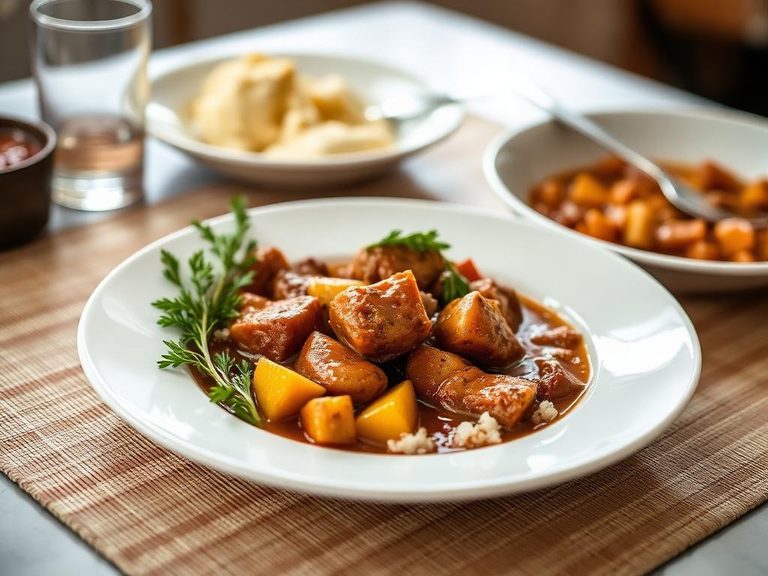
Hamin is a traditional Sephardic and Mizrahi Jewish stew that is slow-cooked overnight, typically from Friday to Saturday, to observe the Sabbath prohibition on cooking. It is a rich, savory dish often featuring meat (like beef or chicken), beans or lentils, and a variety of vegetables such as potatoes, carrots, and onions, all simmered together for hours. The dish is a staple in Jewish communities across the Mediterranean, North Africa, and the Middle East, with variations like the Iraqi 'T'bit' or the Moroccan 'Dafina'.
🍽️ Nutrition at a glance
Hamin is a hearty, calorie-dense meal, typically providing a balanced mix of protein from the meat and legumes, complex carbohydrates from the beans and vegetables, and healthy fats from the cooking oils and meat. A standard serving can range from 400 to 600 calories, offering significant fiber, iron, and B vitamins, making it a nourishing and filling dish.
Nutrition breakdown
| Calories | 380 kcal |
| Protein | 28 g |
| Carbs | 25 g |
| Fat | 18 g |
| Fiber | 4 g |
| Sugar | 3 g |
| Sodium | 850 mg |
| Iron | 4.5 mg |
| Potassium | 650 mg |
| Zinc | 5.8 mg |
| Niacin (B3) | 8.2 mg |
| Vitamin B6 | 0.6 mg |
| Phosphorus | 320 mg |
| Magnesium | 55 mg |
| Selenium | 32 mcg |
Per 1 bowl (300 g) · estimated, varies by recipe
💡 What's interesting
What makes Hamin unique is its cultural and culinary ingenuity: it is cooked slowly overnight without any human intervention, symbolizing the Sabbath rest, and the long, gentle cooking process allows the flavors to meld deeply, creating a tender, aromatic stew. Nutritionally, the slow-cooking method helps break down proteins and fibers, making the nutrients more bioavailable and the dish easier to digest.
AI estimate may be inaccurate · Terms