

Snacks, taro chips
Whole food · Snacks

Photo: Wikipedia
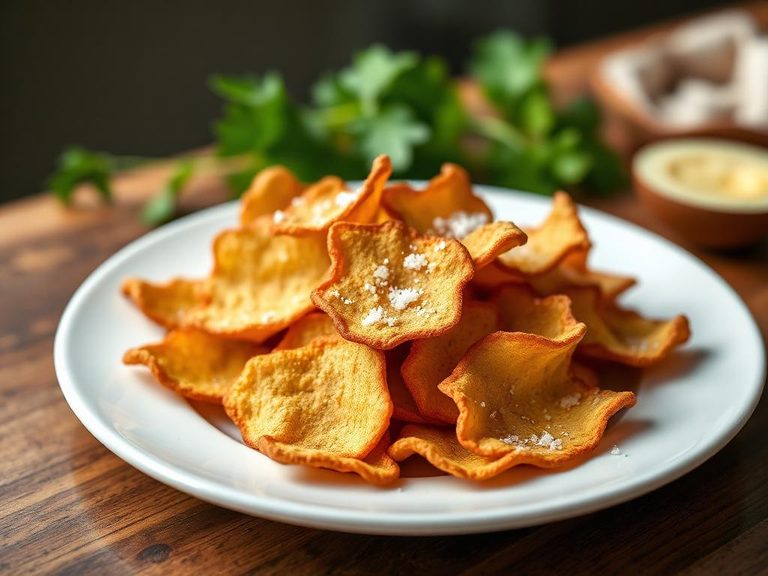
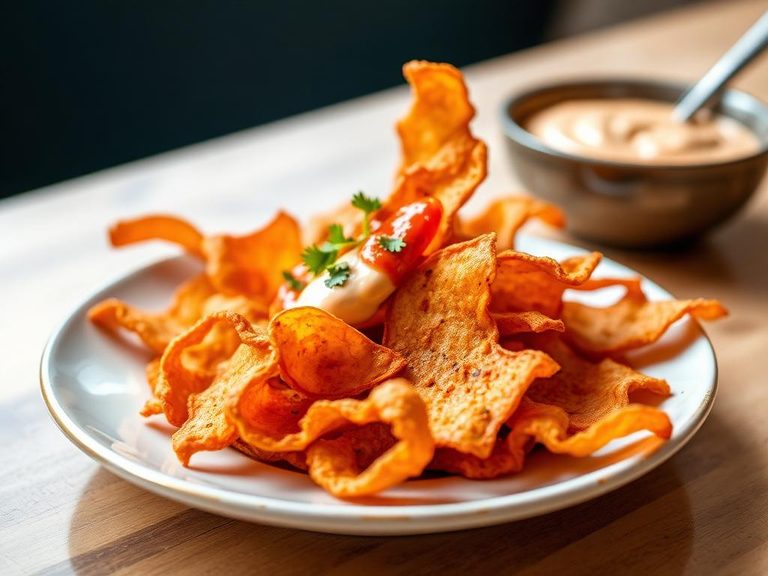
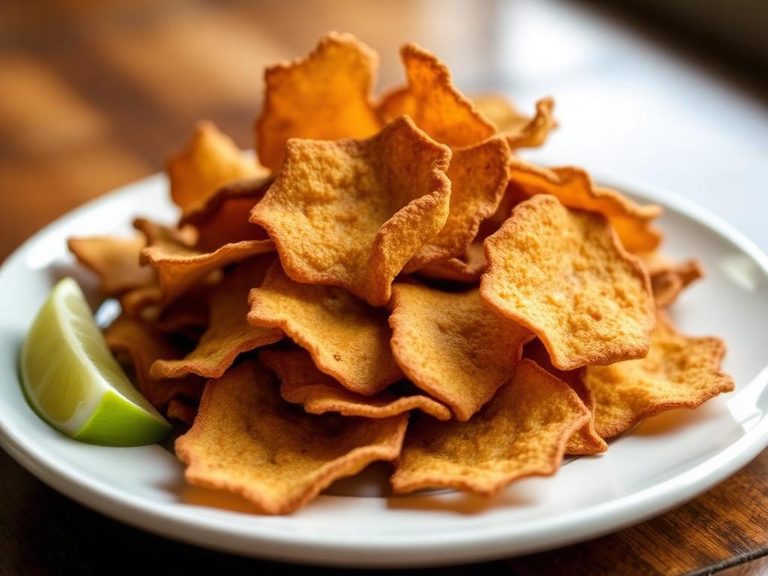
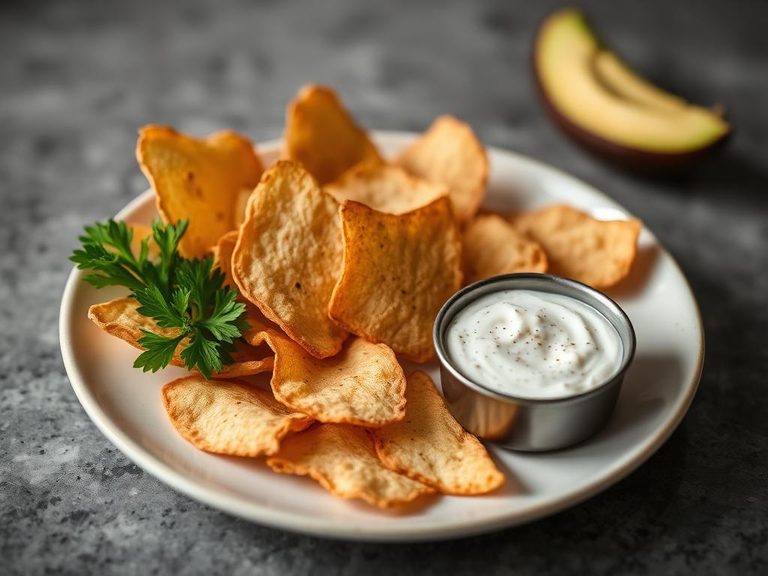
Taro chips are thin, crispy slices of the starchy root vegetable, typically deep-fried or baked until golden. They offer a satisfying crunch with a subtly nutty, earthy flavor and a hint of sweetness, distinct from potato chips. Nutritionally, they are a higher-carb, higher-fat snack with a notable fiber content.
Calorie split: 2% protein · 54% carbs · 44% fat
↓ Full nutrition💚 Why it's loved
People love taro chips for their unique, complex flavor that's more sophisticated than plain potato, and their hearty, satisfying crunch. They are a beloved staple in many Asian and Pacific Island cuisines, often enjoyed as a simple, savory treat.
⚠️ Watch-outs & how to enjoy it better
As a fried snack, they are calorie-dense and high in fat, which can be a concern for weight management. Their high carbohydrate content can cause blood-sugar spikes, especially for those with insulin resistance. To enjoy them, practice strict portion control (e.g., stick to a single-serving bag) and pair them with a protein-rich dip like hummus or a hard-boiled egg to slow digestion.
Key benefits
- Good source of dietary fiber (7.2g per 100g)
- Contains resistant starch, which can support gut health
- Provides some potassium and vitamin B6
- Gluten-free alternative to wheat-based snacks
- Naturally lower in sugar than many sweet snacks
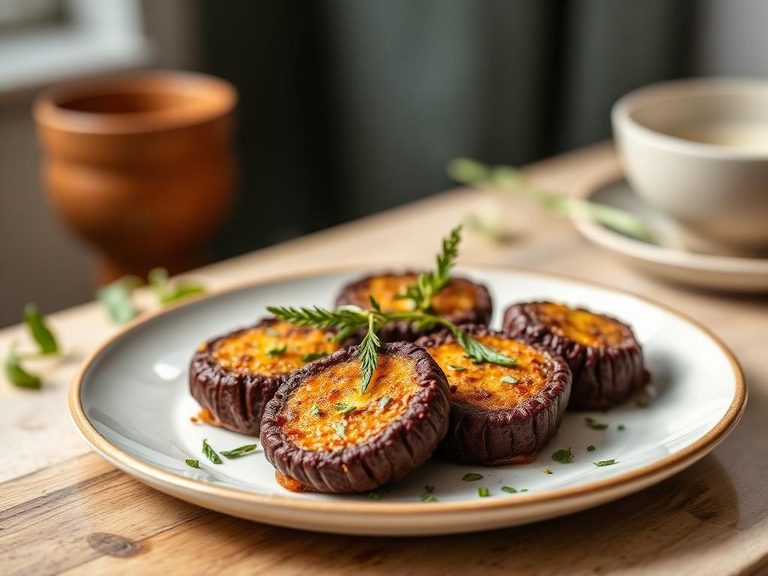
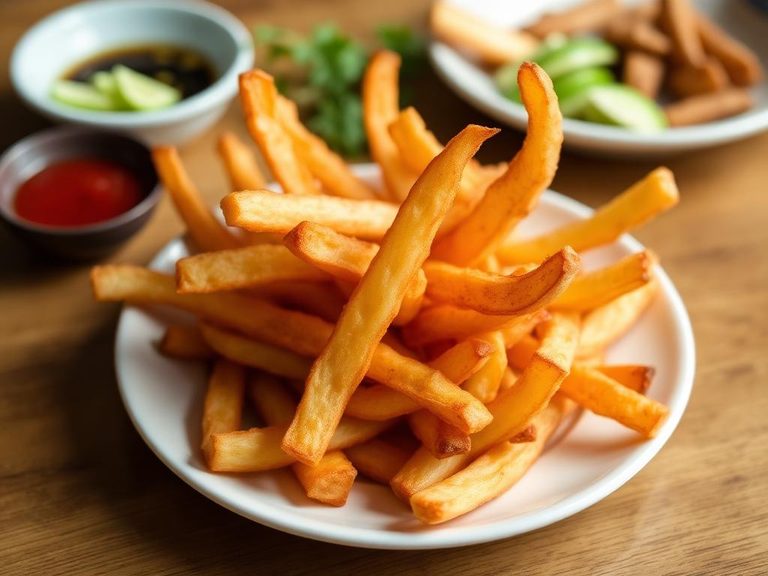
🍽️ Popular dishes
🌍 Where it's eaten
💡 Did you know?
Taro is one of the earliest cultivated plants, with evidence of its domestication in the highlands of Papua New Guinea over 10,000 years ago, making it a true ancient superfood.
Full nutrition (USDA data · scales with serving)
| Water | 2.0 g |
| Energy | 498 kcal |
| Energy | 2084 kj |
| Protein | 2.3 g |
| Total lipid (fat) | 24.9 g |
| Ash | 2.7 g |
| Carbohydrate, by difference | 68.1 g |
| Fiber, total dietary | 7.2 g |
| Total Sugars | 3.8 g |
| Calcium, Ca | 60.0 mg |
| Iron, Fe | 1.2 mg |
| Magnesium, Mg | 84.0 mg |
| Phosphorus, P | 131 mg |
| Potassium, K | 755 mg |
| Sodium, Na | 342 mg |
| Zinc, Zn | 0.38 mg |
| Copper, Cu | 0.28 mg |
| Manganese, Mn | 0.00 mg |
| Selenium, Se | 1.8 ug |
| Vitamin C, total ascorbic acid | 5.0 mg |
| Thiamin | 0.17 mg |
| Riboflavin | 0.03 mg |
| Niacin | 0.52 mg |
| Pantothenic acid | 0.67 mg |
| Vitamin B-6 | 0.44 mg |
| Folate, total | 20.0 ug |
| Folic acid | 0.00 ug |
| Folate, food | 20.0 ug |
| Folate, DFE | 20.0 ug |
| Choline, total | 44.3 mg |
| Vitamin B-12 | 0.00 ug |
| Vitamin B-12, added | 0.00 ug |
| Vitamin A, RAE | 7.0 ug |
| Retinol | 0.00 ug |
| Carotene, beta | 66.0 ug |
| Carotene, alpha | 0.00 ug |
| Cryptoxanthin, beta | 37.0 ug |
| Vitamin A, IU | 142 iu |
| Lycopene | 0.00 ug |
| Lutein + zeaxanthin | 0.00 ug |
| Vitamin E (alpha-tocopherol) | 11.3 mg |
| Vitamin E, added | 0.00 mg |
| Vitamin D (D2 + D3), International Units | 0.00 iu |
| Vitamin D (D2 + D3) | 0.00 ug |
| Vitamin K (phylloquinone) | 18.0 ug |
| Alcohol, ethyl | 0.00 g |
| Caffeine | 0.00 mg |
| Theobromine | 0.00 mg |
Fat & fatty acid profile (per 100g)
| Fatty acids, total saturated | 6.4 g |
| SFA 4:0 | 0.00 g |
| SFA 6:0 | 0.00 g |
| SFA 8:0 | 0.00 g |
| SFA 10:0 | 0.00 g |
| SFA 12:0 | 0.00 g |
| SFA 14:0 | 0.20 g |
| SFA 16:0 | 5.7 g |
| SFA 18:0 | 0.57 g |
| Fatty acids, total monounsaturated | 4.4 g |
| MUFA 16:1 | 0.20 g |
| MUFA 18:1 | 4.2 g |
| MUFA 20:1 | 0.00 g |
| MUFA 22:1 | 0.00 g |
| Fatty acids, total polyunsaturated | 12.9 g |
| PUFA 18:2 | 12.8 g |
| PUFA 18:3 | 0.06 g |
| PUFA 18:4 | 0.00 g |
| PUFA 20:4 | 0.00 g |
| PUFA 20:5 n-3 (EPA) | 0.00 g |
| PUFA 22:5 n-3 (DPA) | 0.00 g |
| PUFA 22:6 n-3 (DHA) | 0.00 g |
| Cholesterol | 0.00 mg |
Amino acid profile (per 100g)
| Tryptophan | 0.04 g |
| Threonine | 0.11 g |
| Isoleucine | 0.08 g |
| Leucine | 0.17 g |
| Lysine | 0.10 g |
| Methionine | 0.03 g |
| Cystine | 0.05 g |
| Phenylalanine | 0.13 g |
| Tyrosine | 0.09 g |
| Valine | 0.13 g |
| Arginine | 0.16 g |
| Histidine | 0.05 g |
| Alanine | 0.11 g |
| Aspartic acid | 0.30 g |
| Glutamic acid | 0.27 g |
| Glycine | 0.11 g |
| Proline | 0.09 g |
| Serine | 0.14 g |
FAQ
Are taro chips healthier than potato chips?
They can be. Taro has a lower glycemic index than white potatoes and offers more fiber. However, both are typically fried, making them high in fat and calories. The healthiest option is baked taro chips with minimal salt.
Why do some taro chips have purple streaks?
The purple color comes from anthocyanins, natural antioxidants present in certain taro varieties. These are the same compounds that give blueberries and red cabbage their color.
Can I make taro chips at home?
Yes. Slice taro root very thinly (a mandoline helps), soak in cold water to remove excess starch, pat completely dry, then bake at a low temperature (around 300°F/150°C) until crisp, or fry briefly in hot oil. Season immediately.
Nutrient density (calculated · NRF9.3)
Nutrient Rich Foods index: beneficial nutrients (protein, fiber, vitamins, minerals) minus saturated fat, added sugar & sodium, per 100 kcal.
NRF9.3 index — Fulgoni, Keast & Drewnowski, 2009. Computed from USDA nutrients.
Weight-loss friendliness (composite index)
Energy density 4.98 kcal/g · 2% calories from protein · 7.2 g fiber · 3.8 g sugar per 100 g.
Composite of energy density (Rolls et al., 1999), protein & fiber satiety, minus sugar. A calculated heuristic — ranks satiety-per-calorie, not a clinical measure.
Dietary load (calculated from USDA values)
Potential renal acid load. Positive = acid-forming, negative = alkaline-forming.
Sodium-to-potassium ratio: 0.45 (lower is better — aim for ≤ 1)
Sodium:potassium per WHO potassium guidance. Computed from USDA nutrients.