Taro Chips with Sea Salt
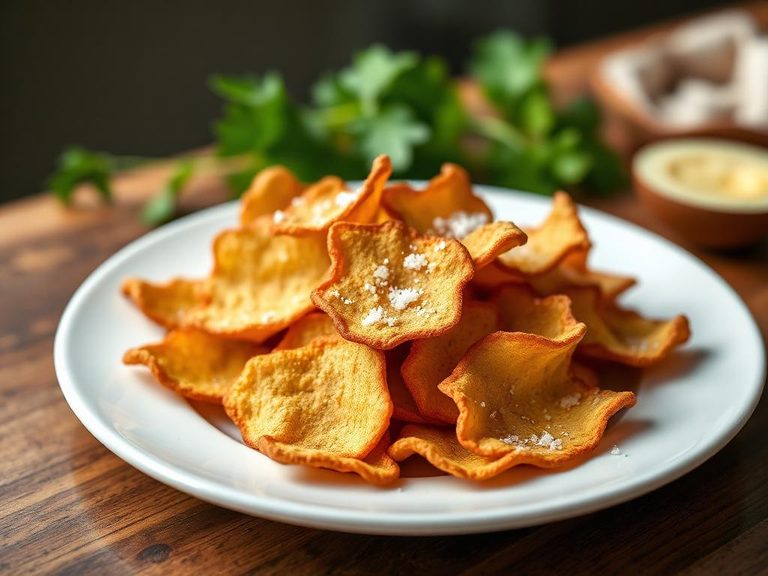
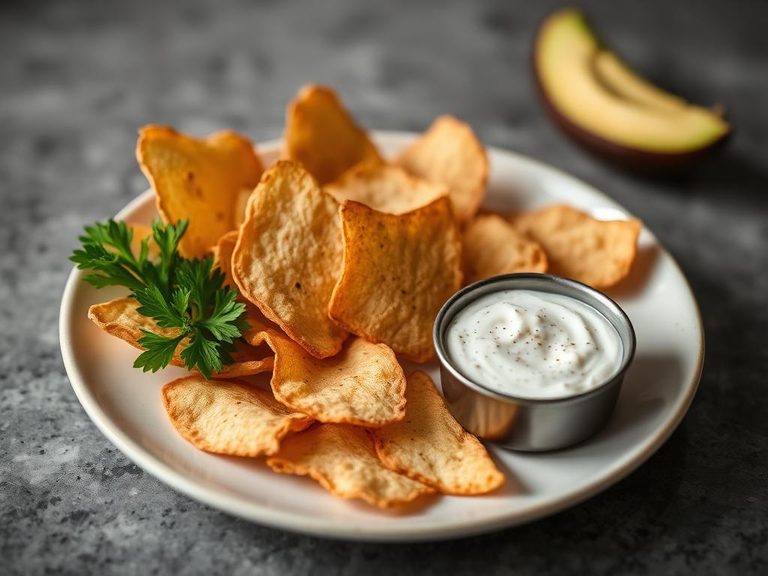
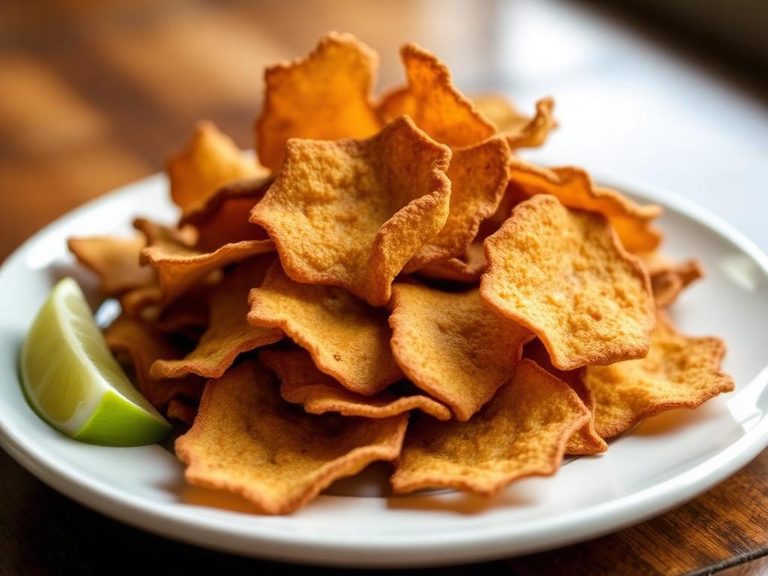
Taro Chips with Sea Salt are thin, crispy slices of the tropical root vegetable taro, typically deep-fried or baked until golden and then lightly seasoned with sea salt. Originating from tropical regions where taro is a staple, like Southeast Asia, the Caribbean, and the Pacific Islands, this snack has become a popular, crunchy alternative to potato chips worldwide.
🍽️ Nutrition at a glance
This snack is primarily a source of carbohydrates from the taro, with a moderate amount of fat from the cooking oil and minimal protein. A standard 1-ounce (28g) serving provides a good amount of fiber and potassium, and typically contains around 150 calories.
Nutrition breakdown
| Calories | 150 kcal |
| Protein | 1.5 g |
| Carbs | 17 g |
| Fat | 9 g |
| Fiber | 2 g |
| Sugar | 1 g |
| Sodium | 200 mg |
| Potassium | 350 mg |
| Vitamin C | 3 mg |
| Vitamin B6 | 0.1 mg |
| Manganese | 0.3 mg |
| Iron | 0.5 mg |
| Magnesium | 20 mg |
| Phosphorus | 40 mg |
| Copper | 0.1 mg |
Per 1 oz (28 g) · estimated, varies by recipe
💡 What's interesting
Nutritionally, taro is interesting because its starches are more easily digestible than those of many other tubers, and it contains a unique antioxidant that gives it a slight purple hue. Culturally, taro is a deeply significant food in many Polynesian and Asian cuisines, often considered a sacred or foundational crop, making its transformation into a modern, salty chip a fun example of traditional ingredients meeting global snack trends.