

Sauerkraut
Common food
Sauerkraut is finely shredded cabbage that has been fermented by lactic acid bacteria, resulting in a tangy, sour, and slightly salty flavor with a crisp, crunchy texture. It's a low-calorie food, providing just 40 calories per 100g, and is a good source of dietary fiber and vitamin C. The fermentation process also creates beneficial probiotics, which are live bacteria that support gut health.
Calorie split: 8% protein · 39% carbs · 53% fat
↓ Full nutrition💚 Why it's loved
People love sauerkraut for its sharp, acidic tang that cuts through rich, fatty foods and adds a vibrant flavor dimension. Its versatility as a condiment, side dish, or ingredient in hearty stews and sandwiches makes it a beloved staple in many cuisines.
⚠️ Watch-outs & how to enjoy it better
The primary downside is its high sodium content, which can be a concern for those monitoring blood pressure. The strong sour flavor may also be too intense for some palates. To manage sodium, look for low-sodium varieties or rinse it briefly before eating. Pairing it with protein or healthy fats can help balance its acidity and provide a more complete meal.
Key benefits
- Rich in probiotics from natural fermentation.
- Good source of dietary fiber (2.8g per 100g).
- High in vitamin C, an antioxidant that supports immune function.
- Low in calories, making it suitable for weight management.
- Contains beneficial plant compounds like glucosinolates from cabbage.
🍽️ Popular dishes
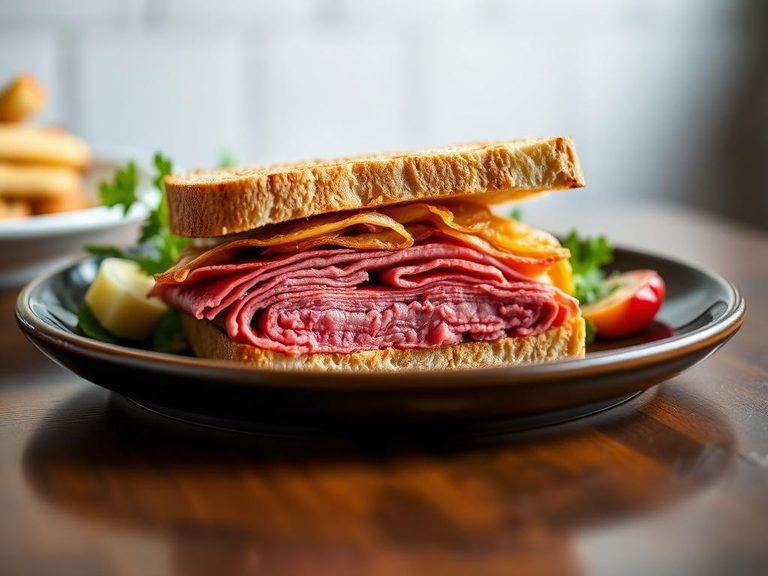
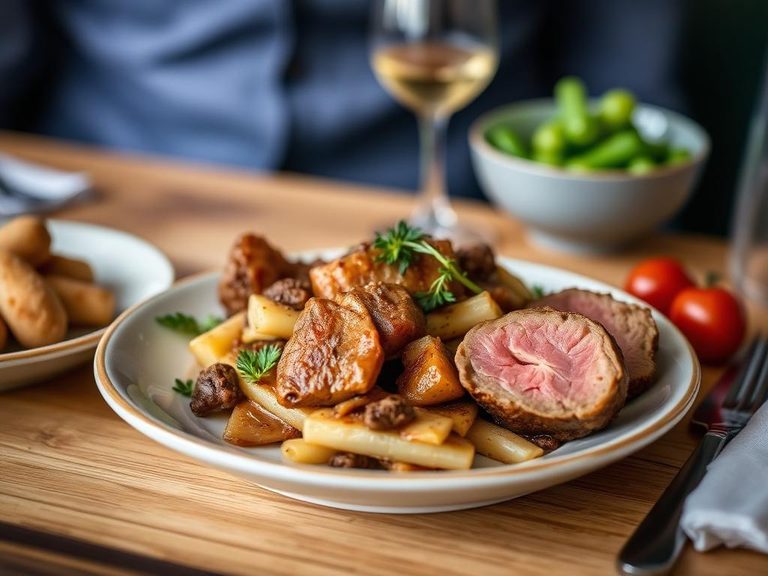
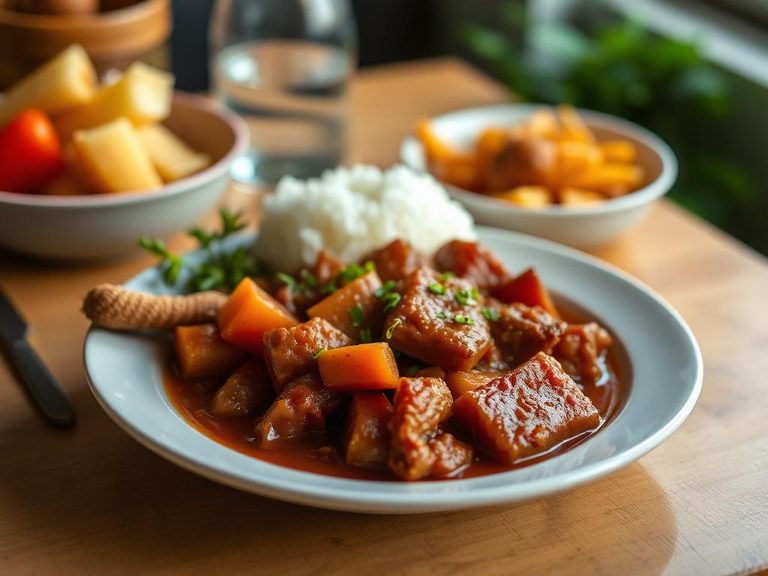
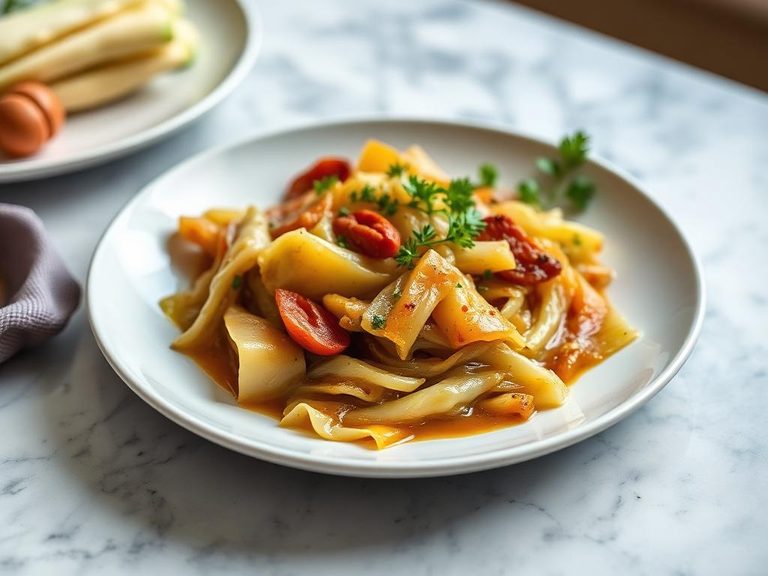

🌍 Where it's eaten
💡 Did you know?
The word 'sauerkraut' is German for 'sour cabbage,' and the fermentation process was historically used as a method of preserving cabbage for long sea voyages, famously helping to prevent scurvy among sailors.
Full nutrition (USDA data · scales with serving)
| Water | 90.3 g |
| Energy | 40.0 kcal |
| Protein | 0.90 g |
| Total lipid (fat) | 2.5 g |
| Carbohydrate, by difference | 4.2 g |
| Fiber, total dietary | 2.8 g |
| Total Sugars | 1.7 g |
| Calcium, Ca | 30.0 mg |
| Iron, Fe | 1.4 mg |
| Magnesium, Mg | 13.0 mg |
| Phosphorus, P | 20.0 mg |
| Potassium, K | 165 mg |
| Sodium, Na | 659 mg |
| Zinc, Zn | 0.18 mg |
| Copper, Cu | 0.09 mg |
| Selenium, Se | 0.60 ug |
| Vitamin C, total ascorbic acid | 12.8 mg |
| Thiamin | 0.02 mg |
| Riboflavin | 0.02 mg |
| Niacin | 0.14 mg |
| Vitamin B-6 | 0.16 mg |
| Folate, total | 22.0 ug |
| Folic acid | 0.00 ug |
| Folate, food | 22.0 ug |
| Folate, DFE | 22.0 ug |
| Choline, total | 10.6 mg |
| Vitamin B-12 | 0.00 ug |
| Vitamin B-12, added | 0.00 ug |
| Vitamin A, RAE | 26.0 ug |
| Retinol | 24.0 ug |
| Carotene, beta | 19.0 ug |
| Carotene, alpha | 5.0 ug |
| Cryptoxanthin, beta | 0.00 ug |
| Lycopene | 0.00 ug |
| Lutein + zeaxanthin | 286 ug |
| Vitamin E (alpha-tocopherol) | 0.37 mg |
| Vitamin E, added | 0.00 mg |
| Vitamin D (D2 + D3) | 0.10 ug |
| Vitamin K (phylloquinone) | 14.0 ug |
| Alcohol, ethyl | 0.00 g |
| Caffeine | 0.00 mg |
| Theobromine | 0.00 mg |
Fat & fatty acid profile (per 100g)
| Fatty acids, total saturated | 1.1 g |
| SFA 4:0 | 0.04 g |
| SFA 6:0 | 0.03 g |
| SFA 8:0 | 0.02 g |
| SFA 10:0 | 0.04 g |
| SFA 12:0 | 0.04 g |
| SFA 14:0 | 0.14 g |
| SFA 16:0 | 0.52 g |
| SFA 18:0 | 0.21 g |
| Fatty acids, total monounsaturated | 0.64 g |
| MUFA 16:1 | 0.02 g |
| MUFA 18:1 | 0.60 g |
| MUFA 20:1 | 0.01 g |
| MUFA 22:1 | 0.00 g |
| Fatty acids, total polyunsaturated | 0.44 g |
| PUFA 18:2 | 0.37 g |
| PUFA 18:3 | 0.07 g |
| PUFA 18:4 | 0.00 g |
| PUFA 20:4 | 0.00 g |
| PUFA 20:5 n-3 (EPA) | 0.00 g |
| PUFA 22:5 n-3 (DPA) | 0.00 g |
| PUFA 22:6 n-3 (DHA) | 0.00 g |
| Cholesterol | 4.0 mg |
Amino acid profile (per 100g)
Estimated from Sauerkraut, canned, solids and liquids — USDA does not publish this profile for Sauerkraut.
| Tryptophan | 0.01 g |
| Threonine | 0.03 g |
| Isoleucine | 0.02 g |
| Leucine | 0.03 g |
| Lysine | 0.03 g |
| Methionine | 0.01 g |
| Cystine | 0.01 g |
| Phenylalanine | 0.02 g |
| Tyrosine | 0.01 g |
| Valine | 0.03 g |
| Arginine | 0.05 g |
| Histidine | 0.02 g |
| Alanine | 0.03 g |
| Aspartic acid | 0.09 g |
| Glutamic acid | 0.21 g |
| Glycine | 0.02 g |
| Proline | 0.03 g |
| Serine | 0.04 g |
FAQ
Is sauerkraut the same as coleslaw?
No. Coleslaw is typically a salad of raw shredded cabbage mixed with a dressing like mayonnaise or vinegar, while sauerkraut is fermented cabbage.
Does cooking sauerkraut kill the probiotics?
Yes, high heat will kill the live probiotic bacteria. To preserve them, add sauerkraut to dishes after cooking or consume it raw.
How long does opened sauerkraut last?
Once opened, it should be stored in the refrigerator in its brine and will typically last for several weeks to a few months.
Nutrient density (calculated · NRF9.3)
Nutrient Rich Foods index: beneficial nutrients (protein, fiber, vitamins, minerals) minus saturated fat, added sugar & sodium, per 100 kcal.
NRF9.3 index — Fulgoni, Keast & Drewnowski, 2009. Computed from USDA nutrients.
Weight-loss friendliness (composite index)
Energy density 0.40 kcal/g · 9% calories from protein · 2.8 g fiber · 1.7 g sugar per 100 g.
Composite of energy density (Rolls et al., 1999), protein & fiber satiety, minus sugar. A calculated heuristic — ranks satiety-per-calorie, not a clinical measure.
Dietary load (calculated from USDA values)
Potential renal acid load. Positive = acid-forming, negative = alkaline-forming.
Sodium-to-potassium ratio: 3.99 (lower is better — aim for ≤ 1)
Sodium:potassium per WHO potassium guidance. Computed from USDA nutrients.