

Sandwich spread, with chopped pickle, regular, unspecified oils
Whole food · Fats and Oils

Photo: Wikipedia
This is a creamy, tangy sandwich spread where finely chopped pickles are folded into a smooth base of regular, unspecified oils. It delivers a sharp, briny punch with a rich, mouth-coating texture from the oil emulsion. Nutritionally, it is a high-fat, energy-dense condiment with minimal protein or fiber.
Calorie split: 1% protein · 22% carbs · 77% fat
↓ Full nutrition💚 Why it's loved
People love it for the instant, zesty flavor lift it gives to basic bread and cheese sandwiches, and its uncanny ability to make leftovers or plain vegetables more exciting. It's a nostalgic, versatile staple in many home kitchens and lunchboxes.
⚠️ Watch-outs & how to enjoy it better
Its high fat and sugar content (over 30g fat and 15g sugar per 100g) can contribute to excess calorie intake and may cause blood-sugar spikes if consumed in large amounts. To counteract, use a thin layer (1-2 tablespoons) and pair it with a protein source like turkey, egg, or chickpeas to slow digestion. Choosing whole-grain bread also adds fiber.
Key benefits
- Provides quick energy from fats and carbohydrates
- Adds significant flavor and moisture to dry sandwiches
- Contains small amounts of vitamin K from the pickle component
- Offers a convenient, shelf-stable flavor booster
- Enhances palatability of simple meals
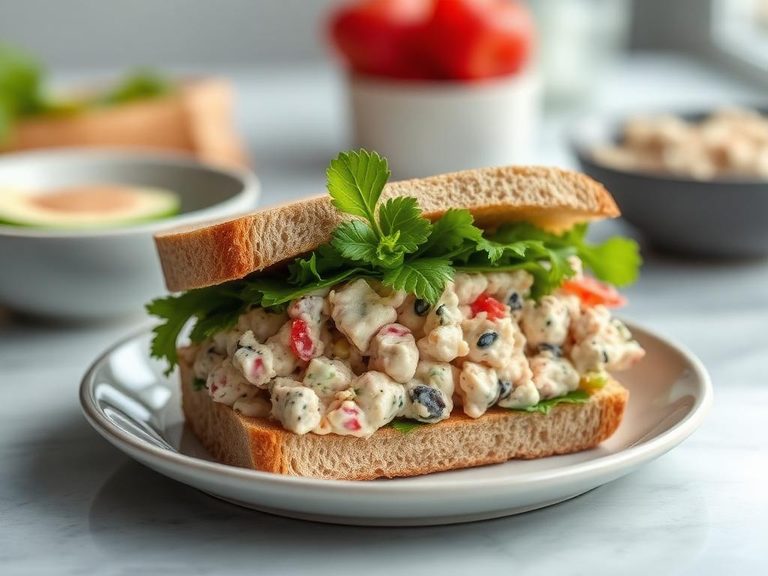
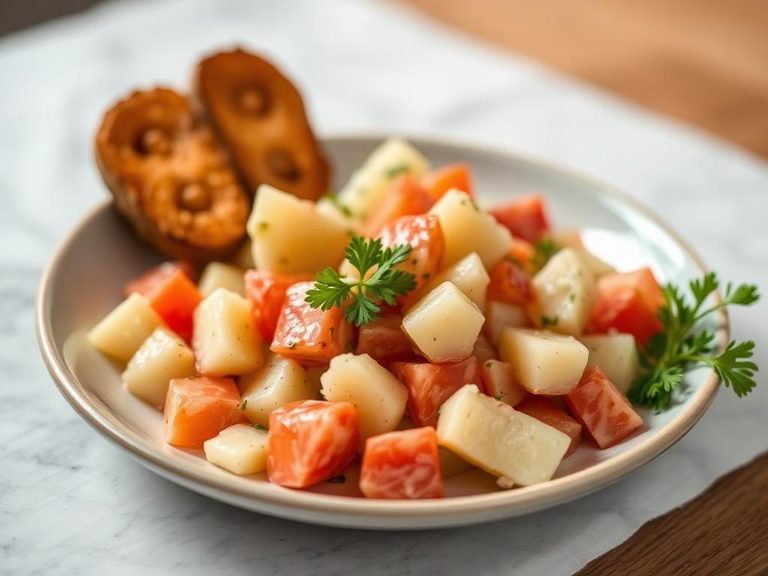
🍽️ Popular dishes
🌍 Where it's eaten
💡 Did you know?
The 'unspecified oils' in this type of spread often refer to a blend of soybean and/or canola oil, which are neutral-flavored and cost-effective for mass production, allowing the pickle flavor to dominate.
Full nutrition (USDA data · scales with serving)
| Water | 40.8 g |
| Energy | 389 kcal |
| Energy | 1628 kj |
| Protein | 0.90 g |
| Total lipid (fat) | 34.0 g |
| Ash | 2.0 g |
| Carbohydrate, by difference | 22.4 g |
| Fiber, total dietary | 0.40 g |
| Total Sugars | 15.2 g |
| Calcium, Ca | 14.0 mg |
| Iron, Fe | 0.20 mg |
| Magnesium, Mg | 2.0 mg |
| Phosphorus, P | 26.0 mg |
| Potassium, K | 35.0 mg |
| Sodium, Na | 1000 mg |
| Zinc, Zn | 0.81 mg |
| Copper, Cu | 0.01 mg |
| Selenium, Se | 1.6 ug |
| Vitamin C, total ascorbic acid | 0.00 mg |
| Thiamin | 0.01 mg |
| Riboflavin | 0.02 mg |
| Niacin | 0.01 mg |
| Pantothenic acid | 0.00 mg |
| Vitamin B-6 | 0.02 mg |
| Folate, total | 6.0 ug |
| Folic acid | 0.00 ug |
| Folate, food | 6.0 ug |
| Folate, DFE | 6.0 ug |
| Choline, total | 14.6 mg |
| Vitamin B-12 | 0.21 ug |
| Vitamin B-12, added | 0.00 ug |
| Vitamin A, RAE | 22.0 ug |
| Retinol | 13.0 ug |
| Carotene, beta | 94.0 ug |
| Carotene, alpha | 1.0 ug |
| Cryptoxanthin, beta | 27.0 ug |
| Vitamin A, IU | 220 iu |
| Lycopene | 0.00 ug |
| Lutein + zeaxanthin | 87.0 ug |
| Vitamin E (alpha-tocopherol) | 4.0 mg |
| Vitamin E, added | 0.00 mg |
| Vitamin D (D2 + D3), International Units | 4.0 iu |
| Vitamin D (D2 + D3) | 0.10 ug |
| Vitamin K (phylloquinone) | 24.7 ug |
| Alcohol, ethyl | 0.00 g |
| Caffeine | 0.00 mg |
| Theobromine | 0.00 mg |
Fat & fatty acid profile (per 100g)
| Fatty acids, total saturated | 5.1 g |
| SFA 4:0 | 0.00 g |
| SFA 6:0 | 0.00 g |
| SFA 8:0 | 0.00 g |
| SFA 10:0 | 0.00 g |
| SFA 12:0 | 0.00 g |
| SFA 14:0 | 0.00 g |
| SFA 16:0 | 3.9 g |
| SFA 18:0 | 1.2 g |
| Fatty acids, total monounsaturated | 7.4 g |
| MUFA 16:1 | 0.00 g |
| MUFA 18:1 | 7.4 g |
| MUFA 20:1 | 0.00 g |
| MUFA 22:1 | 0.00 g |
| Fatty acids, total polyunsaturated | 20.0 g |
| PUFA 18:2 | 18.1 g |
| PUFA 18:3 | 1.9 g |
| PUFA 18:4 | 0.00 g |
| PUFA 20:4 | 0.00 g |
| PUFA 20:5 n-3 (EPA) | 0.00 g |
| PUFA 22:5 n-3 (DPA) | 0.00 g |
| PUFA 22:6 n-3 (DHA) | 0.00 g |
| Cholesterol | 76.0 mg |
| Phytosterols | 75.0 mg |
Amino acid profile (per 100g)
| Tryptophan | 0.01 g |
| Threonine | 0.05 g |
| Isoleucine | 0.05 g |
| Leucine | 0.08 g |
| Lysine | 0.06 g |
| Methionine | 0.02 g |
| Cystine | 0.02 g |
| Phenylalanine | 0.04 g |
| Tyrosine | 0.04 g |
| Valine | 0.06 g |
| Arginine | 0.06 g |
| Histidine | 0.02 g |
| Alanine | 0.04 g |
| Aspartic acid | 0.07 g |
| Glutamic acid | 0.11 g |
| Glycine | 0.03 g |
| Proline | 0.04 g |
| Serine | 0.07 g |
FAQ
Is this the same as tartar sauce?
It's a key component. Tartar sauce is essentially this pickle-oil spread mixed with mayonnaise and sometimes additional herbs or capers. The spread is a more concentrated, pickle-forward base.
Can I use it for cooking?
Yes, but it's best used as a finishing condiment or mixed into cold preparations. Heating it can cause the oil to separate and the fresh pickle flavor to diminish.
What's the best substitute if I don't have it?
Mix mayonnaise with finely chopped dill pickles and a splash of pickle brine. For a closer match to the high-oil version, use a ratio of 3 parts neutral oil to 1 part mayonnaise, then add the pickles.
Nutrient density (calculated · NRF9.3)
Nutrient Rich Foods index: beneficial nutrients (protein, fiber, vitamins, minerals) minus saturated fat, added sugar & sodium, per 100 kcal.
NRF9.3 index — Fulgoni, Keast & Drewnowski, 2009. Computed from USDA nutrients.
Weight-loss friendliness (composite index)
Energy density 3.89 kcal/g · 1% calories from protein · 0.4 g fiber · 15.2 g sugar per 100 g.
Composite of energy density (Rolls et al., 1999), protein & fiber satiety, minus sugar. A calculated heuristic — ranks satiety-per-calorie, not a clinical measure.
Dietary load (calculated from USDA values)
Potential renal acid load. Positive = acid-forming, negative = alkaline-forming.
Sodium-to-potassium ratio: 28.57 (lower is better — aim for ≤ 1)
Sodium:potassium per WHO potassium guidance. Computed from USDA nutrients.