

Salami, made from any type of meat, reduced sodium
Common food

Photo: Wikipedia
Reduced-sodium salami is a cured, fermented sausage that delivers a concentrated, savory punch with a firm, slightly chewy texture and a rich, fatty mouthfeel. Nutritionally, it is a high-fat, high-protein food with virtually no carbohydrates, making it a staple for low-carb and ketogenic diets. The reduction in sodium offers a slightly milder saltiness while preserving the classic, complex spice profile.
Calorie split: 23% protein · 1% carbs · 77% fat
↓ Full nutrition💚 Why it's loved
People love salami for its intense, savory umami flavor and satisfying texture, which makes it a perfect standalone snack or a bold addition to sandwiches and charcuterie boards. Its deep, spicy, and slightly tangy profile is a beloved staple in many culinary traditions.
⚠️ Watch-outs & how to enjoy it better
Despite being reduced-sodium, it remains a processed meat with a significant fat content, which can be a concern for those managing cholesterol or heart health. To mitigate this, pair it with high-fiber vegetables like bell peppers or leafy greens, and practice strict portion control by sticking to a 1-ounce serving.
Key benefits
- High in protein for muscle maintenance and satiety.
- Very low in carbohydrates and sugars, ideal for keto diets.
- Provides essential B vitamins, particularly B12.
- Contains minerals like zinc and selenium.
- Reduced sodium content supports heart health compared to standard salami.
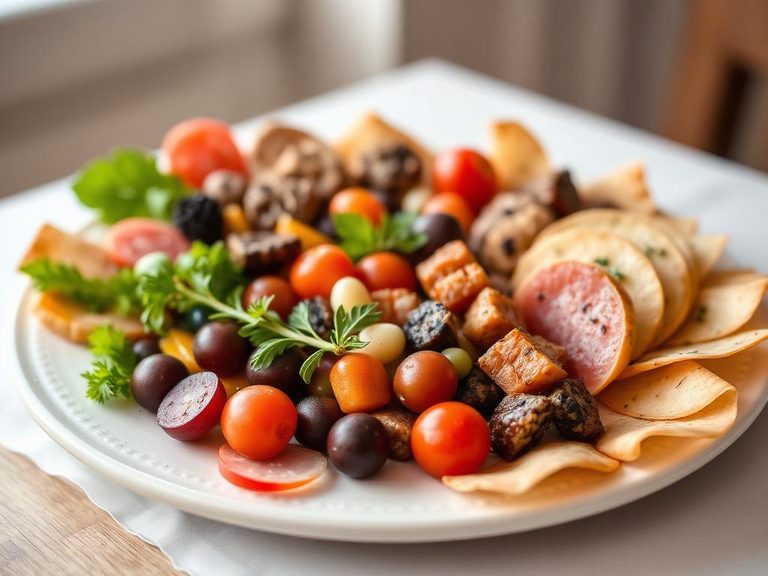
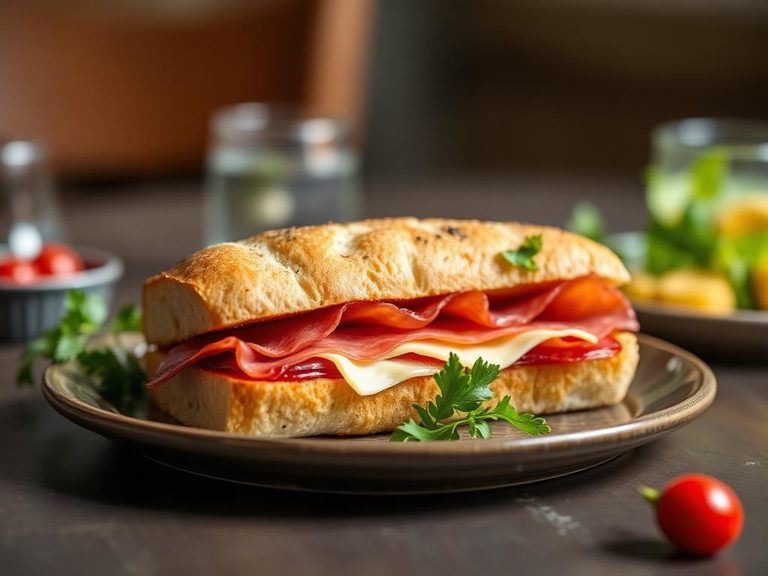
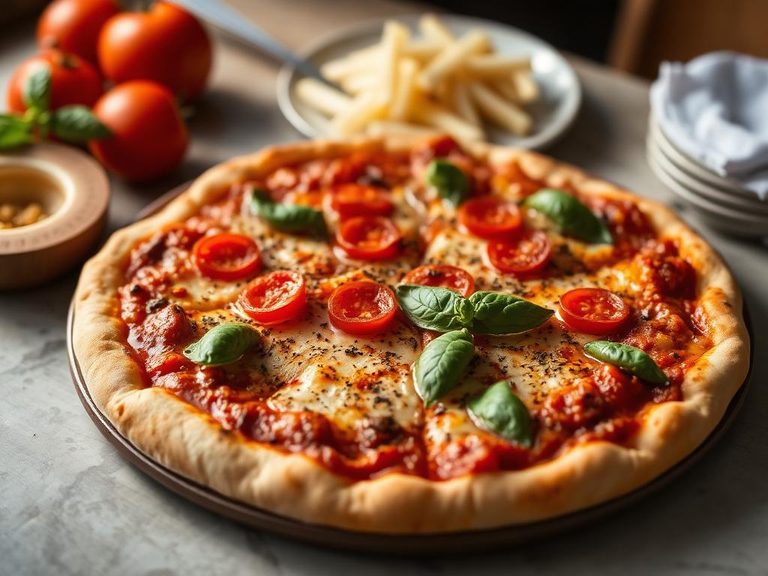
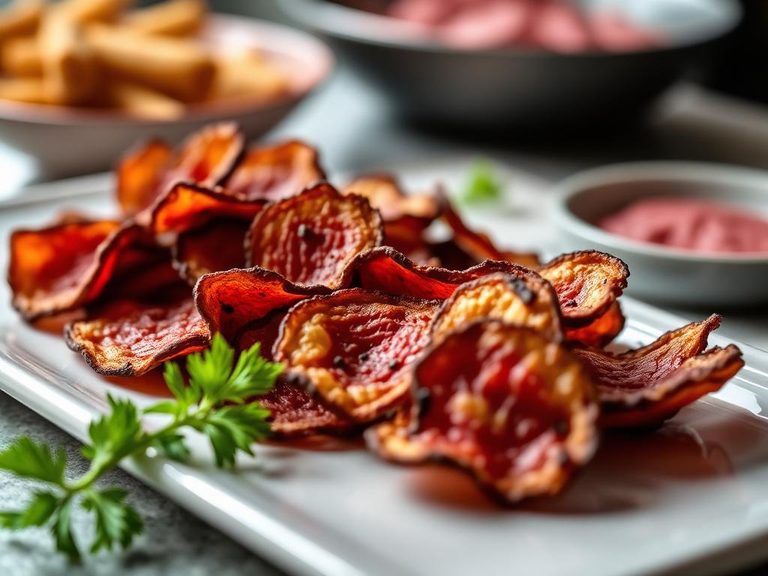
🍽️ Popular dishes

🌍 Where it's eaten
💡 Did you know?
The name 'salami' comes from the Latin word 'sal,' meaning salt, which was the primary preservative used in its ancient origins.
Full nutrition (USDA data · scales with serving)
| Water | 41.2 g |
| Energy | 378 kcal |
| Protein | 21.1 g |
| Total lipid (fat) | 31.6 g |
| Carbohydrate, by difference | 0.72 g |
| Fiber, total dietary | 0.00 g |
| Total Sugars | 0.26 g |
| Calcium, Ca | 24.0 mg |
| Iron, Fe | 1.4 mg |
| Magnesium, Mg | 20.0 mg |
| Phosphorus, P | 192 mg |
| Potassium, K | 363 mg |
| Sodium, Na | 1317 mg |
| Zinc, Zn | 2.7 mg |
| Copper, Cu | 0.10 mg |
| Selenium, Se | 33.6 ug |
| Vitamin C, total ascorbic acid | 0.00 mg |
| Thiamin | 0.39 mg |
| Riboflavin | 0.20 mg |
| Niacin | 6.1 mg |
| Vitamin B-6 | 0.44 mg |
| Folate, total | 0.00 ug |
| Folic acid | 0.00 ug |
| Folate, food | 0.00 ug |
| Folate, DFE | 0.00 ug |
| Choline, total | 72.6 mg |
| Vitamin B-12 | 1.1 ug |
| Vitamin B-12, added | 0.00 ug |
| Vitamin A, RAE | 11.0 ug |
| Retinol | 11.0 ug |
| Carotene, beta | 0.00 ug |
| Carotene, alpha | 0.00 ug |
| Cryptoxanthin, beta | 0.00 ug |
| Lycopene | 0.00 ug |
| Lutein + zeaxanthin | 0.00 ug |
| Vitamin E (alpha-tocopherol) | 0.64 mg |
| Vitamin E, added | 0.00 mg |
| Vitamin D (D2 + D3) | 0.90 ug |
| Vitamin K (phylloquinone) | 0.00 ug |
| Alcohol, ethyl | 0.00 g |
| Caffeine | 0.00 mg |
| Theobromine | 0.00 mg |
Fat & fatty acid profile (per 100g)
| Fatty acids, total saturated | 11.4 g |
| SFA 4:0 | 0.00 g |
| SFA 6:0 | 0.00 g |
| SFA 8:0 | 0.00 g |
| SFA 10:0 | 0.05 g |
| SFA 12:0 | 0.03 g |
| SFA 14:0 | 0.52 g |
| SFA 16:0 | 7.0 g |
| SFA 18:0 | 3.5 g |
| Fatty acids, total monounsaturated | 14.7 g |
| MUFA 16:1 | 0.84 g |
| MUFA 18:1 | 13.4 g |
| MUFA 20:1 | 0.24 g |
| MUFA 22:1 | 0.02 g |
| Fatty acids, total polyunsaturated | 4.9 g |
| PUFA 18:2 | 4.3 g |
| PUFA 18:3 | 0.18 g |
| PUFA 18:4 | 0.00 g |
| PUFA 20:4 | 0.14 g |
| PUFA 20:5 n-3 (EPA) | 0.00 g |
| PUFA 22:5 n-3 (DPA) | 0.02 g |
| PUFA 22:6 n-3 (DHA) | 0.01 g |
| Cholesterol | 108 mg |
Amino acid profile (per 100g)
Estimated from Salami, Italian, pork — USDA does not publish this profile for Salami.
| Tryptophan | 0.25 g |
| Threonine | 1.0 g |
| Isoleucine | 1.1 g |
| Leucine | 1.6 g |
| Lysine | 1.9 g |
| Methionine | 0.47 g |
| Cystine | 0.29 g |
| Phenylalanine | 0.94 g |
| Tyrosine | 0.69 g |
| Valine | 1.1 g |
| Arginine | 1.4 g |
| Histidine | 0.61 g |
| Alanine | 1.3 g |
| Aspartic acid | 2.1 g |
| Glutamic acid | 3.8 g |
| Glycine | 1.6 g |
| Proline | 1.3 g |
| Serine | 0.90 g |
FAQ
How does reduced-sodium salami differ from regular salami?
Reduced-sodium salami contains at least 25% less sodium than the regular version, resulting in a milder salt flavor while maintaining the cured, fermented taste and texture.
Is reduced-sodium salami suitable for a keto diet?
Yes, it is excellent for keto diets due to its high fat and protein content with almost zero carbohydrates.
What is the best way to store opened salami?
Once opened, wrap it tightly in plastic wrap or place it in an airtight container in the refrigerator, where it will last for about 1-2 weeks.
Nutrient density (calculated · NRF9.3)
Nutrient Rich Foods index: beneficial nutrients (protein, fiber, vitamins, minerals) minus saturated fat, added sugar & sodium, per 100 kcal.
NRF9.3 index — Fulgoni, Keast & Drewnowski, 2009. Computed from USDA nutrients.
Weight-loss friendliness (composite index)
Energy density 3.78 kcal/g · 22% calories from protein · 0.0 g fiber · 0.3 g sugar per 100 g.
Composite of energy density (Rolls et al., 1999), protein & fiber satiety, minus sugar. A calculated heuristic — ranks satiety-per-calorie, not a clinical measure.
Dietary load (calculated from USDA values)
Potential renal acid load. Positive = acid-forming, negative = alkaline-forming.
Sodium-to-potassium ratio: 3.63 (lower is better — aim for ≤ 1)
Sodium:potassium per WHO potassium guidance. Computed from USDA nutrients.