

Pastrami, made from any kind of meat, reduced fat
Common food

Photo: Wikipedia
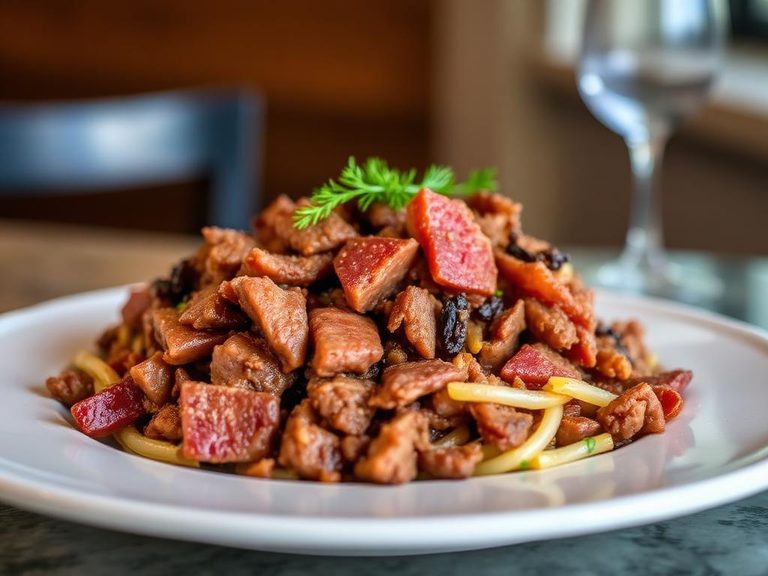
Reduced-fat pastrami is a lean, spice-crusted deli meat, typically made from beef brisket that is brined, smoked, and steamed. It delivers a robust, peppery, and smoky flavor with a tender, yet satisfyingly firm texture. Nutritionally, it's a powerhouse of protein with minimal fat and carbohydrates.
Calorie split: 68% protein · 2% carbs · 30% fat
↓ Full nutrition💚 Why it's loved
People love it for its intense, savory depth of flavor that comes from the unique blend of spices and smoking process. It's a versatile protein that elevates everything from a simple sandwich to a sophisticated appetizer.
⚠️ Watch-outs & how to enjoy it better
The curing process means pastrami is typically very high in sodium, which can be a concern for those monitoring blood pressure. To counteract this, pair it with potassium-rich foods like avocado or spinach, and be mindful of portion sizes. Some may also find the spice blend (like coriander or garlic) to be a digestive irritant.
Key benefits
- High-quality protein source for muscle maintenance.
- Extremely low in carbohydrates and sugars.
- Provides B vitamins like B12 and niacin.
- Source of minerals like zinc and iron.
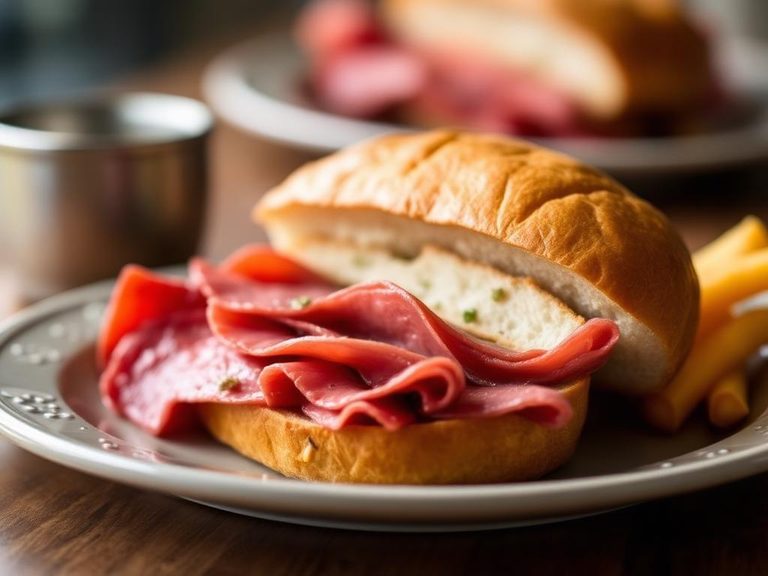
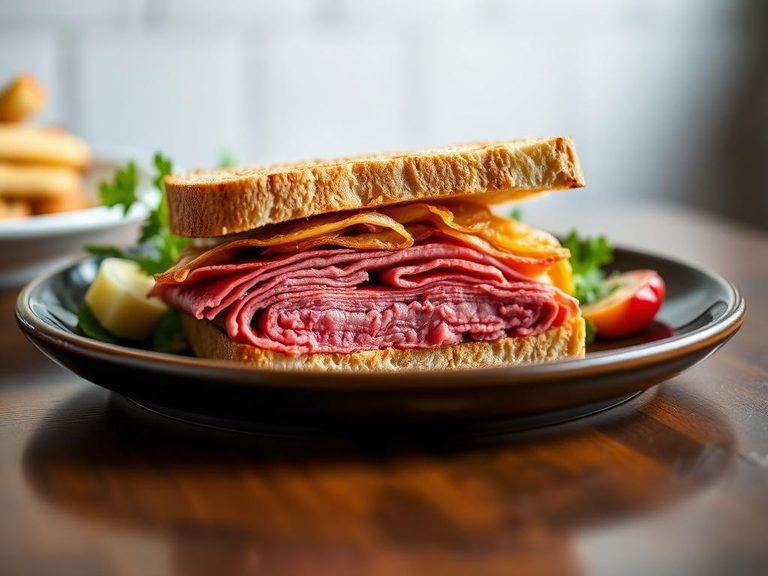
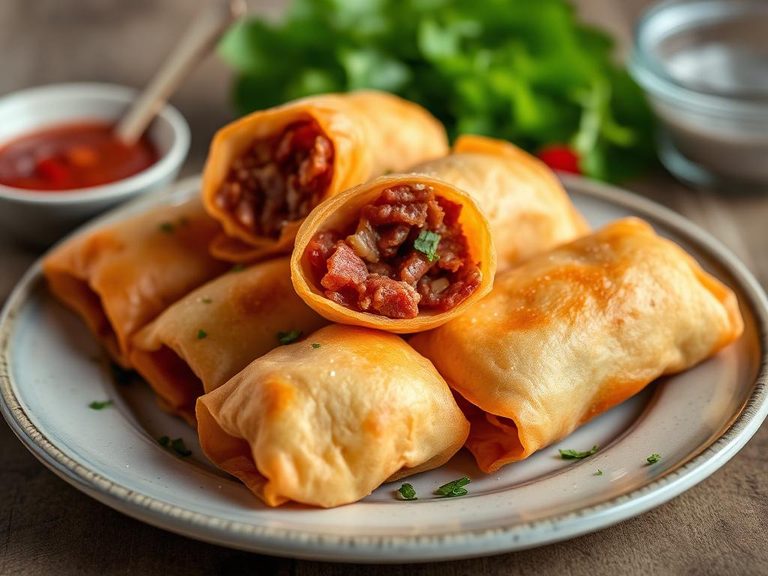
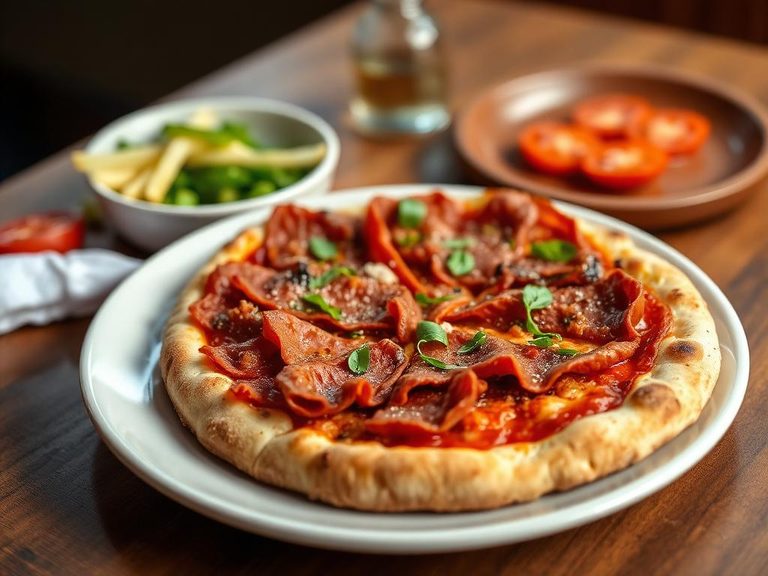
🍽️ Popular dishes
🌍 Where it's eaten
💡 Did you know?
The word 'pastrami' is believed to derive from the Romanian 'pastramă,' which itself comes from the Turkish 'pastırma,' a method of preserving meat by salting and drying it.
Full nutrition (USDA data · scales with serving)
| Water | 73.7 g |
| Energy | 115 kcal |
| Protein | 18.6 g |
| Total lipid (fat) | 3.7 g |
| Carbohydrate, by difference | 0.64 g |
| Fiber, total dietary | 0.00 g |
| Total Sugars | 0.29 g |
| Calcium, Ca | 5.0 mg |
| Iron, Fe | 2.0 mg |
| Magnesium, Mg | 20.0 mg |
| Phosphorus, P | 242 mg |
| Potassium, K | 647 mg |
| Sodium, Na | 853 mg |
| Zinc, Zn | 3.2 mg |
| Copper, Cu | 0.09 mg |
| Selenium, Se | 14.7 ug |
| Vitamin C, total ascorbic acid | 0.00 mg |
| Thiamin | 0.04 mg |
| Riboflavin | 0.21 mg |
| Niacin | 5.6 mg |
| Vitamin B-6 | 0.46 mg |
| Folate, total | 5.0 ug |
| Folic acid | 0.00 ug |
| Folate, food | 5.0 ug |
| Folate, DFE | 5.0 ug |
| Choline, total | 43.9 mg |
| Vitamin B-12 | 2.0 ug |
| Vitamin B-12, added | 0.00 ug |
| Vitamin A, RAE | 3.0 ug |
| Retinol | 3.0 ug |
| Carotene, beta | 0.00 ug |
| Carotene, alpha | 0.00 ug |
| Cryptoxanthin, beta | 0.00 ug |
| Lycopene | 0.00 ug |
| Lutein + zeaxanthin | 0.00 ug |
| Vitamin E (alpha-tocopherol) | 0.49 mg |
| Vitamin E, added | 0.00 mg |
| Vitamin D (D2 + D3) | 0.00 ug |
| Vitamin K (phylloquinone) | 1.6 ug |
| Alcohol, ethyl | 0.00 g |
| Caffeine | 0.00 mg |
| Theobromine | 0.00 mg |
Fat & fatty acid profile (per 100g)
| Fatty acids, total saturated | 1.3 g |
| SFA 4:0 | 0.00 g |
| SFA 6:0 | 0.00 g |
| SFA 8:0 | 0.00 g |
| SFA 10:0 | 0.00 g |
| SFA 12:0 | 0.00 g |
| SFA 14:0 | 0.09 g |
| SFA 16:0 | 0.75 g |
| SFA 18:0 | 0.43 g |
| Fatty acids, total monounsaturated | 1.5 g |
| MUFA 16:1 | 0.12 g |
| MUFA 18:1 | 1.3 g |
| MUFA 20:1 | 0.01 g |
| MUFA 22:1 | 0.00 g |
| Fatty acids, total polyunsaturated | 0.27 g |
| PUFA 18:2 | 0.18 g |
| PUFA 18:3 | 0.02 g |
| PUFA 18:4 | 0.00 g |
| PUFA 20:4 | 0.04 g |
| PUFA 20:5 n-3 (EPA) | 0.01 g |
| PUFA 22:5 n-3 (DPA) | 0.01 g |
| PUFA 22:6 n-3 (DHA) | 0.00 g |
| Cholesterol | 51.0 mg |
Amino acid profile (per 100g)
Estimated from Beef, cured, pastrami — USDA does not publish this profile for Pastrami.
| Tryptophan | 0.14 g |
| Threonine | 0.86 g |
| Isoleucine | 0.98 g |
| Leucine | 1.7 g |
| Lysine | 1.8 g |
| Methionine | 0.56 g |
| Cystine | 0.28 g |
| Phenylalanine | 0.85 g |
| Tyrosine | 0.68 g |
| Valine | 1.1 g |
| Arginine | 1.4 g |
| Histidine | 0.68 g |
| Alanine | 1.3 g |
| Aspartic acid | 2.0 g |
| Glutamic acid | 3.2 g |
| Glycine | 1.3 g |
| Proline | 1.0 g |
| Serine | 0.84 g |
| Hydroxyproline | 0.23 g |
FAQ
Is reduced-fat pastrami as flavorful as regular pastrami?
Yes, the primary flavor comes from the brine and the spice crust, not the fat marbling. The smoking and steaming process ensures it remains juicy and flavorful despite the lower fat content.
What is the best way to heat sliced pastrami?
For the best texture, steam the slices for a few minutes until warm and tender. You can also pan-fry them briefly for a crispier edge, or heat them in a covered pan with a splash of water.
Can I use reduced-fat pastrami in recipes that call for regular pastrami?
Absolutely. It's a direct substitute in any dish. Be aware that it will render less fat during cooking, so you may need to adjust added fats in recipes like hash or casseroles.
Nutrient density (calculated · NRF9.3)
Nutrient Rich Foods index: beneficial nutrients (protein, fiber, vitamins, minerals) minus saturated fat, added sugar & sodium, per 100 kcal.
NRF9.3 index — Fulgoni, Keast & Drewnowski, 2009. Computed from USDA nutrients.
Weight-loss friendliness (composite index)
Energy density 1.15 kcal/g · 65% calories from protein · 0.0 g fiber · 0.3 g sugar per 100 g.
Composite of energy density (Rolls et al., 1999), protein & fiber satiety, minus sugar. A calculated heuristic — ranks satiety-per-calorie, not a clinical measure.
Dietary load (calculated from USDA values)
Potential renal acid load. Positive = acid-forming, negative = alkaline-forming.
Sodium-to-potassium ratio: 1.32 (lower is better — aim for ≤ 1)
Sodium:potassium per WHO potassium guidance. Computed from USDA nutrients.