

Roll, gluten free
Common food
A gluten-free roll is a soft, airy bread alternative made from starches like rice, tapioca, or potato, often bound with xanthan gum. It has a mild, neutral flavor with a tender, slightly chewy crumb that mimics traditional wheat rolls. Nutritionally, it's a significant source of carbohydrates, providing quick energy, but is notably low in protein and fat.
Calorie split: 6% protein · 84% carbs · 10% fat
↓ Full nutrition💚 Why it's loved
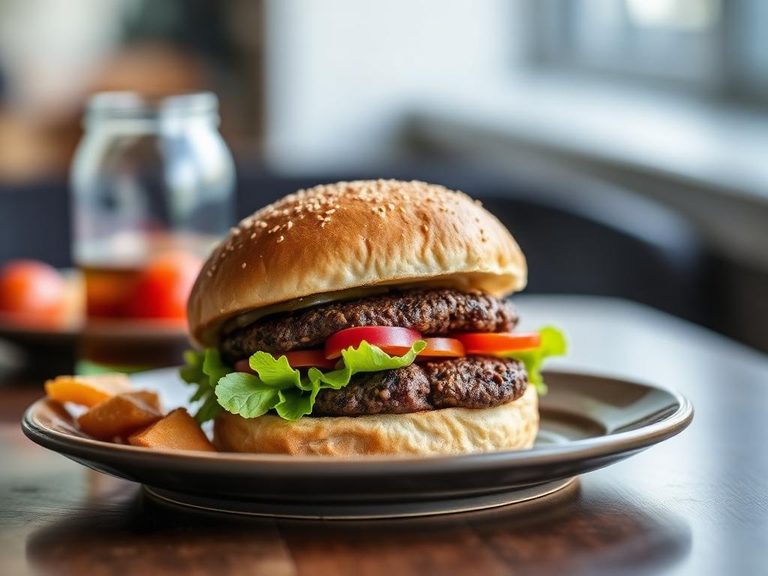
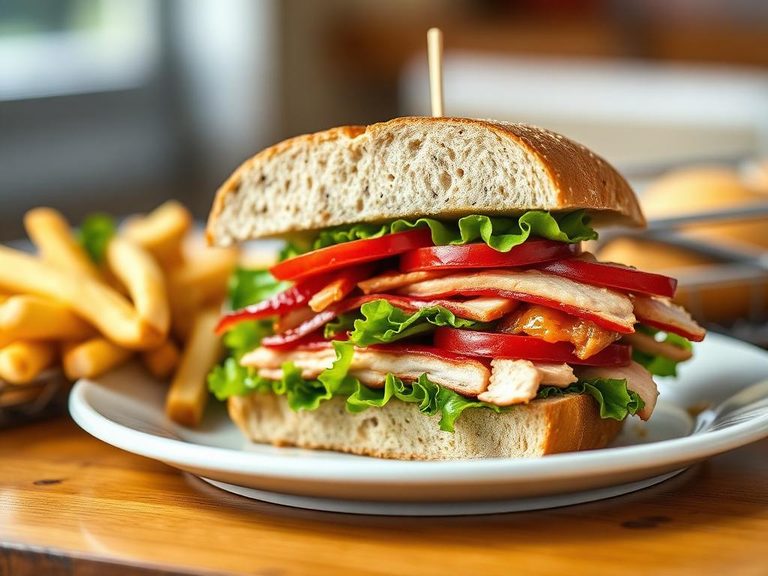
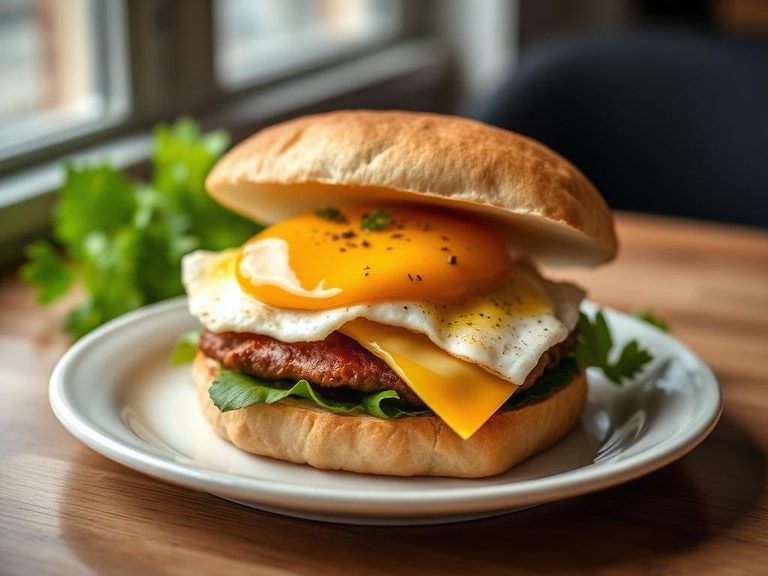
People love it for offering a comforting, familiar bread experience that fits a gluten-free lifestyle, making sandwiches and burgers accessible again. Its mild taste makes it a versatile canvas for both sweet and savory toppings.
⚠️ Watch-outs & how to enjoy it better
Its high carbohydrate content and low protein/fat can lead to rapid blood sugar spikes, and it often contains added sugars. To counteract this, pair it with protein (like turkey or eggs) and healthy fats (like avocado or cheese) to slow digestion and stabilize blood sugar. Be mindful of portion size.
Key benefits
- Safe for celiac disease and gluten sensitivity
- Provides quick energy from carbohydrates
- Often fortified with vitamins and minerals
- Offers a familiar bread format for gluten-free diets
- Naturally low in fat
🍽️ Popular dishes
🌍 Where it's eaten
💡 Did you know?
Many commercial gluten-free rolls rely heavily on potato starch or tapioca flour, which gives them their characteristic light, almost cake-like texture but can make them stale faster than wheat bread.
Full nutrition (USDA data · scales with serving)
| Water | 42.0 g |
| Energy | 239 kcal |
| Protein | 3.3 g |
| Total lipid (fat) | 2.6 g |
| Carbohydrate, by difference | 50.5 g |
| Fiber, total dietary | 5.1 g |
| Total Sugars | 6.9 g |
| Calcium, Ca | 180 mg |
| Iron, Fe | 3.6 mg |
| Magnesium, Mg | 13.0 mg |
| Phosphorus, P | 50.0 mg |
| Potassium, K | 76.0 mg |
| Sodium, Na | 593 mg |
| Zinc, Zn | 0.56 mg |
| Copper, Cu | 0.10 mg |
| Selenium, Se | 0.40 ug |
| Vitamin C, total ascorbic acid | 0.00 mg |
| Thiamin | 0.61 mg |
| Riboflavin | 0.48 mg |
| Niacin | 3.9 mg |
| Vitamin B-6 | 0.04 mg |
| Folate, total | 8.0 ug |
| Folic acid | 0.00 ug |
| Folate, food | 8.0 ug |
| Folate, DFE | 8.0 ug |
| Choline, total | 13.4 mg |
| Vitamin B-12 | 0.00 ug |
| Vitamin B-12, added | 0.00 ug |
| Vitamin A, RAE | 0.00 ug |
| Retinol | 0.00 ug |
| Carotene, beta | 0.00 ug |
| Carotene, alpha | 0.00 ug |
| Cryptoxanthin, beta | 0.00 ug |
| Lycopene | 0.00 ug |
| Lutein + zeaxanthin | 0.00 ug |
| Vitamin E (alpha-tocopherol) | 0.18 mg |
| Vitamin E, added | 0.00 mg |
| Vitamin D (D2 + D3) | 0.00 ug |
| Vitamin K (phylloquinone) | 0.10 ug |
| Alcohol, ethyl | 0.00 g |
| Caffeine | 0.00 mg |
| Theobromine | 0.00 mg |
Fat & fatty acid profile (per 100g)
| Fatty acids, total saturated | 0.21 g |
| SFA 4:0 | 0.00 g |
| SFA 6:0 | 0.00 g |
| SFA 8:0 | 0.00 g |
| SFA 10:0 | 0.00 g |
| SFA 12:0 | 0.00 g |
| SFA 14:0 | 0.01 g |
| SFA 16:0 | 0.10 g |
| SFA 18:0 | 0.07 g |
| Fatty acids, total monounsaturated | 1.4 g |
| MUFA 16:1 | 0.01 g |
| MUFA 18:1 | 1.2 g |
| MUFA 20:1 | 0.01 g |
| MUFA 22:1 | 0.00 g |
| Fatty acids, total polyunsaturated | 0.64 g |
| PUFA 18:2 | 0.61 g |
| PUFA 18:3 | 0.02 g |
| PUFA 18:4 | 0.00 g |
| PUFA 20:4 | 0.00 g |
| PUFA 20:5 n-3 (EPA) | 0.00 g |
| PUFA 22:5 n-3 (DPA) | 0.00 g |
| PUFA 22:6 n-3 (DHA) | 0.00 g |
| Cholesterol | 0.00 mg |
Amino acid profile (per 100g)
Estimated from Candies, TOOTSIE ROLL, chocolate-flavor roll — USDA does not publish this profile for Roll.
| Tryptophan | 0.19 g |
| Threonine | 0.04 g |
| Isoleucine | 0.06 g |
| Leucine | 0.11 g |
| Lysine | 0.09 g |
| Methionine | 0.01 g |
| Cystine | 0.00 g |
| Phenylalanine | 0.05 g |
| Tyrosine | 0.02 g |
| Valine | 0.08 g |
| Arginine | 0.06 g |
| Histidine | 0.03 g |
| Alanine | 0.06 g |
| Aspartic acid | 0.20 g |
| Glutamic acid | 0.28 g |
| Glycine | 0.05 g |
| Proline | 0.03 g |
| Serine | 0.08 g |
| Hydroxyproline | 0.00 g |
FAQ
Why does my gluten-free roll have a gummy texture?
This is often due to the starches used (like tapioca or potato starch) and the absence of gluten's elastic network. Using a blend of flours and ensuring proper baking time and temperature can help. Storing it properly and toasting before serving can also improve texture.
Can I freeze gluten-free rolls?
Yes, they freeze exceptionally well due to their high starch content. Slice before freezing, separate with parchment paper, and store in an airtight bag. Toast directly from frozen for the best texture.
Are all gluten-free rolls also dairy-free?
Not necessarily. While many are dairy-free, some recipes use milk powder, butter, or cheese for flavor and texture. Always check the ingredient list if you have a dairy allergy or follow a vegan diet.
Nutrient density (calculated · NRF9.3)
Nutrient Rich Foods index: beneficial nutrients (protein, fiber, vitamins, minerals) minus saturated fat, added sugar & sodium, per 100 kcal.
NRF9.3 index — Fulgoni, Keast & Drewnowski, 2009. Computed from USDA nutrients.
Weight-loss friendliness (composite index)
Energy density 2.39 kcal/g · 6% calories from protein · 5.1 g fiber · 6.9 g sugar per 100 g.
Composite of energy density (Rolls et al., 1999), protein & fiber satiety, minus sugar. A calculated heuristic — ranks satiety-per-calorie, not a clinical measure.
Dietary load (calculated from USDA values)
Potential renal acid load. Positive = acid-forming, negative = alkaline-forming.
Sodium-to-potassium ratio: 7.80 (lower is better — aim for ≤ 1)
Sodium:potassium per WHO potassium guidance. Computed from USDA nutrients.