

Rice, white, with gravy, NS as to fat
Common food

Photo: Wikipedia
White rice with gravy is a comforting, soft-textured staple where fluffy grains are coated in a savory, often meat-based sauce. The dish is mild in flavor, with the gravy adding a rich, umami depth to the neutral rice. Nutritionally, it provides a quick source of energy from carbohydrates, with a modest amount of fat and protein from the gravy.
Calorie split: 7% protein · 70% carbs · 23% fat
↓ Full nutrition💚 Why it's loved
People love it for its comforting, familiar taste and the way the savory gravy enhances the mild rice, making it a satisfying and filling meal. It's a go-to comfort food that's simple to prepare and can be customized with different gravy flavors.
⚠️ Watch-outs & how to enjoy it better
The dish can be high in sodium and may cause blood-sugar spikes due to the refined white rice and gravy's potential sugar content. To counteract this, pair it with non-starchy vegetables and lean protein, and opt for a low-sodium gravy or make your own with herbs and spices.
Key benefits
- Quick and accessible source of energy from carbohydrates
- Provides a small amount of protein and fat for satiety
- Versatile base that can be paired with various proteins and vegetables
- Comforting and familiar to many cultures worldwide
- Easy to digest for most people
🍽️ Popular dishes
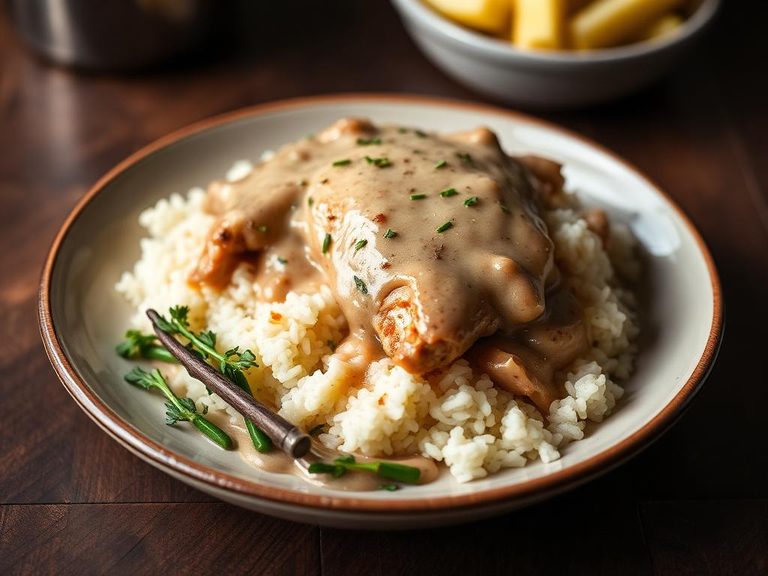
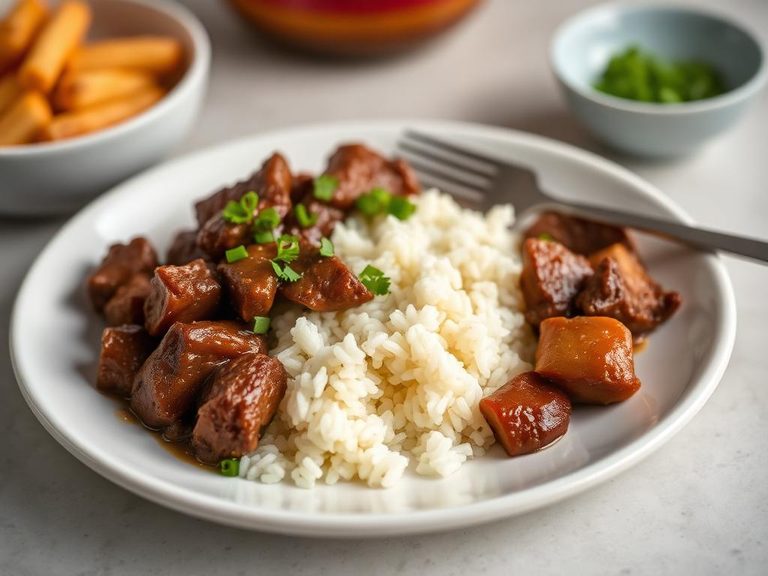
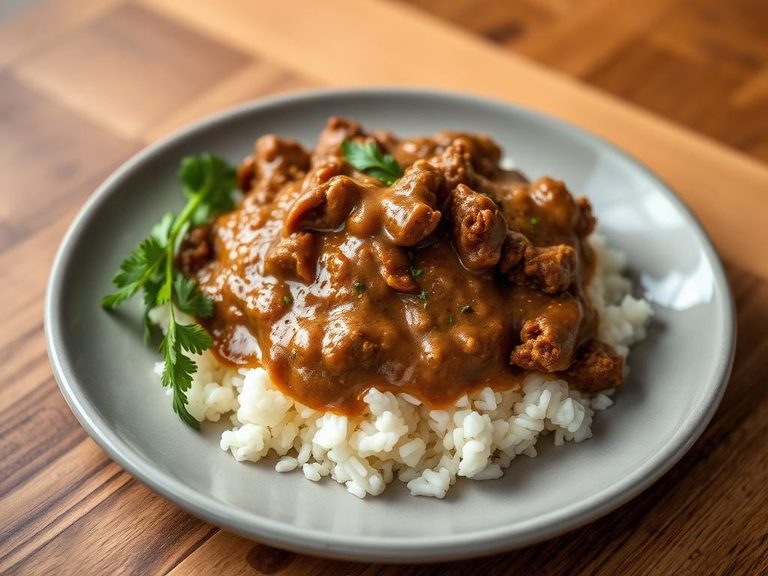

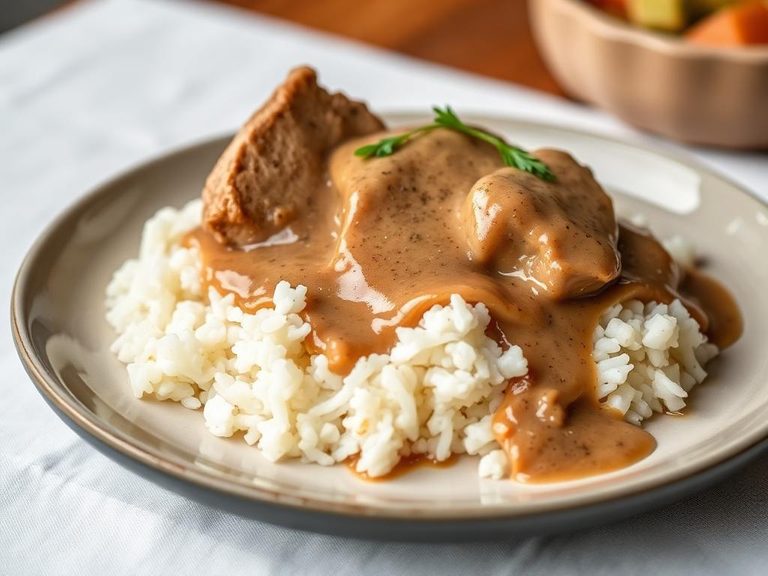
🌍 Where it's eaten
💡 Did you know?
In the American South, 'rice and gravy' is so iconic that it's often considered a single dish, with the gravy being the star that ties everything together, sometimes made from the drippings of fried chicken or meat.
Full nutrition (USDA data · scales with serving)
| Water | 74.0 g |
| Energy | 117 kcal |
| Protein | 2.0 g |
| Total lipid (fat) | 3.0 g |
| Carbohydrate, by difference | 20.0 g |
| Fiber, total dietary | 0.30 g |
| Total Sugars | 0.13 g |
| Calcium, Ca | 10.0 mg |
| Iron, Fe | 0.81 mg |
| Magnesium, Mg | 9.0 mg |
| Phosphorus, P | 34.0 mg |
| Potassium, K | 36.0 mg |
| Sodium, Na | 287 mg |
| Zinc, Zn | 0.34 mg |
| Copper, Cu | 0.05 mg |
| Selenium, Se | 5.0 ug |
| Vitamin C, total ascorbic acid | 0.00 mg |
| Thiamin | 0.11 mg |
| Riboflavin | 0.03 mg |
| Niacin | 1.1 mg |
| Vitamin B-6 | 0.07 mg |
| Folate, total | 38.0 ug |
| Folic acid | 36.0 ug |
| Folate, food | 3.0 ug |
| Folate, DFE | 64.0 ug |
| Choline, total | 2.6 mg |
| Vitamin B-12 | 0.00 ug |
| Vitamin B-12, added | 0.00 ug |
| Vitamin A, RAE | 0.00 ug |
| Retinol | 0.00 ug |
| Carotene, beta | 0.00 ug |
| Carotene, alpha | 0.00 ug |
| Cryptoxanthin, beta | 0.00 ug |
| Lycopene | 0.00 ug |
| Lutein + zeaxanthin | 0.00 ug |
| Vitamin E (alpha-tocopherol) | 0.42 mg |
| Vitamin E, added | 0.00 mg |
| Vitamin D (D2 + D3) | 0.00 ug |
| Vitamin K (phylloquinone) | 2.1 ug |
| Alcohol, ethyl | 0.00 g |
| Caffeine | 0.00 mg |
| Theobromine | 0.00 mg |
Fat & fatty acid profile (per 100g)
| Fatty acids, total saturated | 0.52 g |
| SFA 4:0 | 0.00 g |
| SFA 6:0 | 0.00 g |
| SFA 8:0 | 0.00 g |
| SFA 10:0 | 0.00 g |
| SFA 12:0 | 0.00 g |
| SFA 14:0 | 0.01 g |
| SFA 16:0 | 0.39 g |
| SFA 18:0 | 0.10 g |
| Fatty acids, total monounsaturated | 1.2 g |
| MUFA 16:1 | 0.04 g |
| MUFA 18:1 | 1.1 g |
| MUFA 20:1 | 0.02 g |
| MUFA 22:1 | 0.00 g |
| Fatty acids, total polyunsaturated | 0.92 g |
| PUFA 18:2 | 0.82 g |
| PUFA 18:3 | 0.10 g |
| PUFA 18:4 | 0.00 g |
| PUFA 20:4 | 0.00 g |
| PUFA 20:5 n-3 (EPA) | 0.00 g |
| PUFA 22:5 n-3 (DPA) | 0.00 g |
| PUFA 22:6 n-3 (DHA) | 0.00 g |
| Cholesterol | 2.0 mg |
Amino acid profile (per 100g)
Estimated from Snacks, rice cakes, brown rice, sesame seed — USDA does not publish this profile for Rice.
| Tryptophan | 0.10 g |
| Threonine | 0.28 g |
| Isoleucine | 0.32 g |
| Leucine | 0.63 g |
| Lysine | 0.29 g |
| Methionine | 0.17 g |
| Cystine | 0.09 g |
| Phenylalanine | 0.39 g |
| Tyrosine | 0.29 g |
| Valine | 0.44 g |
| Arginine | 0.59 g |
| Histidine | 0.19 g |
| Alanine | 0.44 g |
| Aspartic acid | 0.71 g |
| Glutamic acid | 1.6 g |
| Glycine | 0.38 g |
| Proline | 0.35 g |
| Serine | 0.39 g |
FAQ
Is white rice with gravy healthy?
It can be part of a balanced diet, but it's often high in sodium and refined carbs. Pairing it with vegetables and lean protein can make it more nutritious.
Can I make a healthier version of this dish?
Yes, use low-sodium broth for the gravy, add vegetables like peas or carrots, and consider using brown rice for more fiber.
What is the best type of gravy for this dish?
The best type depends on preference, but common options include chicken, beef, or mushroom gravy, each offering different flavors and nutritional profiles.
Nutrient density (calculated · NRF9.3)
Nutrient Rich Foods index: beneficial nutrients (protein, fiber, vitamins, minerals) minus saturated fat, added sugar & sodium, per 100 kcal.
NRF9.3 index — Fulgoni, Keast & Drewnowski, 2009. Computed from USDA nutrients.
Weight-loss friendliness (composite index)
Energy density 1.17 kcal/g · 7% calories from protein · 0.3 g fiber · 0.1 g sugar per 100 g.
Composite of energy density (Rolls et al., 1999), protein & fiber satiety, minus sugar. A calculated heuristic — ranks satiety-per-calorie, not a clinical measure.
Dietary load (calculated from USDA values)
Potential renal acid load. Positive = acid-forming, negative = alkaline-forming.
Sodium-to-potassium ratio: 7.97 (lower is better — aim for ≤ 1)
Sodium:potassium per WHO potassium guidance. Computed from USDA nutrients.