

Rice, white, with gravy, no added fat
Common food

Photo: Wikipedia
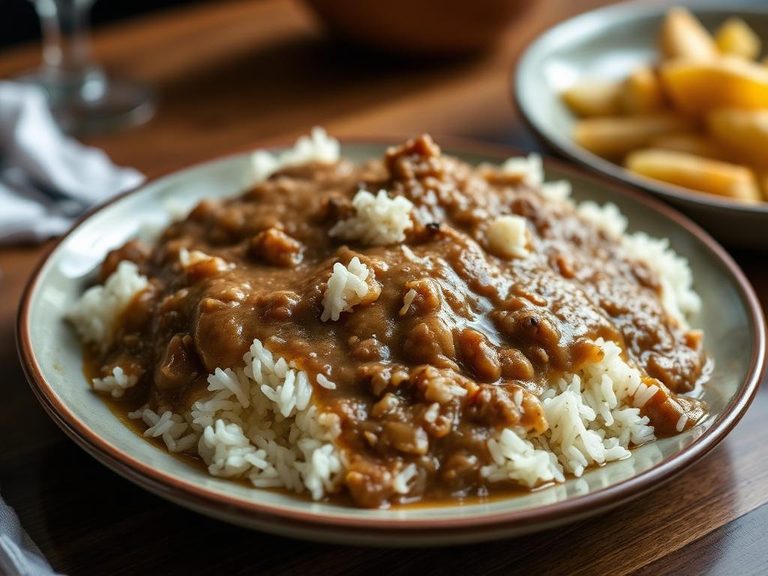
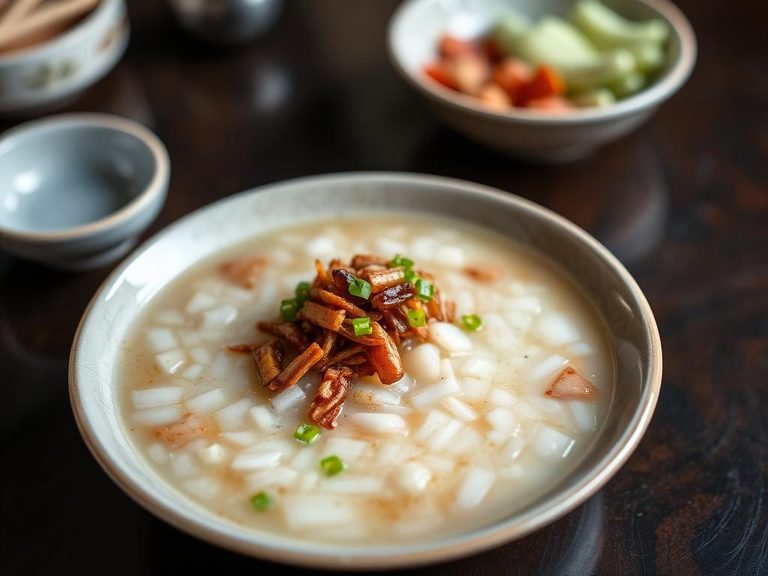
This is a simple, comforting staple: fluffy white rice coated in a savory, often umami-rich gravy. The texture is soft and yielding, with the gravy adding a moist, flavorful layer to the mild grains. Nutritionally, it's a low-fat, moderate-carb base that provides quick energy.
Calorie split: 8% protein · 82% carbs · 10% fat
↓ Full nutrition💚 Why it's loved
People love it for its comforting, savory simplicity and its role as a blank canvas that perfectly soaks up the flavors of the gravy. It's a nostalgic, no-fuss meal that feels like home.
⚠️ Watch-outs & how to enjoy it better
The high glycemic index can lead to rapid blood sugar spikes, making it less ideal for diabetics or those managing insulin resistance. To counteract this, pair it with a source of protein (like beans or chicken) and non-starchy vegetables to slow digestion. Also, be mindful of sodium content in the gravy; opt for low-sodium broths or season with herbs and spices.
Key benefits
- Low in fat and cholesterol
- Provides quick-release energy from carbohydrates
- A versatile, neutral base for absorbing sauces and flavors
- Easy to digest for most people
- A foundational comfort food in many cultures
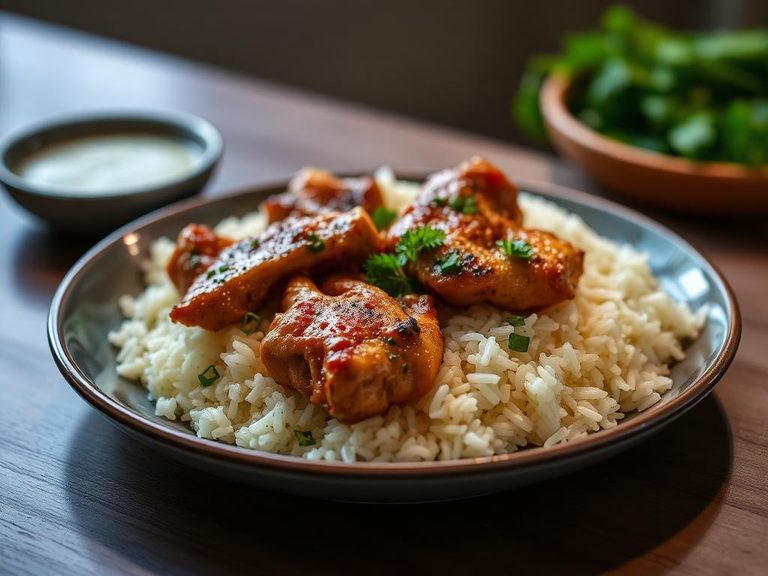
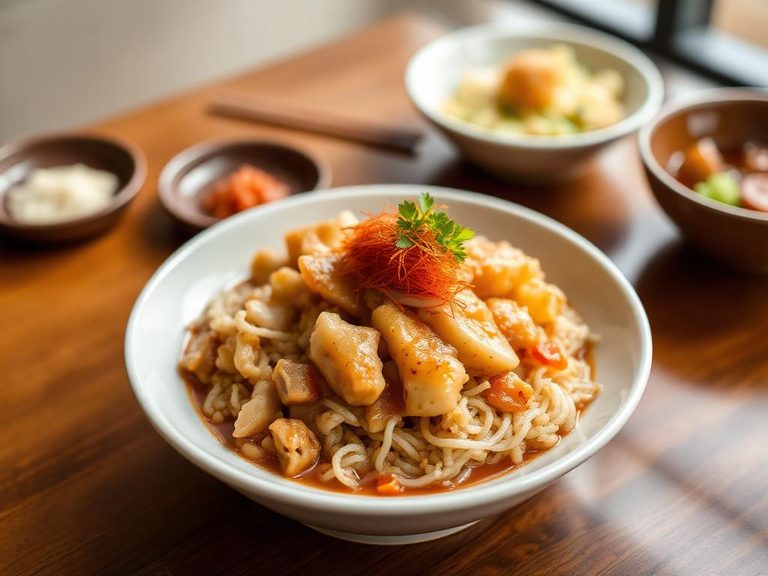
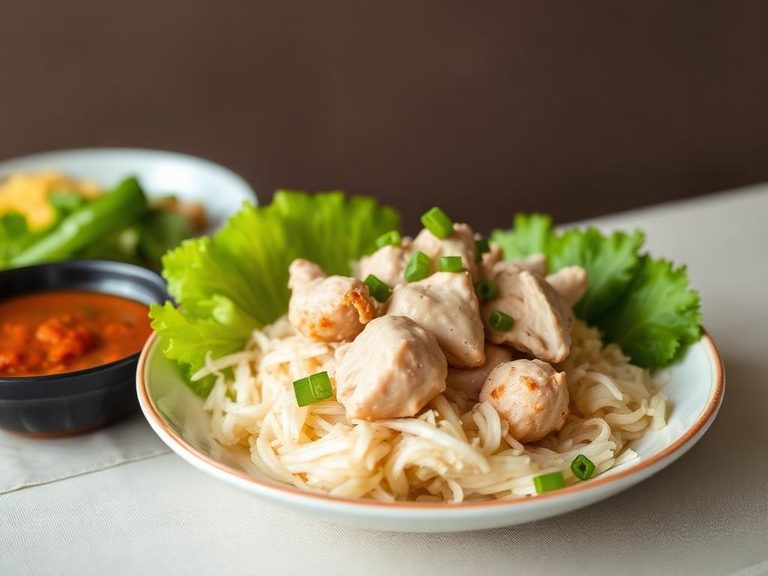
🍽️ Popular dishes
🌍 Where it's eaten
💡 Did you know?
The starch released from white rice when cooked is what helps thicken many gravies and sauces naturally, creating that cohesive, comforting texture.
Full nutrition (USDA data · scales with serving)
| Water | 75.5 g |
| Energy | 102 kcal |
| Protein | 2.0 g |
| Total lipid (fat) | 1.1 g |
| Carbohydrate, by difference | 20.4 g |
| Fiber, total dietary | 0.30 g |
| Total Sugars | 0.13 g |
| Calcium, Ca | 10.0 mg |
| Iron, Fe | 0.82 mg |
| Magnesium, Mg | 9.0 mg |
| Phosphorus, P | 35.0 mg |
| Potassium, K | 37.0 mg |
| Sodium, Na | 293 mg |
| Zinc, Zn | 0.35 mg |
| Copper, Cu | 0.05 mg |
| Selenium, Se | 5.1 ug |
| Vitamin C, total ascorbic acid | 0.00 mg |
| Thiamin | 0.12 mg |
| Riboflavin | 0.03 mg |
| Niacin | 1.1 mg |
| Vitamin B-6 | 0.07 mg |
| Folate, total | 39.0 ug |
| Folic acid | 36.0 ug |
| Folate, food | 3.0 ug |
| Folate, DFE | 65.0 ug |
| Choline, total | 2.6 mg |
| Vitamin B-12 | 0.00 ug |
| Vitamin B-12, added | 0.00 ug |
| Vitamin A, RAE | 0.00 ug |
| Retinol | 0.00 ug |
| Carotene, beta | 0.00 ug |
| Carotene, alpha | 0.00 ug |
| Cryptoxanthin, beta | 0.00 ug |
| Lycopene | 0.00 ug |
| Lutein + zeaxanthin | 0.00 ug |
| Vitamin E (alpha-tocopherol) | 0.06 mg |
| Vitamin E, added | 0.00 mg |
| Vitamin D (D2 + D3) | 0.00 ug |
| Vitamin K (phylloquinone) | 0.20 ug |
| Alcohol, ethyl | 0.00 g |
| Caffeine | 0.00 mg |
| Theobromine | 0.00 mg |
Fat & fatty acid profile (per 100g)
| Fatty acids, total saturated | 0.27 g |
| SFA 4:0 | 0.00 g |
| SFA 6:0 | 0.00 g |
| SFA 8:0 | 0.00 g |
| SFA 10:0 | 0.00 g |
| SFA 12:0 | 0.00 g |
| SFA 14:0 | 0.01 g |
| SFA 16:0 | 0.21 g |
| SFA 18:0 | 0.04 g |
| Fatty acids, total monounsaturated | 0.40 g |
| MUFA 16:1 | 0.04 g |
| MUFA 18:1 | 0.36 g |
| MUFA 20:1 | 0.00 g |
| MUFA 22:1 | 0.00 g |
| Fatty acids, total polyunsaturated | 0.19 g |
| PUFA 18:2 | 0.17 g |
| PUFA 18:3 | 0.01 g |
| PUFA 18:4 | 0.00 g |
| PUFA 20:4 | 0.00 g |
| PUFA 20:5 n-3 (EPA) | 0.00 g |
| PUFA 22:5 n-3 (DPA) | 0.00 g |
| PUFA 22:6 n-3 (DHA) | 0.00 g |
| Cholesterol | 2.0 mg |
Amino acid profile (per 100g)
Estimated from Snacks, rice cakes, brown rice, sesame seed — USDA does not publish this profile for Rice.
| Tryptophan | 0.10 g |
| Threonine | 0.28 g |
| Isoleucine | 0.32 g |
| Leucine | 0.63 g |
| Lysine | 0.29 g |
| Methionine | 0.17 g |
| Cystine | 0.09 g |
| Phenylalanine | 0.39 g |
| Tyrosine | 0.29 g |
| Valine | 0.44 g |
| Arginine | 0.59 g |
| Histidine | 0.19 g |
| Alanine | 0.44 g |
| Aspartic acid | 0.71 g |
| Glutamic acid | 1.6 g |
| Glycine | 0.38 g |
| Proline | 0.35 g |
| Serine | 0.39 g |
FAQ
Is this the same as 'fried rice'?
No. Fried rice is stir-fried in oil with other ingredients. This is simply steamed or boiled white rice served with a poured-over gravy, with no added fat in the preparation.
Can I make this with brown rice?
Yes, you can substitute brown rice for a higher-fiber, more nutrient-dense option. The texture will be chewier and nuttier, which some people prefer.
What is the gravy typically made from?
Gravy can vary widely. It might be a simple meat drippings-based sauce (like from chicken or beef), a vegetable or mushroom broth thickened with a roux or cornstarch, or a soy-based sauce in Asian cuisines.
Nutrient density (calculated · NRF9.3)
Nutrient Rich Foods index: beneficial nutrients (protein, fiber, vitamins, minerals) minus saturated fat, added sugar & sodium, per 100 kcal.
NRF9.3 index — Fulgoni, Keast & Drewnowski, 2009. Computed from USDA nutrients.
Weight-loss friendliness (composite index)
Energy density 1.02 kcal/g · 8% calories from protein · 0.3 g fiber · 0.1 g sugar per 100 g.
Composite of energy density (Rolls et al., 1999), protein & fiber satiety, minus sugar. A calculated heuristic — ranks satiety-per-calorie, not a clinical measure.
Dietary load (calculated from USDA values)
Potential renal acid load. Positive = acid-forming, negative = alkaline-forming.
Sodium-to-potassium ratio: 7.92 (lower is better — aim for ≤ 1)
Sodium:potassium per WHO potassium guidance. Computed from USDA nutrients.