

Rice, white, with gravy, fat added
Common food

Photo: Wikipedia
White rice with gravy is a comforting staple where tender, fluffy grains are enrobed in a savory, often meat-based sauce. The texture is soft and cohesive, with the gravy adding a rich, umami depth that transforms plain rice into a satisfying meal. With a modest 117 kcal per 100g, it offers quick energy primarily from carbohydrates, while the added fat from the gravy contributes to its satisfying mouthfeel.
Calorie split: 7% protein · 70% carbs · 23% fat
↓ Full nutrition💚 Why it's loved
People love this dish for its deep, savory comfort and the way the gravy infuses every grain with flavor. It's a versatile canvas that evokes home cooking and cultural traditions, from Southern US cuisine to Asian rice bowls.
⚠️ Watch-outs & how to enjoy it better
The main downside is its potential for high sodium in the gravy and a high glycemic load from the white rice, which can cause blood sugar spikes. To counteract this, pair it with a lean protein like chicken or fish and add fiber-rich vegetables like broccoli or spinach to slow digestion and balance the meal.
Key benefits
- Provides quick, accessible energy from carbohydrates
- The gravy adds flavor and a small amount of fat for satiety
- Simple, familiar comfort food that is easy to digest
- Can be a base for adding protein or vegetables
🍽️ Popular dishes
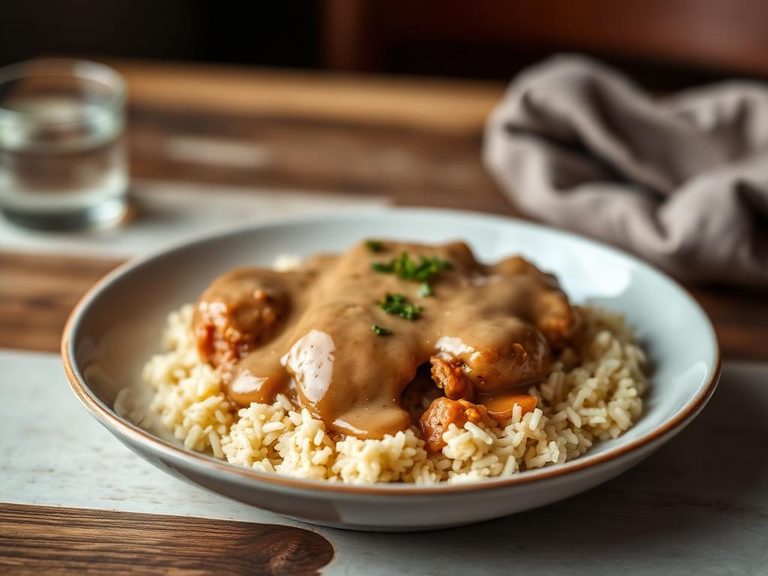
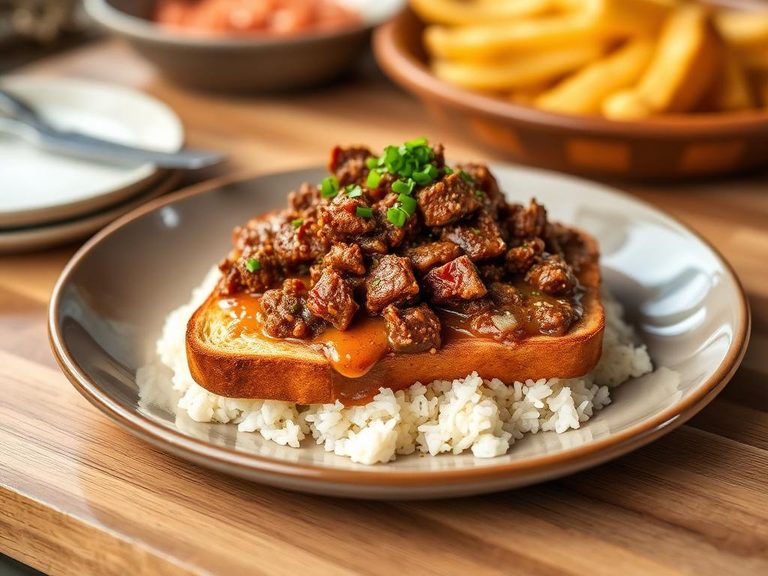
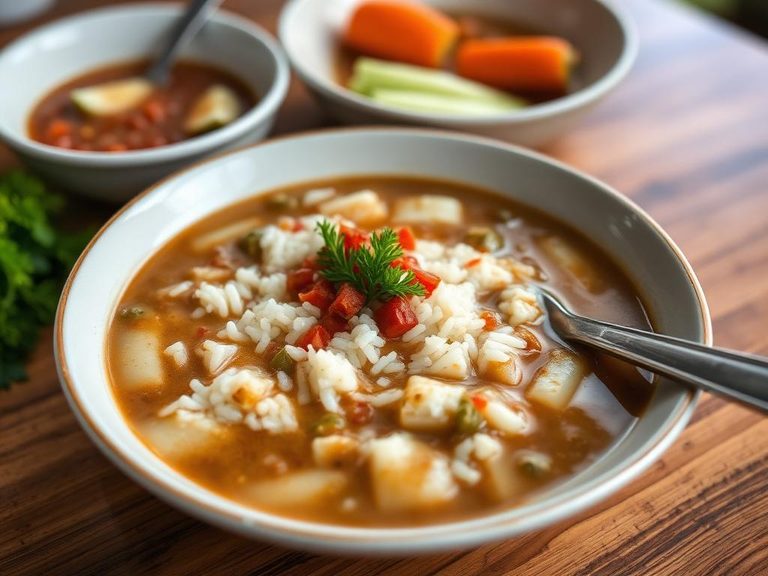
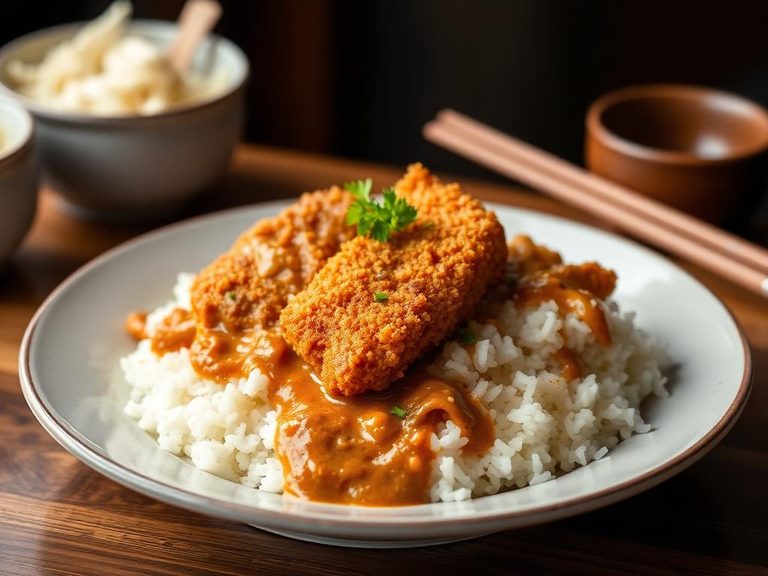
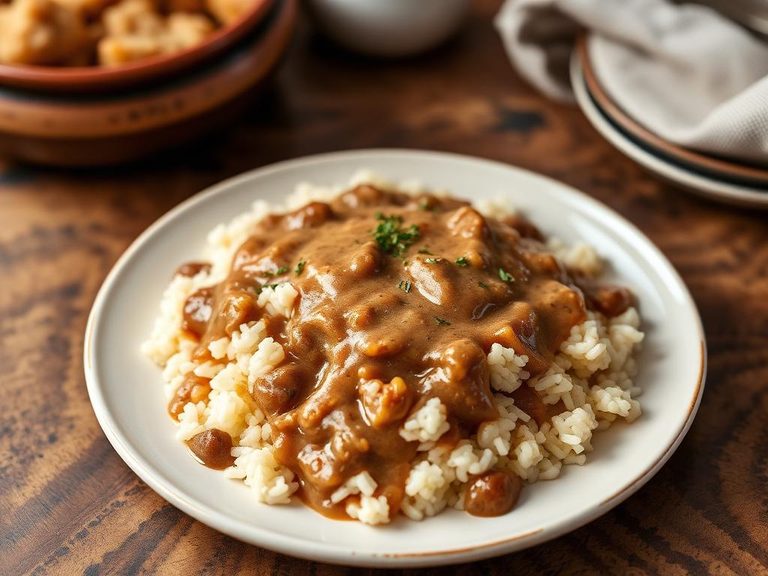
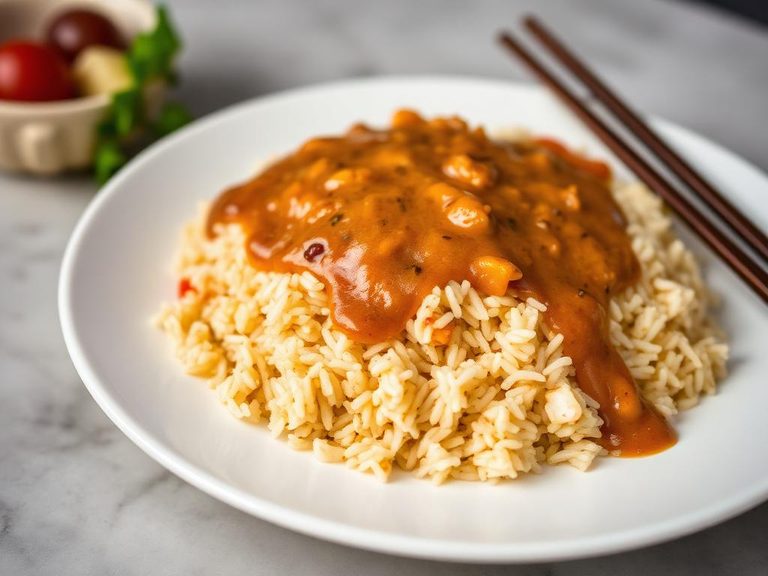
🌍 Where it's eaten
💡 Did you know?
The practice of pouring gravy over rice is a cornerstone of Southern U.S. cuisine, where it's often made from the pan drippings of fried chicken or roast meat, creating a deeply flavorful, resourceful dish.
Full nutrition (USDA data · scales with serving)
| Water | 74.0 g |
| Energy | 117 kcal |
| Protein | 2.0 g |
| Total lipid (fat) | 3.0 g |
| Carbohydrate, by difference | 20.0 g |
| Fiber, total dietary | 0.30 g |
| Total Sugars | 0.13 g |
| Calcium, Ca | 10.0 mg |
| Iron, Fe | 0.81 mg |
| Magnesium, Mg | 9.0 mg |
| Phosphorus, P | 34.0 mg |
| Potassium, K | 36.0 mg |
| Sodium, Na | 287 mg |
| Zinc, Zn | 0.34 mg |
| Copper, Cu | 0.05 mg |
| Selenium, Se | 5.0 ug |
| Vitamin C, total ascorbic acid | 0.00 mg |
| Thiamin | 0.11 mg |
| Riboflavin | 0.03 mg |
| Niacin | 1.1 mg |
| Vitamin B-6 | 0.07 mg |
| Folate, total | 38.0 ug |
| Folic acid | 36.0 ug |
| Folate, food | 3.0 ug |
| Folate, DFE | 64.0 ug |
| Choline, total | 2.6 mg |
| Vitamin B-12 | 0.00 ug |
| Vitamin B-12, added | 0.00 ug |
| Vitamin A, RAE | 0.00 ug |
| Retinol | 0.00 ug |
| Carotene, beta | 0.00 ug |
| Carotene, alpha | 0.00 ug |
| Cryptoxanthin, beta | 0.00 ug |
| Lycopene | 0.00 ug |
| Lutein + zeaxanthin | 0.00 ug |
| Vitamin E (alpha-tocopherol) | 0.42 mg |
| Vitamin E, added | 0.00 mg |
| Vitamin D (D2 + D3) | 0.00 ug |
| Vitamin K (phylloquinone) | 2.1 ug |
| Alcohol, ethyl | 0.00 g |
| Caffeine | 0.00 mg |
| Theobromine | 0.00 mg |
Fat & fatty acid profile (per 100g)
| Fatty acids, total saturated | 0.52 g |
| SFA 4:0 | 0.00 g |
| SFA 6:0 | 0.00 g |
| SFA 8:0 | 0.00 g |
| SFA 10:0 | 0.00 g |
| SFA 12:0 | 0.00 g |
| SFA 14:0 | 0.01 g |
| SFA 16:0 | 0.39 g |
| SFA 18:0 | 0.10 g |
| Fatty acids, total monounsaturated | 1.2 g |
| MUFA 16:1 | 0.04 g |
| MUFA 18:1 | 1.1 g |
| MUFA 20:1 | 0.02 g |
| MUFA 22:1 | 0.00 g |
| Fatty acids, total polyunsaturated | 0.92 g |
| PUFA 18:2 | 0.82 g |
| PUFA 18:3 | 0.10 g |
| PUFA 18:4 | 0.00 g |
| PUFA 20:4 | 0.00 g |
| PUFA 20:5 n-3 (EPA) | 0.00 g |
| PUFA 22:5 n-3 (DPA) | 0.00 g |
| PUFA 22:6 n-3 (DHA) | 0.00 g |
| Cholesterol | 2.0 mg |
Amino acid profile (per 100g)
Estimated from Snacks, rice cakes, brown rice, sesame seed — USDA does not publish this profile for Rice.
| Tryptophan | 0.10 g |
| Threonine | 0.28 g |
| Isoleucine | 0.32 g |
| Leucine | 0.63 g |
| Lysine | 0.29 g |
| Methionine | 0.17 g |
| Cystine | 0.09 g |
| Phenylalanine | 0.39 g |
| Tyrosine | 0.29 g |
| Valine | 0.44 g |
| Arginine | 0.59 g |
| Histidine | 0.19 g |
| Alanine | 0.44 g |
| Aspartic acid | 0.71 g |
| Glutamic acid | 1.6 g |
| Glycine | 0.38 g |
| Proline | 0.35 g |
| Serine | 0.39 g |
FAQ
Is white rice with gravy a healthy meal?
It can be part of a balanced diet, but it's often high in sodium and refined carbs. Pairing it with lean protein and vegetables improves its nutritional profile significantly.
How can I reduce the sodium in gravy?
Use low-sodium broth, reduce added salt, and flavor with herbs, garlic, and onion instead. Making gravy from scratch gives you control over the ingredients.
What is the best type of rice for this dish?
Long-grain white rice is most common for its fluffy texture, but short-grain rice can be used for a stickier, more cohesive dish. Brown rice adds fiber but changes the texture.
Nutrient density (calculated · NRF9.3)
Nutrient Rich Foods index: beneficial nutrients (protein, fiber, vitamins, minerals) minus saturated fat, added sugar & sodium, per 100 kcal.
NRF9.3 index — Fulgoni, Keast & Drewnowski, 2009. Computed from USDA nutrients.
Weight-loss friendliness (composite index)
Energy density 1.17 kcal/g · 7% calories from protein · 0.3 g fiber · 0.1 g sugar per 100 g.
Composite of energy density (Rolls et al., 1999), protein & fiber satiety, minus sugar. A calculated heuristic — ranks satiety-per-calorie, not a clinical measure.
Dietary load (calculated from USDA values)
Potential renal acid load. Positive = acid-forming, negative = alkaline-forming.
Sodium-to-potassium ratio: 7.97 (lower is better — aim for ≤ 1)
Sodium:potassium per WHO potassium guidance. Computed from USDA nutrients.