

Rice pilaf
Common food

Photo: Wikipedia
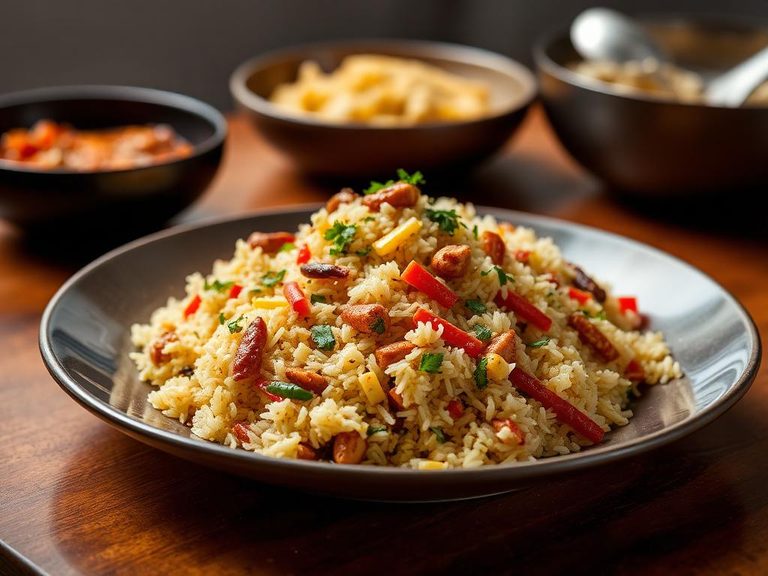
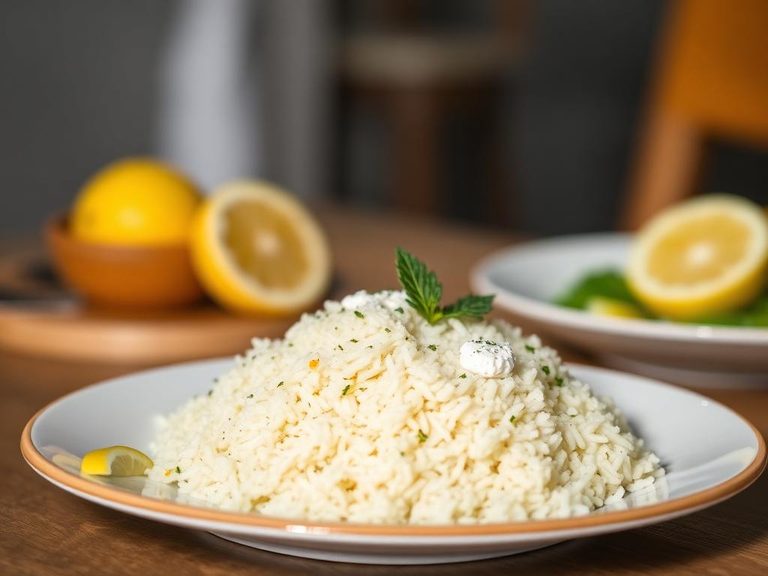
Rice pilaf is a fragrant, savory dish where rice is first sautéed in fat, then simmered in a flavorful broth, resulting in distinct, fluffy grains with a rich, buttery depth. Its texture is light and separate, unlike sticky steamed rice, and it often features subtle notes of onion, garlic, or herbs. Nutritionally, it provides a moderate energy boost with a good balance of carbohydrates and a touch of protein.
Calorie split: 10% protein · 70% carbs · 20% fat
↓ Full nutrition💚 Why it's loved
People love rice pilaf for its comforting, savory flavor and its ability to elevate a simple meal into something special. It's a beloved staple in many cultures, serving as a versatile canvas that absorbs the flavors of broths, spices, and accompanying dishes.
⚠️ Watch-outs & how to enjoy it better
The primary concern is its high glycemic index, which can cause rapid blood sugar spikes, making it less ideal for those with diabetes or insulin resistance. To counteract this, pair it with a source of protein (like chicken or legumes) and healthy fats (like nuts or olive oil) to slow digestion. Be mindful of sodium content if using pre-made broth or seasoning mixes.
Key benefits
- Provides quick energy from complex carbohydrates
- Contains some plant-based protein from the rice
- Can be a good source of B vitamins if made with enriched rice
- Versatile base for adding vegetables and lean proteins
- Often cooked with broth, adding minerals like potassium
🍽️ Popular dishes
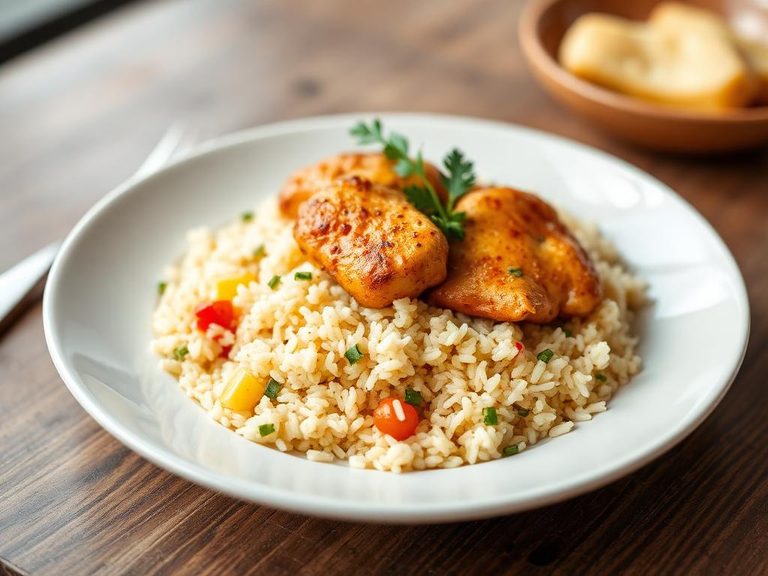
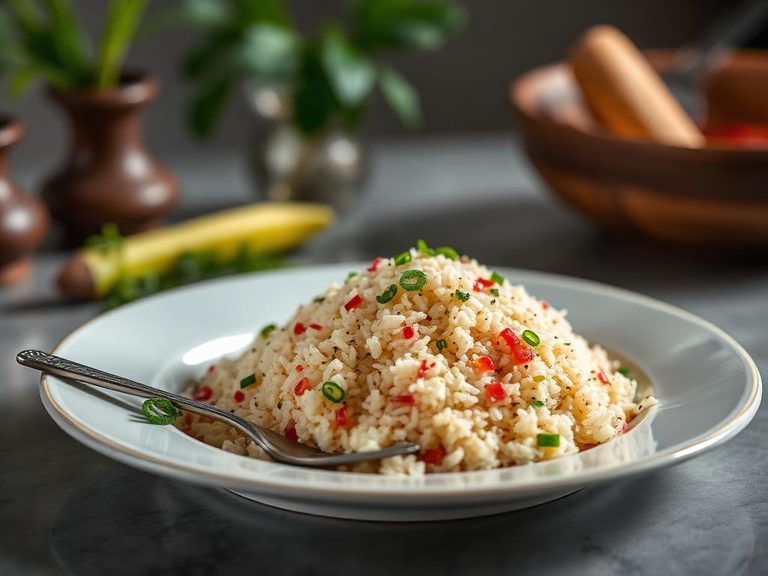
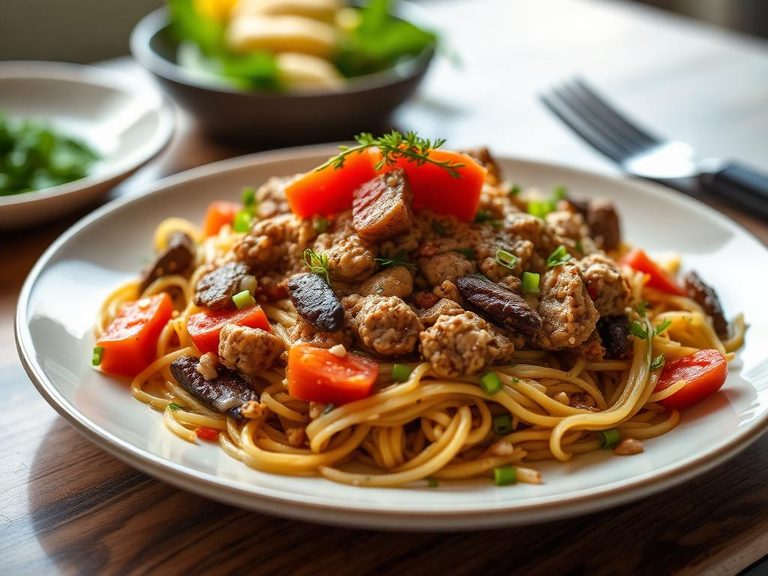
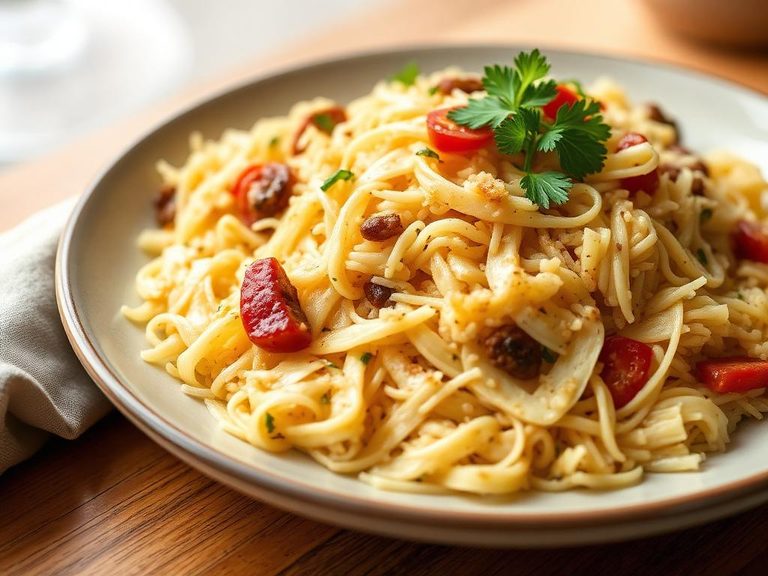
🌍 Where it's eaten
💡 Did you know?
The word 'pilaf' comes from the Persian 'pilāv,' which itself is derived from the Sanskrit 'pulāka,' meaning 'ball of rice'—a nod to the dish's ancient origins and its characteristic separate, rounded grains.
Full nutrition (USDA data · scales with serving)
| Water | 68.3 g |
| Energy | 137 kcal |
| Protein | 3.3 g |
| Total lipid (fat) | 3.0 g |
| Carbohydrate, by difference | 24.1 g |
| Fiber, total dietary | 0.40 g |
| Total Sugars | 0.48 g |
| Calcium, Ca | 29.0 mg |
| Iron, Fe | 0.74 mg |
| Magnesium, Mg | 11.0 mg |
| Phosphorus, P | 46.0 mg |
| Potassium, K | 56.0 mg |
| Sodium, Na | 414 mg |
| Zinc, Zn | 0.33 mg |
| Copper, Cu | 0.06 mg |
| Selenium, Se | 10.2 ug |
| Vitamin C, total ascorbic acid | 1.0 mg |
| Thiamin | 0.15 mg |
| Riboflavin | 0.03 mg |
| Niacin | 1.9 mg |
| Vitamin B-6 | 0.12 mg |
| Folate, total | 47.0 ug |
| Folic acid | 42.0 ug |
| Folate, food | 4.0 ug |
| Folate, DFE | 77.0 ug |
| Choline, total | 5.5 mg |
| Vitamin B-12 | 0.01 ug |
| Vitamin B-12, added | 0.00 ug |
| Vitamin A, RAE | 1.0 ug |
| Retinol | 1.0 ug |
| Carotene, beta | 0.00 ug |
| Carotene, alpha | 0.00 ug |
| Cryptoxanthin, beta | 0.00 ug |
| Lycopene | 0.00 ug |
| Lutein + zeaxanthin | 8.0 ug |
| Vitamin E (alpha-tocopherol) | 0.51 mg |
| Vitamin E, added | 0.00 mg |
| Vitamin D (D2 + D3) | 0.00 ug |
| Vitamin K (phylloquinone) | 2.8 ug |
| Alcohol, ethyl | 0.00 g |
| Caffeine | 0.00 mg |
| Theobromine | 0.00 mg |
Fat & fatty acid profile (per 100g)
| Fatty acids, total saturated | 0.44 g |
| SFA 4:0 | 0.00 g |
| SFA 6:0 | 0.00 g |
| SFA 8:0 | 0.00 g |
| SFA 10:0 | 0.00 g |
| SFA 12:0 | 0.00 g |
| SFA 14:0 | 0.00 g |
| SFA 16:0 | 0.33 g |
| SFA 18:0 | 0.09 g |
| Fatty acids, total monounsaturated | 1.2 g |
| MUFA 16:1 | 0.02 g |
| MUFA 18:1 | 1.2 g |
| MUFA 20:1 | 0.02 g |
| MUFA 22:1 | 0.00 g |
| Fatty acids, total polyunsaturated | 1.1 g |
| PUFA 18:2 | 1.00 g |
| PUFA 18:3 | 0.12 g |
| PUFA 18:4 | 0.00 g |
| PUFA 20:4 | 0.00 g |
| PUFA 20:5 n-3 (EPA) | 0.00 g |
| PUFA 22:5 n-3 (DPA) | 0.00 g |
| PUFA 22:6 n-3 (DHA) | 0.00 g |
| Cholesterol | 0.00 mg |
Amino acid profile (per 100g)
Estimated from Rice and vermicelli mix, rice pilaf flavor, unprepared — USDA does not publish this profile for Rice pilaf.
| Tryptophan | 0.09 g |
| Threonine | 0.22 g |
| Isoleucine | 0.28 g |
| Leucine | 0.52 g |
| Lysine | 0.19 g |
| Methionine | 0.14 g |
| Cystine | 0.13 g |
| Phenylalanine | 0.32 g |
| Tyrosine | 0.18 g |
| Valine | 0.37 g |
| Arginine | 0.57 g |
| Histidine | 0.15 g |
| Alanine | 0.35 g |
| Aspartic acid | 0.64 g |
| Glutamic acid | 1.2 g |
| Glycine | 0.30 g |
| Proline | 0.39 g |
| Serine | 0.30 g |
| Hydroxyproline | 0.00 g |
FAQ
What's the difference between rice pilaf and regular steamed rice?
The key difference is the cooking method. For pilaf, rice is first sautéed in fat (like butter or oil) with aromatics (onion, garlic) before liquid is added. This toasts the grains, infuses flavor, and helps keep them separate and fluffy after cooking, unlike the often stickier texture of plain steamed rice.
Can rice pilaf be made healthier?
Yes. Use low-sodium broth, incorporate whole grains like brown rice or bulgur, and add plenty of vegetables like peas, carrots, or spinach for fiber and nutrients. Using heart-healthy oils like olive oil instead of butter also improves its nutritional profile.
Why is my rice pilaf mushy instead of fluffy?
The most common cause is using too much liquid or stirring it too much during cooking. The standard ratio is about 1.5 to 2 parts liquid to 1 part rice. After adding the liquid, bring to a boil, then reduce to a very low simmer, cover tightly, and do not lift the lid or stir until the cooking time is complete.
Nutrient density (calculated · NRF9.3)
Nutrient Rich Foods index: beneficial nutrients (protein, fiber, vitamins, minerals) minus saturated fat, added sugar & sodium, per 100 kcal.
NRF9.3 index — Fulgoni, Keast & Drewnowski, 2009. Computed from USDA nutrients.
Weight-loss friendliness (composite index)
Energy density 1.37 kcal/g · 10% calories from protein · 0.4 g fiber · 0.5 g sugar per 100 g.
Composite of energy density (Rolls et al., 1999), protein & fiber satiety, minus sugar. A calculated heuristic — ranks satiety-per-calorie, not a clinical measure.
Dietary load (calculated from USDA values)
Potential renal acid load. Positive = acid-forming, negative = alkaline-forming.
Sodium-to-potassium ratio: 7.39 (lower is better — aim for ≤ 1)
Sodium:potassium per WHO potassium guidance. Computed from USDA nutrients.