

Turkish Pirinç Pilavı
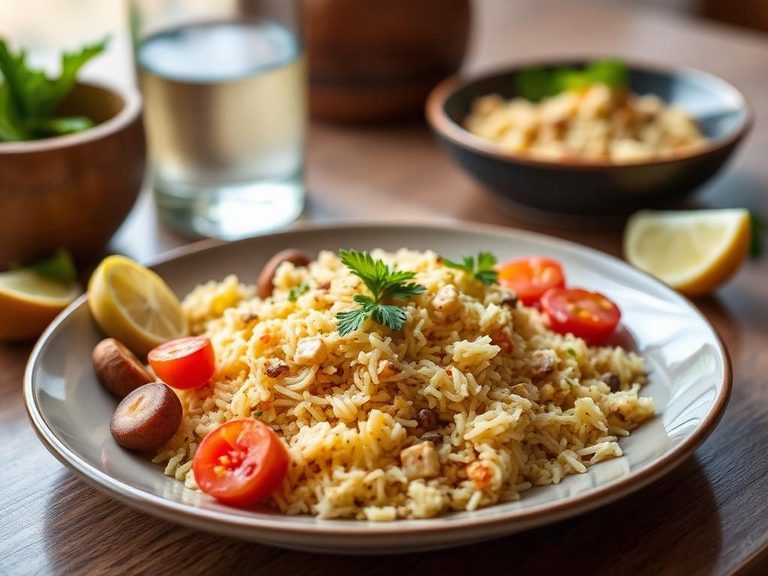
Turkish Pirinç Pilavı is a beloved, fluffy rice pilaf that serves as a staple side dish across Turkey, typically made by toasting long-grain or baldo rice in butter before simmering it in rich chicken or beef broth. The dish is characterized by its tender texture and often includes subtle additions like vermicelli noodles or pine nuts, which are toasted to a golden brown for added depth and nuttiness. It is commonly served alongside kebabs, stews, and yogurt, making it an essential component of traditional Turkish meals.
🍳 View the full Turkish Pirinç Pilavı recipe →
🍽️ Nutrition at a glance
This dish is primarily a source of carbohydrates, providing quick energy, while the butter or oil used in preparation adds a moderate amount of fat. Depending on the broth and preparation, it offers some protein and essential minerals, with a typical serving containing roughly 200 to 300 calories.
Nutrition breakdown
| Calories | 220 kcal |
| Protein | 4.5 g |
| Carbs | 40 g |
| Fat | 4.5 g |
| Fiber | 1 g |
| Sugar | 0.5 g |
| Sodium | 480 mg |
| Potassium | 90 mg |
| Iron | 1.5 mg |
| Magnesium | 25 mg |
| Phosphorus | 80 mg |
| Thiamin (B1) | 0.2 mg |
| Niacin (B3) | 2.5 mg |
| Folate | 60 µg |
| Selenium | 12 µg |
Per 1 cup (200 g) · estimated, varies by recipe
💡 What's interesting
Culturally, Pirinç Pilavı is so central to Turkish cuisine that the texture of the rice—whether it is perfectly fluffy and separate or creamy and sticky—is often a point of pride and debate among cooks. Nutritionally, the practice of toasting the rice and vermicelli in fat before boiling not only enhances flavor but also helps the grains retain their structure, preventing the dish from becoming mushy.
🍽️ Related dishes





AI estimate may be inaccurate · Terms