

Turkish gum

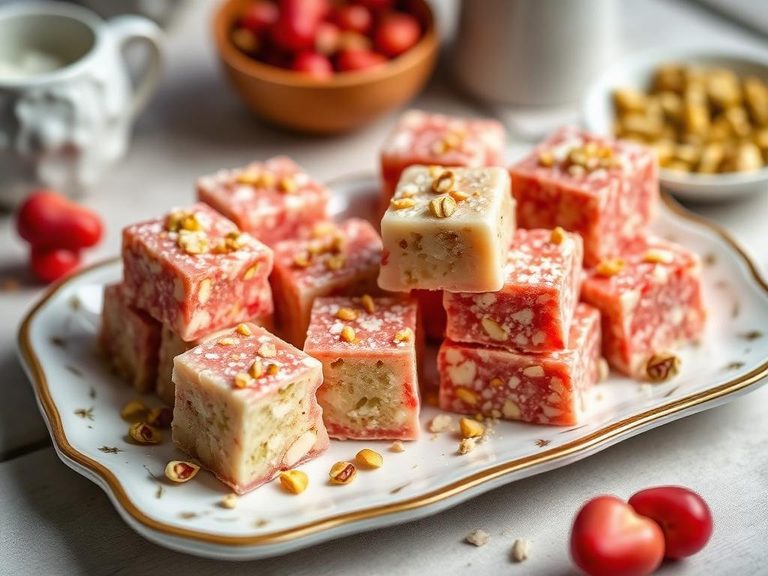
Turkish gum, also known as Turkish delight or lokum, is a confectionery made from starch and sugar, often flavored with rosewater, lemon, or mastic and sometimes containing nuts or dried fruits. It has a soft, chewy, gel-like texture and is typically cut into small cubes and dusted with powdered sugar to prevent sticking. Originating from Istanbul, Turkey, it has been a popular sweet treat since the late 18th century and is often enjoyed with tea or coffee.
🍳 View the full Turkish gum recipe →
🍽️ Nutrition at a glance
Turkish gum is primarily high in carbohydrates due to its sugar and starch content, with minimal protein and fat. A typical serving of about 30 grams contains roughly 100-120 calories, providing quick energy but little in the way of essential nutrients.
Nutrition breakdown
| Calories | 10 kcal |
| Protein | 0 g |
| Carbs | 3 g |
| Fat | 0 g |
| Fiber | 0 g |
| Sugar | 3 g |
| Sodium | 0 mg |
| Potassium | 5 mg |
Per 1 piece (3 g) · estimated, varies by recipe
💡 What's interesting
Culturally, Turkish gum is a symbol of hospitality and is often served to guests in Turkey and the Middle East, and it gained international fame after being featured in literature and media. Nutritionally, its unique texture comes from the use of cornstarch or wheat starch, and it can be made with natural flavors like rosewater, which has been used in traditional medicine for its calming properties.
🍽️ Related dishes







AI estimate may be inaccurate · Terms