

Pumpkin, cooked
Common food

Photo: Wikipedia
Cooked pumpkin is a soft, velvety vegetable with a naturally sweet, earthy flavor that deepens when roasted or simmered. Its smooth, custard-like texture makes it a comforting base for soups, pies, and curries. Nutritionally, it's a low-calorie powerhouse packed with beta-carotene, which your body converts to vitamin A.
Calorie split: 7% protein · 48% carbs · 45% fat
↓ Full nutrition💚 Why it's loved
People adore its versatile, mild sweetness that pairs beautifully with both warm spices like cinnamon and savory elements like sage and garlic. It's a cultural staple in everything from American Thanksgiving pies to Japanese tempura and West African stews, symbolizing harvest and comfort.
⚠️ Watch-outs & how to enjoy it better
Its natural sugars can cause a quicker blood-sugar spike compared to non-starchy vegetables. To counteract this, pair it with a source of protein (like beans or meat) or healthy fat (like olive oil or nuts) to slow digestion. Those with IBS may need to watch portions, as the fiber content, while modest, can be a trigger for some.
Key benefits
- Excellent source of beta-carotene (vitamin A precursor)
- Very low in calories (52 kcal per 100g)
- Provides a good amount of potassium
- Contains antioxidants like lutein and zeaxanthin
- Naturally sweet without added sugars
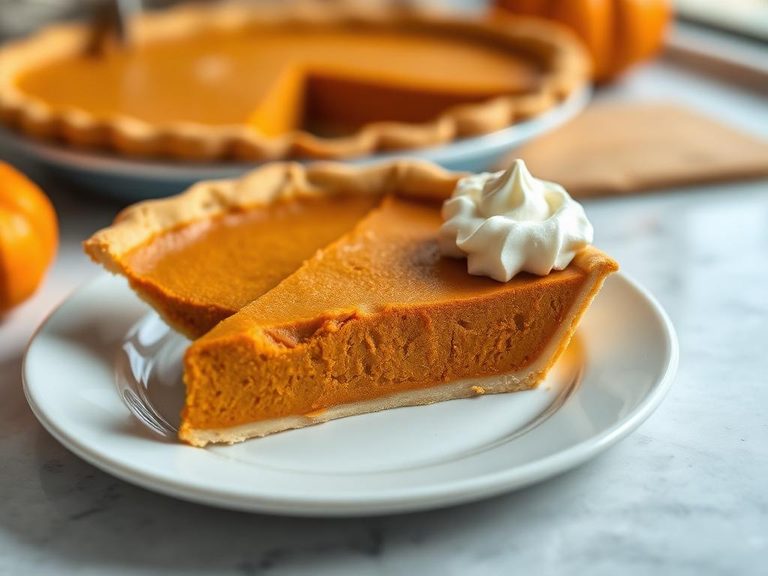
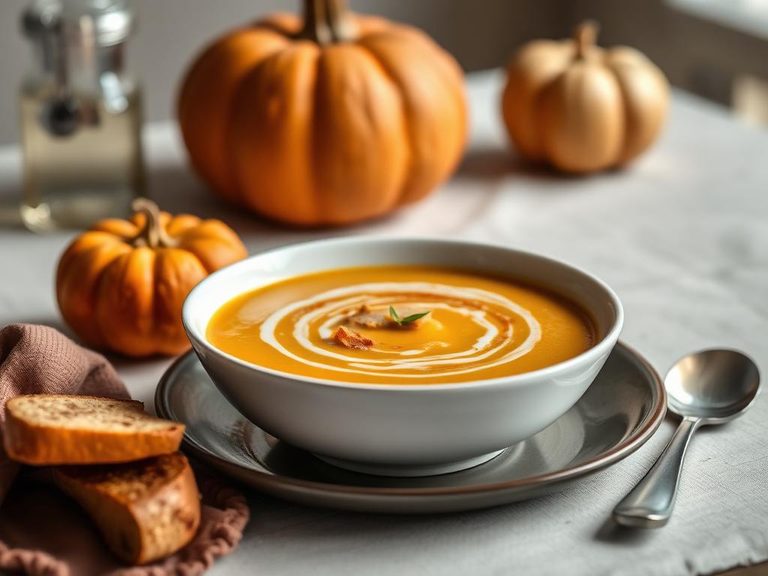
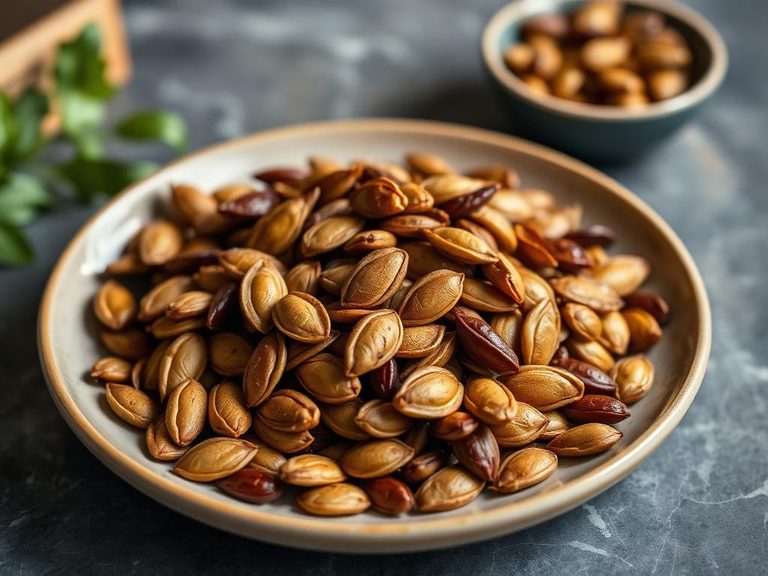
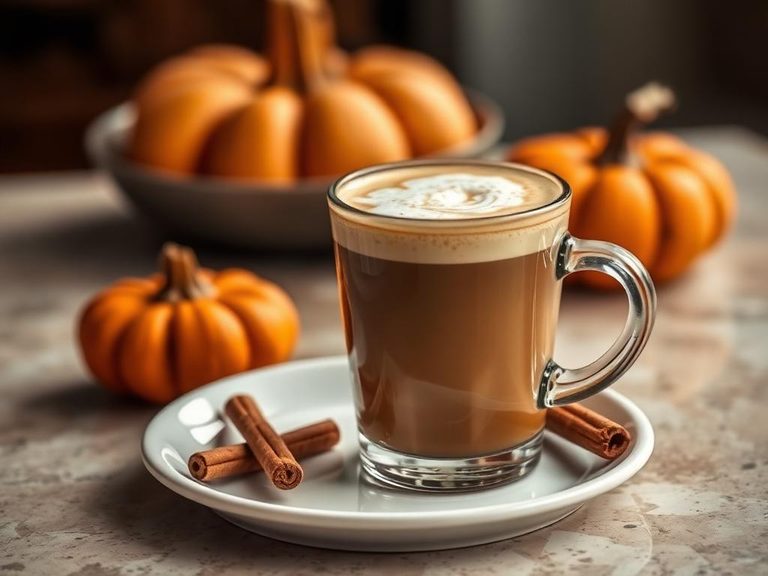
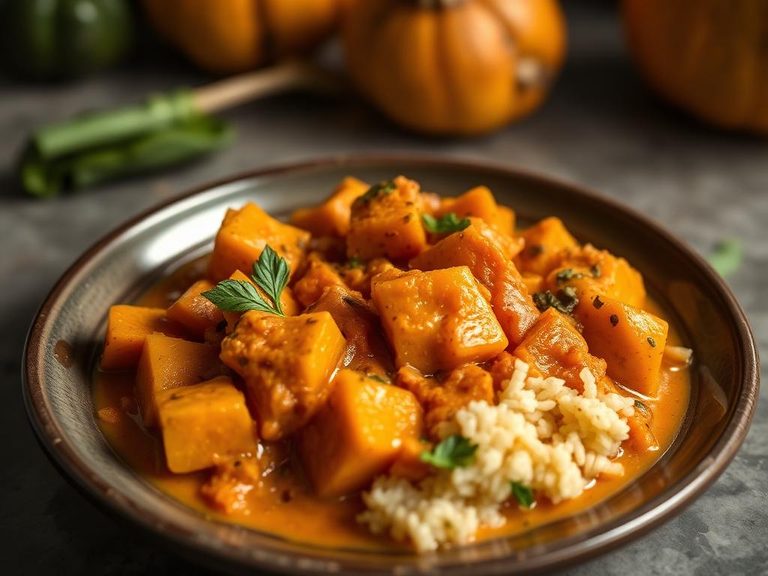
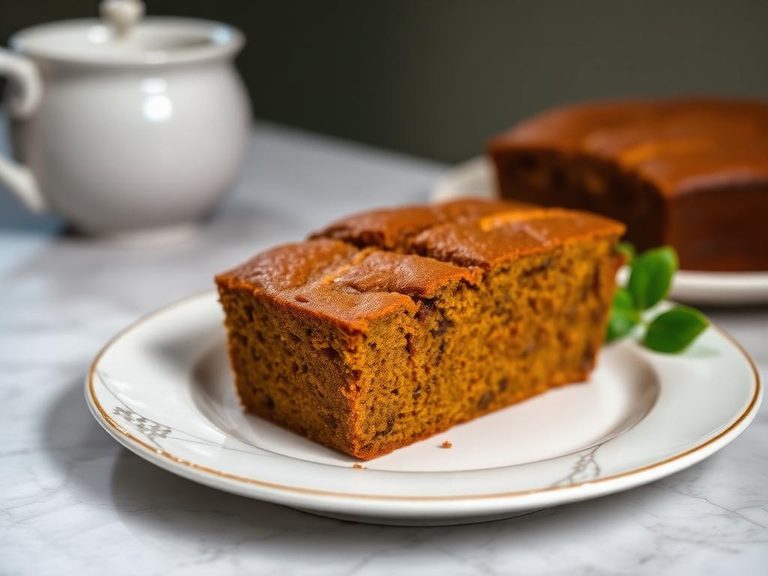
🍽️ Popular dishes
🌍 Where it's eaten
💡 Did you know?
The pumpkin is a fruit botanically, belonging to the gourd family (Cucurbitaceae), and the largest on record weighed over 2,700 pounds (1,230 kg).
Full nutrition (USDA data · scales with serving)
| Water | 88.2 g |
| Energy | 52.0 kcal |
| Protein | 1.1 g |
| Total lipid (fat) | 2.8 g |
| Carbohydrate, by difference | 6.8 g |
| Fiber, total dietary | 0.50 g |
| Total Sugars | 2.9 g |
| Calcium, Ca | 22.0 mg |
| Iron, Fe | 0.84 mg |
| Magnesium, Mg | 13.0 mg |
| Phosphorus, P | 46.0 mg |
| Potassium, K | 354 mg |
| Sodium, Na | 131 mg |
| Zinc, Zn | 0.33 mg |
| Copper, Cu | 0.13 mg |
| Selenium, Se | 0.30 ug |
| Vitamin C, total ascorbic acid | 8.0 mg |
| Thiamin | 0.05 mg |
| Riboflavin | 0.11 mg |
| Niacin | 0.59 mg |
| Vitamin B-6 | 0.07 mg |
| Folate, total | 14.0 ug |
| Folic acid | 0.00 ug |
| Folate, food | 14.0 ug |
| Folate, DFE | 14.0 ug |
| Choline, total | 8.8 mg |
| Vitamin B-12 | 0.00 ug |
| Vitamin B-12, added | 0.00 ug |
| Vitamin A, RAE | 433 ug |
| Retinol | 12.0 ug |
| Carotene, beta | 3071 ug |
| Carotene, alpha | 3971 ug |
| Cryptoxanthin, beta | 0.00 ug |
| Lycopene | 0.00 ug |
| Lutein + zeaxanthin | 1483 ug |
| Vitamin E (alpha-tocopherol) | 1.5 mg |
| Vitamin E, added | 0.00 mg |
| Vitamin D (D2 + D3) | 0.00 ug |
| Vitamin K (phylloquinone) | 3.4 ug |
| Alcohol, ethyl | 0.00 g |
| Caffeine | 0.00 mg |
| Theobromine | 0.00 mg |
Fat & fatty acid profile (per 100g)
| Fatty acids, total saturated | 0.77 g |
| SFA 4:0 | 0.02 g |
| SFA 6:0 | 0.01 g |
| SFA 8:0 | 0.01 g |
| SFA 10:0 | 0.02 g |
| SFA 12:0 | 0.02 g |
| SFA 14:0 | 0.07 g |
| SFA 16:0 | 0.43 g |
| SFA 18:0 | 0.15 g |
| Fatty acids, total monounsaturated | 0.98 g |
| MUFA 16:1 | 0.02 g |
| MUFA 18:1 | 0.94 g |
| MUFA 20:1 | 0.01 g |
| MUFA 22:1 | 0.00 g |
| Fatty acids, total polyunsaturated | 0.79 g |
| PUFA 18:2 | 0.70 g |
| PUFA 18:3 | 0.09 g |
| PUFA 18:4 | 0.00 g |
| PUFA 20:4 | 0.00 g |
| PUFA 20:5 n-3 (EPA) | 0.00 g |
| PUFA 22:5 n-3 (DPA) | 0.00 g |
| PUFA 22:6 n-3 (DHA) | 0.00 g |
| Cholesterol | 2.0 mg |
Amino acid profile (per 100g)
Estimated from Pie, pumpkin, commercially prepared — USDA does not publish this profile for Pumpkin.
| Tryptophan | 0.05 g |
| Threonine | 0.15 g |
| Isoleucine | 0.16 g |
| Leucine | 0.30 g |
| Lysine | 0.19 g |
| Methionine | 0.25 g |
| Cystine | 0.06 g |
| Phenylalanine | 0.17 g |
| Tyrosine | 0.12 g |
| Valine | 0.21 g |
| Arginine | 0.15 g |
| Histidine | 0.09 g |
| Alanine | 0.15 g |
| Aspartic acid | 0.30 g |
| Glutamic acid | 0.84 g |
| Glycine | 0.12 g |
| Proline | 0.29 g |
| Serine | 0.22 g |
FAQ
Is cooked pumpkin the same as canned pumpkin?
Not exactly. Canned pumpkin is typically a dense, smooth purée made from specific pie pumpkin varieties. Cooked fresh pumpkin can vary in texture and moisture depending on the type and cooking method (roasted, steamed, boiled).
Why is cooked pumpkin so orange?
The vibrant orange color comes from high concentrations of beta-carotene, an antioxidant pigment that your body converts into vitamin A, essential for vision and immune health.
Can I eat the skin of cooked pumpkin?
Yes, if the skin is tender and thin (like from sugar pumpkins). It's edible and adds fiber. For tough, thick-skinned varieties (like carving pumpkins), the skin is usually removed.
Nutrient density (calculated · NRF9.3)
Nutrient Rich Foods index: beneficial nutrients (protein, fiber, vitamins, minerals) minus saturated fat, added sugar & sodium, per 100 kcal.
NRF9.3 index — Fulgoni, Keast & Drewnowski, 2009. Computed from USDA nutrients.
Weight-loss friendliness (composite index)
Energy density 0.52 kcal/g · 8% calories from protein · 0.5 g fiber · 2.9 g sugar per 100 g.
Composite of energy density (Rolls et al., 1999), protein & fiber satiety, minus sugar. A calculated heuristic — ranks satiety-per-calorie, not a clinical measure.
Dietary load (calculated from USDA values)
Potential renal acid load. Positive = acid-forming, negative = alkaline-forming.
Sodium-to-potassium ratio: 0.37 (lower is better — aim for ≤ 1)
Sodium:potassium per WHO potassium guidance. Computed from USDA nutrients.