

Pork, pig's feet, pickled
Common food

Photo: Wikipedia
Pig's feet, pickled, are a collagen-rich delicacy with a uniquely satisfying texture—tender, gelatinous skin and cartilage that yield to a pleasant, slightly chewy bite. The pickling process infuses them with a tangy, savory, and often slightly sweet or spicy brine, creating a bold, complex flavor profile. Nutritionally, they are a high-protein, virtually zero-carb food, making them a significant source of fat and a standout choice for low-carb or ketogenic diets.
Calorie split: 34% protein · 0% carbs · 66% fat
↓ Full nutrition💚 Why it's loved
People cherish pickled pig's feet for their deeply savory, umami-rich flavor and the luxurious, melt-in-the-mouth texture that collagen provides. They are a beloved staple in many cultures as a flavorful snack, appetizer, or part of a hearty meal, often evoking nostalgia and tradition.
⚠️ Watch-outs & how to enjoy it better
The high sodium content from the pickling brine can be a concern for those monitoring blood pressure or fluid retention. The fat content, while flavorful, is substantial, and the dish is high in cholesterol. To mitigate sodium intake, look for lower-sodium versions, rinse the pieces lightly before eating, and pair with fresh, low-sodium vegetables. For fat and cholesterol, practice portion control and enjoy as an occasional treat rather than a daily staple.
Key benefits
- Excellent source of high-quality protein for muscle maintenance.
- Extremely low in carbohydrates and sugars, suitable for keto diets.
- Rich in collagen, which supports skin, joint, and connective tissue health.
- Provides essential minerals like zinc and iron.
- Fermented versions may contain probiotics beneficial for gut health.
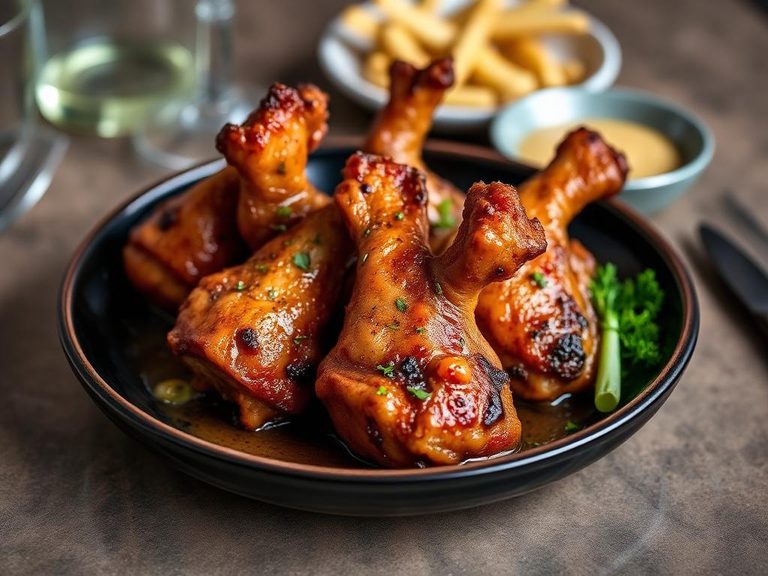
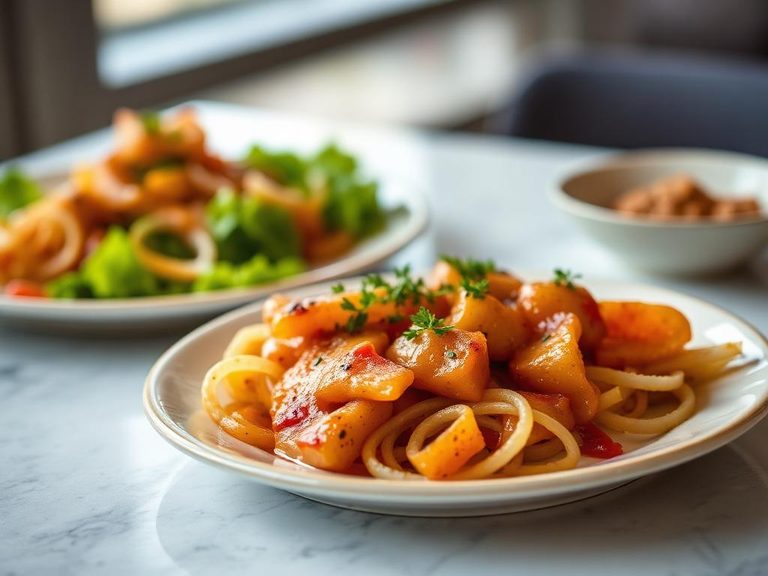
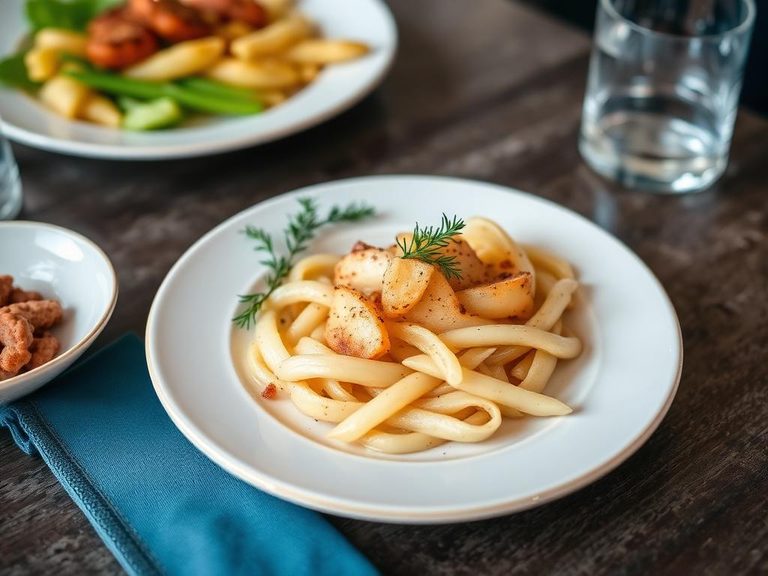
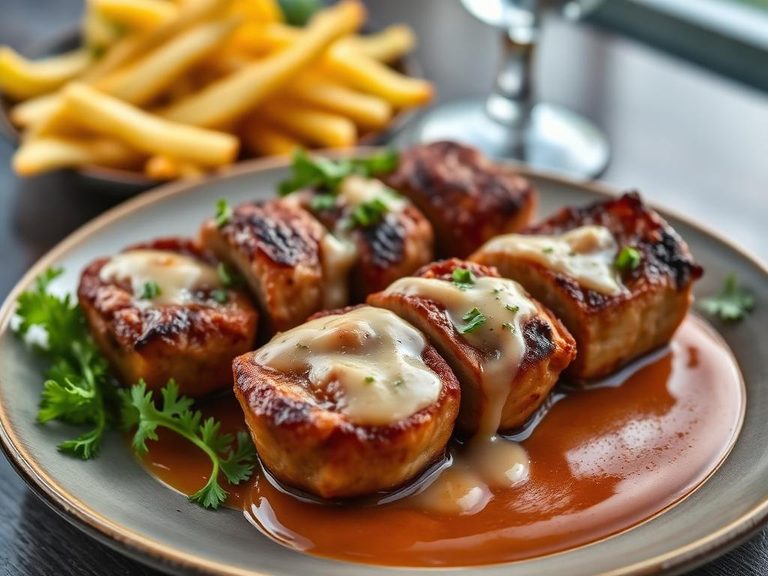
🍽️ Popular dishes
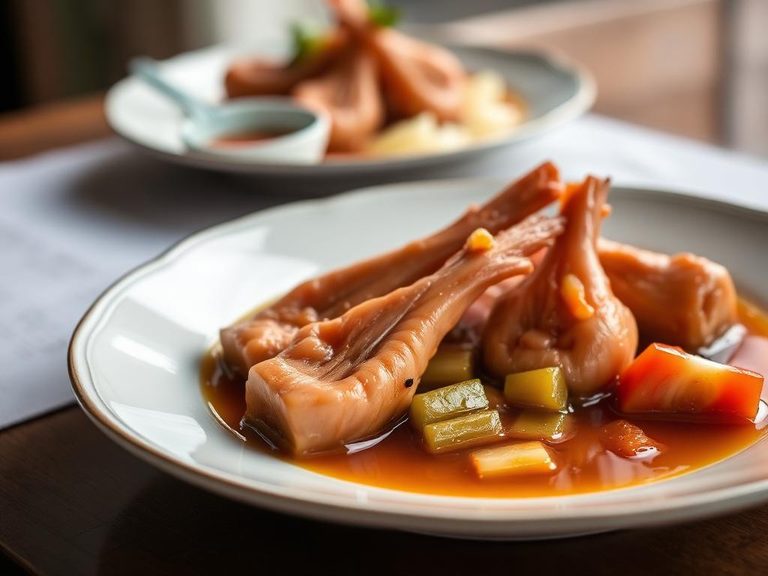
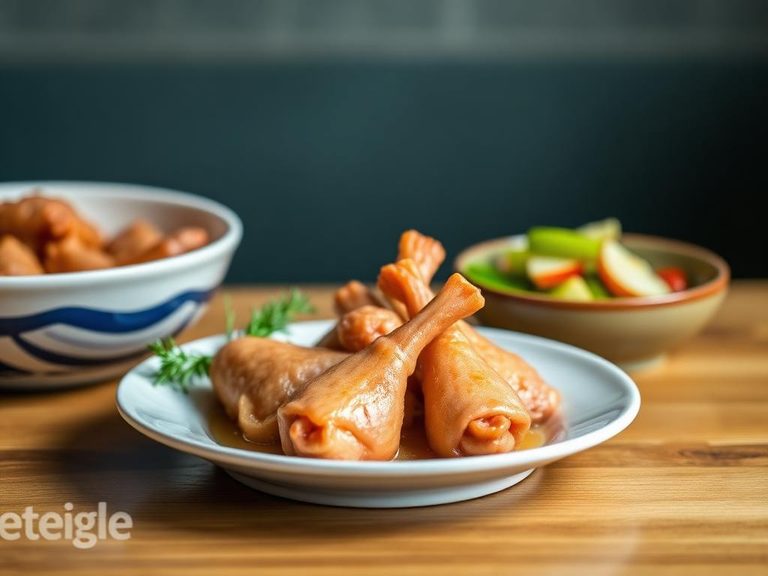
🌍 Where it's eaten
💡 Did you know?
The high collagen content in pickled pig's feet is what gives them their signature sticky, gelatinous texture when chilled, which is essentially a natural, savory gelatin.
Full nutrition (USDA data · scales with serving)
| Water | 75.0 g |
| Energy | 140 kcal |
| Protein | 11.6 g |
| Total lipid (fat) | 10.0 g |
| Carbohydrate, by difference | 0.01 g |
| Fiber, total dietary | 0.00 g |
| Total Sugars | 0.00 g |
| Calcium, Ca | 32.0 mg |
| Iron, Fe | 0.31 mg |
| Magnesium, Mg | 11.0 mg |
| Phosphorus, P | 87.0 mg |
| Potassium, K | 13.0 mg |
| Sodium, Na | 946 mg |
| Zinc, Zn | 0.20 mg |
| Copper, Cu | 0.04 mg |
| Selenium, Se | 15.8 ug |
| Vitamin C, total ascorbic acid | 0.00 mg |
| Thiamin | 0.01 mg |
| Riboflavin | 0.01 mg |
| Niacin | 0.22 mg |
| Vitamin B-6 | 0.01 mg |
| Folate, total | 1.0 ug |
| Folic acid | 0.00 ug |
| Folate, food | 1.0 ug |
| Folate, DFE | 1.0 ug |
| Choline, total | 44.5 mg |
| Vitamin B-12 | 0.21 ug |
| Vitamin B-12, added | 0.00 ug |
| Vitamin A, RAE | 11.0 ug |
| Retinol | 11.0 ug |
| Carotene, beta | 0.00 ug |
| Carotene, alpha | 0.00 ug |
| Cryptoxanthin, beta | 0.00 ug |
| Lycopene | 0.00 ug |
| Lutein + zeaxanthin | 0.00 ug |
| Vitamin E (alpha-tocopherol) | 0.21 mg |
| Vitamin E, added | 0.00 mg |
| Vitamin D (D2 + D3) | 0.40 ug |
| Vitamin K (phylloquinone) | 0.00 ug |
| Alcohol, ethyl | 0.00 g |
| Caffeine | 0.00 mg |
| Theobromine | 0.00 mg |
Fat & fatty acid profile (per 100g)
| Fatty acids, total saturated | 2.9 g |
| SFA 4:0 | 0.00 g |
| SFA 6:0 | 0.00 g |
| SFA 8:0 | 0.00 g |
| SFA 10:0 | 0.00 g |
| SFA 12:0 | 0.00 g |
| SFA 14:0 | 0.12 g |
| SFA 16:0 | 2.1 g |
| SFA 18:0 | 0.70 g |
| Fatty acids, total monounsaturated | 5.7 g |
| MUFA 16:1 | 0.39 g |
| MUFA 18:1 | 5.2 g |
| MUFA 20:1 | 0.10 g |
| MUFA 22:1 | 0.00 g |
| Fatty acids, total polyunsaturated | 0.78 g |
| PUFA 18:2 | 0.67 g |
| PUFA 18:3 | 0.03 g |
| PUFA 18:4 | 0.00 g |
| PUFA 20:4 | 0.05 g |
| PUFA 20:5 n-3 (EPA) | 0.00 g |
| PUFA 22:5 n-3 (DPA) | 0.00 g |
| PUFA 22:6 n-3 (DHA) | 0.00 g |
| Cholesterol | 83.0 mg |
Amino acid profile (per 100g)
Estimated from Pork, cured, salt pork, raw — USDA does not publish this profile for Pork.
| Tryptophan | 0.02 g |
| Threonine | 0.17 g |
| Isoleucine | 0.13 g |
| Leucine | 0.35 g |
| Lysine | 0.42 g |
| Methionine | 0.07 g |
| Cystine | 0.04 g |
| Phenylalanine | 0.19 g |
| Tyrosine | 0.08 g |
| Valine | 0.24 g |
| Arginine | 0.52 g |
| Histidine | 0.06 g |
| Alanine | 0.28 g |
| Aspartic acid | 0.42 g |
| Glutamic acid | 0.69 g |
| Glycine | 0.36 g |
| Proline | 0.27 g |
| Serine | 0.19 g |
FAQ
Are pickled pig's feet the same as head cheese?
Not exactly. Head cheese is a meat jelly or aspic made from the head of a pig or calf, often including the feet, but it's a set terrine. Pickled pig's feet are whole or halved feet preserved in a vinegar-based brine.
Do you eat the bone in pickled pig's feet?
Generally, no. The meat, skin, and cartilage are eaten, while the smaller bones are typically discarded. The larger bones may be gnawed on for flavor but are not consumed.
How should I store opened jarred pickled pig's feet?
Once opened, they must be refrigerated and consumed within a few days, submerged in their brine to maintain freshness and flavor.
Nutrient density (calculated · NRF9.3)
Nutrient Rich Foods index: beneficial nutrients (protein, fiber, vitamins, minerals) minus saturated fat, added sugar & sodium, per 100 kcal.
NRF9.3 index — Fulgoni, Keast & Drewnowski, 2009. Computed from USDA nutrients.
Weight-loss friendliness (composite index)
Energy density 1.40 kcal/g · 33% calories from protein · 0.0 g fiber · 0.0 g sugar per 100 g.
Composite of energy density (Rolls et al., 1999), protein & fiber satiety, minus sugar. A calculated heuristic — ranks satiety-per-calorie, not a clinical measure.
Dietary load (calculated from USDA values)
Potential renal acid load. Positive = acid-forming, negative = alkaline-forming.
Sodium-to-potassium ratio: 72.77 (lower is better — aim for ≤ 1)
Sodium:potassium per WHO potassium guidance. Computed from USDA nutrients.