

Pork, pig's feet
Common food

Photo: Wikipedia
Pork pig's feet, or trotters, are gelatin-rich cuts prized for their unique texture—a satisfying, bouncy chewiness that softens into a luscious, melt-in-your-mouth tenderness when slow-cooked. Nutritionally, they are a powerhouse of protein and collagen, with a notable absence of carbohydrates, making them a staple in many hearty, slow-simmered dishes.
Calorie split: 38% protein · 0% carbs · 62% fat
↓ Full nutrition💚 Why it's loved
People adore pig's feet for their unparalleled ability to transform simple broths into rich, silky stocks and for their deep, savory flavor that becomes incredibly complex with slow cooking. They are a beloved comfort food, central to celebratory and restorative meals in cuisines worldwide.
⚠️ Watch-outs & how to enjoy it better
The high fat and cholesterol content means they should be enjoyed in moderation by those monitoring cardiovascular health. A practical tip is to consume them as part of a balanced meal, perhaps paired with fiber-rich vegetables, and to skim excess fat from the cooking liquid before serving.
Key benefits
- Excellent source of high-quality protein for muscle maintenance.
- Rich in collagen, which supports skin, joint, and connective tissue health.
- Provides essential minerals like iron and zinc.
- Naturally zero in carbohydrates and sugars.
- A traditional, whole-food ingredient in many cultures.
🍽️ Popular dishes
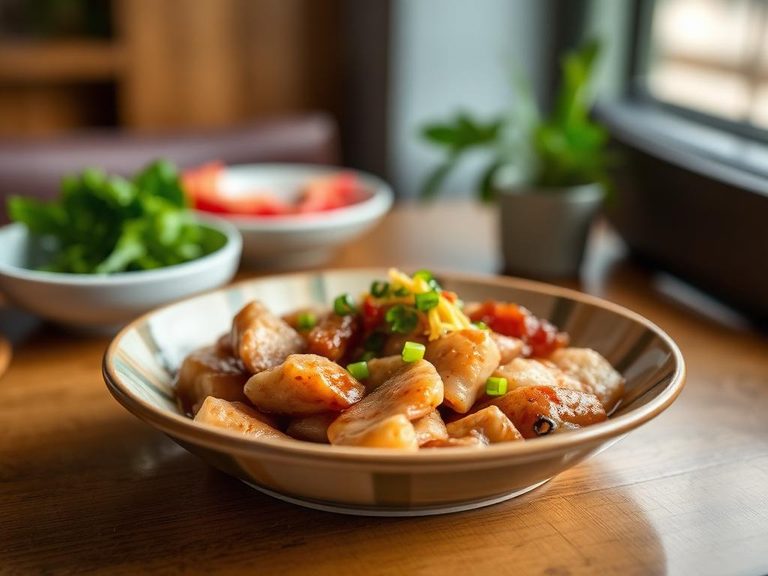
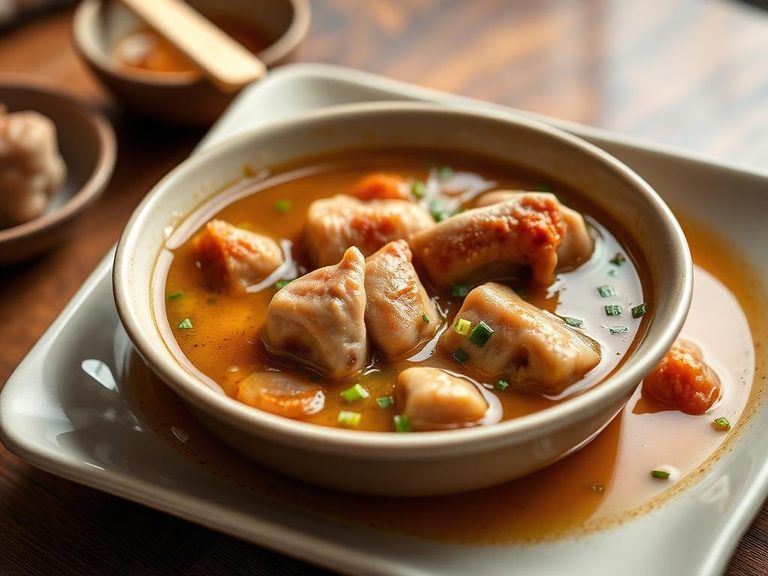
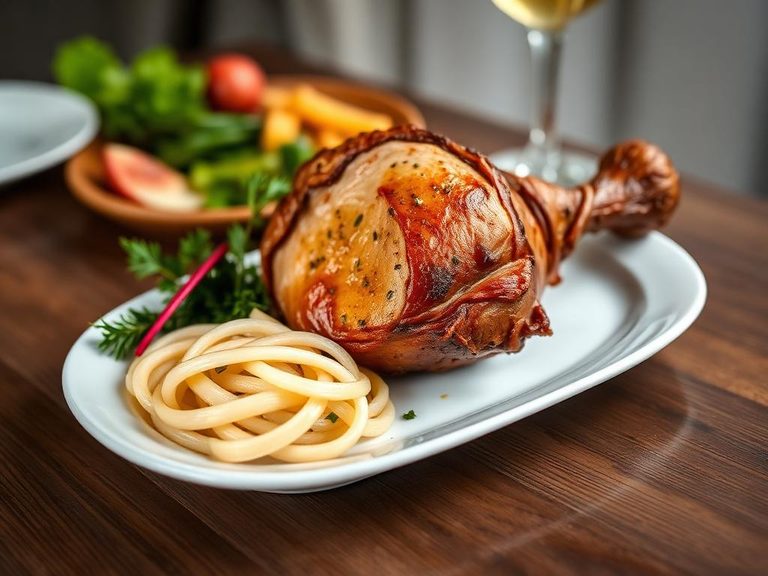
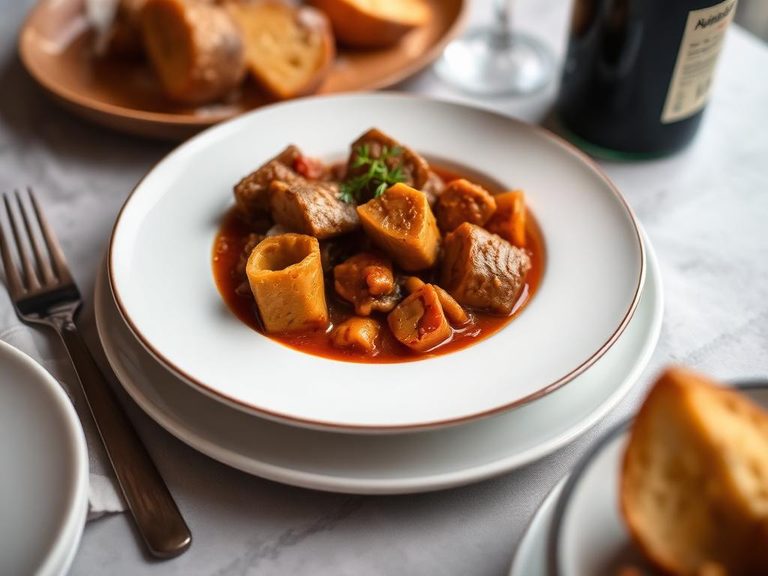


🌍 Where it's eaten
💡 Did you know?
The high collagen content in pig's feet is what gives traditional Japanese ramen broth its characteristic creamy, opaque 'tonkotsu' appearance and rich mouthfeel.
Full nutrition (USDA data · scales with serving)
| Water | 62.4 g |
| Energy | 236 kcal |
| Protein | 21.8 g |
| Total lipid (fat) | 15.9 g |
| Carbohydrate, by difference | 0.00 g |
| Fiber, total dietary | 0.00 g |
| Total Sugars | 0.00 g |
| Calcium, Ca | 0.00 mg |
| Iron, Fe | 0.97 mg |
| Magnesium, Mg | 5.0 mg |
| Phosphorus, P | 81.0 mg |
| Potassium, K | 33.0 mg |
| Sodium, Na | 380 mg |
| Zinc, Zn | 1.0 mg |
| Copper, Cu | 0.06 mg |
| Selenium, Se | 22.8 ug |
| Vitamin C, total ascorbic acid | 0.00 mg |
| Thiamin | 0.02 mg |
| Riboflavin | 0.06 mg |
| Niacin | 0.58 mg |
| Vitamin B-6 | 0.04 mg |
| Folate, total | 2.0 ug |
| Folic acid | 0.00 ug |
| Folate, food | 2.0 ug |
| Folate, DFE | 2.0 ug |
| Choline, total | 74.8 mg |
| Vitamin B-12 | 0.41 ug |
| Vitamin B-12, added | 0.00 ug |
| Vitamin A, RAE | 0.00 ug |
| Retinol | 0.00 ug |
| Carotene, beta | 0.00 ug |
| Carotene, alpha | 0.00 ug |
| Cryptoxanthin, beta | 0.00 ug |
| Lycopene | 0.00 ug |
| Lutein + zeaxanthin | 0.00 ug |
| Vitamin E (alpha-tocopherol) | 0.09 mg |
| Vitamin E, added | 0.00 mg |
| Vitamin D (D2 + D3) | 0.00 ug |
| Vitamin K (phylloquinone) | 0.00 ug |
| Alcohol, ethyl | 0.00 g |
| Caffeine | 0.00 mg |
| Theobromine | 0.00 mg |
Fat & fatty acid profile (per 100g)
| Fatty acids, total saturated | 4.3 g |
| SFA 4:0 | 0.00 g |
| SFA 6:0 | 0.00 g |
| SFA 8:0 | 0.00 g |
| SFA 10:0 | 0.00 g |
| SFA 12:0 | 0.00 g |
| SFA 14:0 | 0.19 g |
| SFA 16:0 | 3.0 g |
| SFA 18:0 | 1.1 g |
| Fatty acids, total monounsaturated | 7.9 g |
| MUFA 16:1 | 0.61 g |
| MUFA 18:1 | 7.2 g |
| MUFA 20:1 | 0.16 g |
| MUFA 22:1 | 0.00 g |
| Fatty acids, total polyunsaturated | 1.5 g |
| PUFA 18:2 | 1.3 g |
| PUFA 18:3 | 0.06 g |
| PUFA 18:4 | 0.00 g |
| PUFA 20:4 | 0.07 g |
| PUFA 20:5 n-3 (EPA) | 0.00 g |
| PUFA 22:5 n-3 (DPA) | 0.00 g |
| PUFA 22:6 n-3 (DHA) | 0.00 g |
| Cholesterol | 106 mg |
Amino acid profile (per 100g)
Estimated from Pork, cured, salt pork, raw — USDA does not publish this profile for Pork.
| Tryptophan | 0.02 g |
| Threonine | 0.17 g |
| Isoleucine | 0.13 g |
| Leucine | 0.35 g |
| Lysine | 0.42 g |
| Methionine | 0.07 g |
| Cystine | 0.04 g |
| Phenylalanine | 0.19 g |
| Tyrosine | 0.08 g |
| Valine | 0.24 g |
| Arginine | 0.52 g |
| Histidine | 0.06 g |
| Alanine | 0.28 g |
| Aspartic acid | 0.42 g |
| Glutamic acid | 0.69 g |
| Glycine | 0.36 g |
| Proline | 0.27 g |
| Serine | 0.19 g |
FAQ
How do you prepare pig's feet to remove the smell?
Soak them in cold water for several hours, changing the water a few times. Before cooking, blanch them in boiling water for 5-10 minutes, then discard the water and rinse the trotters thoroughly.
Are pig's feet the same as pig's ears?
No. Pig's feet (trotters) are the lower part of the leg, rich in collagen and bone. Pig's ears are primarily cartilage and skin, offering a different, crunchier texture.
Can I eat the bones in pig's feet?
The small bones become soft and edible after very long, slow cooking (like in a pressure cooker or multi-hour braise). Many people enjoy them this way for the added calcium and marrow.
Nutrient density (calculated · NRF9.3)
Nutrient Rich Foods index: beneficial nutrients (protein, fiber, vitamins, minerals) minus saturated fat, added sugar & sodium, per 100 kcal.
NRF9.3 index — Fulgoni, Keast & Drewnowski, 2009. Computed from USDA nutrients.
Weight-loss friendliness (composite index)
Energy density 2.36 kcal/g · 37% calories from protein · 0.0 g fiber · 0.0 g sugar per 100 g.
Composite of energy density (Rolls et al., 1999), protein & fiber satiety, minus sugar. A calculated heuristic — ranks satiety-per-calorie, not a clinical measure.
Dietary load (calculated from USDA values)
Potential renal acid load. Positive = acid-forming, negative = alkaline-forming.
Sodium-to-potassium ratio: 11.52 (lower is better — aim for ≤ 1)
Sodium:potassium per WHO potassium guidance. Computed from USDA nutrients.