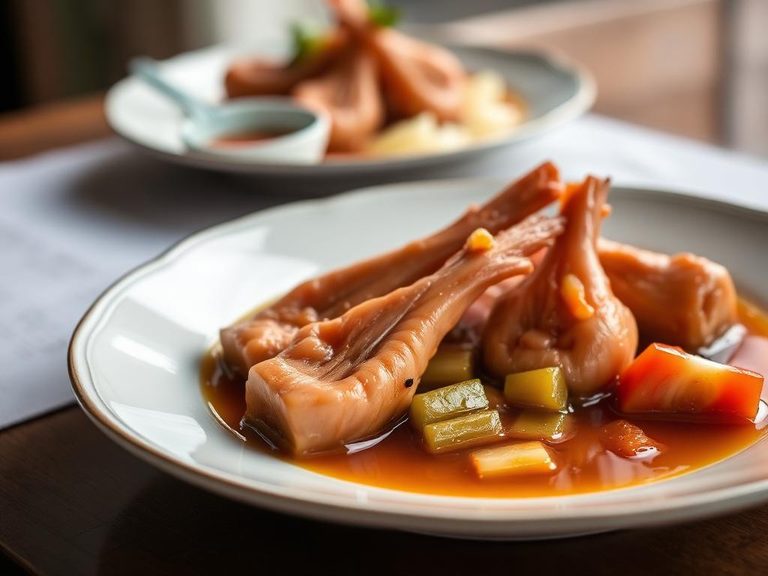
Pig's feet adobo

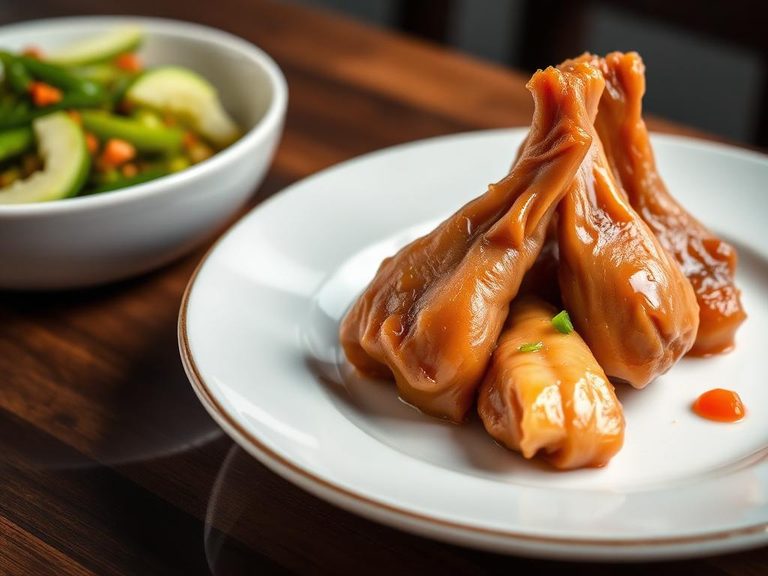
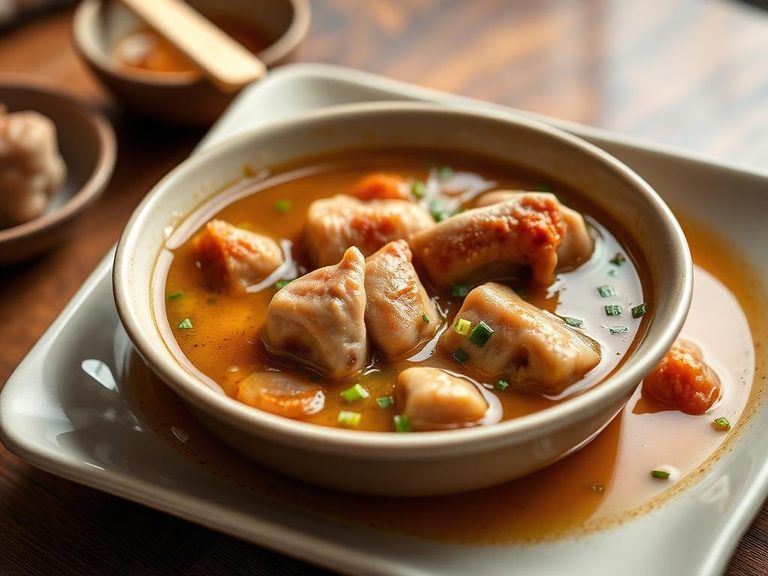
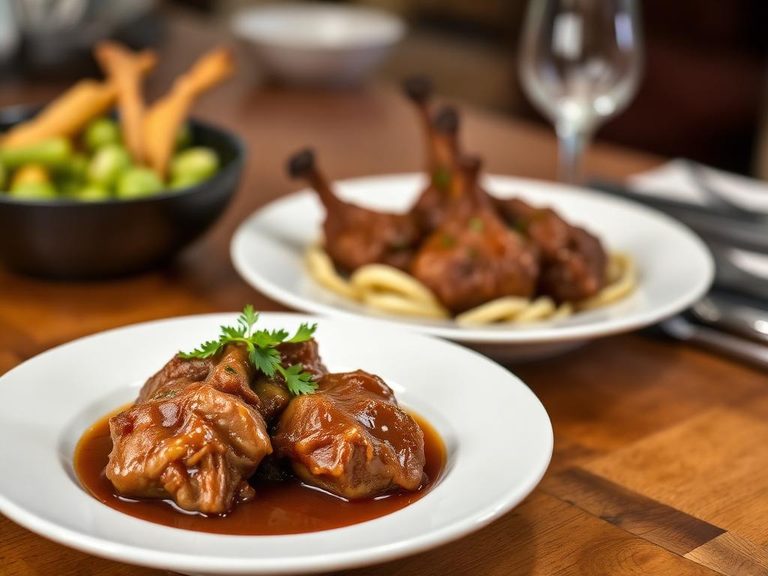
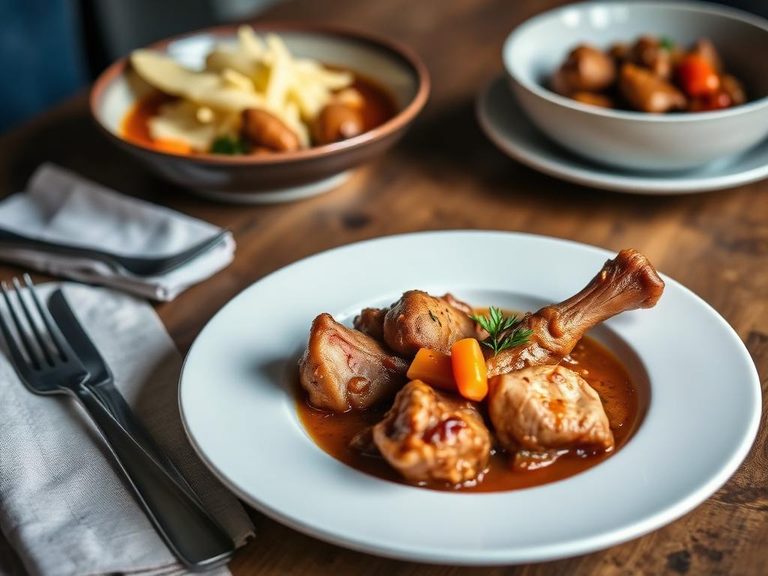
Pig's feet adobo is a savory and tangy Filipino stew featuring pork trotters braised in a classic adobo sauce of vinegar, soy sauce, garlic, and bay leaves. The dish is known for its rich, gelatinous texture from the collagen in the feet, which softens and thickens the sauce during slow cooking. It's a beloved comfort food and a common home-cooked meal throughout the Philippines.
🍽️ Nutrition at a glance
This dish is high in protein and fat, with the fat primarily coming from the skin and connective tissue, while the meat provides a good source of collagen. A typical serving is calorie-dense, ranging from 400-600 kcal, and offers significant amounts of minerals like iron and zinc.
Nutrition breakdown
| Calories | 480 kcal |
| Protein | 32 g |
| Carbs | 8 g |
| Fat | 35 g |
| Fiber | 1 g |
| Sugar | 3 g |
| Sodium | 950 mg |
| Iron | 3.5 mg |
| Zinc | 5.2 mg |
| Selenium | 28 mcg |
| Phosphorus | 210 mg |
| Vitamin B12 | 1.2 mcg |
| Niacin (B3) | 8.5 mg |
| Potassium | 320 mg |
| Collagen | ~15 g (from connective tissue) |
Per 1 cup (240 g) with sauce · estimated, varies by recipe
💡 What's interesting
Culturally, adobo is considered the unofficial national dish of the Philippines, with countless regional and family variations. Nutritionally, the slow-cooked pig's feet are an excellent source of collagen, which is prized for supporting joint and skin health.