

Pork or ham with soy-based sauce
Common food

Photo: Wikipedia
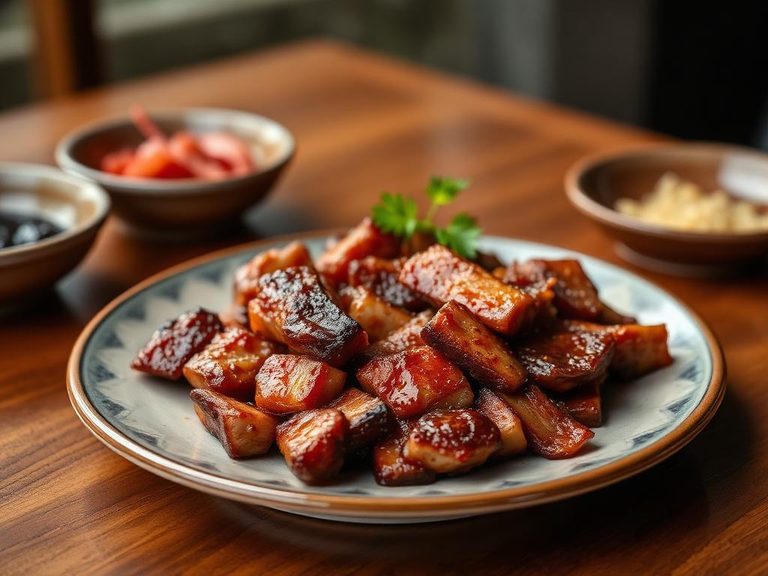
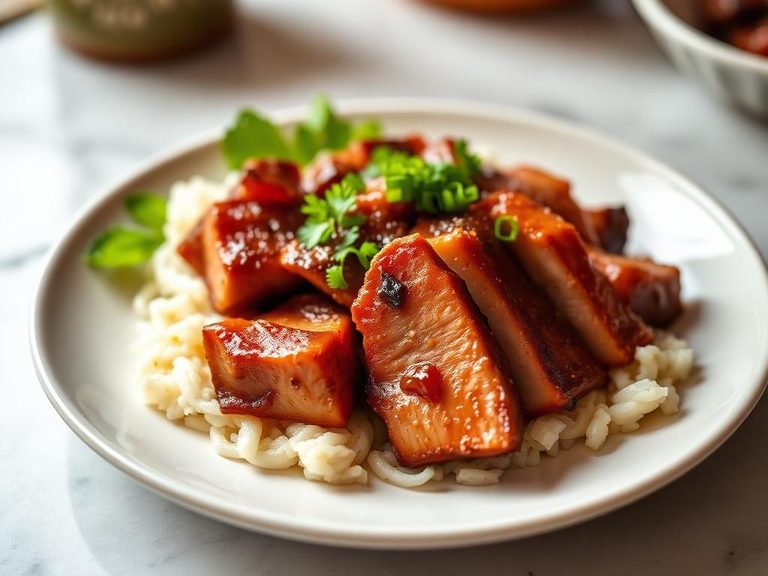
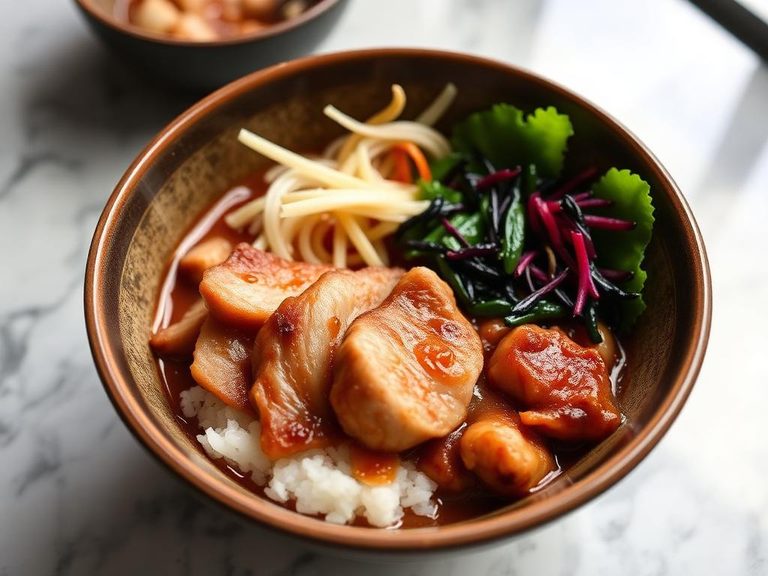
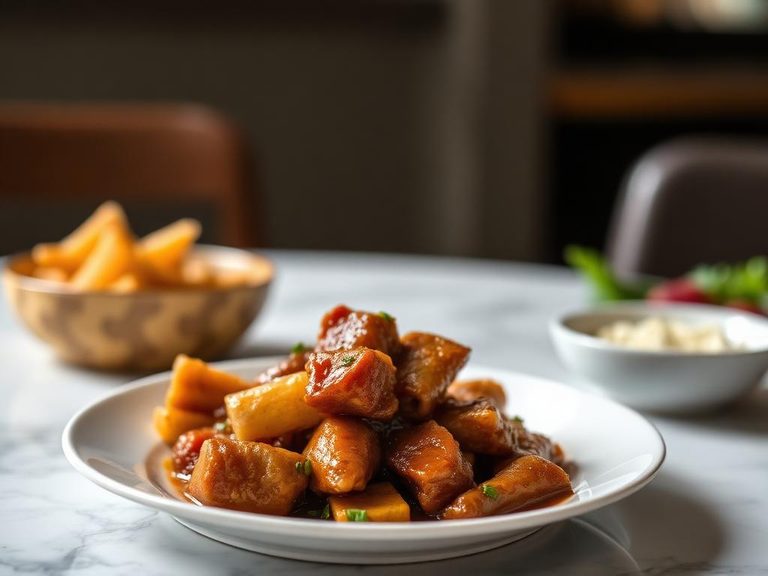
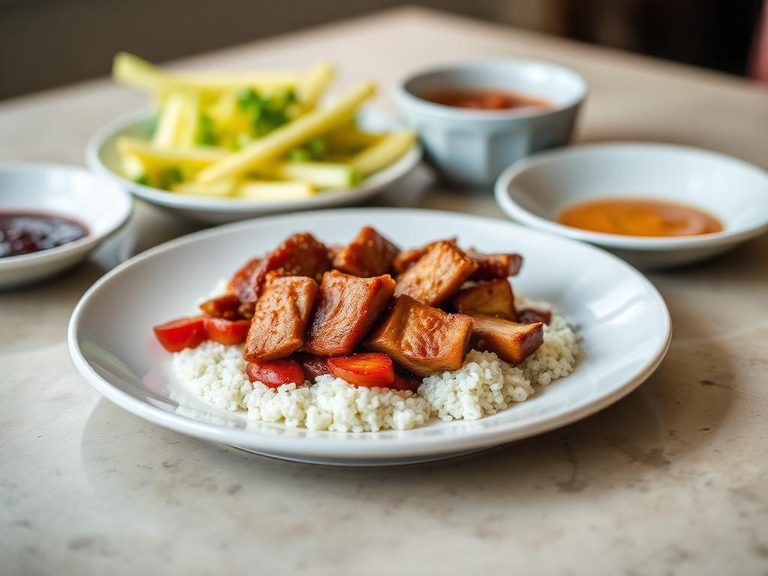
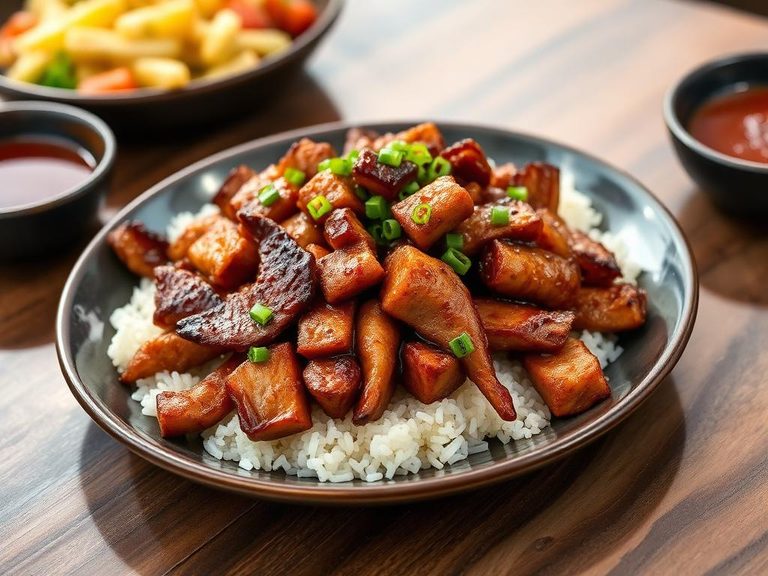
This is a savory, umami-rich preparation where pork or ham is cooked or marinated in a soy-based sauce, resulting in a glossy, deeply flavored dish. The texture ranges from tender and juicy to slightly chewy, depending on the cut and cooking method. It's a protein-packed option with a moderate fat content, making it a satisfying centerpiece for a meal.
Calorie split: 32% protein · 7% carbs · 61% fat
↓ Full nutrition💚 Why it's loved
People love it for the perfect marriage of savory pork and the salty, complex umami depth of soy sauce, creating a flavor that's both comforting and deeply satisfying. It's incredibly versatile, working in everything from a quick stir-fry to a slow-braised masterpiece, and is a cornerstone of many Asian home-cooking traditions.
⚠️ Watch-outs & how to enjoy it better
The primary concern is the high sodium content from the soy sauce, which can contribute to elevated blood pressure. The fat content, especially with fattier cuts of pork, can be significant. To counteract this, opt for low-sodium soy sauce, use it as part of a marinade where some is discarded, and balance the dish with plenty of steamed vegetables and a whole grain like brown rice.
Key benefits
- Excellent source of complete protein for muscle maintenance.
- Provides B vitamins like thiamine and B12 from the pork.
- Contains minerals such as zinc and selenium from the meat.
- Soy sauce adds antioxidants like melanoidins from fermentation.
🍽️ Popular dishes
🌍 Where it's eaten
💡 Did you know?
The Maillard reaction between the amino acids in the pork and the sugars in the soy sauce during cooking is what creates the complex, savory brown crust and deep flavor.
Full nutrition (USDA data · scales with serving)
| Water | 67.7 g |
| Energy | 190 kcal |
| Protein | 14.9 g |
| Total lipid (fat) | 12.7 g |
| Carbohydrate, by difference | 3.4 g |
| Fiber, total dietary | 0.50 g |
| Total Sugars | 1.1 g |
| Calcium, Ca | 24.0 mg |
| Iron, Fe | 0.82 mg |
| Magnesium, Mg | 21.0 mg |
| Phosphorus, P | 142 mg |
| Potassium, K | 295 mg |
| Sodium, Na | 341 mg |
| Zinc, Zn | 1.4 mg |
| Copper, Cu | 0.06 mg |
| Selenium, Se | 17.4 ug |
| Vitamin C, total ascorbic acid | 2.6 mg |
| Thiamin | 0.51 mg |
| Riboflavin | 0.18 mg |
| Niacin | 3.2 mg |
| Vitamin B-6 | 0.33 mg |
| Folate, total | 8.0 ug |
| Folic acid | 0.00 ug |
| Folate, food | 8.0 ug |
| Folate, DFE | 8.0 ug |
| Choline, total | 51.1 mg |
| Vitamin B-12 | 0.36 ug |
| Vitamin B-12, added | 0.00 ug |
| Vitamin A, RAE | 4.0 ug |
| Retinol | 1.0 ug |
| Carotene, beta | 37.0 ug |
| Carotene, alpha | 0.00 ug |
| Cryptoxanthin, beta | 0.00 ug |
| Lycopene | 0.00 ug |
| Lutein + zeaxanthin | 71.0 ug |
| Vitamin E (alpha-tocopherol) | 1.6 mg |
| Vitamin E, added | 0.00 mg |
| Vitamin D (D2 + D3) | 0.30 ug |
| Vitamin K (phylloquinone) | 22.2 ug |
| Alcohol, ethyl | 0.00 g |
| Caffeine | 0.00 mg |
| Theobromine | 0.00 mg |
Fat & fatty acid profile (per 100g)
| Fatty acids, total saturated | 2.8 g |
| SFA 4:0 | 0.00 g |
| SFA 6:0 | 0.00 g |
| SFA 8:0 | 0.00 g |
| SFA 10:0 | 0.01 g |
| SFA 12:0 | 0.01 g |
| SFA 14:0 | 0.06 g |
| SFA 16:0 | 1.8 g |
| SFA 18:0 | 0.78 g |
| Fatty acids, total monounsaturated | 5.5 g |
| MUFA 16:1 | 0.18 g |
| MUFA 18:1 | 5.2 g |
| MUFA 20:1 | 0.10 g |
| MUFA 22:1 | 0.00 g |
| Fatty acids, total polyunsaturated | 3.4 g |
| PUFA 18:2 | 3.0 g |
| PUFA 18:3 | 0.36 g |
| PUFA 18:4 | 0.00 g |
| PUFA 20:4 | 0.02 g |
| PUFA 20:5 n-3 (EPA) | 0.00 g |
| PUFA 22:5 n-3 (DPA) | 0.00 g |
| PUFA 22:6 n-3 (DHA) | 0.00 g |
| Cholesterol | 39.0 mg |
Amino acid profile (per 100g)
Estimated from Pork, fresh, leg (ham), rump half, separable lean and fat, raw — USDA does not publish this profile for Pork or ham with soy-based sauce.
| Tryptophan | 0.24 g |
| Threonine | 0.89 g |
| Isoleucine | 0.96 g |
| Leucine | 1.7 g |
| Lysine | 1.8 g |
| Methionine | 0.56 g |
| Cystine | 0.23 g |
| Phenylalanine | 0.84 g |
| Tyrosine | 0.80 g |
| Valine | 1.0 g |
| Arginine | 1.3 g |
| Histidine | 0.82 g |
| Alanine | 1.2 g |
| Aspartic acid | 1.9 g |
| Glutamic acid | 3.1 g |
| Glycine | 0.92 g |
| Proline | 0.82 g |
| Serine | 0.85 g |
| Hydroxyproline | 0.07 g |
FAQ
Is the sugar content a concern for blood sugar?
The sugar content is relatively low (1.05g per 100g), so it's unlikely to cause a significant spike on its own. The main macronutrient affecting satiety is protein. However, if served with a large portion of white rice, the total carbohydrate load of the meal should be considered.
Can I make this with lean pork?
Absolutely. Using a lean cut like pork loin or tenderloin will significantly reduce the fat content. To keep it moist, consider marinating the meat first and using a quick cooking method like stir-frying or grilling.
What's the difference between using pork and ham?
Fresh pork offers a milder flavor and a texture you control from raw. Ham is pre-cured and cooked, so it's saltier, has a distinct pink color and firmer texture, and requires only heating through, making it a faster option.
Nutrient density (calculated · NRF9.3)
Nutrient Rich Foods index: beneficial nutrients (protein, fiber, vitamins, minerals) minus saturated fat, added sugar & sodium, per 100 kcal.
NRF9.3 index — Fulgoni, Keast & Drewnowski, 2009. Computed from USDA nutrients.
Weight-loss friendliness (composite index)
Energy density 1.90 kcal/g · 31% calories from protein · 0.5 g fiber · 1.1 g sugar per 100 g.
Composite of energy density (Rolls et al., 1999), protein & fiber satiety, minus sugar. A calculated heuristic — ranks satiety-per-calorie, not a clinical measure.
Dietary load (calculated from USDA values)
Potential renal acid load. Positive = acid-forming, negative = alkaline-forming.
Sodium-to-potassium ratio: 1.16 (lower is better — aim for ≤ 1)
Sodium:potassium per WHO potassium guidance. Computed from USDA nutrients.